This was supposed to be a classic, no-fuss deviled egg platter for a last-minute Halloween potluck. I was already running late, the store was out of paprika, and I grabbed the only black thing I saw near the spices—squid ink pasta from the international aisle. Honestly, I didn’t even look at the label until I got home. The power went out halfway through boiling the eggs, too. Classic Tuesday, right? I sat there in the dark, convinced the whole thing was a wash. But when the lights came back on and I stared at that jar of black squid ink, I figured, why not? What came out of that chaotic afternoon was nothing like the plan—and way better. These spooky spider deviled eggs are now the only thing I bring to Halloween parties, and people lose their minds over them every single time. You know that feeling when a total kitchen disaster turns into your signature dish? Yeah, that’s this recipe.
Why You’ll Love This Recipe
Let me tell you, after making about a hundred batches of these for parties, I’ve got the method down to a science. These aren’t just cute—they’re genuinely the best-tasting deviled eggs I’ve ever made. The squid ink doesn’t just add that eerie black color; it brings a subtle brininess that makes the filling pop.
- Quick & Easy: Comes together in under 30 minutes, perfect for last-minute Halloween prep or when you forget you’re hosting.
- Simple Ingredients: No fancy grocery trips needed—eggs, mayo, mustard, and a jar of squid ink (or black food coloring) are all you need.
- Perfect for Halloween: These look like tiny, creepy spiders crawling across your platter. Kids and adults both get a kick out of them.
- Crowd-Pleaser: I’ve brought these to three different parties now, and they’re always the first thing to disappear.
- Unbelievably Delicious: The creamy, tangy filling with that hint of ocean flavor is next-level comfort food.
What makes this version different from every other deviled egg out there is the technique of mixing the squid ink directly into the yolk mixture. It’s not just a surface-level gimmick—the color goes all the way through. I’ve tried black food coloring before, and it always tastes a little artificial. The squid ink gives you that deep, inky black with a flavor that actually complements the eggs. This is the kind of appetizer that makes you close your eyes after the first bite—comfort food reimagined for the spookiest night of the year.
What Ingredients You Will Need
This recipe uses simple, everyday ingredients to deliver bold flavor and a seriously creepy presentation. Most of these are pantry staples, but the squid ink is the star of the show here.
- 12 large eggs, hard-boiled and peeled (room temperature eggs peel easier, trust me)
- 1/3 cup mayonnaise (I prefer Hellmann’s or Duke’s for that tangy kick)
- 1 teaspoon yellow mustard (adds that classic deviled egg zing)
- 1 teaspoon white vinegar (balances the richness of the yolks)
- 1/2 teaspoon salt
- 1/4 teaspoon black pepper
- 2 teaspoons squid ink (look for it in the international aisle or online; you can also use black food coloring, but the flavor won’t be the same)
- 24 black olive slices (for the spider bodies—use canned black olives, not kalamata)
- 48 chive pieces (about 1-inch long each, for the spider legs)
- Paprika for garnish (optional, but a tiny dusting on the spider bodies looks great)
I recommend using large eggs because they hold up better to the filling and the spider decorations. For the squid ink, I’ve had the best luck with the brand “Sos” from the Italian section of most grocery stores. If you’re in a pinch, black food coloring gel works, but you’ll need about a tablespoon and a half to get that same deep black color. For a dairy-free version, swap the mayo with vegan mayonnaise—it works perfectly.
Equipment Needed
You don’t need anything fancy for these spooky spider deviled eggs, but a few tools make the process much smoother.
- Large pot for boiling eggs (use one with a lid for even cooking)
- Mixing bowl for the yolk mixture
- Fork or potato masher for mashing the yolks
- Piping bag or zip-top bag for filling the eggs neatly
- Sharp knife for cutting the olives into spider bodies
- Cutting board
- Small spoon for scooping out the yolks
If you don’t have a piping bag, a zip-top bag with the corner snipped off works just as well. I’ve used both, and honestly, the zip-top bag is less cleanup. For the olive slicing, a paring knife is your best bet—those little spider bodies need to be precise. I picked up a set of cheap piping tips at a dollar store, and they’ve lasted years. Don’t overthink the equipment; you probably already have everything you need.
Preparation Method
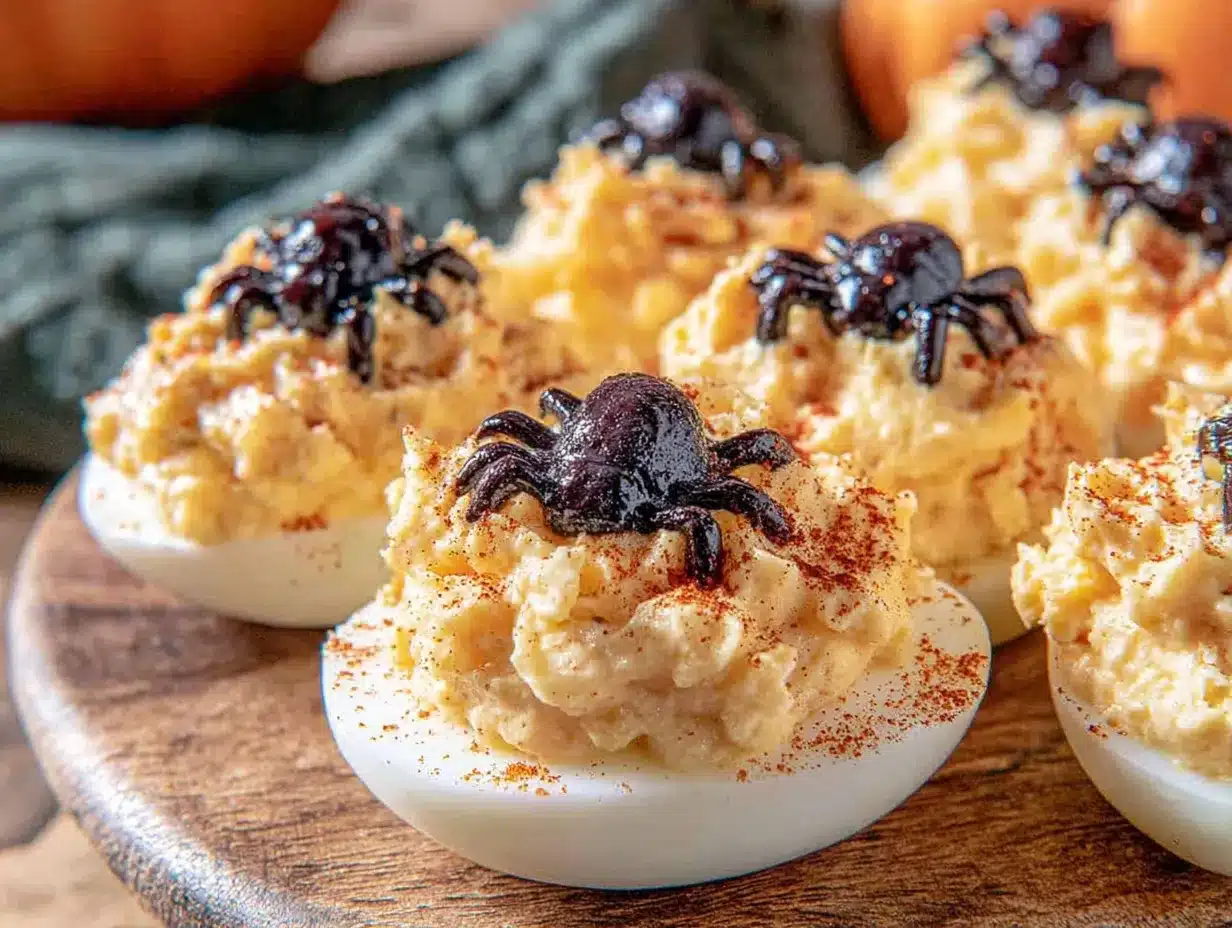
Follow these steps carefully, and you’ll have the spookiest deviled eggs at any Halloween party. I’ve learned a few tricks the hard way, so pay attention to the notes.
- Boil the eggs: Place the eggs in a single layer in a large pot and cover with cold water by about an inch. Bring to a rolling boil over high heat. Once boiling, cover the pot, remove from heat, and let sit for exactly 12 minutes. This gives you perfectly hard-boiled yolks without that green ring. While they sit, prepare an ice bath in a large bowl.
- Cool and peel: Transfer the eggs to the ice bath immediately and let them cool for 10 minutes. This stops the cooking and makes peeling a breeze. Tap each egg gently on the counter to crack the shell, then roll it between your palms to loosen. Peel under running cold water—the water helps slide the shell off. I’ve ruined so many eggs by peeling too fast; take your time here.
- Slice and scoop: Using a sharp knife, slice each egg in half lengthwise. Gently pop out the yolks into a mixing bowl. Arrange the egg white halves on a serving platter, cut-side up. Try to keep the whites intact—if a few tear, just hide them on the bottom of the platter.
- Make the filling: Add the mayonnaise, yellow mustard, white vinegar, salt, pepper, and squid ink to the yolks. Mash everything together with a fork until smooth and creamy. You want a consistency that’s thick but pipeable—if it’s too stiff, add another teaspoon of mayo. The mixture should be a uniform, deep black color. Taste it and adjust salt or mustard as needed.
- Fill the eggs: Spoon the yolk mixture into a piping bag or zip-top bag with a small corner snipped off. Pipe the filling into each egg white half, mounding it slightly. I like to go in a zigzag pattern to create a textured look, like a spider’s web. You should have enough filling for all 24 halves.
- Create the spiders: For each spider, take one black olive slice and place it on top of the filling, slightly off-center. This is the spider’s body. Then, take four chive pieces and insert them into the filling on each side of the olive, creating eight legs total. The legs should curve slightly outward, like a spider crawling. Repeat for all 24 eggs.
- Garnish and serve: If using, dust a tiny pinch of paprika over the olive bodies for a subtle pop of color. Serve immediately or refrigerate for up to 2 hours before serving. The spiders will hold their shape beautifully.
A quick warning: don’t overmix the filling once the squid ink is in—it can get a little gummy if you work it too much. Also, if you’re making these ahead, wait to add the spider legs until just before serving, or they’ll get soggy. Trust me on that one—I learned it the hard way at a party last year.
Cooking Tips & Techniques
I’ve made these spooky spider deviled eggs more times than I can count, and I’ve picked up a few tricks along the way. First, the most common mistake is overcooking the eggs. That green ring around the yolk isn’t just ugly—it makes the filling taste sulfurous. Stick to that 12-minute rest time, and you’ll get bright yellow yolks every time.
Another thing I learned the hard way: don’t use fresh eggs for hard-boiling. Eggs that are at least a week old peel much easier. If you’re not sure, do the float test—if an egg stands on its end in a glass of water, it’s perfect for boiling. If it sinks, it’s too fresh and will be a nightmare to peel.
For the squid ink, start with less than you think you need. You can always add more, but you can’t take it out. I usually start with 1.5 teaspoons and then add a little more until the color is right. The ink is potent, and too much can make the filling taste metallic. If you’re using black food coloring, mix it into the mayo first before combining with the yolks—this ensures even color distribution without streaks.
When piping the filling, hold the bag at a 45-degree angle and apply steady pressure. If you’re nervous, practice on a plate first. And for the spider legs, use fresh chives—dried ones will just crumble. I’ve also used thin strips of roasted red pepper for legs, which adds a nice color contrast, but chives are the classic choice.
Variations & Adaptations
These spooky spider deviled eggs are endlessly customizable. Here are a few ways I’ve adapted them over the years.
- Dietary Variations: For a dairy-free version, use vegan mayonnaise and skip the paprika. For a low-carb option, these are naturally keto-friendly—just use full-fat mayo. I’ve also made them with avocado oil mayo for a healthier twist, and they turned out great.
- Seasonal Twists: In the fall, add a pinch of smoked paprika to the filling for a warm, smoky flavor. For a spring version, swap the chive legs for thin strips of green onion and use yellow food coloring to make “baby chick” deviled eggs for Easter.
- Flavor Upgrades: Mix in a teaspoon of pickle relish or a dash of hot sauce for extra tang. I once added a tiny bit of truffle oil to the filling, and it was incredible—but go easy, because truffle oil can overpower everything.
- Alternative Spider Bodies: If you don’t have black olives, use halved cherry tomatoes or even small pieces of black licorice. For a truly creepy look, use whole black olives with a small slit cut into them to look like spider eyes.
My personal favorite variation is adding a pinch of cayenne pepper to the filling—it gives the spiders a little heat that contrasts with the creamy yolk. I tried it on a whim last Halloween, and now I can’t go back.
Serving & Storage Suggestions
These spooky spider deviled eggs are best served chilled, straight from the refrigerator. Arrange them on a black platter or a dark-colored serving dish to make the spiders pop. I like to scatter a few fake spider webs around the platter for extra Halloween flair—it’s a simple touch that gets people talking.
For beverages, these pair beautifully with a crisp white wine like Sauvignon Blanc or a light beer like a pilsner. If you’re serving a crowd, a Halloween-themed cocktail like a “Witch’s Brew” (think gin, lime, and blackberry) complements the briny squid ink flavor perfectly.
As for storage, place any leftovers in an airtight container in the refrigerator for up to two days. The filling will stay creamy, but the chive legs will soften after about 12 hours. If you’re making these a day ahead, prepare the eggs and filling separately, then assemble the spiders just before serving. I’ve tried freezing the filled eggs, and I don’t recommend it—the texture gets watery and weird.
One thing I love about this recipe is how the flavors develop over time. The squid ink and mustard meld together in the fridge, so the eggs taste even better the next day—if they last that long. Just be sure to let them sit at room temperature for 10 minutes before serving to take the chill off.
Nutritional Information & Benefits
Each spooky spider deviled egg half contains approximately 70 calories, 6 grams of fat, 1 gram of carbohydrates, and 4 grams of protein. They’re a great source of high-quality protein and healthy fats from the eggs and mayonnaise.
Eggs are packed with choline, which supports brain health, and they’re one of the few natural sources of vitamin D. The squid ink is rich in antioxidants and has anti-inflammatory properties—it’s a superfood you don’t expect in a Halloween appetizer. The chives add a small amount of vitamin K and fiber.
For dietary considerations, this recipe is naturally gluten-free, low-carb, and keto-friendly. The main allergens are eggs and, if you use traditional mayo, soy. For a soy-free version, look for an avocado oil-based mayonnaise. I always mention this to guests because you never know who has dietary restrictions.
From a wellness perspective, I love that these deviled eggs are both indulgent and nutritious. They’re the kind of appetizer you can feel good about eating—and sharing. Plus, the protein keeps you full, so you won’t binge on candy later.
Conclusion
These spooky spider deviled eggs are proof that sometimes the best recipes come from total chaos. What started as a failed attempt at a simple appetizer turned into my most requested Halloween dish. The squid ink gives them that genuinely creepy black color, the creamy filling is absolutely delicious, and the little spider legs make everyone smile—or shriek, depending on how convincing they look.
I love this recipe because it’s so easy to customize. Add more heat, swap the olives for something else, or go all-out with a full Halloween spread. The beauty is in the simplicity: basic deviled eggs with a spooky twist that anyone can pull off. I’d love to hear how yours turn out—drop a comment below and tell me your favorite Halloween party trick. And if you come up with a wild variation, share it! This recipe is meant to be played with. Happy Halloween, and happy cooking!
Frequently Asked Questions
Can I use black food coloring instead of squid ink?
Yes, absolutely. Use about 1.5 tablespoons of black food coloring gel instead of the squid ink. The color won’t be quite as deep, and you’ll miss that subtle briny flavor, but it works in a pinch. Just mix the coloring into the mayo first to avoid streaks.
How far in advance can I make these?
You can boil and peel the eggs up to two days ahead. Prepare the filling and store it in a piping bag in the fridge. Assemble the spiders no more than 2 hours before serving, or the chive legs will get soggy. If you’re in a rush, you can assemble everything the morning of your party.
My eggs are hard to peel—what went wrong?
This usually happens with very fresh eggs. Use eggs that are at least a week old, and make sure you cool them completely in an ice bath before peeling. Peeling under running cold water also helps the shell slide off. If you’re still struggling, try adding a teaspoon of baking soda to the boiling water—it raises the pH and makes peeling easier.
Can I make these without squid ink?
Yes, but you’ll need a lot of black food coloring to get that dark color. I’ve also seen people use activated charcoal powder, but it can be gritty. If you want the spooky look without any coloring, you can skip the black entirely and just use the olive spiders on top of classic yellow deviled eggs—they still look great.
How do I transport these to a party?
Place the assembled eggs in a single layer in a shallow, lidded container. Put a damp paper towel on the bottom to keep them from sliding around. If you’re worried about the spider legs, transport the eggs and the legs separately, then assemble at the party. I’ve done this for years, and it works perfectly.
Pin This Recipe!
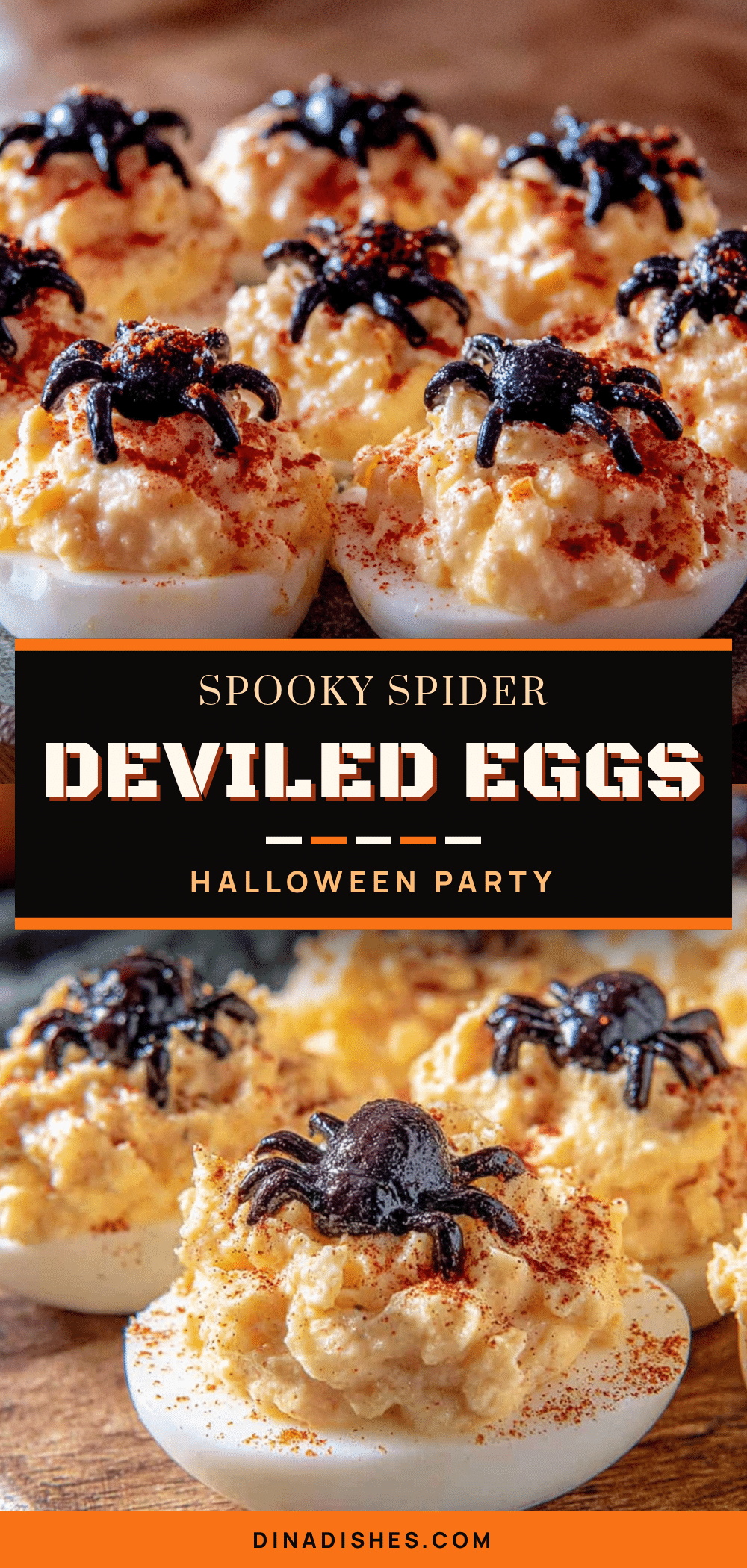
Best Halloween Deviled Eggs: Spooky Spider Recipe
These spooky spider deviled eggs are the perfect Halloween appetizer, featuring a creamy black squid ink filling and adorable spider decorations made from olives and chives. Quick, easy, and guaranteed to be a crowd-pleaser.
- Prep Time: 15 minutes
- Cook Time: 12 minutes
- Total Time: 27 minutes
- Yield: 24 deviled egg halves (12 servings) 1x
- Category: Appetizer
- Cuisine: American
Ingredients
- 12 large eggs, hard-boiled and peeled
- 1/3 cup mayonnaise
- 1 teaspoon yellow mustard
- 1 teaspoon white vinegar
- 1/2 teaspoon salt
- 1/4 teaspoon black pepper
- 2 teaspoons squid ink
- 24 black olive slices
- 48 chive pieces (about 1-inch long each)
- Paprika for garnish (optional)
Instructions
- Boil the eggs: Place the eggs in a single layer in a large pot and cover with cold water by about an inch. Bring to a rolling boil over high heat. Once boiling, cover the pot, remove from heat, and let sit for exactly 12 minutes. While they sit, prepare an ice bath in a large bowl.
- Cool and peel: Transfer the eggs to the ice bath immediately and let them cool for 10 minutes. Tap each egg gently on the counter to crack the shell, then roll it between your palms to loosen. Peel under running cold water.
- Slice and scoop: Using a sharp knife, slice each egg in half lengthwise. Gently pop out the yolks into a mixing bowl. Arrange the egg white halves on a serving platter, cut-side up.
- Make the filling: Add the mayonnaise, yellow mustard, white vinegar, salt, pepper, and squid ink to the yolks. Mash everything together with a fork until smooth and creamy. The mixture should be a uniform, deep black color. Taste and adjust salt or mustard as needed.
- Fill the eggs: Spoon the yolk mixture into a piping bag or zip-top bag with a small corner snipped off. Pipe the filling into each egg white half, mounding it slightly. You should have enough filling for all 24 halves.
- Create the spiders: For each spider, take one black olive slice and place it on top of the filling, slightly off-center. Then, take four chive pieces and insert them into the filling on each side of the olive, creating eight legs total. Repeat for all 24 eggs.
- Garnish and serve: If using, dust a tiny pinch of paprika over the olive bodies. Serve immediately or refrigerate for up to 2 hours before serving.
Notes
Don’t overmix the filling once the squid ink is in—it can get gummy. If making ahead, wait to add the spider legs until just before serving to prevent sogginess. Use eggs that are at least a week old for easier peeling.
Nutrition
- Serving Size: 2 deviled egg halves
- Calories: 140
- Sugar: 1
- Sodium: 280
- Fat: 12
- Saturated Fat: 3
- Carbohydrates: 2
- Protein: 8
Keywords: Halloween deviled eggs, spooky spider deviled eggs, black deviled eggs, squid ink deviled eggs, Halloween appetizer, creepy deviled eggs