My neighbor, a woman named Carol who gardens with the kind of obsessive precision I admire from a safe distance, had claimed for years that she hated butternut squash. “Too sweet,” she’d say, waving a trowel at me. “And that texture—like eating a wet sock.” I’d nod, because what do you say to that? Then last October, I made this mac and cheese on a Tuesday that felt more like February—gray sky, damp chill, the kind of day that makes you want to crawl inside a blanket and stay there. I brought a bowl over to Carol, mostly because I had too much and I knew her husband would eat anything. I found her standing at her kitchen counter, fork halfway to her mouth, this guilty look on her face like I’d caught her doing something wrong. “I don’t know what happened,” she said, still chewing. “But I’ve had three servings.” That’s the thing about this recipe, honestly. It doesn’t argue with you. It just sits there, all golden and creamy, and lets the crispy sage do the talking. Maybe you’ve been there, watching someone who swore they’d never like something take another bite anyway. That’s the moment this recipe lives in.
Why You’ll Love This Recipe
This butternut squash mac and cheese isn’t just another fall pasta dish. It’s the one that makes you forget you’re eating vegetables, and I mean that in the best possible way. After testing this recipe about seven times (my family staged a polite intervention), I landed on a version that balances creamy, savory, and nutty flavors without feeling heavy.
Here’s what makes it stand out:
- Quick & Easy : Ready in about 45 minutes, and most of that is hands-off roasting time.
- Simple Ingredients : No fancy cheese shops required. Cheddar, Parmesan, and pantry staples do the work.
- Perfect for Cozy Nights : This is the dish you want when the leaves are falling and you need something that feels like a hug.
- Crowd-Pleaser : I’ve served this to kids, adults, and a friend who “doesn’t do squash.” Empty bowls all around.
- Unbelievably Delicious : The roasted squash blends into a silky sauce that coats every piece of pasta, and the crispy sage on top? Honestly, it’s the part everyone fights over.
What makes this recipe different from other squash mac and cheeses is the technique. I roast the squash until it’s caramelized, not just soft. That extra step deepens the flavor and cuts the sweetness Carol was worried about. The sauce comes together with a little nutmeg and a splash of cream, but the squash does the heavy lifting. It’s comfort food that feels a little fancy but takes almost no effort.
This is the kind of recipe that makes you close your eyes after the first bite. Not because it’s complicated, but because it’s exactly right. Perfect for impressing guests without stress, or turning a simple Tuesday into something memorable.
What Ingredients You Will Need
This recipe uses simple, wholesome ingredients that come together to create something surprisingly luxurious. The squash does double duty as both the flavor base and the thickener, so you don’t need a complicated roux.
- Butternut squash , 1 medium (about 2 pounds or 900g), peeled, seeded, and cubed into 1-inch pieces (roasting brings out the natural sweetness and creates that silky texture)
- Olive oil , 2 tablespoons (30ml), for roasting the squash
- Salt , 1 teaspoon (5g), divided
- Black pepper , ½ teaspoon (2g), freshly ground
- Elbow macaroni , 12 ounces (340g) — I prefer De Cecco or Barilla for the best texture, but any short pasta works
- Unsalted butter , 4 tablespoons (56g), divided
- Fresh sage leaves , about 20 leaves (don’t skimp — they shrink when fried)
- All-purpose flour , 3 tablespoons (24g)
- Whole milk , 2 cups (480ml), warmed (cold milk can make the sauce seize up)
- Heavy cream , ½ cup (120ml)
- Sharp cheddar cheese , 8 ounces (225g), freshly grated (pre-shredded cheese has anti-caking agents that ruin the smoothness)
- Parmesan cheese , 2 ounces (56g), finely grated
- Nutmeg , ¼ teaspoon (0.5g), freshly grated if possible
- Garlic powder , ½ teaspoon (1.5g)
- Panko breadcrumbs , ½ cup (45g), optional but recommended for a crunchy topping
Substitution guidance: For a gluten-free version, use gluten-free pasta and replace the flour with a 1:1 gluten-free blend. Swap the whole milk and cream for oat milk and full-fat coconut cream for a dairy-free option. The cheddar can be replaced with a plant-based shred that melts well, though the texture will be slightly different.
Equipment Needed
You don’t need a professional kitchen to pull this off. Most of this you probably already have.
- Baking sheet , rimmed — a half-sheet pan works perfectly for roasting the squash
- Large pot , for boiling pasta
- Large skillet or Dutch oven , for making the sauce and combining everything
- Chef’s knife and cutting board , for prepping the squash (a sharp vegetable peeler helps too)
- Box grater or food processor , for grating the cheese — I’ve used both, and the food processor saves about five minutes
- Wooden spoon or silicone spatula , for stirring
- Small skillet , for frying the sage leaves
- 9×13-inch baking dish , if you’re baking the assembled mac and cheese
- Measuring cups and spoons
If you don’t have a Dutch oven, a deep skillet works fine. For the sage, you can use the same pan you make the sauce in — just fry the sage first, set it aside, and use the butter left in the pan. Budget-friendly tip: skip the panko topping if you’re short on time. The crispy sage alone is enough to make this dish special.
Preparation Method
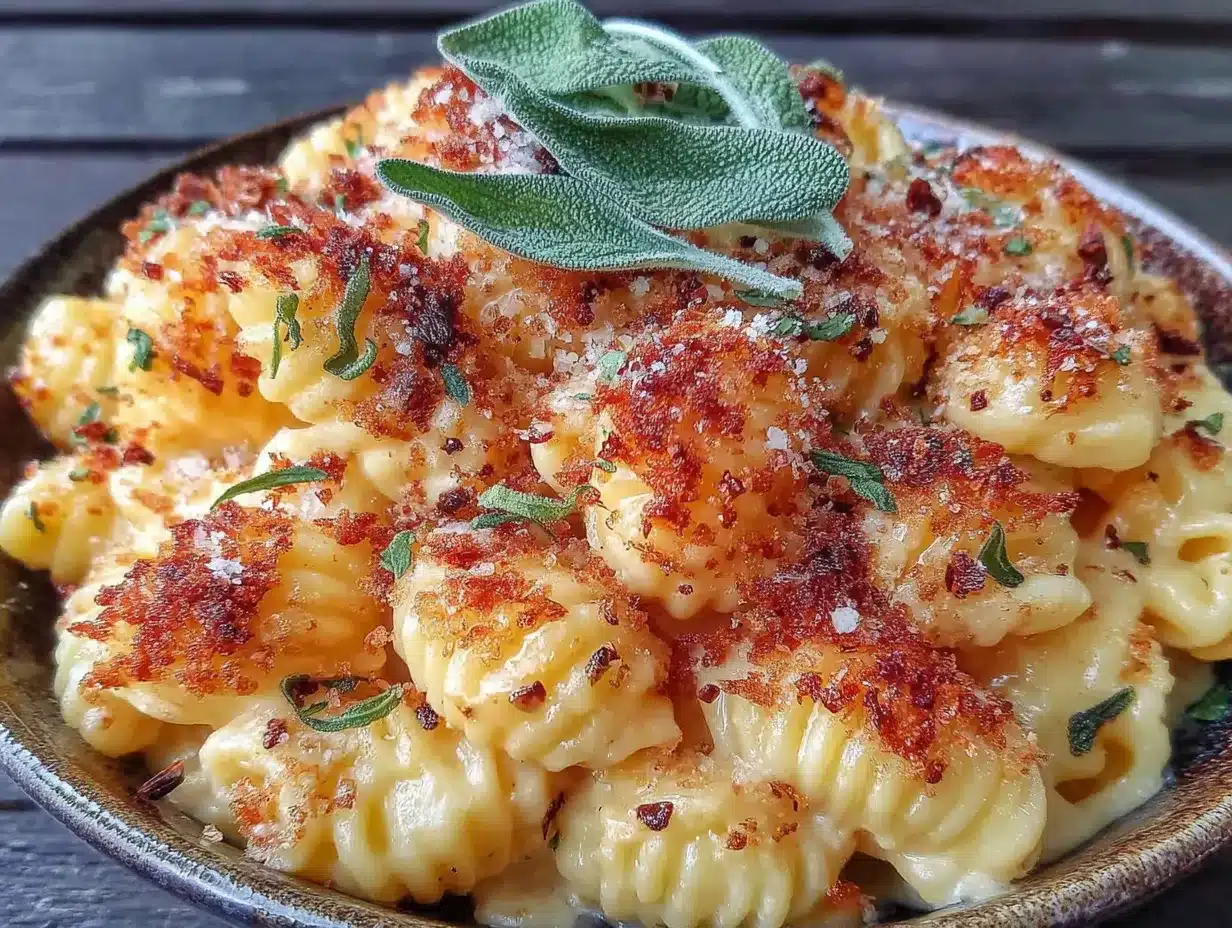
Step 1: Roast the squash. Preheat your oven to 400°F (200°C). Toss the cubed squash with 1 tablespoon of olive oil, ½ teaspoon of salt, and ¼ teaspoon of black pepper. Spread it in a single layer on the baking sheet. Roast for 25-30 minutes, flipping halfway through, until the edges are caramelized and a fork slides in easily. The squash should be golden, not mushy. Let it cool slightly.
Step 2: Cook the pasta. While the squash roasts, bring a large pot of salted water to a boil. Cook the macaroni according to package directions until al dente — about 8 minutes. Reserve 1 cup (240ml) of pasta water before draining. Drain the pasta and set it aside. Don’t rinse it; the starch helps the sauce cling.
Step 3: Fry the sage. In a small skillet, melt 2 tablespoons of butter over medium heat. Add the sage leaves in a single layer. Cook for about 30-45 seconds per side, until they turn darker green and the edges get crispy. Transfer them to a paper towel-lined plate. They’ll crisp up more as they cool. Don’t crowd the pan; work in batches if needed.
Step 4: Make the squash puree. Transfer the roasted squash to a blender or food processor. Add ½ cup of the reserved pasta water. Blend until completely smooth, scraping down the sides as needed. The mixture should be thick but pourable. Set aside.
Step 5: Build the cheese sauce. In a large skillet or Dutch oven, melt the remaining 2 tablespoons of butter over medium heat. Whisk in the flour and cook for 1 minute, stirring constantly — this gets rid of the raw flour taste. Slowly pour in the warm milk, whisking continuously to prevent lumps. Add the heavy cream and continue whisking until the mixture thickens, about 3-4 minutes. It should coat the back of a spoon.
Step 6: Add the squash and cheese. Reduce the heat to low. Stir in the squash puree, nutmeg, garlic powder, and remaining ½ teaspoon of salt and ¼ teaspoon of pepper. Add the cheddar and Parmesan a handful at a time, stirring until each addition is fully melted before adding the next. The sauce will turn a beautiful golden-orange color. Taste it — you should get a subtle sweetness from the squash balanced by the sharpness of the cheddar.
Step 7: Combine and finish. Add the cooked pasta to the sauce and stir until every piece is coated. If the sauce seems too thick, add a splash of the remaining pasta water to loosen it. If you’re baking it, transfer everything to a greased 9×13-inch dish, top with panko breadcrumbs, and bake at 375°F (190°C) for 15 minutes until bubbly. If you’re serving it straight from the stovetop, just top with the crispy sage leaves and serve immediately.
Troubleshooting tip: If your sauce looks grainy, you probably added the cheese too quickly or let it get too hot. Keep the heat low and stir patiently. If it’s too thin, let it simmer for another minute or two — it will thicken as it cools.
Cooking Tips & Techniques
I learned the hard way that not all squash is created equal. The first time I made this, I used a pre-cut bag of squash from the grocery store. It was dry, unevenly cooked, and the sauce came out watery. Roasting your own squash from whole is worth the extra ten minutes of prep. Look for a squash that feels heavy for its size and has a solid, beige-colored skin without soft spots.
Here’s something I wish I’d known earlier: grate your own cheese. I know, I know, it’s annoying. But pre-shredded cheese is coated with cellulose and starches that prevent clumping — and that same coating stops it from melting smoothly into your sauce. Spend two minutes with a box grater. Your sauce will thank you.
When you fry the sage, watch it like a hawk. Sage goes from perfectly crispy to burnt in about 15 seconds. I’ve ruined two batches by walking away to check my phone. The leaves should sizzle gently, not aggressively. If they’re smoking, the heat is too high.
For the smoothest sauce, warm your milk before adding it to the roux. Cold milk shocks the mixture and can create lumps. I microwave mine for about 45 seconds — just enough to take the chill off.
Timing tip: Roast the squash while you prep everything else. By the time it’s done, your pasta water should be boiling and your cheese should be grated. Multitasking makes this a 45-minute meal instead of an hour-long project.
Variations & Adaptations
This recipe is flexible, and I’ve tried a few versions that turned out surprisingly well.
- Make it vegetarian : It already is, but for a heartier version, add 1 cup of roasted mushrooms or caramelized onions before baking.
- Add protein : Stir in 2 cups of shredded rotisserie chicken or crispy bacon bits after combining the pasta and sauce. The smoky flavor plays beautifully with the sage.
- Go gluten-free : Use your favorite gluten-free pasta and swap the all-purpose flour for a 1:1 gluten-free blend. The sauce might be slightly thinner, so let it simmer an extra minute.
- Try different squash : Kabocha or red kuri squash work well, though they’re slightly sweeter. Acorn squash is a bit more fibrous, so blend it thoroughly.
- Spice it up : Add a pinch of red pepper flakes or a dash of smoked paprika to the sauce for a subtle kick.
- Make it vegan : Use plant-based butter, oat milk, and a vegan cheddar shred that melts well. Nutritional yeast (about 2 tablespoons) adds a cheesy flavor without dairy.
I once made a version with leftover Thanksgiving turkey mixed in, topped with crushed Ritz crackers instead of panko. It was ridiculous and amazing. Don’t be afraid to experiment.
Serving & Storage Suggestions
Serve this mac and cheese straight from the stovetop or oven while it’s still bubbling. The crispy sage should go on right before serving — it loses its crunch within an hour. I like to garnish with a few extra sage leaves and a light dusting of Parmesan on top.
For sides, a simple green salad with lemon vinaigrette cuts through the richness perfectly. Roasted broccoli or Brussels sprouts also work well, especially if you’re already using the oven. A glass of crisp white wine like Sauvignon Blanc or a dry cider balances the creamy sauce.
Storage: Leftovers keep in an airtight container in the refrigerator for up to 4 days. The pasta will absorb some of the sauce, so it won’t be as creamy the next day — but it’s still delicious.
Reheating: The best method is on the stovetop over low heat with a splash of milk or cream, stirring gently until warmed through. The microwave works in a pinch, but it can make the pasta mushy. If you baked it, reheat individual portions in a 350°F (175°C) oven for about 10 minutes.
Freezing: Assemble the mac and cheese (without the panko topping or crispy sage) in a freezer-safe dish. Freeze for up to 3 months. Thaw overnight in the refrigerator, then bake at 375°F (190°C) for 20-25 minutes, adding the panko during the last 5 minutes. I’ve done this for make-ahead holiday meals, and it works beautifully.
The flavors actually deepen after a day in the fridge — the squash and sage meld together in a way that tastes even more comforting. Just don’t expect leftovers to last long.
Nutritional Information & Benefits
Per serving (based on 6 servings): approximately 480 calories, 22g fat, 12g saturated fat, 55g carbohydrates, 6g fiber, 18g protein, 680mg sodium.
This isn’t a light dish, but it’s more nutritious than traditional mac and cheese. Butternut squash is packed with vitamin A (over 400% of your daily needs per cup), vitamin C, and potassium. The sage adds antioxidants and has anti-inflammatory properties. Using whole milk and real cheese means you’re getting calcium and protein, not processed additives.
For a lower-calorie version, swap the heavy cream for an extra ½ cup of milk and reduce the cheddar to 6 ounces. The sauce will be slightly thinner but still satisfying. If you’re watching sodium, use low-sodium chicken or vegetable broth instead of salted pasta water, and reduce the added salt.
This recipe is vegetarian-friendly and can be made gluten-free or dairy-free with the substitutions mentioned above. It contains dairy and gluten in its standard form.
Conclusion
This butternut squash mac and cheese with crispy sage is one of those recipes that feels like a secret weapon. It’s fancy enough for company, simple enough for a weeknight, and forgiving enough for a beginner. The roasted squash gives you a creamy sauce without a ton of cream, and the sage adds that little something that makes people ask, “What’s in this?”
I love this recipe because it proves that comfort food doesn’t have to be boring or heavy. It can be seasonal, a little unexpected, and still make you feel like you’re wrapped in a warm blanket. Whether you serve it for a cozy dinner, a holiday side dish, or just because it’s Tuesday and you need something good, it delivers every time.
I’d love to hear how it turns out for you. Did you add bacon? Swap the cheese? Forget the sage and use rosemary instead? Drop a comment below and let me know what you did — I’m always looking for new ideas. And if you share it on social media, tag me so I can see your beautiful, golden, sage-topped creation.
Go make some. Your kitchen is about to smell amazing.
Frequently Asked Questions
Can I use frozen butternut squash instead of fresh?
Yes, but thaw and drain it well first, then pat it dry with paper towels. Frozen squash has more moisture, which can make the sauce watery. Roast it a little longer — about 35 minutes — to help evaporate the excess liquid.
Why did my sauce turn out grainy?
Grainy sauce usually means the cheese got too hot or was added too quickly. Always grate your own cheese (pre-shredded doesn’t melt well) and add it off the heat or on low heat, stirring constantly. If it’s already grainy, try blending it with an immersion blender to smooth it out.
Can I make this ahead of time?
Absolutely. Assemble the mac and cheese without the panko topping or crispy sage, cover it, and refrigerate for up to 24 hours. When you’re ready to bake, add the panko and bake at 375°F (190°C) for 20-25 minutes. Add the crispy sage right before serving.
What can I use instead of sage?
Thyme or rosemary work well, though they have a stronger flavor. Fry them the same way you would sage — just be aware that rosemary needles can be a bit prickly. For a milder option, try chopped fresh parsley or chives sprinkled on top after baking.
How do I make this dairy-free?
Use plant-based butter, oat milk or unsweetened almond milk, and a vegan cheddar that melts well (I like Violife or Follow Your Heart). Nutritional yeast (about 2 tablespoons) adds a cheesy flavor. The sauce will be slightly thinner, so let it simmer an extra minute to thicken.
Pin This Recipe!
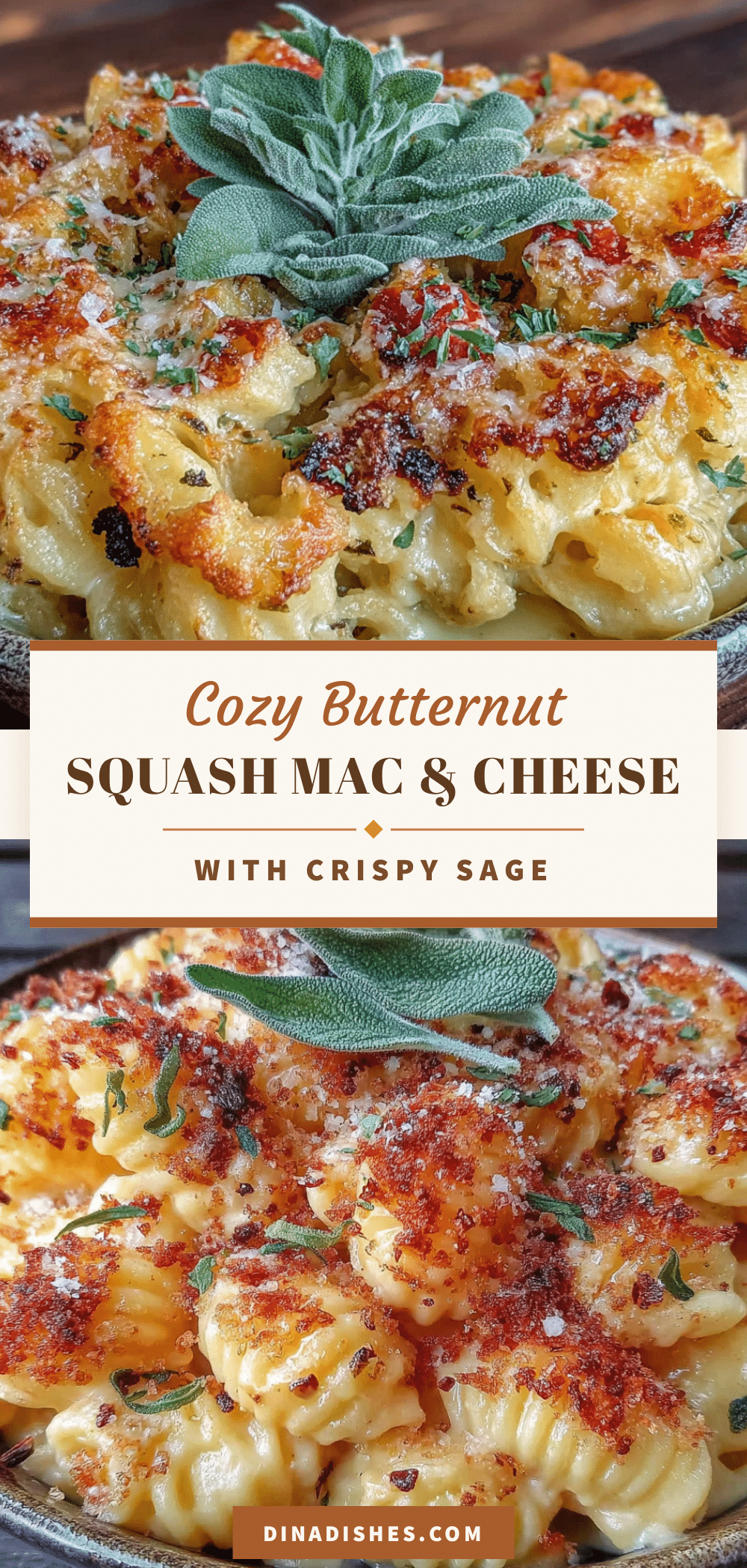
Cozy Butternut Squash Mac and Cheese with Crispy Sage

This butternut squash mac and cheese is the ultimate comfort food for fall. Roasted squash creates a silky, creamy sauce without heavy cream, topped with crispy fried sage for a nutty, savory finish. Ready in about 45 minutes, it’s a crowd-pleaser that even squash skeptics will love.
- Prep Time: 15 minutes
- Cook Time: 30 minutes
- Total Time: 45 minutes
- Yield: 6 servings 1x
- Category: Main Course
- Cuisine: American
Ingredients
- 1 medium butternut squash (about 2 pounds or 900g), peeled, seeded, and cubed into 1-inch pieces
- 2 tablespoons (30ml) olive oil
- 1 teaspoon (5g) salt, divided
- ½ teaspoon (2g) freshly ground black pepper
- 12 ounces (340g) elbow macaroni (preferably De Cecco or Barilla)
- 4 tablespoons (56g) unsalted butter, divided
- 20 fresh sage leaves
- 3 tablespoons (24g) all-purpose flour
- 2 cups (480ml) whole milk, warmed
- ½ cup (120ml) heavy cream
- 8 ounces (225g) sharp cheddar cheese, freshly grated
- 2 ounces (56g) Parmesan cheese, finely grated
- ¼ teaspoon (0.5g) freshly grated nutmeg
- ½ teaspoon (1.5g) garlic powder
- ½ cup (45g) panko breadcrumbs (optional, for crunchy topping)
Instructions
- Preheat oven to 400°F (200°C). Toss cubed squash with 1 tablespoon olive oil, ½ teaspoon salt, and ¼ teaspoon black pepper. Spread in a single layer on a rimmed baking sheet. Roast for 25-30 minutes, flipping halfway, until caramelized and fork-tender. Let cool slightly.
- While squash roasts, bring a large pot of salted water to a boil. Cook macaroni according to package directions until al dente (about 8 minutes). Reserve 1 cup (240ml) pasta water before draining. Drain pasta and set aside (do not rinse).
- In a small skillet, melt 2 tablespoons butter over medium heat. Add sage leaves in a single layer. Cook 30-45 seconds per side until darker green and crispy. Transfer to a paper towel-lined plate.
- Transfer roasted squash to a blender or food processor. Add ½ cup reserved pasta water. Blend until completely smooth, scraping down sides as needed. Set aside.
- In a large skillet or Dutch oven, melt remaining 2 tablespoons butter over medium heat. Whisk in flour and cook for 1 minute, stirring constantly. Slowly pour in warm milk, whisking continuously. Add heavy cream and whisk until thickened, about 3-4 minutes (mixture should coat the back of a spoon).
- Reduce heat to low. Stir in squash puree, nutmeg, garlic powder, remaining ½ teaspoon salt, and ¼ teaspoon pepper. Add cheddar and Parmesan a handful at a time, stirring until each addition is fully melted before adding the next.
- Add cooked pasta to sauce and stir until every piece is coated. If sauce seems too thick, add a splash of remaining pasta water. For baked version: transfer to a greased 9×13-inch dish, top with panko breadcrumbs, and bake at 375°F (190°C) for 15 minutes until bubbly. For stovetop version: top with crispy sage leaves and serve immediately.
Notes
For smoothest sauce, warm milk before adding to roux. Grate your own cheese for best melting. Watch sage carefully when frying as it burns quickly. Sauce can be made ahead and refrigerated for up to 24 hours before baking. Leftovers keep in refrigerator for up to 4 days. Reheat on stovetop with a splash of milk for best results. Can be frozen for up to 3 months (without panko topping or crispy sage).
Nutrition
- Serving Size: 1 serving (about 1.5
- Calories: 480
- Sugar: 8
- Sodium: 680
- Fat: 22
- Saturated Fat: 12
- Carbohydrates: 55
- Fiber: 6
- Protein: 18
Keywords: butternut squash mac and cheese, fall pasta, creamy mac and cheese, crispy sage, comfort food, vegetarian pasta, roasted squash