Marta, who runs the corner bodega on my street, watched me staring at her display of butternut squash one chilly October morning. She didn’t say anything at first. Then she reached under her counter, pulled out a wrinkled index card, and slid it across the counter toward me. “You look like someone who needs this,” she said with a shrug. The card was splattered with what I hoped was olive oil, and the handwriting was in a mix of Spanish and English. I couldn’t read half of it, honestly. But I thanked her, bought two squashes, and went home to figure it out.
That card turned into this lasagna. It took me three tries to get it right—the first batch was watery, the second was burnt on the edges and raw in the middle. I mean, let me tell you, there were moments I wanted to call Marta and ask for a refund on that recipe. But the third time? That was the one. The squash got sweet and caramelized, the brown butter turned nutty and rich, and the whole thing came together like a warm hug on a plate. Maybe you’ve been there, where a recipe feels like it’s testing your patience before it rewards you.
This Cozy Butternut Squash Lasagna with Sage Brown Butter is now my go-to for fall dinners when I want something that feels special but doesn’t require a culinary degree. It’s the kind of dish that makes your kitchen smell like Thanksgiving, even on a random Tuesday. Marta’s card is still taped inside my cabinet, and every time I make this lasagna, I think about that morning and how a stranger’s kindness turned into a family tradition. That’s why this recipe stayed with me—it’s not just good food, it’s a reminder that the best things come from unexpected places.
Why You’ll Love This Recipe
Let’s be real for a second—lasagna can be a project. But this version is worth every minute you spend in the kitchen. I’ve tested it on picky kids, skeptical in-laws, and friends who claim they don’t like squash, and it wins every single time. Here’s why you’ll fall for it too:
- Budget-Friendly Ingredients: Butternut squash is usually cheap in the fall, and everything else is pantry staples. No expensive cheeses or hard-to-find spices here.
- Family-Approved: My kids don’t even notice they’re eating vegetables. The creamy squash blends right into the sauce, and the browned butter adds a richness that makes everyone ask for seconds.
- Make-Ahead Magic: You can assemble this lasagna the night before and bake it when you’re ready. Perfect for busy weeknights or Sunday dinners when you want to actually enjoy your company.
- Leftovers That Reheat Beautifully: This is not one of those dishes that gets sad in the fridge. The flavors actually get better overnight, and it reheats like a dream in the oven or microwave.
- Comfort Food That Feels Special: There’s something about browned butter and sage that screams “I made an effort,” even though this recipe is surprisingly simple. You’ll impress everyone without breaking a sweat.
What makes this lasagna different from the rest? It’s the brown butter, honestly. Most squash lasagnas rely on cream or béchamel, which can be heavy and bland. The browned butter adds a nutty, toasty depth that pairs perfectly with the sweet squash. Plus, I skip the ricotta and use a mix of cottage cheese and mozzarella—it’s creamier, cheaper, and holds together better when you slice it. Trust me on this one.
What Ingredients You Will Need
This recipe uses simple, wholesome ingredients to deliver bold flavor and satisfying texture without the fuss. Most of these are pantry staples or easy to find at any grocery store. Here’s what you’ll need:
For the Squash Filling
- 1 medium butternut squash (about 3 pounds), peeled, seeded, and cubed into 1-inch pieces
- 2 tablespoons olive oil
- 1 teaspoon salt
- ½ teaspoon black pepper
- ½ teaspoon garlic powder
For the Sage Brown Butter Sauce

- ½ cup unsalted butter (1 stick)
- 12-15 fresh sage leaves (plus extra for garnish if you’re feeling fancy)
- 2 cloves garlic, minced
- ¼ cup all-purpose flour
- 3 cups whole milk (2% works too, but whole milk makes it richer)
- ½ teaspoon salt
- ¼ teaspoon nutmeg (freshly grated if you have it—it makes a difference)
For Assembly
- 12-15 lasagna noodles (no-boil noodles save time, but regular ones work too)
- 2 cups shredded mozzarella cheese
- 1 cup cottage cheese (full-fat or low-fat, your call)
- ½ cup grated Parmesan cheese
- Additional sage leaves for garnish (optional, but pretty)
Ingredient tips from my kitchen: I prefer using Barilla no-boil lasagna noodles because they save time and come out perfectly al dente every time. If you use regular noodles, cook them about 2 minutes less than the package directions—they’ll finish cooking in the oven. For the squash, look for one that feels heavy for its size and has a solid, unblemished skin. And please, please use fresh sage—dried sage has a different flavor and won’t give you that same aromatic punch when you brown the butter.
Substitution note: If you’re dairy-sensitive, you can use a dairy-free butter alternative and unsweetened oat milk for the sauce. The texture will be slightly different, but still delicious. For a gluten-free version, use gluten-free lasagna noodles and a 1:1 gluten-free flour blend for the sauce.
Equipment Needed
You don’t need a fancy kitchen to make this lasagna. Here’s what I use:
- 9×13-inch baking dish—glass or ceramic works best for even heating
- Large skillet or sauté pan—for browning the butter and making the sauce
- Baking sheet—for roasting the squash (lined with parchment paper for easy cleanup)
- Medium saucepan—if you’re cooking regular lasagna noodles
- Chef’s knife and cutting board—for prepping the squash
- Whisk—for making the brown butter sauce smooth
- Measuring cups and spoons
- Aluminum foil—for covering the lasagna while it bakes
If you don’t have a 9×13 dish, you can use two 8×8 dishes and freeze one for later. I’ve also made this in a disposable aluminum pan when I was bringing it to a friend’s house—worked perfectly. And if you’re short on time, skip roasting the squash and use 3 cups of pre-cubed butternut squash from the produce section. No judgment here.
Preparation Method
Let’s get cooking. This recipe takes about 1 hour of active time and 45 minutes of baking, but trust me, it’s worth every step.
- Preheat your oven to 400°F (200°C). Line a baking sheet with parchment paper or foil for easy cleanup.
- Prep the squash. Peel the butternut squash with a vegetable peeler or sharp knife, then cut it in half lengthwise. Scoop out the seeds and stringy bits with a spoon. Cut the flesh into 1-inch cubes. Toss the cubes with olive oil, salt, pepper, and garlic powder on the prepared baking sheet. Spread them in a single layer—crowding them will make them steam instead of roast.
- Roast the squash. Pop the baking sheet in the oven and roast for 25-30 minutes, flipping halfway through. The squash should be fork-tender and starting to caramelize on the edges. Remove from the oven and let it cool slightly. Reduce the oven temperature to 375°F (190°C).
- Make the sage brown butter sauce. While the squash roasts, melt the butter in a large skillet over medium heat. Add the fresh sage leaves and cook, stirring occasionally, until the butter turns golden brown and smells nutty—about 5-7 minutes. Watch it carefully; brown butter can go from perfect to burnt in seconds. Remove the sage leaves with a slotted spoon and set them aside on a paper towel (they’ll crisp up as they cool).
- Finish the sauce. Add the minced garlic to the browned butter and cook for 30 seconds until fragrant. Sprinkle in the flour and whisk continuously for 1 minute to cook out the raw flour taste. Slowly pour in the milk while whisking constantly to prevent lumps. Add the salt and nutmeg. Continue cooking, whisking often, until the sauce thickens enough to coat the back of a spoon—about 5-7 minutes. Remove from heat.
- Mash the squash. Transfer the roasted squash to a bowl and mash it with a fork or potato masher. You want it mostly smooth with a few small chunks for texture. Stir in about ½ cup of the brown butter sauce to loosen it up.
- Cook the noodles (if using regular ones). Bring a large pot of salted water to a boil. Cook the lasagna noodles according to package directions, but subtract 2 minutes from the recommended time. Drain and lay them flat on a sheet of parchment paper to prevent sticking. If you’re using no-boil noodles, skip this step.
- Assemble the lasagna. Spread a thin layer of the brown butter sauce on the bottom of your 9×13 baking dish. Layer 3-4 noodles on top, overlapping slightly. Spread half of the mashed squash over the noodles, then dollop half of the cottage cheese on top. Sprinkle with ⅓ of the mozzarella and ⅓ of the Parmesan. Repeat the layers: noodles, remaining squash, remaining cottage cheese, another ⅓ of the mozzarella and Parmesan. Top with a final layer of noodles, pour the remaining brown butter sauce over the top, and sprinkle with the remaining mozzarella and Parmesan. Crumble the crispy sage leaves over the top.
- Bake the lasagna. Cover the dish with aluminum foil (spray the underside with cooking spray to prevent sticking) and bake at 375°F for 30 minutes. Remove the foil and bake for another 15-20 minutes until the top is golden and bubbly. Let it rest for 10-15 minutes before slicing—this is crucial for clean slices. I know it’s hard to wait, but trust me.
A note from my kitchen: The first time I made this, I skipped the resting step and ended up with a soupy mess on everyone’s plates. Learn from my mistake. That resting time lets the sauce set and the layers hold together. Use it to set the table, pour some wine, and admire your handiwork.
Cooking Tips & Techniques
I’ve made this lasagna more times than I can count, and I’ve learned a few things along the way. Here are my best tips:
Don’t rush the brown butter. This is the most important step. The butter will foam up, then settle down, then start turning golden. Swirl the pan occasionally and watch for the color change. When it smells like toasted nuts and the milk solids at the bottom turn amber, you’re there. Remove it from the heat immediately—the residual heat will continue cooking it.
Season the squash well. Butternut squash is naturally sweet, but it needs salt to balance that sweetness. Don’t be shy with the salt and pepper when you roast it. I’ve made the mistake of undersalting the squash before, and the whole lasagna tasted flat.
Use room temperature milk. Cold milk can cause the sauce to seize up and get lumpy. If you forgot to take it out of the fridge, microwave it for 30 seconds before adding it to the pan. This small step makes a big difference in the sauce texture.
Layer strategically. Don’t overload any single layer with too much filling, or the lasagna will slide apart when you cut it. Think of each layer as a thin, even spread. And always start and end with sauce—it helps the noodles cook evenly and prevents the top from drying out.
Let it rest. I already mentioned this, but it’s worth repeating. A 15-minute rest is non-negotiable for clean slices. If you’re serving guests, use that time to make a salad or just enjoy the smell of your kitchen.
One of my biggest failures: I once forgot to add the cottage cheese entirely. I was halfway through baking when I saw the container sitting on the counter. The lasagna was still good, but it wasn’t as creamy and satisfying. Now I always do a quick mental checklist before the lasagna goes in the oven.
Variations & Adaptations
This recipe is flexible, and I love tweaking it depending on what I have in the fridge or who I’m feeding. Here are some variations I’ve tried:
Vegetarian Version: This recipe is already vegetarian, but you can add more veggies if you want. Sautéed mushrooms, spinach, or roasted red peppers between the layers add extra flavor and nutrition. I sometimes add a layer of sautéed kale for a pop of green.
Add Protein: If you want to make it heartier, add a layer of cooked Italian sausage or shredded rotisserie chicken. Brown the sausage in the same skillet you used for the brown butter, then crumble it over the squash layer. My husband loves this version.
Dairy-Free Adaptation: Use a dairy-free butter alternative and unsweetened oat or almond milk for the sauce. Nutritional yeast can replace the Parmesan, and there are good dairy-free mozzarella shreds available now. The texture will be slightly different, but still creamy and satisfying.
Gluten-Free Option: Use gluten-free lasagna noodles and a 1:1 gluten-free flour blend for the sauce. I’ve tried this with several brands, and Barilla’s gluten-free noodles work best—they hold up well and don’t get mushy.
Seasonal Twist: In the summer, swap the butternut squash for roasted zucchini and yellow squash. In the winter, try using roasted sweet potatoes or pumpkin. The brown butter sage sauce works with any winter squash.
My personal favorite variation: I add a layer of caramelized onions between the squash and cottage cheese. It adds a sweetness that pairs beautifully with the sage. Just slice two onions thinly, cook them in butter over low heat for about 30 minutes until golden and jammy, then spread them on the second layer. It takes the lasagna from great to unforgettable.
Serving & Storage Suggestions
This lasagna is best served warm, straight from the oven, after that crucial 15-minute rest. The top should be golden and bubbly, and the edges should be crispy and caramelized. I like to garnish with a few extra fresh sage leaves and a sprinkle of flaky sea salt for a finishing touch.
What to serve with it: A simple green salad with a lemon vinaigrette cuts through the richness of the lasagna perfectly. Roasted broccoli or green beans also work well. If you’re feeling indulgent, serve it with crusty bread to soak up any extra sauce on the plate. For drinks, a crisp white wine like Sauvignon Blanc or a light red like Pinot Noir pairs beautifully.
Storage instructions: Leftover lasagna keeps in the refrigerator for up to 5 days. Cover the dish tightly with foil or transfer individual portions to airtight containers. The flavors actually get better as they meld together overnight.
Freezer instructions: This lasagna freezes beautifully. Assemble the lasagna completely but don’t bake it. Cover it tightly with a layer of plastic wrap, then a layer of aluminum foil, and freeze for up to 3 months. When you’re ready to bake, thaw it in the refrigerator overnight, then bake as directed (you may need to add 10-15 minutes to the baking time since it’s starting from cold).
Reheating tips: For best results, reheat individual portions in a 350°F oven for about 15 minutes, or in the microwave for 2-3 minutes. If the lasagna seems dry, add a splash of milk or cream before reheating. The sauce will loosen up and become creamy again.
Nutritional Information & Benefits
Here’s an approximate nutritional breakdown per serving (based on 8 servings):
| Nutrient | Amount per Serving |
|---|---|
| Calories | 420 |
| Protein | 18g |
| Carbohydrates | 45g |
| Fiber | 5g |
| Fat | 20g |
| Saturated Fat | 12g |
| Sodium | 680mg |
Butternut squash is packed with vitamin A, vitamin C, and fiber—great for your immune system and digestion. The sage in the brown butter adds antioxidants and anti-inflammatory properties. And while this isn’t a low-calorie dish, it’s a satisfying, nutrient-dense meal that will keep you full and happy.
Dietary considerations: This recipe contains dairy and gluten, but can be adapted as noted above. It’s naturally vegetarian and can be made vegan with substitutions. The cottage cheese adds protein and calcium without the heaviness of ricotta.
From a wellness perspective, I love that this lasagna feels indulgent but is made from whole foods. It’s comfort food that actually nourishes you—the kind of meal you can feel good about serving your family on a chilly autumn evening.
Conclusion
This Cozy Butternut Squash Lasagna with Sage Brown Butter is more than just a recipe—it’s a hug on a plate, a celebration of fall flavors, and a reminder that the best dishes come from sharing and adapting. Whether you make it for a Sunday dinner, a holiday gathering, or just because you need something warm and comforting, I promise it’ll become a favorite in your kitchen too.
I love this recipe because it’s forgiving. You can tweak it, adapt it, and make it your own. Maybe you’ll add more sage, or swap the cottage cheese for ricotta, or throw in some spinach because that’s what’s in your fridge. That’s the beauty of cooking—you take something someone shared with you and make it yours.
If you try this recipe, I’d love to hear how it turns out. Leave a comment below, tag me in your photos, or share your own twist on it. And if you’re looking for more cozy fall recipes, check out my Creamy Pumpkin Soup with Crispy Sage or my Easy Homemade Apple Crisp for a sweet finish. Happy cooking, friends!
Frequently Asked Questions
Can I use pre-cut butternut squash to save time?
Absolutely! Most grocery stores sell pre-cubed butternut squash in the produce section. Use about 3 cups for this recipe. Just keep in mind that pre-cut squash can dry out faster, so check it a few minutes early when roasting.
Can I make this lasagna ahead of time?
Yes, and I actually recommend it. Assemble the lasagna completely, cover it tightly, and refrigerate for up to 24 hours before baking. You may need to add 10-15 minutes to the baking time since it’s starting from cold. The flavors meld together beautifully overnight.
Can I use dried sage instead of fresh?
Fresh sage is strongly recommended for this recipe. Dried sage has a different, more medicinal flavor and won’t crisp up the same way when you brown the butter. If you only have dried, use about 1 tablespoon and add it with the garlic instead of browning it in the butter.
How do I prevent the lasagna from being watery?
This is a common issue with vegetable lasagnas. The key is roasting the squash until it’s caramelized and most of the moisture has evaporated. Also, let the brown butter sauce thicken properly before assembling—it should coat the back of a spoon. And don’t skip the resting time after baking; that’s when the sauce sets.
Can I freeze individual portions for lunches?
Definitely! Bake the lasagna, let it cool completely, then cut it into individual portions. Wrap each piece tightly in plastic wrap and then aluminum foil, or store them in freezer-safe containers. They’ll keep for up to 3 months. Reheat in the microwave for 2-3 minutes or in a 350°F oven for 15 minutes.
Pin This Recipe!
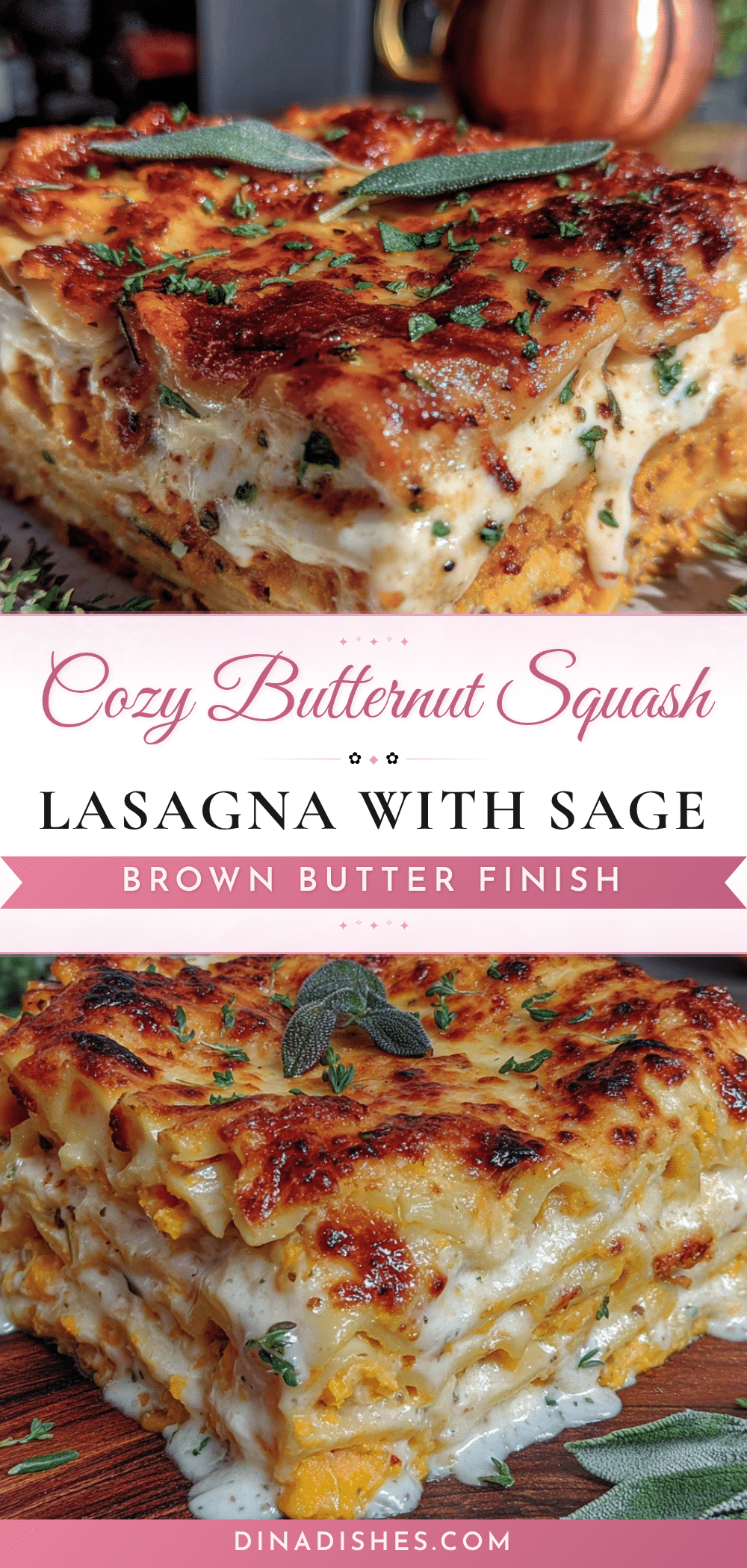
Cozy Butternut Squash Lasagna with Sage Brown Butter

A warm, comforting lasagna featuring roasted butternut squash, nutty sage brown butter sauce, and creamy cottage cheese. Perfect for fall dinners, this dish is budget-friendly, family-approved, and can be made ahead for busy weeknights.
- Prep Time: 1 hour
- Cook Time: 45 minutes
- Total Time: 1 hour 45 minutes
- Yield: 8 servings 1x
- Category: Main Course
- Cuisine: American
Ingredients
- 1 medium butternut squash (about 3 pounds), peeled, seeded, and cubed into 1-inch pieces
- 2 tablespoons olive oil
- 1 teaspoon salt
- ½ teaspoon black pepper
- ½ teaspoon garlic powder
- ½ cup unsalted butter (1 stick)
- 12–15 fresh sage leaves (plus extra for garnish)
- 2 cloves garlic, minced
- ¼ cup all-purpose flour
- 3 cups whole milk (2% works too)
- ½ teaspoon salt
- ¼ teaspoon nutmeg (freshly grated if possible)
- 12–15 lasagna noodles (no-boil or regular)
- 2 cups shredded mozzarella cheese
- 1 cup cottage cheese (full-fat or low-fat)
- ½ cup grated Parmesan cheese
- Additional sage leaves for garnish (optional)
Instructions
- Preheat your oven to 400°F (200°C). Line a baking sheet with parchment paper or foil.
- Prep the squash: Peel the butternut squash, cut in half lengthwise, scoop out seeds, and cut into 1-inch cubes. Toss with olive oil, salt, pepper, and garlic powder on the prepared baking sheet. Spread in a single layer.
- Roast the squash for 25-30 minutes, flipping halfway, until fork-tender and caramelized. Remove from oven and let cool slightly. Reduce oven temperature to 375°F (190°C).
- Make the sage brown butter sauce: Melt butter in a large skillet over medium heat. Add fresh sage leaves and cook, stirring occasionally, until butter turns golden brown and smells nutty (5-7 minutes). Remove sage leaves with a slotted spoon and set aside on a paper towel.
- Finish the sauce: Add minced garlic to the browned butter and cook for 30 seconds. Sprinkle in flour and whisk continuously for 1 minute. Slowly pour in milk while whisking constantly. Add salt and nutmeg. Cook, whisking often, until sauce thickens (5-7 minutes). Remove from heat.
- Mash the roasted squash with a fork or potato masher until mostly smooth with a few chunks. Stir in about ½ cup of the brown butter sauce.
- If using regular lasagna noodles, cook them in salted boiling water according to package directions minus 2 minutes. Drain and lay flat on parchment paper. If using no-boil noodles, skip this step.
- Assemble the lasagna: Spread a thin layer of brown butter sauce on the bottom of a 9×13-inch baking dish. Layer 3-4 noodles. Spread half of the mashed squash, then dollop half of the cottage cheese. Sprinkle with ⅓ of the mozzarella and ⅓ of the Parmesan. Repeat layers: noodles, remaining squash, remaining cottage cheese, another ⅓ of mozzarella and Parmesan. Top with final layer of noodles, pour remaining brown butter sauce over top, and sprinkle with remaining mozzarella and Parmesan. Crumble …
- Cover with aluminum foil (spray underside with cooking spray) and bake at 375°F for 30 minutes. Remove foil and bake for another 15-20 minutes until golden and bubbly. Let rest for 10-15 minutes before slicing.
Notes
Let the lasagna rest for 10-15 minutes after baking for clean slices. Don’t rush the brown butter—watch for the color change and nutty aroma. Use room temperature milk to prevent lumps in the sauce. Season the squash well to balance its sweetness. For best results, assemble the night before and refrigerate.
Nutrition
- Serving Size: 1 slice (1/8 of lasa
- Calories: 420
- Sugar: 8
- Sodium: 680
- Fat: 20
- Saturated Fat: 12
- Carbohydrates: 45
- Fiber: 5
- Protein: 18
Keywords: butternut squash lasagna, sage brown butter, fall lasagna, vegetarian lasagna, comfort food, make-ahead lasagna