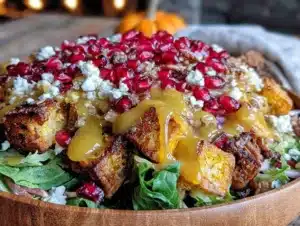
My neighbor Sarah wasn’t trying to impress anyone. I’d stopped by to borrow a measuring cup—mine had mysteriously vanished into the back of a cabinet—and the smell hit me before I even got through her screen door. It was warm and tangy, with this sweetness that made me think of hayrides and crisp October afternoons. She was standing at her kitchen counter, tossing something in a big wooden bowl, looking like she’d just rolled out of bed. “Oh, this?” she said when I asked. “It’s just a salad.” Just a salad. She said it like it was nothing, like she hadn’t just created something that made me forget why I was even there.
I stood there watching her for a minute, honestly a little annoyed at how effortless she made it look. She was using leftover roasted squash from last night’s dinner, some apples she’d grabbed at the farmers’ market, and this dressing she whisked together in about thirty seconds. No fancy ingredients, no complicated steps. She handed me a forkful over the counter, and I swear I closed my eyes. The crunch of the pecans, the soft sweetness of the squash, that tangy cider dressing pulling everything together—it was fall in a bowl, and she made it like it was no big deal.
I asked for the recipe, obviously. She kind of shrugged and scribbled it on the back of an old envelope. “It’s nothing special,” she said. But here’s the thing—it is. It’s the kind of salad that makes you actually want to eat salad. The kind that comes together in under twenty minutes but tastes like you spent all afternoon in the kitchen. And now, every time I make it, I think about that moment standing in her doorway, wondering how someone could be so casual about something so good. Maybe you’ve been there too—finding a recipe that feels like a secret, one you can’t stop telling people about. This is that recipe for me.
Why You’ll Love This Quick Fall Harvest Salad
Let me be real with you—I’ve tested a lot of fall salads over the years. Some are too complicated, others are boring, and most just don’t deliver on the flavor front. This one is different. It’s been through my kitchen more times than I can count, and I’ve tweaked it until every single element works together perfectly. Here’s why it’s earned a permanent spot in my weeknight rotation:
- Ready in 20 minutes flat. No joke. While the pecans toast (which takes about 5 minutes), you can chop the apples and whisk the dressing. Dinner doesn’t get much faster than this.
- Pantry-friendly ingredients. Besides maybe the squash and apples, you probably have most of this stuff already. No hunting down obscure items at three different stores.
- Perfect for busy weeknights. When you’re tired and hungry and the last thing you want to do is cook, this salad saves the day. It’s satisfying without being heavy.
- Always gets compliments. I’ve brought this to potlucks and family dinners, and people always ask for the recipe. Kids actually eat it too, which is a miracle in my house.
- That dressing though. The apple cider vinaigrette is the real star here. It’s tangy, slightly sweet, and ties everything together in a way that bottled dressing just can’t match.
What makes this version different from every other fall salad out there? It’s the balance. Roasted squash brings warmth and creaminess, crisp apples add freshness, toasted pecans give crunch, and the dressing cuts through it all with just the right amount of acidity. I’ve tested it with different squashes, different apples, different nuts—and this combination is the one that works every single time. It’s comfort food that’s actually good for you, and honestly, that’s hard to find.
What Ingredients You Will Need
This recipe uses simple, wholesome ingredients that come together to create something genuinely special. Most of these are fall staples, so you might already have them on hand. Here’s what you’ll need and why each one matters:
For the Salad
- Butternut squash (about 2 cups, cubed) – I prefer buying pre-cut cubes from the store to save time. Look for firm, orange pieces without any mushy spots. You can also use delicata or acorn squash if that’s what you have.
- Mixed salad greens (5-6 ounces) – A blend of baby spinach, arugula, and mild greens works beautifully. The peppery arugula adds a nice kick against the sweet dressing.
- Honeycrisp apple (1 large, thinly sliced) – These hold their shape well and don’t brown too quickly. Fuji or Gala also work great. Avoid super tart varieties like Granny Smith for this one—you want some sweetness.
- Dried cranberries (⅓ cup) – They add chewy texture and tartness. Look for unsweetened if you want to control the sugar, but regular works fine too.
- Pecan halves (½ cup) – Toast them first for maximum flavor. I’ve tried walnuts and almonds too, but pecans really nail that fall feeling.
- Crumbled feta cheese (¼ cup, optional) – Adds salty creaminess. Skip it for a dairy-free version, or try goat cheese for a tangier twist.
- Pomegranate arils (¼ cup, optional) – These little jewels add pops of sweetness and color. Totally optional, but worth it when they’re in season.
For the Apple Cider Vinaigrette
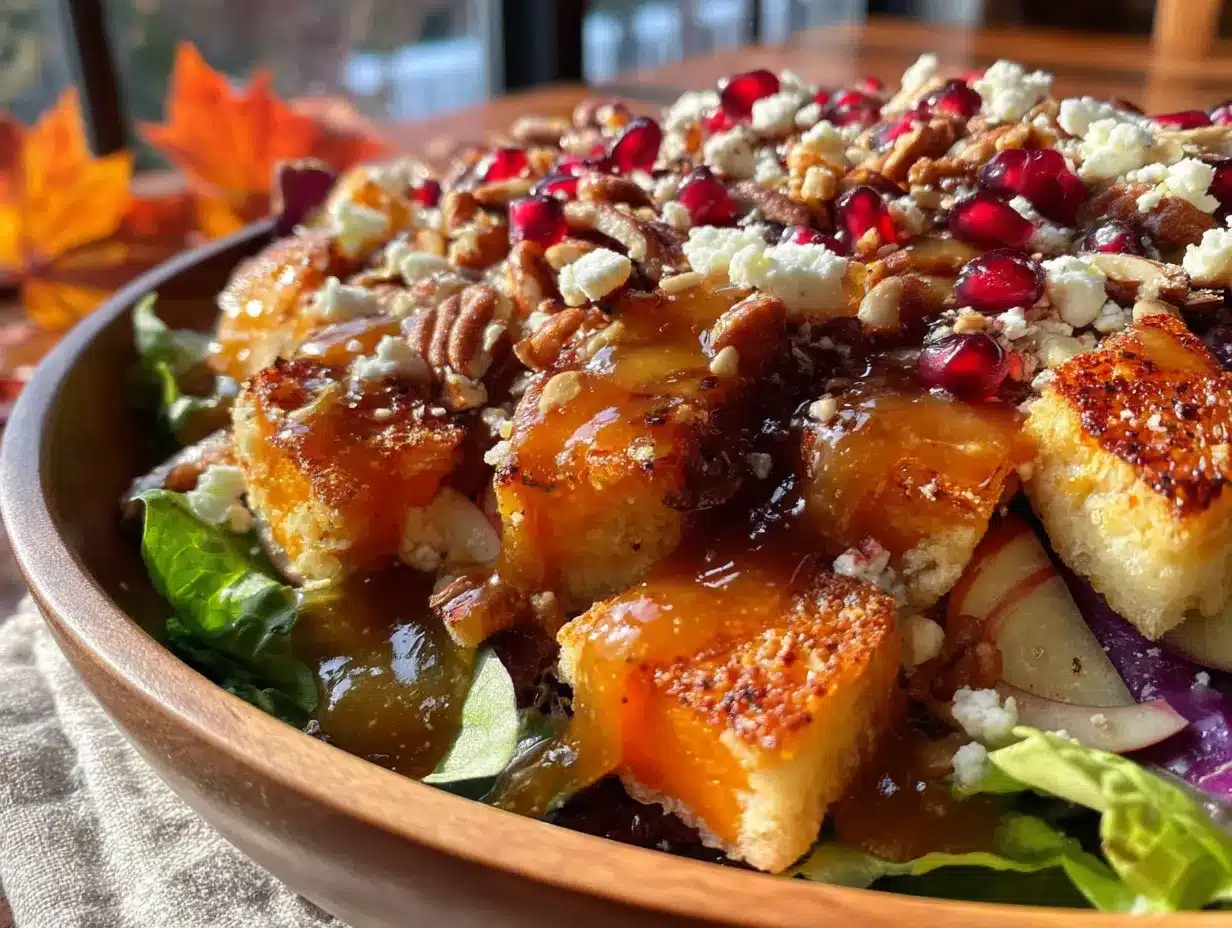
- Apple cider (¼ cup) – Not apple cider vinegar, actual apple cider. This gives the dressing its sweet, fruity base. Fresh-pressed is amazing if you can find it.
- Apple cider vinegar (2 tablespoons) – For that tangy punch. I use Bragg’s, but any unfiltered brand works.
- Dijon mustard (1 teaspoon) – Helps emulsify the dressing and adds a subtle sharpness. Whole grain mustard works too if you want more texture.
- Honey (1 tablespoon) – Balances the acidity. Maple syrup is a great substitute if you’re going for a vegan version.
- Extra virgin olive oil (⅓ cup) – Use a good-quality one here since it’s a key flavor. I like California Olive Ranch for everyday use.
- Shallot (1 small, finely minced) – Adds a mild onion flavor without being overpowering. A small red onion works in a pinch.
- Salt and pepper (to taste) – Don’t skip the salt—it wakes up all the other flavors.
Equipment Needed
You don’t need a fancy kitchen to make this salad. Here’s what I use and some alternatives if you’re working with less:
- Baking sheet – For roasting the squash. A half-sheet pan works perfectly. If you don’t have one, a rimmed baking dish will do.
- Parchment paper – Makes cleanup a breeze. You can skip it and just oil the pan, but honestly, parchment is worth the small cost.
- Large salad bowl – I use a big wooden bowl my mom gave me, but any large bowl works. You need enough room to toss without making a mess.
- Small skillet – For toasting the pecans. A dry pan over medium heat does the job in minutes.
- Chef’s knife and cutting board – For chopping squash and apples. A sharp knife makes this so much easier—I learned that the hard way after a few close calls.
- Mason jar or small bowl – For making the dressing. A jar with a tight lid lets you shake it up, which is my preferred method. A bowl and whisk work too.
- Measuring cups and spoons – I’m usually a “eyeball it” kind of cook, but for the dressing, measuring helps keep the balance right.
Preparation Method
Alright, let’s get cooking. I’ve broken this down step by step so you can follow along without any stress. Trust me, you’ll have dinner on the table before you know it.
- Preheat your oven to 400°F (200°C). While it’s heating up, line a baking sheet with parchment paper. This saves you from scrubbing later—trust me on this one.
- Prep the squash. If you’re using whole butternut squash, peel it with a vegetable peeler, cut it in half lengthwise, scoop out the seeds, and cut into ½-inch cubes. If you bought pre-cut cubes (no judgment here), just spread them on the baking sheet. Drizzle with about 1 tablespoon of olive oil, sprinkle with salt and pepper, and toss to coat. Spread them in a single layer—crowding them makes them steam instead of roast.
- Roast the squash. Pop the baking sheet in the oven and roast for 20-25 minutes, flipping halfway through. You want the edges to be golden brown and the centers to be tender when pierced with a fork. The smell at this point is incredible—warm and sweet and totally fall. Let them cool for about 5 minutes while you work on the rest.
- Toast the pecans. While the squash roasts, place a small skillet over medium heat. Add the pecan halves and cook, stirring frequently, for 3-5 minutes. You’ll know they’re done when they smell nutty and look slightly darker. Watch them closely—they burn fast. I’ve ruined more than one batch by walking away to check my phone. Transfer them to a plate to cool.
- Make the dressing. In a mason jar or small bowl, combine ¼ cup apple cider, 2 tablespoons apple cider vinegar, 1 teaspoon Dijon mustard, and 1 tablespoon honey. Add a pinch of salt and a few grinds of black pepper. Pour in ⅓ cup olive oil, then either shake the jar vigorously or whisk until everything is well combined. Taste it and adjust—maybe more honey if you like it sweeter, more vinegar if you want it tangier. Add the minced shallot and give it one more shake.
- Prep the apple. Core the apple and slice it thinly—about ⅛-inch thick. I leave the skin on for color and texture, but you can peel it if you prefer. If you’re making this ahead, toss the slices in a little lemon juice to keep them from browning.
- Assemble the salad. In your large bowl, add the mixed greens. Top with the roasted squash cubes, apple slices, dried cranberries, and toasted pecans. If you’re using feta and pomegranate arils, sprinkle those on top too.
- Dress and toss. Drizzle about half the dressing over the salad and toss gently with tongs or your hands (clean ones, obviously). Add more dressing as needed—you might not use all of it. The key is to coat everything lightly without drowning it. Serve immediately while the squash is still slightly warm and the greens are crisp.
A quick note: if you’re meal-prepping, keep the dressing separate until you’re ready to eat. Nobody likes soggy salad. Store the components in separate containers and toss everything together right before serving.
Cooking Tips & Techniques
After making this salad probably two dozen times, I’ve picked up a few tricks that make it even better. Here’s what I wish someone had told me from the start:
Roast the squash at the right temperature. I used to roast it at 350°F because that’s what most recipes said, but 400°F is where the magic happens. The higher heat caramelizes the natural sugars and gives you those gorgeous brown edges. Just keep an eye on it—check at the 15-minute mark if your oven runs hot.
Toast pecans in a dry pan. No oil needed. The natural oils in the nuts will release as they heat up, giving you a deeper, toastier flavor. Stir them constantly—I set a timer for 3 minutes and don’t walk away. Burnt pecans are sad pecans.
Let the squash cool slightly. If you add hot squash directly to the greens, they’ll wilt into a sad, limp mess. Give them 5 minutes on the baking sheet before adding them to the bowl. The slight warmth actually helps the flavors meld together without destroying the texture.
Make double the dressing. Seriously. This vinaigrette is good on everything—roasted vegetables, grain bowls, even as a marinade for chicken. I always make a double batch and keep it in the fridge for up to a week. Just shake it before using because the shallot settles at the bottom.
Season the greens. This is a pro tip I picked up from a restaurant cookbook. Before you add any toppings, sprinkle the greens with a tiny pinch of salt and give them a quick toss. It wakes up the flavor and makes the whole salad taste more vibrant. Don’t overdo it though—you can always add more later.
One mistake I made early on? Using cold greens straight from the fridge. They taste flat and sad. Let them sit at room temperature for about 10 minutes before assembling. It makes a bigger difference than you’d think.
Variations & Adaptations
The beauty of this salad is how flexible it is. Here are some ways I’ve adapted it depending on what I have on hand or who I’m cooking for:
Make it a meal. Add grilled chicken, sliced steak, or roasted chickpeas for protein. I’ve also added cooked quinoa or farro to make it more filling for lunch. The smoky flavor from grilled chicken pairs surprisingly well with the sweet dressing.
Swap the squash. Sweet potatoes work beautifully here—just cube and roast them the same way. I’ve also used roasted beets for a earthier version, or raw shaved Brussels sprouts for extra crunch. In a pinch, canned pumpkin (drained well) can work, though the texture is softer.
Change up the cheese. Feta is my go-to, but goat cheese adds a tangy creaminess that’s hard to beat. Blue cheese crumbles work if you’re into that funky flavor. For a dairy-free option, I’ve used vegan feta from the brand Violife—it’s actually pretty good.
Seasonal swaps. In early fall, use fresh figs instead of apples. In late fall, swap the dried cranberries for chopped Medjool dates. In winter, try sliced pears and pomegranate seeds. The dressing works with all of them.
Nut-free version. Toast pumpkin seeds or sunflower seeds instead of pecans. They add the same crunch without the allergen concern. I’ve also used crispy chickpeas (tossed in olive oil and roasted until crunchy) for a savory twist.
Make it vegan. Use maple syrup instead of honey in the dressing, and skip the cheese. The salad is still incredibly flavorful without it—the dressing and roasted squash do most of the heavy lifting.
Serving & Storage Suggestions
This salad is best served immediately while the squash is still slightly warm and the greens are crisp. The contrast between warm and cool, soft and crunchy, is what makes it special. I like to serve it in a big wooden bowl with the extra dressing on the side so everyone can add more if they want.
For a weeknight dinner, I’ll serve this alongside a simple protein—grilled chicken thighs, pan-seared salmon, or even a fried egg on top. It also works beautifully as a side dish for holiday meals. Last Thanksgiving, I brought it to my sister’s house and it was the first bowl to empty. People were going back for thirds.
Storage tips: If you have leftovers (unlikely, but possible), store the undressed salad components in an airtight container in the fridge for up to 2 days. Keep the dressing separate. When you’re ready to eat, let everything come to room temperature for about 10 minutes, then toss with the dressing. The roasted squash will soften a bit, but it’s still delicious.
Make-ahead strategy: Roast the squash and toast the pecans up to 3 days ahead. Store them separately in airtight containers in the fridge. Slice the apple and make the dressing the day you’re serving. This cuts your prep time down to about 5 minutes—perfect for those nights when you’re racing against the clock.
Reheating note: If you want to rewarm the squash, pop it in a 350°F oven for 5 minutes or microwave it for 30 seconds. Just let it cool slightly before adding to the greens.
Nutritional Information & Benefits
This salad isn’t just delicious—it’s actually good for you. Here’s a rough breakdown per serving (about 2 cups of dressed salad without extra cheese):
- Calories: Approximately 320-380
- Protein: 6-8 grams
- Fat: 22-26 grams (mostly healthy fats from olive oil and pecans)
- Carbohydrates: 30-35 grams
- Fiber: 6-8 grams
- Sugar: 16-20 grams (natural sugars from fruit and honey)
Health highlights: Butternut squash is packed with vitamin A (great for eye health) and fiber. Pecans provide healthy monounsaturated fats and magnesium. Apples offer vitamin C and antioxidants. The olive oil in the dressing is rich in anti-inflammatory compounds. Even the cranberries add antioxidants—just watch the added sugar if you’re using sweetened ones.
Dietary considerations: This salad is naturally gluten-free and can easily be made vegan (use maple syrup and skip the cheese). It’s also relatively low in carbs compared to many fall dishes. If you’re watching sodium, go easy on the salt in the dressing and use unsalted pecans.
I’m not a nutritionist, but I’ve found that eating this salad regularly helps me feel satisfied without that heavy, stuffed feeling. It’s the kind of meal that energizes you instead of putting you to sleep.
Conclusion
This quick fall harvest salad has become my go-to for so many reasons. It’s fast enough for a crazy weeknight, impressive enough for company, and flexible enough to work with whatever I have in the fridge. Every time I make it, I think about Sarah standing in her kitchen, tossing it together like it was nothing. But here’s the thing—it’s not nothing. It’s something special, and now it’s yours too.
I’d love to hear how it turns out for you. Did you make any swaps? Add something unexpected? Serve it with your favorite protein? Drop a comment below and let me know—I read every single one and I’m always looking for new ideas to try. And if you snap a photo, tag me on Pinterest so I can see your creation. Happy cooking, friends. Here’s to quick dinners that feel like a little celebration.
Frequently Asked Questions
Can I use pre-cut butternut squash from the store?
Absolutely. That’s actually my preferred method for busy weeknights. Just make sure the cubes are roughly the same size so they cook evenly. Pre-cut squash saves about 10 minutes of prep time and works perfectly.
How long does the apple cider vinaigrette last in the fridge?
Up to one week in an airtight container. The flavors actually meld together and get better after a day or two. Just give it a good shake before using because the shallot and mustard settle at the bottom.
Can I make this salad ahead of time for a party?
Yes, with a few adjustments. Roast the squash and toast the pecans up to 3 days ahead. Slice the apple and make the dressing the day of. Keep everything separate and toss together right before serving. This way, the greens stay crisp and the squash stays flavorful.
What can I substitute for butternut squash?
Sweet potatoes are the easiest swap—just cube and roast the same way. Delicata squash works great too and doesn’t need peeling. Roasted beets or raw shaved Brussels sprouts are also delicious alternatives.
Is this salad gluten-free?
Yes, it’s naturally gluten-free. All the ingredients are gluten-free, so you don’t need to make any substitutions. Just double-check your Dijon mustard if you’re very sensitive—most brands are gluten-free, but a few may contain additives.
Pin This Recipe!
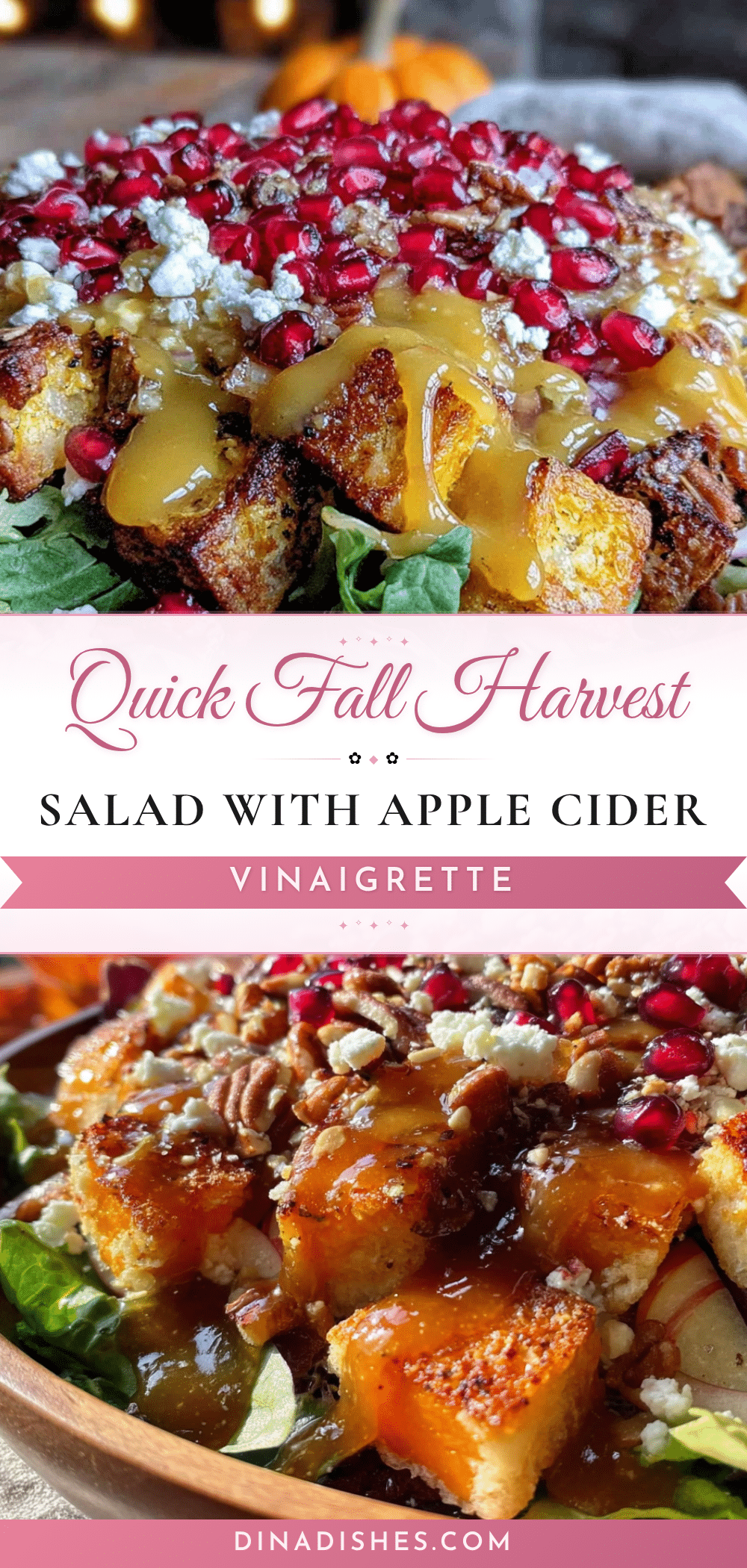
Quick Fall Harvest Salad with Easy Apple Cider Vinaigrette
A quick and easy fall salad featuring roasted butternut squash, crisp apples, toasted pecans, and a tangy apple cider vinaigrette. Ready in 20 minutes, it’s perfect for busy weeknights and always gets compliments.
- Prep Time: 10 minutes
- Cook Time: 25 minutes
- Total Time: 35 minutes
- Yield: 4 servings 1x
- Category: Salad
- Cuisine: American
Ingredients
- 2 cups cubed butternut squash
- 5–6 ounces mixed salad greens (baby spinach, arugula, and mild greens)
- 1 large Honeycrisp apple, thinly sliced
- 1/3 cup dried cranberries
- 1/2 cup pecan halves
- 1/4 cup crumbled feta cheese (optional)
- 1/4 cup pomegranate arils (optional)
- 1/4 cup apple cider
- 2 tablespoons apple cider vinegar
- 1 teaspoon Dijon mustard
- 1 tablespoon honey
- 1/3 cup extra virgin olive oil
- 1 small shallot, finely minced
- Salt and pepper to taste
Instructions
- Preheat oven to 400°F (200°C). Line a baking sheet with parchment paper.
- If using whole butternut squash, peel, halve, seed, and cut into 1/2-inch cubes. Spread pre-cut or prepared cubes on the baking sheet. Drizzle with 1 tablespoon olive oil, sprinkle with salt and pepper, and toss to coat. Spread in a single layer.
- Roast squash for 20-25 minutes, flipping halfway, until golden brown and tender. Let cool for 5 minutes.
- While squash roasts, toast pecans in a dry small skillet over medium heat, stirring frequently, for 3-5 minutes until fragrant and slightly darker. Transfer to a plate to cool.
- Make the dressing: In a mason jar or small bowl, combine apple cider, apple cider vinegar, Dijon mustard, honey, salt, and pepper. Add olive oil and shake or whisk until well combined. Stir in minced shallot. Adjust seasoning to taste.
- Core the apple and slice thinly (about 1/8-inch thick). Leave skin on for color.
- In a large bowl, add mixed greens. Top with roasted squash, apple slices, dried cranberries, toasted pecans, and optional feta and pomegranate arils.
- Drizzle about half the dressing over the salad and toss gently. Add more dressing as needed. Serve immediately while squash is slightly warm.
Notes
For meal prep, keep dressing separate until ready to serve. Roast squash and toast pecans up to 3 days ahead. Let greens come to room temperature for 10 minutes before assembling for best flavor.
Nutrition
- Serving Size: 2 cups dressed salad
- Calories: 350
- Sugar: 18
- Sodium: 200
- Fat: 24
- Saturated Fat: 3
- Carbohydrates: 33
- Fiber: 7
- Protein: 7
Keywords: fall harvest salad, apple cider vinaigrette, butternut squash salad, quick salad, healthy salad, gluten-free, vegetarian