The office birthday party was in six hours and I’d completely forgotten. I was the one who’d volunteered to bring the cake—because of course I had, in a moment of pure overconfidence three weeks earlier. Everyone else would be bringing fancy store-bought pastries from that expensive bakery downtown, or those elaborate layer cakes with perfect buttercream rosettes. I had a half-stick of butter, some all-purpose flour, and a box of sprinkles that had been sitting in my pantry since last New Year’s Eve. Honestly, I almost just stopped for a sheet cake at the grocery store on my way in.
But something stopped me. Maybe it was stubbornness, or maybe it was the memory of my grandmother telling me that a simple cake made with love always beats a fancy one bought with cash. So I threw together what I had, crossed my fingers, and baked the most straightforward sheet cake I could manage. I slapped on a quick buttercream, tossed those rainbow sprinkles on top like confetti, and walked into that party feeling like I was bringing a C- project to a room full of A+ students.
You know that feeling when you’re bracing for polite smiles and awkward compliments? That was me. But then the first person took a bite, and their eyes went wide. Then another person cut themselves a second piece. Then someone actually asked me for the recipe—and she was the one who’d brought the fancy bakery cake. I mean, I was genuinely shocked. The simple birthday sheet cake, thrown together in a panic, was the star of the party. And honestly, I’ve been making it ever since. It’s the recipe that taught me that you don’t need fancy tools or a full day in the kitchen to make something unforgettable. You just need a good base recipe, a little bit of trust, and a whole lot of sprinkles.
Why You’ll Love This Recipe
Let me tell you why this classic birthday sheet cake with rainbow sprinkle buttercream has become my go-to for every celebration, big or small. I’ve tested this recipe more times than I can count, tweaking the ratios and the mixing method until it was absolutely foolproof. Here’s what makes it stand out:
- Quick & Easy: From start to finish, this cake comes together in under an hour. The sheet pan format means less fussy layering and no worrying about a lopsided tier. It’s the perfect solution for last-minute birthday parties or when you just need a dessert that works.
- Simple Ingredients: You likely already have everything in your kitchen right now. No specialty flours, no hard-to-find extracts, no expensive decorating tools. This is pantry baking at its finest.
- Perfect for Crowds: A sheet cake serves 20 to 24 people easily, making it ideal for birthday parties, office celebrations, potlucks, or family reunions. No one walks away hungry.
- Crowd-Pleaser: I’ve served this cake to kids, adults, picky eaters, and self-proclaimed cake snobs. Every single time, it gets rave reviews. The texture is incredibly moist, the crumb is tender, and the buttercream is just sweet enough without being cloying.
- Unbelievably Delicious: The secret is in the buttermilk and the technique. This isn’t a dry, crumbly sheet cake—it’s a rich, velvety cake that stays moist for days. And that rainbow sprinkle buttercream? It’s pure joy in frosting form.
What makes this recipe different from the dozens of other birthday cake recipes out there? It’s the balance. I’ve spent years perfecting the ratio of butter to sugar, the right amount of buttermilk for tenderness, and the exact mixing method to prevent a dense or tough crumb. This isn’t just another version—it’s my best version. The kind of cake that makes you close your eyes after the first bite and just smile. It’s comfort food reimagined: nostalgic, celebratory, but simple enough for a Tuesday night.
What Ingredients You Will Need
This recipe uses straightforward, humble ingredients that work together to create something genuinely special. Let me walk you through each one and explain why they matter.
For the Cake:
- 2 1/2 cups (315g) all-purpose flour – I recommend Gold Medal or King Arthur for consistent results. Spoon and level your flour for the most accurate measurement; scooping directly from the bag can pack in too much flour and make the cake dry.
- 2 1/2 teaspoons baking powder – This is your leavening agent. Make sure it’s fresh—if it’s been sitting in your pantry for over a year, it may have lost its potency.
- 1/2 teaspoon baking soda – Works with the buttermilk to create extra lift and tenderness.
- 1/2 teaspoon salt – Don’t skip this. Salt enhances the sweetness and balances the flavors. I use fine sea salt.
- 3/4 cup (170g) unsalted butter, softened – Butter gives the cake its rich flavor and tender crumb. Make sure it’s truly at room temperature—soft but not greasy. If you’re in a hurry, cut it into small cubes and let it sit for 15 minutes.
- 1 1/2 cups (300g) granulated sugar – Standard white sugar works beautifully here. It creates a light, airy texture when creamed properly with the butter.
- 3 large eggs, room temperature – Room-temperature eggs emulsify into the batter much more easily, creating a smoother, more uniform crumb. If you forgot to take them out ahead of time, place them in a bowl of warm water for 5 minutes.
- 1 tablespoon vanilla extract – Pure vanilla extract makes a noticeable difference. I use Nielsen-Massey, but any good-quality brand works. Avoid imitation vanilla if you can—it has a harsh, artificial flavor.
- 1 cup (240ml) buttermilk, room temperature – Buttermilk is the secret to a moist, tender cake with a slight tang that cuts through the sweetness. If you don’t have buttermilk, add 1 tablespoon of lemon juice or white vinegar to a cup of whole milk and let it sit for 5 minutes.
For the Rainbow Sprinkle Buttercream:
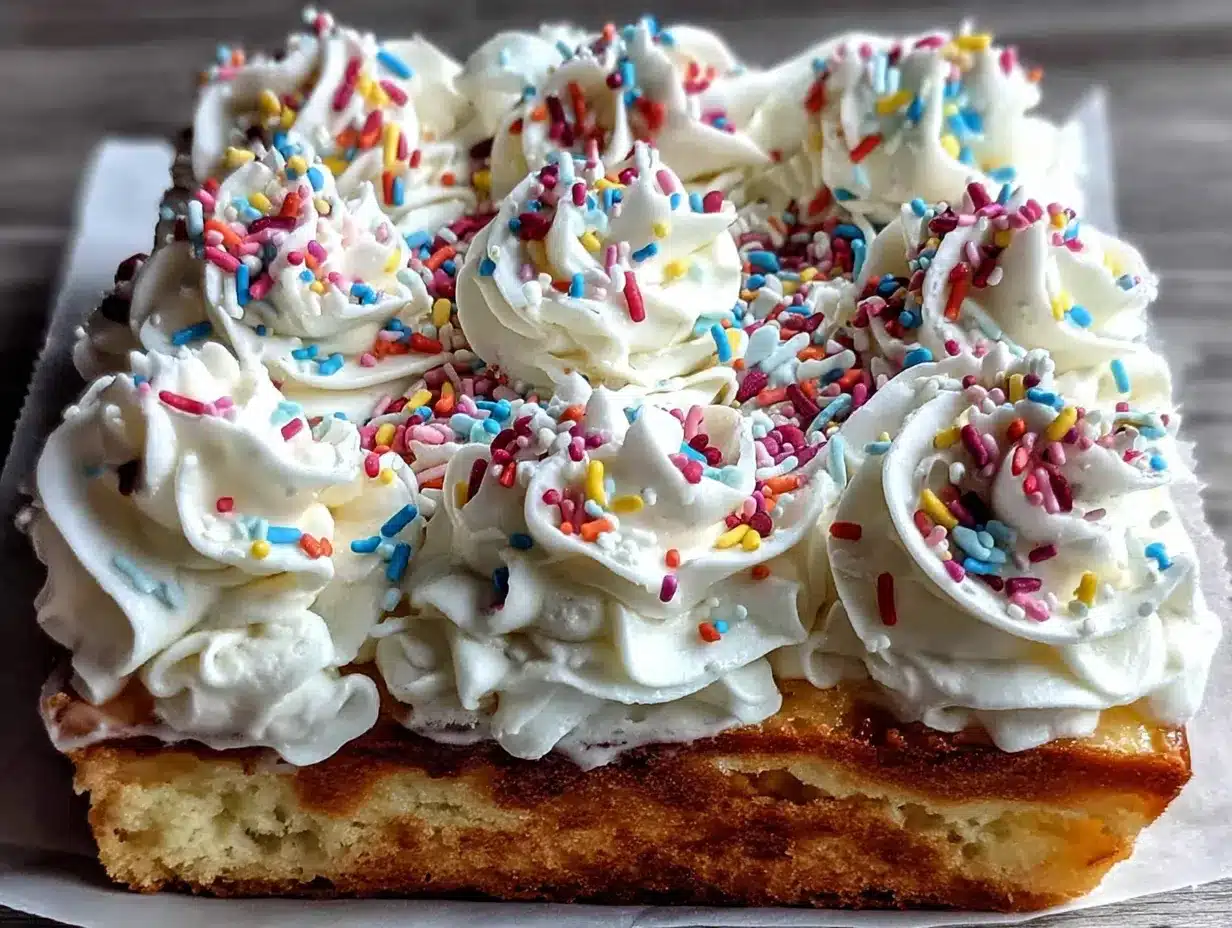
- 1 cup (226g) unsalted butter, softened – Again, make sure it’s at room temperature. Cold butter will result in lumpy, curdled frosting.
- 4 cups (480g) powdered sugar, sifted – Sifting is important here. Lumpy powdered sugar creates lumpy buttercream. If you don’t have a sifter, whisk it vigorously with a fork.
- 2-3 tablespoons heavy cream or whole milk – Heavy cream makes a richer, silkier frosting. Whole milk works in a pinch, but the texture won’t be quite as luxurious.
- 1 teaspoon vanilla extract – Keeps the flavor profile consistent with the cake.
- 1/4 teaspoon salt – Balances the sweetness.
- 1/3 cup rainbow sprinkles (jimmies, not nonpareils) – Jimmies are the long, cylindrical sprinkles that hold their color and texture in buttercream. Nonpareils (the tiny round ones) tend to bleed their color and create a messy look. I recommend Wilton or Sweetapolita brand sprinkles for the best results.
Equipment Needed
You don’t need a professional bakery setup for this cake, but having the right tools makes the process smoother and more enjoyable.
- Half-sheet pan (13×18 inches) – This is the standard size for a sheet cake. If you don’t have one, a 9×13-inch pan works, but the cake will be thicker and may need an extra 5-10 minutes of baking time. I use a Nordic Ware aluminum half-sheet pan—it heats evenly and doesn’t warp.
- Electric hand mixer or stand mixer – You can make the cake batter by hand with a whisk and some elbow grease, but the buttercream really benefits from electric mixing. A hand mixer is perfectly adequate and easier to clean.
- Large mixing bowls – You’ll need at least two: one for dry ingredients and one for wet. I prefer stainless steel bowls—they’re lightweight and don’t retain odors.
- Rubber spatula – For scraping down the bowl and folding in the sprinkles. A good silicone spatula is worth its weight in gold.
- Parchment paper – Lining your pan with parchment paper ensures the cake releases cleanly. Cut it to fit the bottom of the pan, leaving a little overhang on two sides for easy lifting.
- Cooling rack – A wire rack allows air to circulate around the cake, preventing a soggy bottom. If you don’t have one, you can use the inverted pan after it’s cooled slightly.
- Offset spatula – Not strictly necessary, but it makes spreading the buttercream much easier and gives a more professional finish. A butter knife works in a pinch.
Preparation Method
Let’s get baking. I’ll walk you through every step so you feel confident, even if this is your first time making a sheet cake.
- Preheat your oven to 350°F (175°C). Position the rack in the center of the oven. While it’s heating, line your half-sheet pan with parchment paper and lightly grease the sides with butter or non-stick spray.
- Whisk the dry ingredients together. In a large bowl, combine the all-purpose flour, baking powder, baking soda, and salt. Whisk them thoroughly—this ensures the leavening agents are evenly distributed so your cake rises uniformly. Set this aside.
- Cream the butter and sugar. In the bowl of your stand mixer (or a large bowl if using a hand mixer), beat the softened butter and granulated sugar together on medium speed for 3 to 4 minutes. You’re looking for a light, fluffy, pale yellow mixture. Scrape down the sides and bottom of the bowl with your spatula halfway through. Don’t rush this step—proper creaming is what gives the cake its tender crumb.
- Add the eggs and vanilla. Add the eggs one at a time, beating well after each addition. The mixture should look smooth and glossy. Then add the vanilla extract and beat until combined. If the mixture looks slightly curdled at this point, don’t panic—it will come together when you add the flour.
- Alternate adding the dry ingredients and buttermilk. With the mixer on low speed, add about one-third of the flour mixture, then half of the buttermilk. Mix just until combined—overmixing develops gluten and makes the cake tough. Repeat with another third of the flour, the remaining buttermilk, and finally the last third of the flour. Stop the mixer the moment the last streaks of flour disappear. Use your spatula to give the batter a few gentle folds from the bottom up, just to make sure everything is incorporated.
- Pour the batter into the prepared pan. Use your spatula to spread it evenly into the corners. Give the pan a gentle tap on the counter to release any air bubbles. The batter should be thick but spreadable.
- Bake for 20 to 25 minutes. Start checking at 20 minutes. The cake is done when the top is golden brown, the edges have pulled away slightly from the pan, and a toothpick inserted into the center comes out clean or with just a few moist crumbs. Don’t overbake—a dry cake is a sad cake.
- Cool the cake completely. Let the cake cool in the pan on a wire rack for 10 minutes. Then run a knife around the edges and lift the cake out using the parchment overhang. Transfer it to the wire rack to cool completely. This is crucial—if you try to frost a warm cake, the buttercream will melt into a sad, greasy puddle. Wait at least 1 hour.
- Make the buttercream. While the cake cools, beat the softened butter in a clean mixer bowl on medium speed for 2 minutes until it’s smooth and creamy. Gradually add the sifted powdered sugar, one cup at a time, beating on low speed to prevent a sugar cloud. Add the vanilla extract and salt. Then add the heavy cream, one tablespoon at a time, until the frosting reaches a spreadable consistency. You want it thick enough to hold its shape but soft enough to spread easily.
- Fold in the rainbow sprinkles. Gently fold the sprinkles into the buttercream using your spatula. Be careful not to overmix—you want distinct pops of color, not a muddy gray mess.
- Frost the cake. Once the cake is completely cool, spread the buttercream evenly over the top using your offset spatula. Start in the center and work your way outward. If you want a rustic look, leave the edges exposed. For a more polished finish, spread the frosting all the way to the edges.
- Add extra sprinkles on top. This is the fun part. Sprinkle a generous handful of rainbow sprinkles over the frosted cake. Press them in gently so they stick.
- Slice and serve. Use a sharp knife to cut the cake into squares. Wipe the knife clean between cuts for neat slices. Serve at room temperature for the best texture and flavor.
Cooking Tips & Techniques
Over the years, I’ve made every mistake in the book with sheet cakes. Here’s what I’ve learned so you don’t have to repeat my failures.
Room temperature ingredients are non-negotiable. I know it’s tempting to use cold eggs and cold buttermilk straight from the fridge, but trust me—cold ingredients don’t emulsify properly. The result is a dense, uneven crumb. Take the time to let everything come to room temperature. It takes about 30 minutes, and it makes a world of difference.
Don’t overmix the batter. This is the most common mistake home bakers make. Once you add the flour, mix only until it disappears. Overmixing develops gluten, which makes the cake tough and chewy instead of tender and soft. If you see a few tiny lumps in the batter, that’s perfectly fine—they’ll bake out.
Use a toothpick to check for doneness. Oven temperatures vary wildly. My oven runs hot, so I start checking at 18 minutes. Yours might need the full 25. The toothpick test is more reliable than the clock. Insert a toothpick into the center of the cake—if it comes out clean or with just a few moist crumbs attached, it’s done. If there’s wet batter on it, give it another 2-3 minutes.
Let the cake cool completely before frosting. I learned this the hard way when I frosted a slightly warm cake and ended up with a melted, streaky mess. Patience is key. If you’re in a rush, you can speed up the cooling process by placing the cake in the refrigerator for 20 minutes after it’s come to room temperature.
Sift your powdered sugar. I know, it’s an extra step. But lumpy powdered sugar creates lumpy buttercream, and nobody wants that. If you don’t have a sifter, whisk the powdered sugar vigorously with a fork before adding it to the butter.
Add sprinkles at the last minute. If you add the rainbow sprinkles to the buttercream too early, the colors can bleed and create a muddy effect. Fold them in just before you’re ready to frost the cake. And if you’re making the cake a day ahead, wait to add the sprinkles until just before serving for the most vibrant look.
Variations & Adaptations
One of the best things about this classic birthday sheet cake is how adaptable it is. Here are some of my favorite variations.
Chocolate Birthday Sheet Cake: Replace 1/2 cup of the all-purpose flour with 1/2 cup of unsweetened cocoa powder. Increase the buttermilk to 1 1/4 cups to compensate for the drier cocoa. The result is a rich, fudgy chocolate cake that pairs beautifully with the rainbow sprinkle buttercream—or switch to a chocolate buttercream for double the chocolate.
Gluten-Free Version: Substitute the all-purpose flour with a high-quality gluten-free all-purpose flour blend that contains xanthan gum. I’ve had great results with Bob’s Red Mill 1-to-1 Baking Flour. The texture is slightly more delicate, so handle the batter gently and don’t overbake.
Dairy-Free Adaptation: Use vegan butter sticks (like Earth Balance) and replace the buttermilk with 1 cup of unsweetened almond milk mixed with 1 tablespoon of apple cider vinegar. For the buttercream, use vegan butter and a dairy-free milk alternative. The flavor is slightly different, but still delicious.
Lemon Birthday Cake: Add the zest of two lemons to the sugar and rub it in with your fingers before creaming with the butter. Replace the vanilla extract in the buttercream with lemon extract, or use fresh lemon juice in place of the heavy cream. This version is bright, tangy, and perfect for spring and summer birthdays.
Funfetti Inside and Out: For an extra dose of celebration, fold 1/4 cup of rainbow sprinkles into the cake batter just before pouring it into the pan. Use jimmies, not nonpareils, to prevent the color from bleeding into the batter. The cake will have colorful specks throughout, making every slice a surprise.
Serving & Storage Suggestions
This cake is best served at room temperature, which allows the buttercream to soften slightly and the crumb to be at its most tender. If you’ve refrigerated the cake, let it sit on the counter for 20 to 30 minutes before slicing and serving.
For a truly celebratory presentation, arrange fresh berries or edible flowers on top of the frosted cake alongside the rainbow sprinkles. A few birthday candles never hurt, either. I like to serve this cake with a scoop of vanilla ice cream or a dollop of lightly sweetened whipped cream for an extra indulgent touch.
Storage: Cover the cake tightly with plastic wrap or aluminum foil, or store it in an airtight cake carrier. It will keep at room temperature for up to 2 days. If your kitchen is warm, refrigerate it—the buttercream can soften and slide off in hot weather. Refrigerated, the cake stays fresh for up to 5 days.
Freezing: This cake freezes beautifully. Wrap the unfrosted cake tightly in plastic wrap, then in aluminum foil, and freeze for up to 3 months. Thaw overnight in the refrigerator, then bring to room temperature before frosting. You can also freeze the frosted cake—place it in the freezer uncovered for 1 hour to set the buttercream, then wrap it tightly. Thaw in the refrigerator overnight.
Reheating: If you prefer your cake slightly warm, pop individual slices in the microwave for 10 to 15 seconds. The buttercream will soften and the cake will taste freshly baked.
Nutritional Information & Benefits
Let’s be honest—this is a celebration cake, not a health food. But here’s the nutritional breakdown for one serving (based on 24 servings):
| Nutrient | Amount per Serving |
|---|---|
| Calories | 320 |
| Total Fat | 16g |
| Saturated Fat | 10g |
| Cholesterol | 65mg |
| Sodium | 220mg |
| Total Carbohydrates | 43g |
| Sugars | 32g |
| Protein | 3g |
While this cake is certainly a treat, it does contain eggs and dairy, which provide some protein and calcium. The butter adds vitamin A, and the buttermilk contributes a small amount of probiotics. If you’re looking to lighten it up, you can reduce the sugar in the buttercream by half a cup, or use a sugar substitute in the cake batter—though I’ll warn you, the texture won’t be quite the same.
This recipe contains gluten, dairy, and eggs. For those with allergies, please refer to the variations section for suitable substitutions.
Conclusion
This classic birthday sheet cake with rainbow sprinkle buttercream is more than just a recipe—it’s a reminder that you don’t need to be a professional baker to create something that brings people together. It’s the cake I turn to when I want to celebrate without stress, when I want to impress without fussing, and when I want to taste pure joy in every bite.
I hope you make this cake for your next birthday party, potluck, or random Tuesday that deserves a little extra color. Don’t be afraid to customize it based on what you have in your pantry or what your family loves. That’s the beauty of a good base recipe—it’s a starting point for your own creativity.
If you try this recipe, I’d love to hear about it. Leave a comment below telling me how it turned out, or share a photo of your creation on Pinterest. Did you add a twist? Did your kids help with the sprinkles? Tell me your story. And if you’re looking for more celebration-worthy desserts, check out our classic vanilla birthday cake or our easy chocolate sheet cake for even more options.
Happy baking, and happy celebrating!
Frequently Asked Questions
Can I use a different size pan?
Absolutely. If you use a 9×13-inch pan, the cake will be thicker and will need about 30 to 35 minutes of baking time. For two 8-inch round pans, bake for 25 to 30 minutes. Adjust your baking time based on the pan size and check for doneness with a toothpick.
Can I make this cake ahead of time?
Yes! You can bake the cake layers up to 2 days in advance. Wrap them tightly in plastic wrap and store at room temperature or in the refrigerator. Make the buttercream up to 3 days ahead and refrigerate it in an airtight container. Bring the buttercream to room temperature and re-whip it before frosting the cake.
Why did my buttercream turn out grainy?
Grainy buttercream is usually caused by undissolved powdered sugar. Make sure you sift your powdered sugar before using it. If your buttercream is already made and grainy, try beating it on medium-high speed for 2 to 3 minutes—sometimes the heat from friction can help dissolve the sugar granules.
Can I use salted butter instead of unsalted?
You can, but reduce or omit the added salt in the recipe. Salted butter contains about 1/4 teaspoon of salt per stick, so adjust accordingly. The flavor may be slightly saltier, which some people actually prefer.
How do I keep the sprinkles from bleeding their color?
Use jimmies (the long, cylindrical sprinkles) instead of nonpareils (the tiny round ones). Jimmies have a thicker coating that holds their color better. Also, fold them into the buttercream at the last minute and avoid overmixing. If you’re adding sprinkles on top, wait until just before serving for the most vibrant look.
Pin This Recipe!
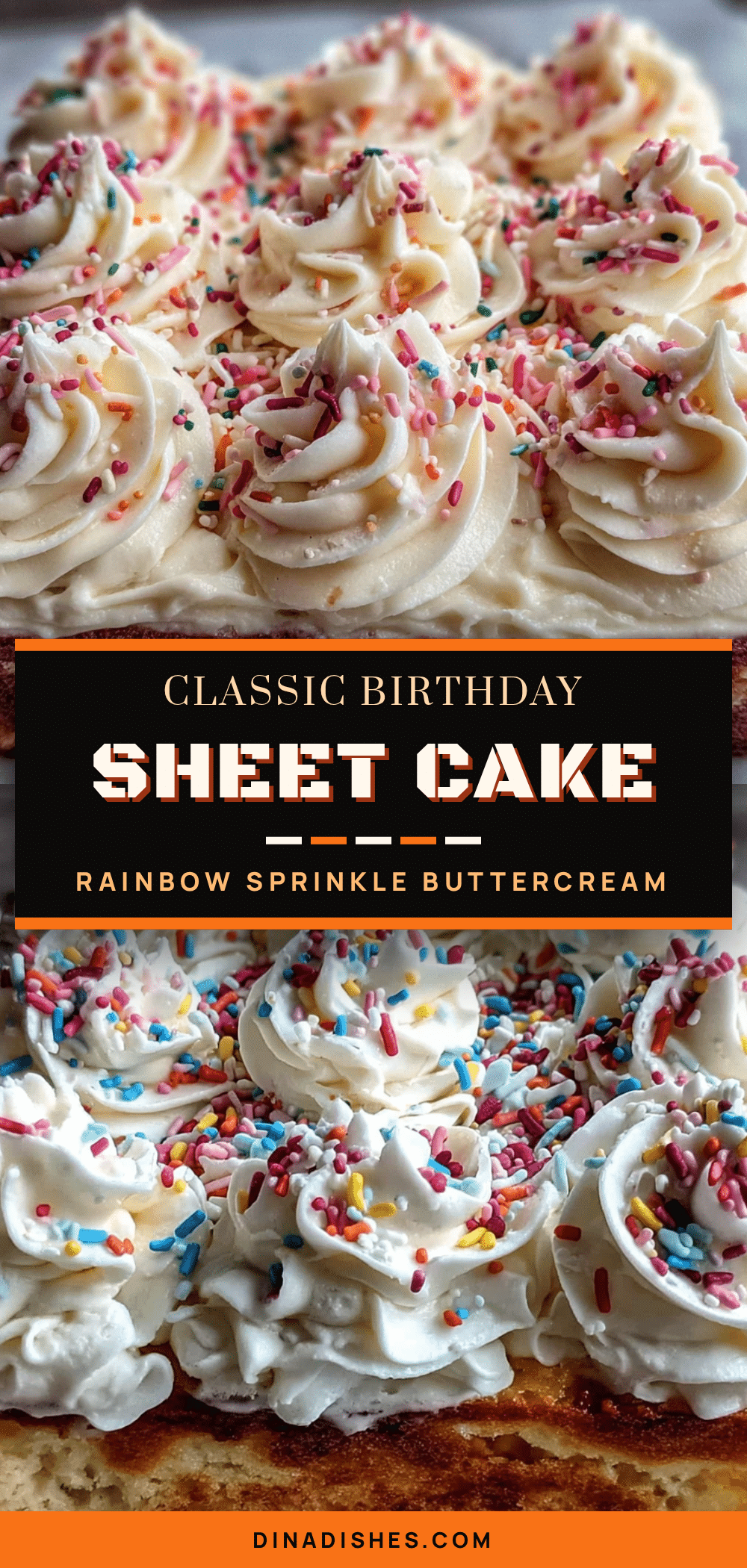
Best Classic Birthday Sheet Cake with Rainbow Sprinkle Buttercream
A moist, tender sheet cake topped with a vibrant rainbow sprinkle buttercream. This easy, foolproof recipe is perfect for birthday parties, potlucks, or any celebration, and comes together in under an hour with simple pantry ingredients.
- Prep Time: 15 minutes
- Cook Time: 25 minutes
- Total Time: 1 hour 40 minutes (includes cooling time)
- Yield: 24 servings 1x
- Category: Dessert
- Cuisine: American
Ingredients
- 2 1/2 cups (315g) all-purpose flour
- 2 1/2 teaspoons baking powder
- 1/2 teaspoon baking soda
- 1/2 teaspoon salt
- 3/4 cup (170g) unsalted butter, softened
- 1 1/2 cups (300g) granulated sugar
- 3 large eggs, room temperature
- 1 tablespoon vanilla extract
- 1 cup (240ml) buttermilk, room temperature
- 1 cup (226g) unsalted butter, softened (for buttercream)
- 4 cups (480g) powdered sugar, sifted
- 2–3 tablespoons heavy cream or whole milk
- 1 teaspoon vanilla extract (for buttercream)
- 1/4 teaspoon salt (for buttercream)
- 1/3 cup rainbow sprinkles (jimmies)
Instructions
- Preheat your oven to 350°F (175°C). Position the rack in the center of the oven. Line a half-sheet pan (13×18 inches) with parchment paper and lightly grease the sides with butter or non-stick spray.
- In a large bowl, whisk together the all-purpose flour, baking powder, baking soda, and salt. Set aside.
- In the bowl of a stand mixer or using a hand mixer, beat the softened butter and granulated sugar on medium speed for 3 to 4 minutes until light, fluffy, and pale yellow. Scrape down the sides and bottom of the bowl halfway through.
- Add the eggs one at a time, beating well after each addition. Add the vanilla extract and beat until combined.
- With the mixer on low speed, add about one-third of the flour mixture, then half of the buttermilk. Mix just until combined. Repeat with another third of the flour, the remaining buttermilk, and finally the last third of the flour. Stop mixing when the last streaks of flour disappear. Use a spatula to gently fold the batter from the bottom up to ensure everything is incorporated.
- Pour the batter into the prepared pan and spread it evenly into the corners. Tap the pan gently on the counter to release any air bubbles.
- Bake for 20 to 25 minutes, or until the top is golden brown, the edges have pulled away from the pan, and a toothpick inserted into the center comes out clean or with a few moist crumbs. Cool the cake in the pan on a wire rack for 10 minutes, then lift it out using the parchment overhang and transfer to the wire rack to cool completely (at least 1 hour).
- While the cake cools, make the buttercream: In a clean mixer bowl, beat the softened butter on medium speed for 2 minutes until smooth and creamy. Gradually add the sifted powdered sugar, one cup at a time, beating on low speed. Add the vanilla extract and salt. Add the heavy cream, one tablespoon at a time, until the frosting reaches a spreadable consistency.
- Gently fold the rainbow sprinkles into the buttercream using a spatula. Be careful not to overmix.
- Once the cake is completely cool, spread the buttercream evenly over the top using an offset spatula. Sprinkle a generous handful of rainbow sprinkles on top and press them in gently.
- Slice and serve at room temperature.
Notes
Room temperature ingredients are crucial for best texture. Do not overmix the batter. Let cake cool completely before frosting. Use jimmies (not nonpareils) to prevent color bleeding. Cake can be stored at room temperature for up to 2 days or refrigerated for up to 5 days. Unfrosted cake can be frozen for up to 3 months.
Nutrition
- Serving Size: 1 slice (1/24 of cak
- Calories: 320
- Sugar: 32
- Sodium: 220
- Fat: 16
- Saturated Fat: 10
- Carbohydrates: 43
- Protein: 3
Keywords: birthday cake, sheet cake, rainbow sprinkle buttercream, easy cake, classic cake, party cake, buttermilk cake