My neighbor, a woman named Gladys who must have been pushing eighty, watched me struggling with a particularly stubborn butternut squash one October afternoon. I was out on my front steps, trying to hack it in half with a knife that was clearly not up to the task. She didn’t say anything at first. Then she just shook her head, walked into her garage, and came back with the most enormous, ancient-looking cleaver I have ever seen. She handed it over, handle first, and said, “Let the squash win, and you’ll be eating soup for a week.” I laughed, made a mental note to buy a better knife, and we ended up talking for an hour right there on the stoop. The conversation drifted from squash to her childhood in Vermont, and eventually, to this very recipe. She described it as “the only way to get her grandkids to eat a vegetable without a fight.” I scribbled the basics on a scrap of mail, and honestly, I’ve been tweaking it ever since. It’s the kind of recipe that feels like a secret handshake between cooks. You know the feeling—when someone shares a dish that’s more than just food, it’s a little piece of their history. This mac and cheese is that for me now.
Why You’ll Love This Recipe
Let’s be real, we all love a classic mac and cheese. But this version? It’s something else entirely. It’s the dish you bring to a potluck and watch people go back for thirds, the one that makes your dinner party guests ask for the recipe before they’ve even finished their first serving. It’s comfort food that feels a little bit fancy, without any of the stress.
- Crowd-Pleaser: This is not a “healthy” compromise that tastes like a sad afterthought. It’s genuinely, unbelievably delicious. The creamy, velvety sauce coats every single noodle, and the crispy sage adds a pop of texture and flavor that makes everyone say, “What is that?”
- Perfect for Hosting: You can make the entire dish ahead of time, which is a total lifesaver when you’re trying to get a roast chicken in the oven and a salad tossed. Just pop it in the oven when your guests arrive, and the smell alone will have them hovering in the kitchen.
- Simple Ingredients: No need to hunt down weird, expensive cheeses. The magic comes from a humble butternut squash and a few pantry staples. It’s proof that you don’t need a fancy grocery trip to make something spectacular.
- Sneaky Veggies: This is the ultimate way to get everyone—picky kids, skeptical adults—to eat a full serving of squash. The flavor is so rich and nutty, it just tastes like a more interesting, luxurious cheese sauce.
- Impressive Without Effort: It looks like you spent hours in the kitchen, but the biggest job is roasting a squash. The rest comes together in one pot. It’s my go-to for when I want to look like a hero without actually breaking a sweat.
This isn’t just another mac and cheese recipe. It’s the one that has a secret ingredient (the squash!), a textural twist (crispy sage!), and a story behind it. It’s the kind of dish that makes you close your eyes after the first bite, not just because it tastes good, but because it feels good. It’s comfort, reimagined.
What Ingredients You Will Need
This recipe uses simple, wholesome ingredients that work together to create a sauce that’s both decadent and surprisingly light. No heavy cream needed—the squash does all the heavy lifting.
- For the Roasted Squash:
- 1 medium butternut squash (about 2-3 lbs / 900g-1.4kg), peeled, seeded, and cubed (I find pre-cut cubes from the store are a massive time-saver, but be sure they’re fresh)
- 2 tablespoons olive oil
- 1/2 teaspoon salt
- 1/4 teaspoon black pepper
- For the Pasta & Sauce:
- 1 lb (450g) dried pasta (cavatappi, shells, or elbow macaroni work best—the ridges grab the sauce)
- 4 tablespoons unsalted butter
- 1 small yellow onion, finely diced
- 3 cloves garlic, minced
- 1/4 cup (30g) all-purpose flour
- 3 cups (720ml) whole milk
- 1 cup (240ml) low-sodium vegetable or chicken broth
- 1 ½ cups (150g) sharp white cheddar cheese, freshly grated (please, please grate your own—pre-shredded has anti-caking agents that make the sauce grainy)
- 1 cup (100g) Gruyère cheese, freshly grated (adds incredible nuttiness)
- 1/2 cup (50g) Parmesan cheese, freshly grated
- 1/2 teaspoon smoked paprika
- 1/4 teaspoon ground nutmeg
- Salt and black pepper to taste
- For the Crispy Sage Topping:
- 3 tablespoons unsalted butter
- 15-20 fresh sage leaves
- 1/2 cup (50g) panko breadcrumbs (optional, for a crunchy topping—I highly recommend it)
Ingredient Tips: For the best texture, look for a squash that feels heavy for its size. The Gruyère is non-negotiable in my book—it’s what gives the sauce that deep, savory flavor. If you can’t find it, you can substitute with an extra cup of sharp cheddar, but it won’t be quite the same. For a gluten-free version, use a 1:1 gluten-free flour blend and gluten-free pasta.
Equipment Needed
You don’t need a professional kitchen to pull this off, but a few key tools make the process so much smoother.
- Baking Sheet: For roasting the squash. A rimmed one is best to catch any juices.
- Large Pot: For boiling the pasta. Also, you’ll use this for the sauce.
- Large Skillet or Dutch Oven: For making the roux and the sauce. A Dutch oven is ideal because you can do everything in one pot.
- Immersion Blender or Regular Blender: This is key for pureeing the squash into a silky smooth sauce. I’ve used both, and honestly, an immersion blender is less cleanup. If using a regular blender, be careful with the hot liquid—work in batches and vent the lid.
- Cheese Grater: A microplane or box grater. Seriously, grate your own cheese.
- Small Skillet: For frying the sage leaves.
- 9×13-inch Baking Dish: For the final bake (if you’re making it ahead and baking it).
I once tried to make this with a hand mixer to puree the squash, and let me tell you, it was a lumpy disaster. A good blender or immersion blender is worth its weight in gold here.
Preparation Method

- Roast the Squash: Preheat your oven to 400°F (200°C). Toss the cubed butternut squash with the olive oil, salt, and pepper on a baking sheet. Spread it in a single layer. Roast for 25-30 minutes, or until the squash is tender and the edges are starting to caramelize. You want it soft enough to easily pierce with a fork. Let it cool slightly.
- Cook the Pasta: While the squash roasts, bring a large pot of generously salted water to a rolling boil. Cook the pasta according to package directions until al dente—about 1-2 minutes less than the recommended time, as it will continue to cook in the oven later. Drain the pasta, but reserve about 1 cup (240ml) of the pasta water. Set aside.
- Make the Squash Puree: Transfer the roasted squash to a blender or a large bowl (if using an immersion blender). Add 1 cup (240ml) of the milk. Blend until completely smooth and velvety. It should look like a thick, creamy orange soup. Set this aside.
- Start the Roux: In a large Dutch oven or heavy-bottomed pot, melt the 4 tablespoons of butter over medium heat. Add the diced onion and cook, stirring occasionally, for 4-5 minutes until softened and translucent. Add the minced garlic and cook for another 30 seconds until fragrant. Be careful not to burn the garlic.
- Make the Sauce: Sprinkle the flour over the onion mixture. Whisk constantly for 1-2 minutes. This cooks out the raw flour taste. The mixture will look like a thick paste—that’s your roux. Slowly pour in the remaining 2 cups (480ml) of milk and the vegetable broth, whisking continuously to prevent lumps. Bring the mixture to a gentle simmer, and it will start to thicken nicely.
- Add the Squash & Cheese: Pour the smooth squash puree into the pot with the sauce. Whisk to combine. Reduce the heat to low. Now, add the cheeses one handful at a time, stirring until each addition is fully melted before adding the next. This ensures a silky, not grainy, sauce. Stir in the smoked paprika and nutmeg. Taste it. This is the moment. Add salt and pepper to your liking. I usually add about a teaspoon of salt and a half teaspoon of pepper.
- Combine: Add the drained pasta to the pot of sauce. Stir gently until every piece of pasta is coated in that glorious, creamy sauce. If the sauce seems too thick, add a splash of the reserved pasta water until it reaches your desired consistency. The sauce will thicken further as it sits and bakes.
- Make the Crispy Sage Topping: In a small skillet, melt the 3 tablespoons of butter over medium heat. Add the sage leaves in a single layer. Fry for 30-60 seconds per side, until they turn dark green and crisp. Be careful—they can burn quickly! Use a slotted spoon to transfer them to a paper towel-lined plate. They will crisp up more as they cool. If using panko, add it to the remaining butter in the pan and toast for 1-2 minutes until golden. Sprinkle this over the mac and cheese along with the crispy sage.
- Bake (Optional but Recommended): If you like a bubbly, golden crust on top (who doesn’t?), transfer the mac and cheese to a buttered 9×13-inch baking dish. Sprinkle the crispy sage and panko mixture on top. Bake at 375°F (190°C) for 15-20 minutes, until bubbly and the top is lightly golden. If you’re making this ahead, this is the step that brings it all back to life.
Cooking Tips & Techniques
The first time I made this, I made the rookie mistake of adding the cheese to a boiling hot sauce. It turned into a stringy, greasy mess. I learned my lesson the hard way. The key is low heat and patience. Here are a few more things I’ve picked up.
- Don’t Skip the Nutmeg: I know it sounds weird, but a pinch of freshly grated nutmeg is the secret to making a creamy cheese sauce taste truly incredible. It doesn’t make it taste like pumpkin pie—it just rounds out the flavors in a way you can’t quite place.
- Grate Your Own Cheese: I cannot stress this enough. Pre-shredded cheese is coated in cellulose and starches to prevent clumping, which means it won’t melt smoothly. You’ll end up with a gritty sauce. Take the extra two minutes to grate a block of cheese. Your taste buds will thank you.
- Undercook the Pasta: If you’re going to bake the mac and cheese, undercook the pasta by a full minute. It will finish cooking in the oven, and you won’t end up with mushy noodles.
- The Sage is the Star: Don’t skimp on it. The crispy sage leaves are what take this from “good” to “whoa.” They add a savory, slightly peppery, and herbaceous crunch that cuts through the richness of the cheese sauce. I once forgot to add them, and the dish felt… flat.
- Make it Ahead: This is a host’s best friend. Assemble the mac and cheese completely (up to step 7), but don’t add the sage topping. Cover and refrigerate for up to 24 hours. When you’re ready to serve, let it sit on the counter for 20 minutes to take the chill off, then add the sage and panko and bake as directed. You might need to add 5-10 minutes to the baking time.
Variations & Adaptations
This recipe is incredibly forgiving, which is one of the reasons I love it so much. Here are a few ways to make it your own.
- Make it Gluten-Free: Use a good quality gluten-free pasta (I like the brown rice and quinoa blends) and swap the all-purpose flour for a 1:1 gluten-free flour blend. The rest of the recipe stays the same.
- Make it Dairy-Free: This is a bit trickier, but totally doable. Use a high-quality unsweetened oat or cashew milk in place of the whole milk. Use a dairy-free butter substitute. For the cheese, look for a plant-based cheddar and a nut-based Parmesan. The texture won’t be quite as creamy, but the flavor from the squash will still be fantastic.
- Add Some Protein: Leftover shredded rotisserie chicken, crumbled cooked bacon, or even some spicy Italian sausage would be incredible folded into this. I’ve done it with crispy pancetta before, and it was a total hit.
- Change the Veggies: Roasted sweet potato or even carrot puree can be swapped in for the butternut squash. You’ll get a slightly different flavor profile, but the same creamy, dreamy result.
- Spice it Up: Add a pinch of cayenne pepper or red pepper flakes to the sauce for a little heat. A dash of hot sauce before serving is never a bad idea.
Serving & Storage Suggestions
This mac and cheese is a meal in itself, but it also plays beautifully with others.
Serving: Serve it hot, straight from the oven or stovetop. The crispy sage leaves should be sprinkled on top just before serving so they stay crunchy. It’s rich, so I like to pair it with a simple green salad with a bright lemon vinaigrette to cut through the creaminess. A glass of crisp Sauvignon Blanc or a light, fruity Pinot Noir is a lovely pairing. For a cozy dinner, serve it alongside a simple roasted herb chicken or a piece of seared salmon.
Storage: Let any leftovers cool completely. Store in an airtight container in the refrigerator for up to 4 days. The pasta will absorb some of the sauce as it sits, so don’t be alarmed if it looks a little dry.
Reheating: The best way to reheat it is in a skillet over medium-low heat with a splash of milk or broth. Stir it gently until it’s warmed through and the sauce loosens up. You can also microwave it in 30-second bursts, stirring in between. If you have leftovers that were baked, you can reheat individual portions in a 350°F (175°C) oven for about 10 minutes, covered with foil.
Freezing: You can freeze the unbaked mac and cheese for up to 3 months. Assemble it in a freezer-safe dish, but don’t add the sage topping. Cover tightly with foil. Thaw overnight in the refrigerator before baking as directed. The texture will be slightly different, but it’s still a fantastic freezer meal.
Nutritional Information & Benefits
This is comfort food, so let’s be real—it’s not a diet food. But it has some surprising nutritional perks, thanks to the butternut squash.
Estimated per serving (based on 8 servings):
- Calories: ~520
- Fat: 28g
- Carbohydrates: 48g
- Protein: 22g
- Fiber: 5g
Health Highlights:
- Vitamin A Powerhouse: Butternut squash is loaded with beta-carotene, which your body converts into Vitamin A. This is great for your eyesight, immune system, and skin health.
- Good Source of Fiber: The squash and whole-wheat pasta (if you use it) add a good dose of fiber, which helps with digestion and keeps you feeling full and satisfied.
- Calcium-Rich: The milk and cheese provide a solid amount of calcium for strong bones.
Dietary Considerations: This recipe is vegetarian. As noted above, it can be adapted to be gluten-free or dairy-free. It contains dairy and gluten in its standard form.
Conclusion
This creamy butternut squash mac and cheese with crispy sage isn’t just a recipe; it’s a little piece of my kitchen history, passed along from a neighbor who knew a thing or two about feeding a crowd. It’s the dish that proves you don’t need a million ingredients or a culinary degree to make something that feels truly special. It’s for the nights when you want to impress without the stress, for the gatherings where you want everyone to feel welcome and well-fed. I hope you make it your own—maybe you’ll add a little more sage, or a pinch of cayenne, or serve it with a side of roasted broccoli. Whatever you do, I promise it will be a hit. I’d love to hear how it turns out for you! Drop a comment below and let me know what you think, or tag me in your photos. Happy cooking!
Frequently Asked Questions (FAQs)
Can I use frozen butternut squash instead of fresh?
Absolutely! Frozen butternut squash works perfectly for this recipe. You don’t even need to thaw it first. Just toss it on the baking sheet with the oil and roast for an extra 5-10 minutes, until it’s tender and any excess water has evaporated.
My sauce is grainy. What went wrong?
This usually happens from one of two things: using pre-shredded cheese (the anti-caking agents are the culprit) or overheating the sauce after the cheese has been added. Always grate your own cheese and keep the heat on low when you’re melting it in.
Can I make this without the crispy sage?
You can, but I wouldn’t! The crispy sage is what makes this recipe so special. If you don’t have fresh sage, you can substitute with fresh thyme or rosemary, or even just a sprinkle of smoked paprika and panko breadcrumbs for crunch.
How do I prevent the pasta from getting mushy?
The key is to undercook your pasta by about 1-2 minutes from the package directions. It will continue to cook in the sauce and in the oven. Also, make sure you’re not over-stirring it once it’s combined.
Can I add other vegetables to this dish?
Definitely! This is a great way to use up leftover roasted veggies. Roasted broccoli, cauliflower, or even some wilted spinach would be delicious stirred in just before serving.
Pin This Recipe!
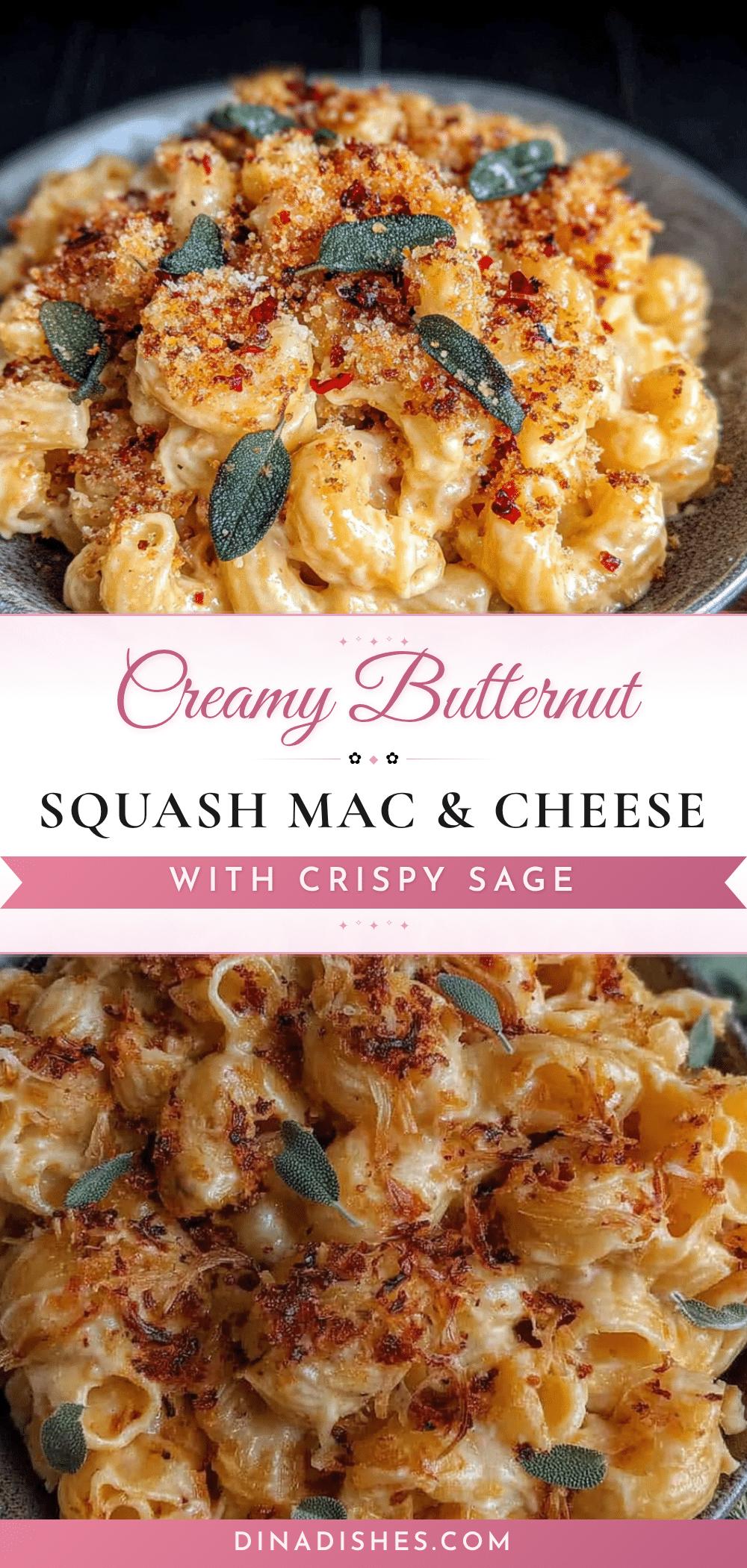
Creamy Butternut Squash Mac and Cheese with Crispy Sage

This creamy mac and cheese uses roasted butternut squash for a velvety, nutrient-packed sauce, topped with crispy sage for a savory crunch. It’s a crowd-pleasing comfort dish that feels fancy without the stress.
- Prep Time: 20 minutes
- Cook Time: 45 minutes
- Total Time: 1 hour 5 minutes
- Yield: 8 servings 1x
- Category: Main Course
- Cuisine: American
Ingredients
- 1 medium butternut squash (about 2–3 lbs / 900g-1.4kg), peeled, seeded, and cubed
- 2 tablespoons olive oil
- 1/2 teaspoon salt
- 1/4 teaspoon black pepper
- 1 lb (450g) dried pasta (cavatappi, shells, or elbow macaroni)
- 4 tablespoons unsalted butter
- 1 small yellow onion, finely diced
- 3 cloves garlic, minced
- 1/4 cup (30g) all-purpose flour
- 3 cups (720ml) whole milk
- 1 cup (240ml) low-sodium vegetable or chicken broth
- 1 ½ cups (150g) sharp white cheddar cheese, freshly grated
- 1 cup (100g) Gruyère cheese, freshly grated
- 1/2 cup (50g) Parmesan cheese, freshly grated
- 1/2 teaspoon smoked paprika
- 1/4 teaspoon ground nutmeg
- Salt and black pepper to taste
- 3 tablespoons unsalted butter (for topping)
- 15–20 fresh sage leaves
- 1/2 cup (50g) panko breadcrumbs (optional)
Instructions
- Preheat oven to 400°F (200°C). Toss cubed butternut squash with olive oil, salt, and pepper on a baking sheet. Spread in a single layer. Roast for 25-30 minutes until tender and edges are caramelized. Let cool slightly.
- While squash roasts, bring a large pot of salted water to a boil. Cook pasta according to package directions until al dente (1-2 minutes less than recommended). Drain, reserving 1 cup (240ml) pasta water. Set aside.
- Transfer roasted squash to a blender or large bowl. Add 1 cup (240ml) milk. Blend until completely smooth and velvety. Set aside.
- In a large Dutch oven or heavy-bottomed pot, melt 4 tablespoons butter over medium heat. Add diced onion and cook 4-5 minutes until softened. Add minced garlic and cook 30 seconds until fragrant.
- Sprinkle flour over onion mixture. Whisk constantly for 1-2 minutes to cook out raw flour taste. Slowly pour in remaining 2 cups (480ml) milk and vegetable broth, whisking continuously. Bring to a gentle simmer until thickened.
- Pour squash puree into the pot. Whisk to combine. Reduce heat to low. Add cheeses one handful at a time, stirring until each addition is fully melted. Stir in smoked paprika and nutmeg. Season with salt and pepper to taste.
- Add drained pasta to the sauce. Stir gently until every piece is coated. If sauce is too thick, add a splash of reserved pasta water until desired consistency.
- In a small skillet, melt 3 tablespoons butter over medium heat. Add sage leaves in a single layer. Fry 30-60 seconds per side until dark green and crisp. Transfer to paper towel-lined plate. If using panko, add to remaining butter in pan and toast 1-2 minutes until golden.
- Optional: Transfer mac and cheese to a buttered 9×13-inch baking dish. Sprinkle crispy sage and panko mixture on top. Bake at 375°F (190°C) for 15-20 minutes until bubbly and top is lightly golden.
Notes
For best results, grate your own cheese to avoid graininess. Undercook pasta slightly if baking. The crispy sage is the star—don’t skip it. Make ahead: assemble without sage topping, refrigerate up to 24 hours, then add topping and bake, adding 5-10 minutes to baking time.
Nutrition
- Serving Size: 1 serving (about 1/8
- Calories: 520
- Sugar: 8
- Sodium: 680
- Fat: 28
- Saturated Fat: 16
- Carbohydrates: 48
- Fiber: 5
- Protein: 22
Keywords: butternut squash mac and cheese, creamy mac and cheese, crispy sage, comfort food, vegetarian, fall recipe, holiday side dish