I was loading groceries into my car last Tuesday—a gray, forgettable afternoon in the parking lot of a strip mall—when the smell hit me. It wasn’t perfume or exhaust or the damp wool of my coat. It was something warmer, deeper, a whiff of red wine and browned meat and thyme that seemed to come from nowhere. And suddenly I was eight years old, standing in my Aunt Claire’s narrow kitchen in Philadelphia, watching her stir a pot on the stove while snow piled up on the windowsill behind her.
Aunt Claire wasn’t a showy cook. She didn’t own a single fancy gadget, and her spice rack was basically salt, pepper, and a jar of dried oregano that had probably been there since the 80s. But her beef stew? That was different. That was the thing she made when company was coming, when she wanted to fill the house with something that felt like a hug you could eat. I watched her brown the meat in batches—patient, methodical—while I sat on a wobbly stool and peppered her with questions. She never wrote the recipe down. She just knew it.
I’ve spent years trying to get that exact taste back. And let me tell you, I’ve had some disasters along the way. Too much wine, not enough browning, a stew that tasted more like a sad marinara than a rich, velvety braise. But this version? This is the one. It’s the stew I make when I want to walk into a room full of friends and watch their faces change after the first bite. It’s the one that makes people close their eyes and go quiet for a second. Maybe you’ve been there—chasing a flavor from your past that you can almost but not quite hold onto. This recipe is my way of holding onto hers.
Why You’ll Love This Recipe
Honestly, this isn’t just another beef stew recipe. This is the one you’ll pull out when you want to feed a crowd without spending the whole evening in the kitchen. It’s built for hosting—scales beautifully, gets better as it sits, and makes your house smell like you’ve been slaving away all day (even if you prepped everything the night before).
- Deep, Complex Flavor: The red wine isn’t just a splash—it’s the backbone. Combined with seared beef, aromatic vegetables, and a slow simmer, it creates a sauce that’s rich, savory, and just a little bit luxurious.
- Perfect for a Crowd: This recipe makes a generous amount, ideal for dinner parties, potlucks, or holiday gatherings. It’s a dish that says “I made an effort” without making you feel frantic.
- Make-Ahead Magic: Like all great stews, this one tastes even better the next day. You can make it fully ahead, refrigerate it, and reheat it just before your guests arrive. The flavors meld and deepen overnight.
- Simple, Humble Ingredients: No weird specialty items here. Chuck beef, carrots, onions, celery, garlic, a decent bottle of red wine, and some pantry staples. Your grocery list is short and your neighbors will be jealous of the smell.
- Always a Showstopper: I’ve served this at casual weeknight dinners and at a New Year’s Eve party with a dozen people. Every single time, someone asks for the recipe. It’s that kind of dish—the one that earns you a reputation as “the person who makes that amazing stew.”
This isn’t just another version of beef stew. It’s the version I tweaked over dozens of batches—adjusting the wine-to-broth ratio, testing different searing techniques, figuring out the exact moment to add the potatoes so they’re tender but not mushy. It’s comfort food that feels special enough for a celebration, and honestly, it’s the kind of recipe that makes you feel like a really good cook. Because you are.
What Ingredients You Will Need
This recipe relies on a handful of quality ingredients that work together to create that deep, soul-warming flavor. Nothing fancy, but each one plays a crucial role.
- 2 ½ pounds beef chuck, cut into 1 ½-inch cubes: Chuck is the king of stew meat. It has enough marbling to stay tender during the long simmer. Don’t use lean cuts like sirloin—they’ll turn tough and dry. (I always buy a whole chuck roast and cube it myself for better control over size.)
- 2 tablespoons olive oil: For searing the beef. Use a good quality oil with a high smoke point, like regular olive oil (not extra-virgin, which can burn).
- 1 large yellow onion, diced: About 2 cups. Onions add sweetness and depth. Don’t rush the browning of them—this is where flavor builds.
- 3 carrots, peeled and cut into 1-inch chunks: They add sweetness and color. I prefer standard orange carrots, but rainbow carrots work too for a fun twist.
- 3 celery stalks, cut into 1-inch pieces: Celery adds a subtle savory note and texture. Don’t skip it—it’s part of the classic mirepoix base.
- 4 cloves garlic, minced: Fresh garlic is non-negotiable here. The jarred stuff just doesn’t have the same punch.
- ¼ cup tomato paste: This concentrates the umami flavor. I use the double-concentrated kind in a tube—it lasts longer and has a richer taste.
- 1 ½ cups dry red wine: Use something you’d actually drink. A Cabernet Sauvignon, Merlot, or Côtes du Rhône works beautifully. (I’ve used a $10 bottle and a $25 bottle—the $10 one was fine, the $25 one made the stew noticeably better.)
- 4 cups beef broth: Low-sodium is best so you can control the salt. I recommend Better Than Bouillon paste—it has a deeper, more authentic beef flavor than most boxed broths.
- 1 ½ pounds Yukon Gold potatoes, peeled and cut into 1 ½-inch chunks: These hold their shape beautifully and get creamy without falling apart. Russets will disintegrate, so stick with Yukon Golds.
- 2 bay leaves: For that subtle herbal background note. Fresh or dried both work.
- 2 sprigs fresh thyme: Fresh thyme is best here—it infuses the stew with a gentle earthiness. If you only have dried, use 1 teaspoon.
- 1 tablespoon Worcestershire sauce: This adds a savory, slightly tangy depth that you can’t quite identify but would miss if it were gone.
- Salt and freshly ground black pepper: To taste. Be generous with the pepper—it cuts through the richness.
- 2 tablespoons all-purpose flour (optional): For thickening, if you prefer a thicker stew. I often skip it and let the potatoes naturally thicken the broth.
- Fresh parsley, chopped (for garnish): A sprinkle of green at the end adds freshness and color.
Equipment Needed
You don’t need a professional kitchen to pull this off, but a few key tools make the process smoother.
- Large Dutch Oven or Heavy-Bottomed Pot: A 6- to 7-quart Dutch oven is ideal. It holds heat evenly and can go from stovetop to oven (if you’re braising). I use a Lodge enameled cast iron one—it’s affordable and works like a dream. If you don’t have one, a heavy stainless steel pot with a tight-fitting lid will do.
- Sharp Chef’s Knife: For cubing the beef and chopping vegetables. A dull knife makes everything harder and more dangerous.
- Cutting Board: A large wooden or plastic board. I prefer wood—it’s gentler on knives.
- Wooden Spoon or Spatula: For scraping up the flavorful browned bits (fond) from the bottom of the pot. A flat-edged wooden spoon works best.
- Measuring Cups and Spoons: For accuracy, especially with the wine and broth.
- Tongs: For flipping the beef cubes while searing. They give you better control than a fork.
- Large Bowl: To hold the seared beef while you cook the vegetables.
Budget-Friendly Tip: If you don’t own a Dutch oven, a slow cooker can work for the simmering stage. Sear the beef and sauté the vegetables in a skillet first, then transfer everything to the slow cooker and cook on low for 6-8 hours. The texture won’t be quite as rich, but it’s still delicious.
Preparation Method
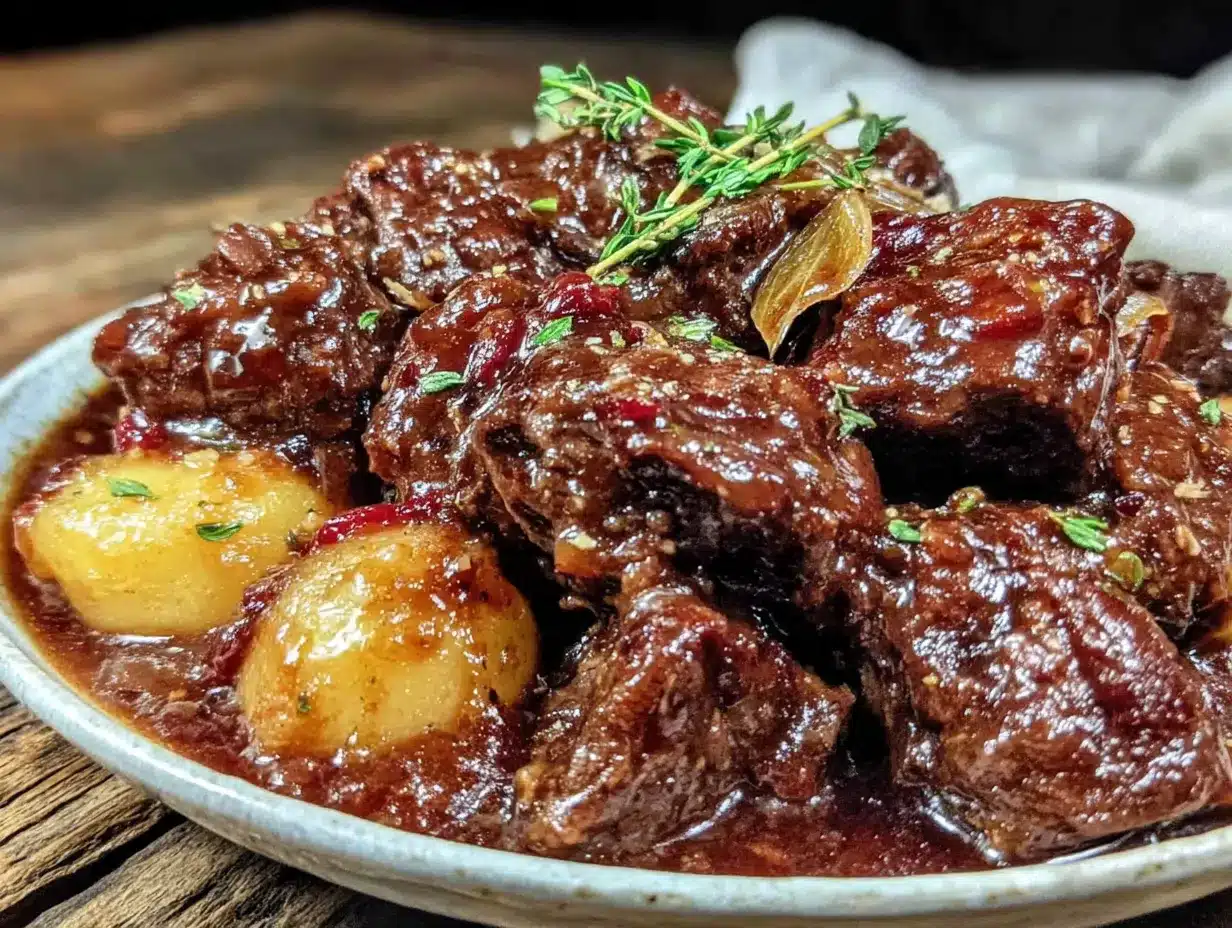
This is where the magic happens. Take your time with each step—the stew rewards patience.
- Prep the beef (10 minutes): Pat the beef cubes dry with paper towels. This is crucial—wet meat won’t brown properly. Season generously with salt and pepper on all sides. Let them sit at room temperature for 15 minutes while you prep the vegetables.
- Sear the beef (15-20 minutes): Heat 1 tablespoon of olive oil in your Dutch oven over medium-high heat until it shimmers. Working in batches (don’t crowd the pot!), add the beef cubes in a single layer. Sear for 3-4 minutes per side until deeply browned—a dark crust is what you’re after. Use tongs to turn them. Transfer the seared beef to a large bowl and set aside. (If you crowd the pot, the beef will steam instead of brown. Trust me, I learned this the hard way during a particularly sad stew attempt.)
- Sauté the aromatics (8-10 minutes): Reduce the heat to medium. Add the remaining 1 tablespoon of olive oil. Add the diced onion, carrots, and celery. Cook, stirring occasionally, until the onions are translucent and starting to brown at the edges, about 6 minutes. Add the minced garlic and cook for 1 minute more, until fragrant.
- Add the tomato paste (2 minutes): Stir in the tomato paste and cook, stirring constantly, for 2 minutes. This deepens its flavor and removes any raw taste. The bottom of the pot will look dark and sticky—that’s good.
- Deglaze with wine (3-5 minutes): Pour in the red wine, scraping the bottom of the pot with your wooden spoon to release all those browned bits (the fond). Let the wine bubble and reduce slightly, about 3 minutes. The alcohol will cook off, leaving behind concentrated flavor.
- Combine everything (5 minutes): Return the seared beef to the pot, along with any accumulated juices. Add the beef broth, Worcestershire sauce, bay leaves, and fresh thyme sprigs. Stir to combine. Bring the liquid to a gentle boil, then reduce the heat to low so it’s at a steady, gentle simmer—not a rolling boil.
- Simmer the stew (1 hour 30 minutes): Cover the pot with the lid slightly ajar and let it simmer. After 1 hour, check the meat—it should be starting to get tender. Add the potatoes and stir them in. Continue simmering, covered, for another 30-45 minutes, until the potatoes are fork-tender and the beef is fall-apart tender.
- Thicken (optional, 5 minutes): If you want a thicker stew, mix 2 tablespoons of all-purpose flour with ¼ cup of cold water in a small bowl until smooth. Stir this slurry into the stew and let it simmer, uncovered, for 5 minutes. The liquid will thicken slightly.
- Finish and season (2 minutes): Remove the bay leaves and thyme sprigs (discard them). Taste the stew and adjust seasoning with salt and pepper. I usually add another good crack of black pepper at this point.
- Rest and serve (10 minutes): Let the stew sit off the heat for 10 minutes before serving. This allows the flavors to settle and the meat to relax. Ladle into deep bowls and garnish with fresh parsley.
Cooking Tips & Techniques
Here are the things I wish someone had told me when I first started making stew.
- Don’t skip the sear: This is the single most important step. A deep, dark brown crust on the beef creates layers of flavor. If you rush it or crowd the pan, you’ll end up with gray, sad meat. Take your time, do it in batches, and let the pot get hot between batches.
- Room temperature beef browns better: Let the cubed beef sit out for 15-20 minutes before searing. Cold meat lowers the pan temperature and steams instead of sears.
- The wine matters: Use a wine you’d actually drink. A cheap, overly sweet cooking wine will ruin the stew. A dry red with good structure—like a Cabernet or Malbec—adds complexity. I once used a leftover Zinfandel that was too jammy, and the stew tasted like grape jelly. Learn from my mistake.
- Low and slow is the way: A gentle simmer, not a boil, is what breaks down the collagen in the beef and makes it tender. If you boil it, the meat will toughen and the vegetables will turn to mush. The liquid should have small, lazy bubbles, not a vigorous churn.
- Season as you go: Don’t just salt at the end. Season the beef before searing, add a pinch when you sauté the vegetables, and adjust again before serving. Layered seasoning builds depth.
- Make it ahead for best flavor: This stew is a gift to your future self. Make it a day ahead, refrigerate it, and reheat it gently. The flavors will meld and deepen overnight. I’ve done this for every dinner party I’ve hosted—it takes so much pressure off the day of.
Variations & Adaptations
This recipe is a fantastic base, but don’t be afraid to make it your own. Here are a few ways I’ve tweaked it over the years.
- Vegetarian Version: Swap the beef for 2 pounds of cremini mushrooms (halved or quartered) and use vegetable broth instead of beef broth. Sear the mushrooms in batches until deeply browned—they’ll release their liquid and then reabsorb flavor. The texture is surprisingly meaty.
- Herb Swap: If you don’t have fresh thyme, use 1 teaspoon of dried rosemary or 2 sprigs of fresh oregano. Each brings a different character—rosemary is piney and bold, oregano is slightly floral.
- Add Some Heat: For a subtle kick, add ½ teaspoon of red pepper flakes along with the garlic. It won’t make the stew spicy, just warm and interesting.
- Root Vegetable Medley: Swap half the potatoes for parsnips, turnips, or sweet potatoes. They add sweetness and a different texture. Just cut them into similar-sized chunks so they cook evenly.
- Slow Cooker Method: After searing the beef and sautéing the vegetables, transfer everything to a slow cooker. Add the wine, broth, and seasonings, then cook on low for 7-8 hours or high for 4-5 hours. Add the potatoes in the last hour of cooking so they don’t turn to mush.
- Gluten-Free Thickening: Instead of flour, use 1 tablespoon of cornstarch mixed with 2 tablespoons of cold water. Stir it in at the end and simmer for 5 minutes. Or simply skip the thickener entirely—the potatoes will naturally break down and thicken the broth.
Serving & Storage Suggestions
This stew is a meal in itself, but the right accompaniments can make it feel even more special.
- Serving Temperature: Serve piping hot in deep, wide bowls. The stew should be steaming, with the sauce thick enough to coat the back of a spoon.
- What to Serve Alongside: A crusty baguette or sourdough bread is essential for sopping up the sauce. A simple green salad with a lemony vinaigrette cuts through the richness. For a truly impressive spread, serve it with a side of creamy mashed potatoes—the stew ladled over them is next-level comfort.
- Wine Pairing: Pour the same wine you used in the stew. A full-bodied red like a Cabernet Sauvignon or a Côtes du Rhône is perfect.
- Storing Leftovers: Cool the stew completely, then transfer it to an airtight container. It will keep in the refrigerator for up to 5 days. The flavors actually improve after a day or two—the beef gets more tender and the sauce gets more complex.
- Freezing: This stew freezes beautifully. Portion it into freezer-safe containers or zip-top bags (lay them flat for easy stacking). It will keep for up to 3 months. Thaw overnight in the refrigerator before reheating.
- Reheating: Reheat gently on the stovetop over medium-low heat, stirring occasionally. Add a splash of beef broth or water if the stew has thickened too much. You can also reheat individual portions in the microwave, but the stovetop gives the best texture.
Nutritional Information & Benefits
This stew is hearty and satisfying, but it also packs some nutritional perks.
- Estimated Per Serving (based on 8 servings): Calories: 425, Protein: 38g, Fat: 18g, Carbohydrates: 28g, Fiber: 4g, Sugar: 6g, Sodium: 680mg.
- High-Quality Protein: Beef chuck is a great source of protein, iron, and B vitamins, which support energy and muscle health.
- Vitamin-Rich Vegetables: Carrots and celery provide vitamin A, vitamin K, and antioxidants. Potatoes offer potassium and vitamin C (especially if you leave the skins on).
- Red Wine Benefits: In moderation, red wine contains resveratrol, an antioxidant linked to heart health. Most of the alcohol cooks off during simmering.
- Dietary Considerations: This recipe is naturally gluten-free (if you skip the flour thickener). It’s also dairy-free and nut-free. For a lower-sodium version, use low-sodium broth and go easy on the added salt.
- Personal Note: I love that this stew feels indulgent but is actually balanced. It’s the kind of meal that fills you up without weighing you down—perfect for a cold night when you want something deeply satisfying.
Conclusion
This classic red wine beef stew is more than just a recipe—it’s a way to bring people together. It’s the dish that fills your kitchen with warmth and your home with the kind of aroma that makes everyone gravitate toward the stove. Whether you’re hosting a formal dinner party or a casual get-together with friends, this stew delivers every single time.
I love this recipe because it reminds me of Aunt Claire, but also because it’s become my own. I’ve tweaked it, tested it, and served it to dozens of people who’ve all asked for seconds. It’s forgiving enough for a beginner and impressive enough for a seasoned cook. So go ahead—make a mess, taste as you go, and don’t be afraid to add a little extra pepper. Your guests will thank you, and honestly, you’ll thank yourself when you’re spooning up that last bite the next day.
Have you tried this stew? I’d love to hear how it turned out! Drop a comment below and tell me about your own stew-making adventures—what wine did you use? Did you add any twists? Share your version, and don’t forget to pass this recipe along to a friend who loves to cook. Happy stewing!
Frequently Asked Questions
Can I use a different cut of beef for this stew?
Yes, but stick with tougher, well-marbled cuts like chuck, brisket, or bottom round. Lean cuts like sirloin or tenderloin will become dry and tough during the long simmer. Chuck is the most reliable choice for fall-apart tenderness.
Can I make this stew in a slow cooker or Instant Pot?
Absolutely. For a slow cooker, sear the beef and sauté the vegetables on the stovetop first, then transfer everything to the slow cooker. Cook on low for 7-8 hours or high for 4-5 hours. Add the potatoes in the last hour. For an Instant Pot, use the sauté function for searing, then pressure cook on high for 35 minutes with a natural release.
How can I thicken the stew if it’s too thin?
You have a few options. Mix 2 tablespoons of all-purpose flour with ¼ cup of cold water to make a slurry, then stir it into the simmering stew. Alternatively, mash a few of the cooked potatoes against the side of the pot—they’ll release their starch and naturally thicken the broth. You can also let the stew simmer uncovered for 10-15 minutes to reduce the liquid.
Can I freeze this stew?
Yes, this stew freezes beautifully. Let it cool completely, then transfer it to freezer-safe containers or zip-top bags. It will keep for up to 3 months. Thaw overnight in the refrigerator before reheating gently on the stovetop. Add a splash of broth if it seems too thick after thawing.
What’s the best wine to use for this recipe?
Use a dry red wine that you’d enjoy drinking. Cabernet Sauvignon, Merlot, Malbec, or a Côtes du Rhône all work wonderfully. Avoid sweet wines like port or cooking wine, as they’ll make the stew taste unbalanced. A good rule of thumb: if you wouldn’t drink it, don’t cook with it.
Pin This Recipe!
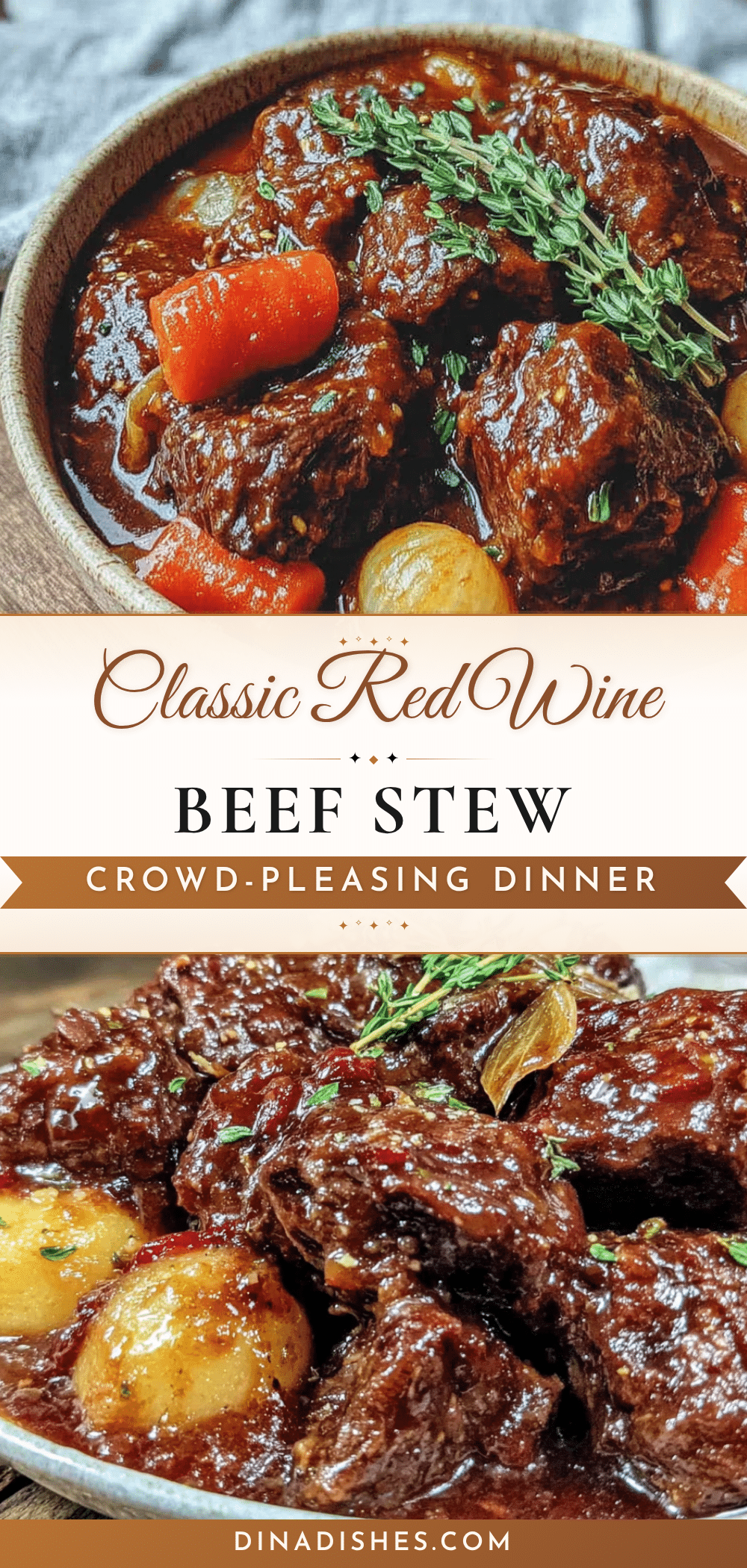
Classic Red Wine Beef Stew – Easy Crowd-Pleasing Dinner Recipe
This classic red wine beef stew is a rich, deeply flavorful dish that fills your home with warmth and brings people together. Made with tender beef chuck, aromatic vegetables, and a full-bodied red wine, it’s perfect for dinner parties, potlucks, or cozy weeknight dinners.
- Prep Time: 15 minutes
- Cook Time: 1 hour 45 minutes
- Total Time: 2 hours
- Yield: 8 servings 1x
- Category: Main Course
- Cuisine: American
Ingredients
- 2 ½ pounds beef chuck, cut into 1 ½-inch cubes
- 2 tablespoons olive oil
- 1 large yellow onion, diced (about 2 cups)
- 3 carrots, peeled and cut into 1-inch chunks
- 3 celery stalks, cut into 1-inch pieces
- 4 cloves garlic, minced
- ¼ cup tomato paste
- 1 ½ cups dry red wine (e.g., Cabernet Sauvignon, Merlot, or Côtes du Rhône)
- 4 cups low-sodium beef broth
- 1 ½ pounds Yukon Gold potatoes, peeled and cut into 1 ½-inch chunks
- 2 bay leaves
- 2 sprigs fresh thyme (or 1 teaspoon dried)
- 1 tablespoon Worcestershire sauce
- Salt and freshly ground black pepper, to taste
- 2 tablespoons all-purpose flour (optional, for thickening)
- Fresh parsley, chopped (for garnish)
Instructions
- Prep the beef: Pat the beef cubes dry with paper towels. Season generously with salt and pepper on all sides. Let them sit at room temperature for 15 minutes while you prep the vegetables.
- Sear the beef: Heat 1 tablespoon of olive oil in a large Dutch oven over medium-high heat until shimmering. Working in batches, add the beef cubes in a single layer. Sear for 3-4 minutes per side until deeply browned. Transfer the seared beef to a large bowl and set aside.
- Sauté the aromatics: Reduce the heat to medium. Add the remaining 1 tablespoon of olive oil. Add the diced onion, carrots, and celery. Cook, stirring occasionally, until the onions are translucent and starting to brown, about 6 minutes. Add the minced garlic and cook for 1 minute more, until fragrant.
- Add the tomato paste: Stir in the tomato paste and cook, stirring constantly, for 2 minutes.
- Deglaze with wine: Pour in the red wine, scraping the bottom of the pot with a wooden spoon to release the browned bits. Let the wine bubble and reduce slightly, about 3 minutes.
- Combine everything: Return the seared beef to the pot, along with any accumulated juices. Add the beef broth, Worcestershire sauce, bay leaves, and fresh thyme sprigs. Stir to combine. Bring to a gentle boil, then reduce the heat to low so it’s at a steady, gentle simmer.
- Simmer the stew: Cover the pot with the lid slightly ajar and let it simmer. After 1 hour, check the meat—it should be starting to get tender. Add the potatoes and stir them in. Continue simmering, covered, for another 30-45 minutes, until the potatoes are fork-tender and the beef is fall-apart tender.
- Thicken (optional): If you want a thicker stew, mix 2 tablespoons of all-purpose flour with ¼ cup of cold water until smooth. Stir this slurry into the stew and let it simmer, uncovered, for 5 minutes.
- Finish and season: Remove the bay leaves and thyme sprigs. Taste the stew and adjust seasoning with salt and pepper.
- Rest and serve: Let the stew sit off the heat for 10 minutes before serving. Ladle into deep bowls and garnish with fresh parsley.
Notes
For best flavor, make the stew a day ahead and refrigerate overnight. The flavors meld and deepen. Use a dry red wine you’d enjoy drinking—avoid sweet wines or cooking wine. Let the beef come to room temperature before searing for better browning. If using a slow cooker, sear the beef and sauté the vegetables first, then transfer to the slow cooker and cook on low for 7-8 hours, adding potatoes in the last hour.
Nutrition
- Serving Size: 1 serving (about 1 ½
- Calories: 425
- Sugar: 6
- Sodium: 680
- Fat: 18
- Saturated Fat: 6
- Carbohydrates: 28
- Fiber: 4
- Protein: 38
Keywords: beef stew, red wine beef stew, classic beef stew, comfort food, dinner party, crowd-pleasing, make-ahead, winter recipe