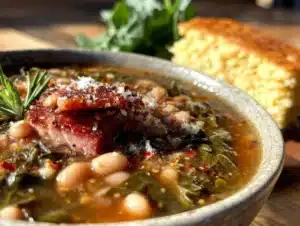
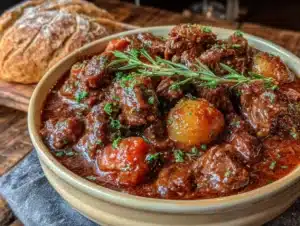
I swore I hated beef stew. For years. The kind of beef stew I grew up with was a sad, gray-brown affair—mushy carrots floating in a thin broth that tasted more like boiled regret than actual food. My grandmother made it every other Sunday, and I’d push the chunks of meat around my bowl, hoping they’d disappear. So when a friend invited me to a winter dinner party and said she was making “the best Guinness beef stew you’ll ever have,” I smiled politely and mentally planned to grab a burger on the way home. Then I walked into her kitchen. The smell hit me before I even took off my coat—deep, malty, savory, with something almost sweet curling through it. I found her at the stove, stirring a pot that looked like it held liquid velvet. “You have to try this,” she said, handing me a spoon. I took a bite. And then I took another. And another. I stood there, eating stew straight from the pot, while she laughed and told me I looked exactly like someone who’d just been proven wrong. She wasn’t wrong. That night, I asked for the recipe, and I’ve been making it for every gathering I host ever since. It’s the dish that turned me into a stew person—and honestly, it might do the same for you.
Why You’ll Love This Recipe
Let me tell you why this Guinness beef stew has become my go-to for every dinner party, potluck, and holiday gathering I’ve hosted over the last five years. It’s not just because it tastes incredible—though it absolutely does. It’s because this recipe delivers on every level without making you feel like you’re working in a professional kitchen. I’ve tested it on picky eaters, serious foodies, and even my uncle who “doesn’t eat stew.” Every single time, I get the same response: “Can I have the recipe?”
- Deep, Rich Flavor: The Guinness stout adds a malty, slightly bitter depth that you just can’t get from red wine or broth alone. It’s the secret to that “what’s in this?” reaction from your guests.
- Tender, Fall-Apart Beef: With the right cut of meat and a low-and-slow braise, the chuck roast becomes so tender it practically melts on your tongue. No chewy chunks here.
- Perfect for Hosting: You can make this entirely ahead of time—it actually tastes better the next day. That means you can actually enjoy your own party instead of being stuck in the kitchen.
- Simple Ingredients, No Fuss: Everything in this recipe is easy to find at any grocery store. No specialty shops, no expensive imports. Just good, honest food.
- Crowd-Pleasing Comfort: I’ve served this to groups of four and crowds of twelve, and it always gets the same response—silence while everyone eats, followed by requests for seconds.
What makes this version different from all the other stews out there? It’s the balance. The Guinness doesn’t overpower the dish; it just deepens everything. The root vegetables soak up that rich broth without turning to mush. And the final touch—a splash of balsamic vinegar right at the end—brightens the whole pot and keeps it from feeling heavy. This isn’t just another beef stew. It’s the one you’ll reach for when you want to impress without the stress.
What Ingredients You Will Need
This recipe uses simple, hearty ingredients that come together to create something truly special. Most of these are pantry staples or easily found at your local grocery store, which makes it perfect for last-minute entertaining. Let’s walk through each one so you know exactly what to look for.
- 3 pounds beef chuck roast, cut into 2-inch cubes (trim off any large pieces of fat, but leave a little for flavor)
- 2 tablespoons olive oil, divided (use a good quality one for browning—it makes a difference)
- 1 large yellow onion, diced (about 2 cups)
- 4 cloves garlic, minced (fresh is best, but jarred works in a pinch)
- 3 tablespoons tomato paste (I prefer the double-concentrated kind in a tube—it adds deeper flavor)
- 1 bottle (11.2 ounces) Guinness Draught stout (not the extra stout—it can be too bitter)
- 4 cups beef broth, low-sodium (I use Swanson or Kitchen Basics)
- 2 tablespoons Worcestershire sauce
- 1 tablespoon balsamic vinegar (this is my secret weapon—adds brightness at the end)
- 2 bay leaves
- 4 sprigs fresh thyme (or 1 teaspoon dried)
- 1 teaspoon salt, plus more to taste
- ½ teaspoon black pepper, freshly ground
- 4 large carrots, peeled and cut into 1-inch chunks (about 2 cups)
- 3 parsnips, peeled and cut into 1-inch chunks (about 1½ cups)
- 2 large Yukon Gold potatoes, peeled and cut into 1½-inch chunks (about 2 cups)
- 2 large celery stalks, cut into 1-inch pieces (about 1 cup)
- 2 tablespoons unsalted butter
- 2 tablespoons all-purpose flour (for a gluten-free version, use cornstarch slurry instead)
When I’m shopping for this stew, I always look for a chuck roast with good marbling. The fat renders down during cooking and keeps the meat incredibly tender. For the Guinness, I’ve tried other stouts, but the classic Draught is the most balanced—not too bitter, not too sweet. And for the vegetables, I like to keep the chunks roughly the same size so they cook evenly. If you can’t find parsnips, just double up on the carrots. No one will complain.
Equipment Needed
You don’t need a lot of fancy tools to make this stew, but a few key pieces will make your life easier. Here’s what I use every time:
- Large Dutch oven (5 to 7 quarts) – This is my workhorse. The heavy bottom distributes heat evenly, and the tight-fitting lid locks in moisture. If you don’t have one, a heavy-bottomed stockpot works, but you’ll need to watch the liquid levels more closely.
- Sharp chef’s knife – A good knife makes cutting the beef and vegetables so much safer and faster. I use a 8-inch Wusthof, but any sharp knife will do.
- Cutting board – Go for a large wooden or plastic board. You’ll be doing a lot of chopping.
- Wooden spoon – Perfect for scraping up all those browned bits from the bottom of the pot.
- Measuring cups and spoons – For accuracy, especially with the liquids.
- Tongs – For flipping the beef in the hot oil without splashing.
- Small bowl – For mixing the flour and butter into a beurre manié (trust me on this).
If you don’t have a Dutch oven, you can use a slow cooker for the braising step. Just brown the meat and sauté the vegetables on the stove first, then transfer everything to the slow cooker and cook on low for 8 hours. I’ve done it that way when I’m short on oven space, and it works beautifully.
Preparation Method
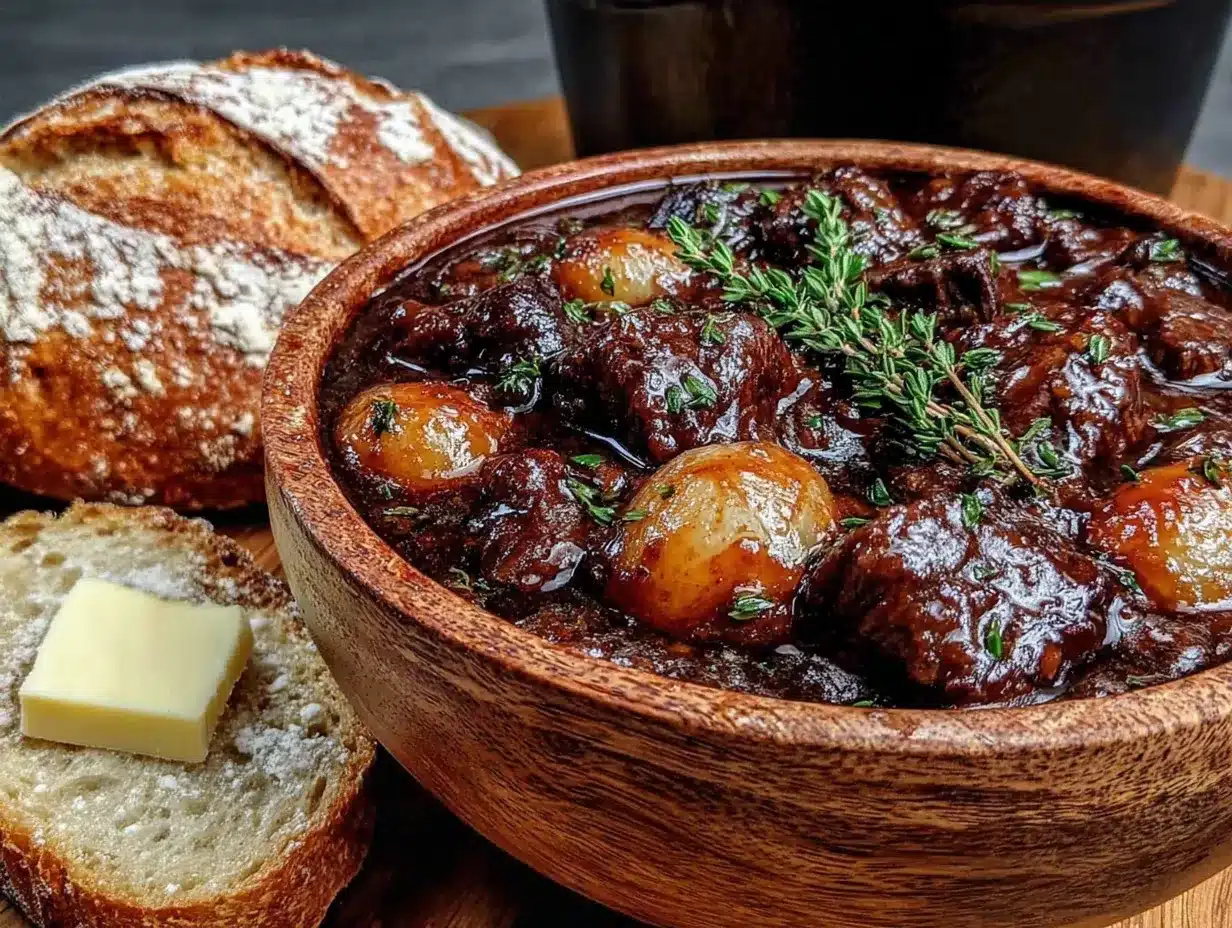
Making this stew is a labor of love, but it’s not complicated. Follow these steps, and you’ll have a pot of something truly special. I’ve included time estimates and sensory cues so you know exactly what to look for at each stage.
- Pat the beef cubes dry with paper towels. This is so important—wet meat won’t brown properly. Season generously with salt and pepper. Let them sit at room temperature for 15 minutes while you prep the vegetables.
- Heat 1 tablespoon of olive oil in your Dutch oven over medium-high heat. When the oil shimmers (you’ll see tiny ripples), add half the beef cubes in a single layer. Don’t crowd the pot—cook in batches. Let them sear undisturbed for 3-4 minutes until a deep brown crust forms. Flip and repeat on the other side. Transfer to a plate. Repeat with the remaining oil and beef.
- Reduce heat to medium. Add the diced onion to the pot. Scrape up the brown bits from the bottom with your wooden spoon—that’s pure flavor. Cook for 5-6 minutes until the onion is soft and translucent. Add the garlic and cook for 1 minute more, until fragrant.
- Stir in the tomato paste. Cook for 2 minutes, stirring constantly. It will darken and smell incredible. This step deepens the umami flavor.
- Pour in the Guinness. It will foam up—that’s normal. Scrape the bottom again to release any remaining browned bits. Let it simmer for 2-3 minutes, allowing the alcohol to cook off slightly.
- Return the beef to the pot. Add the beef broth, Worcestershire sauce, bay leaves, and thyme sprigs. Bring to a gentle boil, then reduce the heat to low. Cover and let it simmer for 1½ hours. The liquid should be at a steady, gentle bubble—not a rolling boil.
- After 1½ hours, add the vegetables. Stir in the carrots, parsnips, potatoes, and celery. Make sure they’re submerged in the liquid. Cover and cook for another 45 minutes to 1 hour, until the vegetables are tender when pierced with a fork and the beef is fall-apart tender.
- While the stew is finishing, make the beurre manié. In a small bowl, mash together the softened butter and flour with a fork until it forms a smooth paste. This will thicken the stew without lumps.
- Remove the bay leaves and thyme stems. Stir in the beurre manié, a little at a time, until the broth thickens to your liking. Let it simmer for 5 minutes.
- Finish with the balsamic vinegar. Stir it in, taste, and adjust salt and pepper. The vinegar brightens everything and balances the richness.
Here’s a tip I learned the hard way: don’t skip the browning step. The first time I made this, I was in a hurry and just dumped everything in the pot. The stew was okay, but it lacked that deep, caramelized flavor. Browning the beef and tomato paste is where the magic happens. Also, if the stew looks too thick at any point, just add a splash of beef broth or water. You can always adjust the consistency at the end.
Cooking Tips & Techniques
Over the years, I’ve made this stew dozens of times, and I’ve picked up a few tricks that make a real difference. Let me share them with you so you can skip the trial-and-error part.
Don’t rush the browning. I know it’s tempting to crank the heat and get it over with, but medium-high is the sweet spot. If the heat is too high, the sugar in the meat will burn and turn bitter. If it’s too low, the meat will steam instead of sear. Look for that deep mahogany color—it takes about 3-4 minutes per side. And don’t move the meat around once it’s in the pan. Let it sit and develop that crust.
Use the right cut of beef. Chuck roast is my go-to because it has enough marbling to stay tender during the long braise. Avoid lean cuts like sirloin or round—they’ll turn tough and dry. If you can find it, look for “chuck shoulder” or “chuck eye” for even better results.
Let it rest. This is the hardest lesson for me to follow, but it’s worth it. The stew tastes even better the next day. The flavors meld together, the beef becomes more tender, and the broth thickens naturally. If you’re serving it the same day, let it sit for at least 30 minutes after cooking before serving. It gives the flavors time to settle.
Watch your salt. Beef broth and Worcestershire sauce both contain salt, so go easy at the beginning. I season the meat generously before browning, but I wait to add more salt until the end. Taste it after the balsamic vinegar goes in—you might not need any more.
Multitask like a pro. While the stew is simmering, you can prep your side dishes, set the table, or just relax with a glass of wine. The stew does all the work on its own. I usually make a batch of crusty bread or creamy mashed potatoes to serve alongside, and I prep those during the last 30 minutes of cooking.
Variations & Adaptations
One of the things I love about this stew is how flexible it is. You can adapt it to suit your taste, dietary needs, or what you have in the fridge. Here are a few variations I’ve tried and loved:
- Vegetarian Version: Swap the beef for 2 pounds of cremini mushrooms, halved. Use vegetable broth instead of beef broth, and add a tablespoon of soy sauce for umami. The mushrooms will release their own liquid and create a rich, savory broth. I’ve made this for a vegetarian friend, and she asked for the recipe twice.
- Slow Cooker Adaptation: Brown the beef and sauté the vegetables on the stove first, then transfer everything (including the Guinness and broth) to a slow cooker. Cook on low for 8 hours. Add the vegetables during the last 2 hours so they don’t turn to mush. This is my go-to for busy days when I want dinner ready when I walk in the door.
- Irish-Inspired Twist: Add 1 pound of baby potatoes (halved) instead of the Yukon Golds, and throw in a cup of frozen peas during the last 10 minutes. The peas add a pop of sweetness and color that’s very traditional. I did this for a St. Patrick’s Day party, and it was a hit.
- Herb Swap: If you don’t have fresh thyme, use 2 teaspoons of dried rosemary instead. It gives the stew a slightly different, more piney flavor that pairs beautifully with the Guinness. I’ve also used a bouquet garni (a bundle of parsley, thyme, and bay leaf tied together) when I had fresh herbs on hand.
- Gluten-Free Option: Skip the flour and butter beurre manié. Instead, mix 2 tablespoons of cornstarch with 2 tablespoons of cold water to make a slurry. Stir it into the stew during the last 10 minutes of cooking. It thickens just as well without any gluten.
I once made a version with sweet potatoes instead of parsnips because that’s what I had in the pantry. It was sweeter than usual, but my kids loved it. Don’t be afraid to experiment—the stew is forgiving.
Serving & Storage Suggestions
This stew is the star of the show, but the right sides and presentation can make it unforgettable. Here’s how I serve and store it.
Serving Temperature and Presentation: Serve the stew piping hot in deep bowls. I like to ladle it over a scoop of creamy mashed potatoes or alongside a thick slice of crusty sourdough bread for dipping. The bread soaks up that incredible broth, and honestly, it’s my favorite part of the meal. For a dinner party, I garnish each bowl with a sprig of fresh thyme or a sprinkle of chopped parsley. It adds a pop of green that looks beautiful against the dark stew.
Complementary Dishes and Beverages: A simple green salad with a tangy vinaigrette cuts through the richness of the stew. For drinks, the obvious choice is a pint of Guinness, but a full-bodied red wine like a Malbec or Zinfandel works beautifully too. If you’re serving non-alcoholic options, a sparkling water with a squeeze of lemon is a nice palate cleanser.
Storage Instructions: This stew keeps beautifully in the refrigerator for up to 5 days. Let it cool completely before transferring to an airtight container. The flavors actually deepen over time, so leftovers are a gift. You can also freeze it for up to 3 months. I portion it into individual containers for easy lunches. Just thaw overnight in the fridge and reheat gently.
Reheating Methods: The best way to reheat is on the stovetop over medium-low heat, stirring occasionally. Add a splash of beef broth or water if it’s too thick. You can also microwave individual portions in 30-second bursts, stirring between each. The texture stays surprisingly good either way. I’ve reheated this stew for lunch at work, and it still tastes like I made it that morning.
Flavor Development Over Time: Here’s a secret: this stew is even better on day two. The Guinness mellows out, the beef becomes more tender, and the vegetables soak up all that rich broth. If you’re hosting a dinner party, I highly recommend making it a day ahead. Just reheat it gently before your guests arrive. It takes the pressure off and gives you more time to enjoy the evening.
Nutritional Information & Benefits
While this stew is undeniably indulgent, it also has some surprising nutritional benefits. Here’s a quick look at what you’re getting in each serving (based on 8 servings).
| Nutrient | Amount Per Serving |
|---|---|
| Calories | 485 |
| Protein | 42g |
| Fat | 22g |
| Carbohydrates | 28g |
| Fiber | 6g |
| Sugar | 9g |
| Sodium | 780mg |
Health Benefits of Key Ingredients: The beef provides high-quality protein and iron, which supports energy levels and healthy blood. Carrots and parsnips are packed with vitamin A and fiber, while the garlic and onions offer immune-boosting compounds. The Guinness itself contains antioxidants and B vitamins, though I’d argue the flavor is the real benefit.
Dietary Considerations: This recipe is naturally dairy-free if you skip the butter and use olive oil instead. It can be made gluten-free with the cornstarch slurry option. It’s also low in added sugar—the sweetness comes entirely from the vegetables and the balsamic vinegar. If you’re watching your sodium, use low-sodium broth and go easy on the added salt.
Potential Allergens: This recipe contains gluten (from the flour) and dairy (from the butter). Both can be easily substituted as noted above. Always check your Worcestershire sauce—some brands contain anchovies, which may be an issue for those with fish allergies.
I personally love that this stew feels like a treat but still fits into a balanced diet. It’s the kind of meal that fills you up without weighing you down, especially when served with a big pile of vegetables.
Conclusion
This Guinness beef stew has become my signature dish for a reason. It’s the recipe I turn to when I want to feed a crowd, impress a date, or just make a cold winter night feel a little cozier. The deep, malty flavor from the stout, the tender beef, and the sweet root vegetables all come together in a way that feels both rustic and refined. And honestly, it’s not that hard to make. You just need a little patience and a good pot.
I hope you give this stew a try—and I hope it surprises you as much as it surprised me. Don’t be afraid to make it your own. Swap in different vegetables, adjust the herbs, or double the batch for a big party. The beauty of a good stew is that it’s flexible, forgiving, and always rewarding.
If you make this recipe, I’d love to hear about it. Leave a comment below and tell me how it turned out—did your guests ask for the recipe? Did you add your own twist? Share your photos on social media and tag me so I can see your beautiful bowls of comfort. And if you’re looking for other cozy recipes to serve at your next gathering, check out my creamy mushroom soup or my garlic herb roasted chicken for more crowd-pleasing ideas.
Happy cooking, friends. May your stew be rich, your bread be crusty, and your table be full of good company.
Frequently Asked Questions
Can I use a different beer instead of Guinness?
Absolutely. Any dark stout or porter will work well. Avoid light beers or IPAs, as they won’t provide the same depth of flavor. My second choice is a milk stout, which adds a touch of sweetness.
Can I make this stew in a slow cooker?
Yes! Brown the beef and sauté the vegetables on the stove first, then transfer everything to a slow cooker. Cook on low for 8 hours. Add the root vegetables during the last 2 hours so they don’t turn mushy.
How do I thicken the stew if it’s too thin?
You can use the beurre manié (butter and flour paste) as described in the recipe, or mix 2 tablespoons of cornstarch with 2 tablespoons of cold water and stir it in during the last 10 minutes of cooking. Let it simmer until thickened.
Can I freeze the stew?
Yes, this stew freezes beautifully. Let it cool completely, then transfer to airtight containers. It will keep for up to 3 months. Thaw overnight in the fridge and reheat gently on the stovetop or in the microwave.
What can I serve with this stew?
Crusty bread for dipping is a must. Creamy mashed potatoes, buttered egg noodles, or a simple green salad with a tangy vinaigrette are all excellent choices. For drinks, a pint of Guinness or a full-bodied red wine pairs perfectly.
Pin This Recipe!
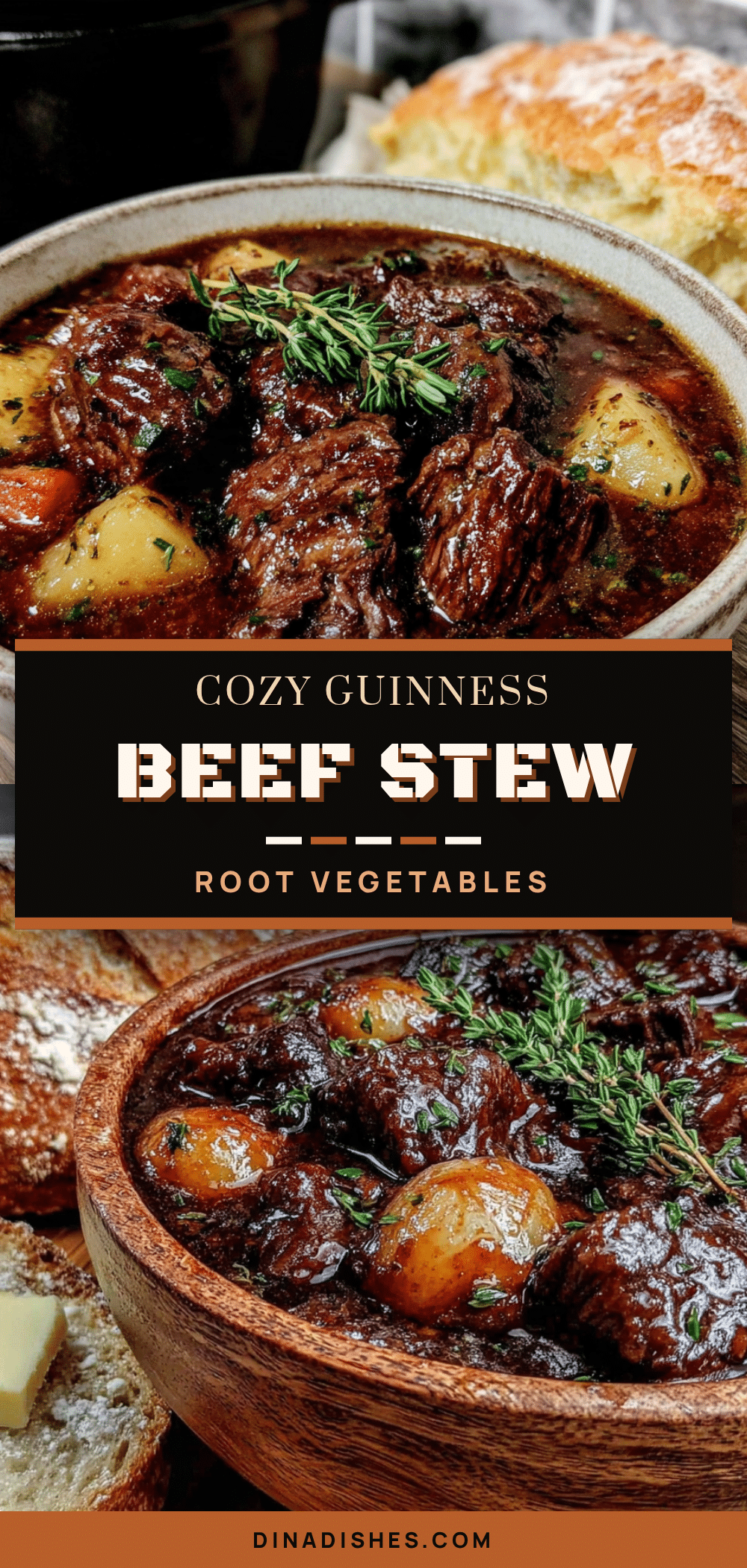
Cozy Guinness Beef Stew with Root Vegetables
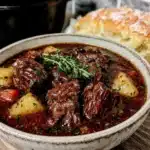
This Guinness beef stew is a rich, hearty dish featuring tender fall-apart beef and root vegetables in a deeply flavorful stout-infused broth. It’s the perfect comfort food for cold winter nights and is sure to impress guests.
- Prep Time: 20 minutes
- Cook Time: 2 hours 30 minutes
- Total Time: 2 hours 50 minutes
- Yield: 8 servings 1x
- Category: Main Course
- Cuisine: Irish
Ingredients
- 3 pounds beef chuck roast, cut into 2-inch cubes
- 2 tablespoons olive oil, divided
- 1 large yellow onion, diced (about 2 cups)
- 4 cloves garlic, minced
- 3 tablespoons tomato paste
- 1 bottle (11.2 ounces) Guinness Draught stout
- 4 cups low-sodium beef broth
- 2 tablespoons Worcestershire sauce
- 1 tablespoon balsamic vinegar
- 2 bay leaves
- 4 sprigs fresh thyme (or 1 teaspoon dried)
- 1 teaspoon salt, plus more to taste
- ½ teaspoon freshly ground black pepper
- 4 large carrots, peeled and cut into 1-inch chunks (about 2 cups)
- 3 parsnips, peeled and cut into 1-inch chunks (about 1½ cups)
- 2 large Yukon Gold potatoes, peeled and cut into 1½-inch chunks (about 2 cups)
- 2 large celery stalks, cut into 1-inch pieces (about 1 cup)
- 2 tablespoons unsalted butter
- 2 tablespoons all-purpose flour (or cornstarch for gluten-free)
Instructions
- Pat the beef cubes dry with paper towels. Season generously with salt and pepper. Let them sit at room temperature for 15 minutes while you prep the vegetables.
- Heat 1 tablespoon of olive oil in your Dutch oven over medium-high heat. When the oil shimmers, add half the beef cubes in a single layer. Don’t crowd the pot—cook in batches. Let them sear undisturbed for 3-4 minutes until a deep brown crust forms. Flip and repeat on the other side. Transfer to a plate. Repeat with the remaining oil and beef.
- Reduce heat to medium. Add the diced onion to the pot. Scrape up the brown bits from the bottom with your wooden spoon. Cook for 5-6 minutes until the onion is soft and translucent. Add the garlic and cook for 1 minute more, until fragrant.
- Stir in the tomato paste. Cook for 2 minutes, stirring constantly. It will darken and smell incredible.
- Pour in the Guinness. It will foam up—that’s normal. Scrape the bottom again to release any remaining browned bits. Let it simmer for 2-3 minutes, allowing the alcohol to cook off slightly.
- Return the beef to the pot. Add the beef broth, Worcestershire sauce, bay leaves, and thyme sprigs. Bring to a gentle boil, then reduce the heat to low. Cover and let it simmer for 1½ hours. The liquid should be at a steady, gentle bubble—not a rolling boil.
- After 1½ hours, add the vegetables. Stir in the carrots, parsnips, potatoes, and celery. Make sure they’re submerged in the liquid. Cover and cook for another 45 minutes to 1 hour, until the vegetables are tender when pierced with a fork and the beef is fall-apart tender.
- While the stew is finishing, make the beurre manié. In a small bowl, mash together the softened butter and flour with a fork until it forms a smooth paste.
- Remove the bay leaves and thyme stems. Stir in the beurre manié, a little at a time, until the broth thickens to your liking. Let it simmer for 5 minutes.
- Finish with the balsamic vinegar. Stir it in, taste, and adjust salt and pepper.
Notes
For best flavor, make the stew a day ahead and reheat gently. The browning step is crucial for deep flavor. If the stew is too thick, add a splash of beef broth or water. For a gluten-free version, use a cornstarch slurry instead of the beurre manié.
Nutrition
- Serving Size: 1 serving (about 1.5
- Calories: 485
- Sugar: 9
- Sodium: 780
- Fat: 22
- Saturated Fat: 8
- Carbohydrates: 28
- Fiber: 6
- Protein: 42
Keywords: Guinness beef stew, Irish stew, beef stew, root vegetables, comfort food, winter stew, stout stew