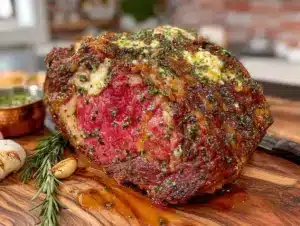
It was 10:47 PM on a random Thursday in February, and I had a serious craving for a meal that felt like a celebration. You know that feeling when the week has been long, the kids are finally asleep, and you just want something that makes you feel like you’ve won at adulting? That was me. I didn’t have a standing rib roast that night—I had a much humbler chuck roast in the fridge. But I did have a stick of butter, a head of garlic, and a crazy idea about a reverse sear that I’d been reading about on a food forum at 2 AM the week before.
Honestly, I thought it was going to be a disaster. I mean, who attempts a prime rib-style technique on a random Thursday with a cut of meat that cost twelve bucks? I almost talked myself out of it. But something about the late hour made me impulsive. I figured, if it flopped, no one would know. The dog would still love me. So I rubbed that cheap roast down with garlic butter, popped it in a low oven, and waited. Let me tell you, the smell that filled my kitchen was almost embarrassing—like I was trying too hard on a school night.
When I finally seared that roast in a screaming hot cast iron skillet, the crust that formed was ridiculous. And the inside? It was the most tender, perfectly medium-rare piece of beef I had ever made at home. I stood at my kitchen counter at midnight, eating slice after slice with my fingers, laughing at how something so simple felt so monumental. That’s when I knew I had to perfect this method with a real prime rib. This recipe for the Best Garlic Herb Butter Prime Rib Roast using the reverse sear method is the result of that weird, wonderful late-night experiment. It’s special enough for a family feast but easy enough that you don’t need a culinary degree.
Why You’ll Love This Recipe
Let me be straight with you—this isn’t just another prime rib recipe. I’ve tested this reverse sear method more times than I care to admit, and it consistently delivers a roast that looks like it came from a high-end steakhouse but costs a fraction of the price. The first time I made this for my family, my husband actually asked if I had secretly ordered takeout. That’s the level of result we’re talking about here.
- Foolproof Tenderness: The reverse sear method ensures the entire roast cooks evenly from edge to center. No more gray, overcooked outer rings and a raw middle.
- Incredible Garlic Herb Crust: That compound butter creates a flavorful, crispy bark that is absolutely addictive. My kids fight over the end pieces.
- Feeds a Crowd on a Budget: A prime rib roast goes a long way. For the price of a few restaurant entrees, you can feed your whole family plus have leftovers for sandwiches that will make your coworkers jealous.
- Stress-Free Cooking: The low-and-slow first phase gives you hours of hands-off time. You can prep sides, set the table, or honestly just take a nap. The final sear takes only minutes.
- Leftovers That Reheat Beautifully: Because the meat is cooked low and slow, it stays juicy even when reheated. I’ve had slices three days later that were still tender and delicious.
What makes this recipe different from every other prime rib out there? It’s the balance. The garlic herb butter isn’t just slathered on—it’s massaged into every crevice and allowed to penetrate the meat while it slowly comes to temperature. The reverse sear locks in that moisture without steaming the roast. And the best part? You don’t need a fancy smoker or a rotisserie. Just your regular oven and a hot pan. This is the kind of meal that makes you close your eyes after the first bite, not because it’s complicated, but because it’s so perfectly simple.
What Ingredients You Will Need
This recipe uses simple, quality ingredients to create something truly spectacular. Most of these are pantry staples or easy to find at any grocery store. The star is the beef, so let’s talk about what to look for.
For the Prime Rib Roast:
- 1 (5-7 pound) bone-in prime rib roast (look for good marbling—those little white flecks of fat mean flavor and tenderness. I prefer Certified Angus Beef for consistent quality)
- 2 tablespoons kosher salt (Diamond Crystal is my go-to—it’s less salty by volume than Morton’s, so you get better control. Don’t skip this step!)
- 1 tablespoon freshly ground black pepper (pre-ground will work in a pinch, but fresh makes a noticeable difference in the crust)
For the Garlic Herb Butter:
- 1/2 cup (1 stick) unsalted butter, softened to room temperature (salted butter will work, just reduce the added salt slightly)
- 6 cloves garlic, minced (I use a microplane for a paste-like consistency—it distributes better than chopped)
- 2 tablespoons fresh rosemary, finely chopped (dried rosemary can be used, but use half the amount and crush it between your fingers first)
- 2 tablespoons fresh thyme leaves (strip the leaves from the stems—nobody wants a twig in their butter)
- 1 tablespoon fresh parsley, finely chopped (optional, but adds a nice freshness)
- 1 teaspoon Worcestershire sauce (this is my secret ingredient—it adds umami depth without tasting like Worcestershire)
- 1/2 teaspoon red pepper flakes (optional, for a tiny kick. My kids don’t even notice it, but it rounds out the flavor)
For the Au Jus (Optional but Highly Recommended):
- 2 cups beef broth (low-sodium is best so you can control the salt level. I like Kitchen Basics brand)
- 1/4 cup dry red wine (or substitute with more beef broth and a splash of balsamic vinegar)
- 1 tablespoon Worcestershire sauce
- Pan drippings from the roast (this is where all the flavor lives!)
Ingredient Selection Tips: When buying your prime rib, look for one that has a nice fat cap on top—about 1/4 inch thick. This fat renders during cooking and bastes the meat naturally. If your roast is already trimmed, don’t worry, the garlic butter will compensate. For the freshest herbs, check the produce section for bunches that look perky, not wilted. If fresh herbs aren’t available, dried herbs work, but reduce the amount by half since dried herbs are more concentrated.
Equipment Needed
You don’t need a professional kitchen to pull this off. Here’s what you’ll actually use:
- Large roasting pan with a rack (a rimmed baking sheet with a wire cooling rack works perfectly if you don’t have a roasting pan)
- Instant-read meat thermometer (this is non-negotiable. I’ve ruined roasts guessing. A $15 digital thermometer from Amazon is worth its weight in gold)
- Cast iron skillet or heavy-bottomed pan (for that final sear. Cast iron holds heat best, but any heavy pan will work)
- Mixing bowl (for the compound butter)
- Chef’s knife and cutting board
- Aluminum foil (for resting the roast)
- Small saucepan (for the au jus)
- Kitchen twine (optional, but helps the roast hold its shape. Your butcher might do this for you)
Budget-Friendly Alternatives: If you don’t have a roasting rack, crumple up a few long strips of aluminum foil into coils and place them in the pan. The roast sits on top, allowing air to circulate underneath. It’s not fancy, but it works. I’ve done this more times than I care to admit.
Preparation Method
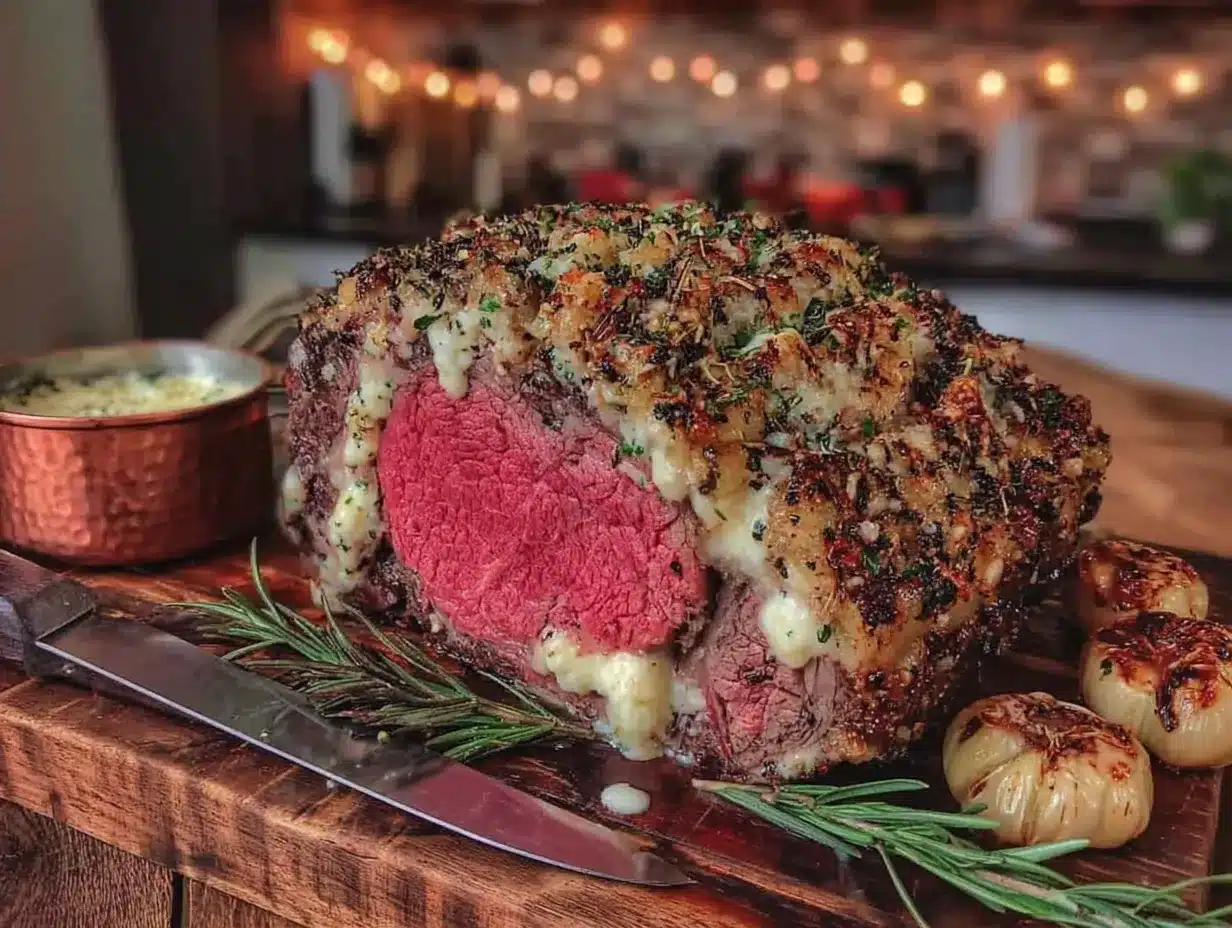
Alright, let’s get cooking. This method has two phases—low and slow, then hot and fast. Trust the process. I promise it’s worth it.
- Prep the Roast (Day Before or at Least 4 Hours Ahead): Pat the prime rib roast dry with paper towels. This is crucial—moisture is the enemy of a good crust. Place the roast on a wire rack set over a baking sheet and refrigerate, uncovered, for at least 4 hours or overnight. This dries out the surface, which means better browning later. I know it seems extra, but try it once and you’ll never skip this step.
- Make the Garlic Herb Butter: In a small bowl, combine the softened butter, minced garlic, rosemary, thyme, parsley, Worcestershire sauce, and red pepper flakes. Mix until everything is evenly distributed. Set aside at room temperature. Don’t use cold butter—it won’t spread properly and will just sit on top of the meat.
- Season the Roast: About 2 hours before cooking, remove the roast from the refrigerator. Rub the garlic herb butter all over the roast, making sure to get it into the crevices between the bones. Then season generously with kosher salt and black pepper. Don’t be shy with the salt—it’s a big piece of meat. Let the roast sit at room temperature for 1-2 hours. This takes the chill off and helps it cook more evenly. I usually set a timer so I don’t forget.
- Preheat the Oven for the Reverse Sear: About 30 minutes before cooking, preheat your oven to 250°F (120°C). Yes, 250°F. I know it feels low, but that’s the magic of the reverse sear. Place the roast on a rack in your roasting pan, bone-side down. The bones act as a natural roasting rack.
- Cook Low and Slow: Insert your meat thermometer into the thickest part of the roast, avoiding the bone. Place the roast in the oven and cook until the internal temperature reaches 125°F (52°C) for medium-rare. This usually takes about 3 to 4 hours for a 5-7 pound roast, but every oven is different—trust your thermometer, not the clock. The roast will look pale and unappetizing at this point. Don’t panic. That’s normal.
- Rest and Prepare for the Sear: Once the roast hits 125°F, remove it from the oven. Tent it loosely with aluminum foil and let it rest for 20-30 minutes. This is a good time to make your au jus (see step 8) and get your cast iron skillet screaming hot. Increase your oven temperature to 500°F (260°C) or as high as it will go. You want it nuclear hot.
- The Final Sear: Place your cast iron skillet over high heat on the stovetop for about 5 minutes. Carefully transfer the rested roast to the hot skillet (you might need two sets of hands—it’s heavy and hot). Sear for 2-3 minutes per side, including the ends, until a deep, golden-brown crust forms. Alternatively, you can return the roast to the 500°F oven for 10-15 minutes, but I prefer the stovetop method for more control. The crust should be dark and crackly. Let the roast rest for another 10 minutes before slicing. This second rest is critical—it lets the juices redistribute so they don’t end up all over your cutting board.
- Make the Au Jus (While the Roast Rests): While the roast is resting after the sear, place your roasting pan over medium-high heat on the stovetop. Add the beef broth, red wine, and Worcestershire sauce. Scrape up all the browned bits from the bottom of the pan—that’s pure flavor. Bring to a simmer and cook for 10-15 minutes until reduced by about half. Season with salt and pepper to taste. Strain if you want a smooth jus, or leave it rustic. I like it rustic.
- Carve and Serve: To carve, remove the bones by cutting along the line where the meat meets the bone. Then slice the roast against the grain into 1/2-inch to 3/4-inch thick slices. Arrange on a platter, spoon some au jus over the top, and serve the rest on the side.
Troubleshooting Tip: If your roast is cooking faster than expected, don’t panic. Just pull it out when it hits your target temperature. If it’s cooking slower, be patient. The low temperature is forgiving—you can’t really overcook it at 250°F unless you forget about it for hours.
Cooking Tips & Techniques
I’ve made this roast about a dozen times now, and I’ve learned a few things the hard way. Let me save you some trouble.
The Most Common Mistake: Skipping the overnight dry brine. I know it takes planning, but that dry surface is what gives you the incredible crust. The first time I made this, I was impatient and skipped it. The crust was okay, but not great. Now I always plan ahead.
Don’t Open the Oven Door: I know it’s tempting to check on it, but every time you open the door, you lose heat and extend the cooking time. Trust your thermometer. If you don’t have a probe thermometer with a wire that goes outside the oven, just wait until the estimated time is close before checking.
Timing Strategy for a Family Feast: Here’s my game plan for a holiday meal. Start the roast in the oven about 4 hours before you want to eat. While it’s cooking, prep your sides. When you pull the roast for its first rest, pop your side dishes in the oven (they usually need 350°F, which is fine). While the sides cook, sear the roast and make the au jus. Everything comes together at the same time. It feels like magic, but it’s really just good timing.
My Biggest Failure: The second time I made this, I forgot to take the butter out of the fridge to soften. I tried to spread cold butter on the roast and it just ripped the surface. The crust was uneven and some spots burned while others were pale. Now I always set the butter out first thing in the morning. Learn from my mistake.
Consistency Tip: For the most even cooking, make sure your roast is at room temperature before it goes in the oven. A cold roast will cook unevenly, with the outside overdone before the center is warm. That 1-2 hour rest on the counter isn’t optional—it’s essential.
Variations & Adaptations
This recipe is wonderfully flexible. Here are some ways to make it your own.
Herb Swap: Not a fan of rosemary? No problem. Use equal amounts of sage or oregano instead. I once made this with a mix of tarragon and chives because that’s what I had in the garden, and it was fantastic. The butter is a blank canvas.
Spicy Kick: Add 1 tablespoon of Dijon mustard to the butter mixture for a tangy, slightly spicy crust. My brother-in-law loves this version. He says it cuts through the richness of the meat.
Garlic-Free Version: If you’re cooking for someone with a garlic sensitivity, replace the garlic with 2 tablespoons of finely chopped shallots and an extra tablespoon of fresh herbs. The flavor will be more delicate but still delicious.
Different Cuts: This reverse sear method works beautifully with other cuts too. I’ve used it on a boneless ribeye roast, a sirloin tip roast, and even a whole beef tenderloin. The cooking time will vary based on the size and shape, but the technique is the same. Just adjust your target temperature based on the cut.
Smoker Version: If you have a smoker, this recipe is incredible with a little smoke flavor. Set your smoker to 225°F (107°C) and use hickory or oak wood. Follow the same steps—cook until 125°F internal, then sear on a hot cast iron pan or under the broiler. The smoke adds a whole other layer of flavor that’s hard to beat.
Serving & Storage Suggestions
This roast is the centerpiece of a feast, so let’s talk about how to serve it and what to do with leftovers.
Serving Temperature: Prime rib is best served hot, right after it’s carved. The au jus should be simmering hot. I like to arrange the slices on a warm platter and spoon a little jus over the top just before serving. The contrast between the hot jus and the tender meat is perfection.
What to Serve With It: Keep the sides simple so the roast stays the star. Creamy mashed potatoes are a classic—they soak up the au jus beautifully. Roasted asparagus or green beans add color and freshness. Yorkshire puddings are traditional and always a hit. For a lighter option, a simple arugula salad with lemon vinaigrette cuts through the richness. My family loves it with creamy horseradish sauce on the side.
Storage: Leftover prime rib is a gift. Store slices in an airtight container in the refrigerator for up to 4 days. The meat will stay moist because of the reverse sear method. For longer storage, wrap individual slices tightly in plastic wrap and then foil, and freeze for up to 3 months.
Reheating: The key to reheating without drying out the meat is low and slow. Place slices in a baking dish with a splash of beef broth or au jus, cover with foil, and warm in a 300°F (150°C) oven for 10-15 minutes. You can also reheat slices in a skillet over medium-low heat with a little butter. Microwave works in a pinch, but it will toughen the meat slightly.
Leftover Ideas: Leftover prime rib makes the best sandwiches. Thinly slice the cold meat, pile it on crusty bread with horseradish sauce and arugula, and thank me later. You can also dice it up for beef hash, steak salads, or even a prime rib stroganoff. The flavor is so good that it elevates anything you add it to.
Nutritional Information & Benefits
Let’s be real—prime rib is an indulgence. But it does have some nutritional upsides when enjoyed in moderation.
Estimated Nutritional Values (per 6-ounce serving, without au jus):
- Calories: 450-500
- Protein: 45-50g
- Fat: 30-35g
- Saturated Fat: 12-15g
- Carbohydrates: 0g
- Sodium: 600-800mg (varies with seasoning)
- Iron: 15% of daily value
- Vitamin B12: 100% of daily value
Health Benefits: Beef is an excellent source of high-quality protein, which is essential for muscle repair and growth. It’s also rich in iron, which helps prevent anemia, and vitamin B12, which supports nerve function and energy production. The garlic in the butter has anti-inflammatory properties, and the herbs add antioxidants. Is it a health food? No. But as part of a balanced diet, it’s a nutrient-dense choice for a special meal.
Dietary Considerations: This recipe is naturally gluten-free, low-carb, and keto-friendly. For a lower-sodium version, reduce the added salt and use low-sodium beef broth for the au jus. The main allergens are dairy (butter) and potential sulfites in the wine. Use dairy-free butter and skip the wine for a dairy-free and sulfite-free version.
My Personal Take: I believe in enjoying food without guilt. This roast is for celebrations—birthdays, holidays, or just a Tuesday that felt like it needed something special. One serving of this with a big pile of roasted vegetables and a salad is a satisfying, balanced meal that leaves you feeling happy, not stuffed.
Conclusion
This Best Garlic Herb Butter Prime Rib Roast using the reverse sear method is more than just a recipe—it’s a way to make any family gathering feel special without spending all day in the kitchen. The technique is forgiving, the ingredients are simple, and the result is genuinely impressive. I’ve made this for Christmas dinner, New Year’s Eve, and random Sunday suppers, and it never fails to draw oohs and ahhs from the table.
What I love most about this recipe is how it brings people together. There’s something about carving a beautiful roast at the table that makes everyone feel like they’re part of something special. And when they take that first bite and their eyes go wide—that’s the moment that makes all the effort worth it.
I’d love to hear how yours turns out. Did you try a different herb combination? Did your kids ask for seconds? Drop a comment below and let me know. And if you’re looking for more family-friendly feast ideas, my easy herb roasted chicken is another crowd-pleaser that won’t break the bank, or try this garlic mashed potatoes recipe for the perfect side dish. Happy cooking, friends—you’ve got this.
Frequently Asked Questions
Can I use a boneless prime rib roast for this recipe?
Absolutely. Boneless roasts cook slightly faster because there’s no bone to conduct heat. Start checking the temperature about 30 minutes earlier than the recipe suggests. The bone does add flavor, but a boneless roast will still be delicious.
What if I don’t have a meat thermometer?
Honestly, I’d recommend buying one before attempting this recipe. Prime rib is too expensive to guess. If you absolutely can’t get one, use the touch test—medium-rare meat should feel like the fleshy part of your palm when you touch your thumb and index finger together. But please, just get a thermometer. They’re cheap and save so much stress.
Can I prepare the garlic herb butter ahead of time?
Yes! The compound butter can be made up to 3 days in advance. Keep it tightly wrapped in the refrigerator, and let it come to room temperature for about 30 minutes before using. You can also freeze it for up to 3 months—just wrap it well.
How do I know when the roast is done without cutting into it?
Trust your thermometer. For medium-rare, pull the roast at 125°F (52°C). It will rise to about 130-135°F during resting, which is perfect. For medium, pull at 135°F (57°C). For medium-well, pull at 145°F (63°C). I don’t recommend going beyond that for prime rib—it gets tough and dry.
My roast is smaller than 5 pounds. How do I adjust the cooking time?
The reverse sear method is very forgiving for different sizes. A 3-pound roast might take about 2 hours at 250°F, while an 8-pound roast could take 4-5 hours. The key is to always cook to internal temperature, not time. Your thermometer is your best friend here.
Pin This Recipe!
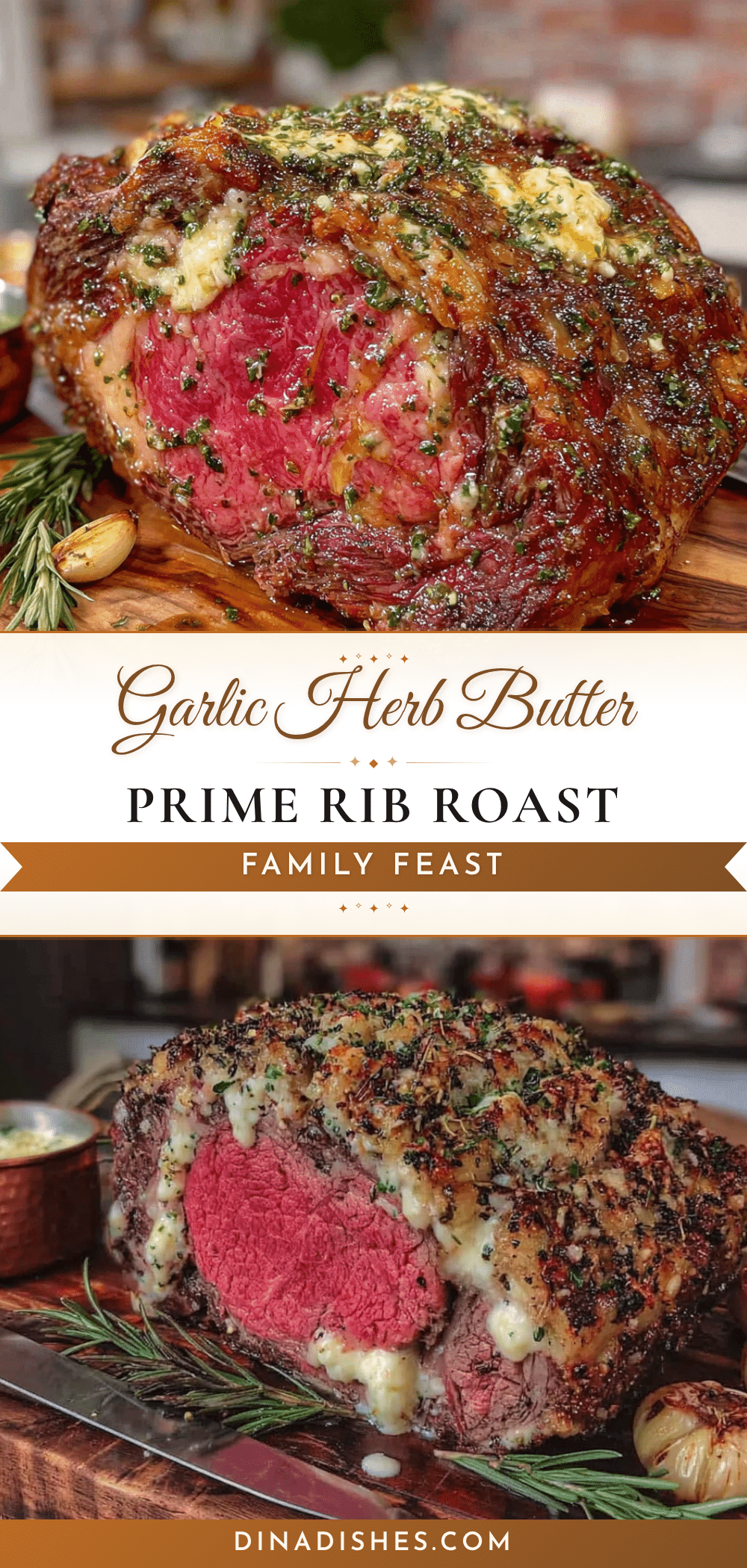
Best Garlic Herb Butter Prime Rib Roast – Easy Family Feast
This foolproof reverse sear method delivers a perfectly tender, medium-rare prime rib with a crispy garlic herb crust. It’s special enough for a family feast but easy enough that you don’t need a culinary degree.
- Prep Time: 20 minutes
- Cook Time: 3 hours 30 minutes
- Total Time: 4 hours 30 minutes
- Yield: 8 servings 1x
- Category: Main Course
- Cuisine: American
Ingredients
- 1 (5-7 pound) bone-in prime rib roast
- 2 tablespoons kosher salt
- 1 tablespoon freshly ground black pepper
- 1/2 cup (1 stick) unsalted butter, softened
- 6 cloves garlic, minced
- 2 tablespoons fresh rosemary, finely chopped
- 2 tablespoons fresh thyme leaves
- 1 tablespoon fresh parsley, finely chopped
- 1 teaspoon Worcestershire sauce
- 1/2 teaspoon red pepper flakes (optional)
- 2 cups low-sodium beef broth
- 1/4 cup dry red wine
- 1 tablespoon Worcestershire sauce
Instructions
- Prep the Roast (Day Before or at Least 4 Hours Ahead): Pat the prime rib roast dry with paper towels. Place on a wire rack over a baking sheet and refrigerate, uncovered, for at least 4 hours or overnight.
- Make the Garlic Herb Butter: In a small bowl, combine softened butter, minced garlic, rosemary, thyme, parsley, Worcestershire sauce, and red pepper flakes. Mix until evenly distributed. Set aside at room temperature.
- Season the Roast: About 2 hours before cooking, remove roast from refrigerator. Rub garlic herb butter all over the roast, getting into crevices between bones. Season generously with kosher salt and black pepper. Let sit at room temperature for 1-2 hours.
- Preheat the Oven for the Reverse Sear: About 30 minutes before cooking, preheat oven to 250°F (120°C). Place roast on a rack in roasting pan, bone-side down.
- Cook Low and Slow: Insert meat thermometer into thickest part of roast, avoiding bone. Cook until internal temperature reaches 125°F (52°C) for medium-rare, about 3-4 hours.
- Rest and Prepare for the Sear: Remove roast from oven. Tent loosely with foil and let rest 20-30 minutes. Increase oven temperature to 500°F (260°C) or as high as it will go.
- The Final Sear: Heat a cast iron skillet over high heat for 5 minutes. Carefully transfer rested roast to hot skillet. Sear 2-3 minutes per side, including ends, until deep golden-brown crust forms. Let rest another 10 minutes before slicing.
- Make the Au Jus: While roast rests, place roasting pan over medium-high heat. Add beef broth, red wine, and Worcestershire sauce. Scrape up browned bits. Simmer 10-15 minutes until reduced by half. Season with salt and pepper.
- Carve and Serve: Remove bones by cutting along meat-bone line. Slice roast against the grain into 1/2-inch to 3/4-inch thick slices. Arrange on platter, spoon some au jus over top, and serve remaining on the side.
Notes
For best results, dry brine the roast overnight. Don’t open the oven door during cooking. Let the roast come to room temperature before cooking for even doneness. The compound butter can be made up to 3 days ahead.
Nutrition
- Serving Size: 6 ounces
- Calories: 475
- Sodium: 700
- Fat: 32
- Saturated Fat: 14
- Protein: 47
Keywords: prime rib, reverse sear, garlic herb butter, roast beef, holiday dinner, family feast