This was supposed to be a slow-simmered Sunday ragu. I had the canned tomatoes out, the celery chopped, and I was ready to spend a couple of hours coaxing flavor out of cheap cuts of meat. Then my youngest walked into the kitchen with a note from school about a last-minute project due the next morning. The celery went back in the fridge. The tomatoes got pushed to the back of the pantry. And there I was, staring at a bag of frozen shrimp I’d grabbed on sale the week before, with no real plan for it. The timer was ticking—literally. I had fifteen minutes before I needed to be helping with poster board and glue sticks. I threw some pasta in boiling water, melted a ridiculous amount of butter in a skillet, and just started tossing things in. I honestly expected to serve something mediocre, the kind of meal you eat quickly without really tasting. But when I took that first forkful—the garlic had melted into the butter, the shrimp were perfectly pink, and the whole thing came together in a way that felt both indulgent and impossibly fast—I knew I’d stumbled onto something. Maybe you’ve been there, standing in your kitchen with a hungry family and a clock that won’t stop moving. This one’s for those nights. I’ve made it every week since, and it never gets old.
Why You’ll Love This Recipe
Let’s be honest—there are a million pasta recipes out there, but most of them either take forever or leave you with a mountain of dishes. This one is different, and here’s why it works so well for real families:
- Quick & Easy: From start to table in 15 minutes flat. No marinating, no complicated steps, no waiting around. This is the definition of a weeknight win.
- Simple Ingredients: You likely already have garlic, butter, pasta, and lemon in your kitchen. The shrimp is the only “special” ingredient, and frozen works perfectly.
- Perfect for Busy Weeknights: Whether it’s homework, sports practice, or just one of those days where everyone is hungry and cranky, this dinner saves the evening.
- Crowd-Pleaser: My kids devour this, and so do the adults. The garlic butter sauce is mild enough for picky eaters but flavorful enough for the grown-ups.
- Unbelievably Delicious: The secret is letting the butter brown just slightly before adding the garlic. It adds a nutty depth that makes this taste like it simmered for hours.
I’ve tested this recipe at least a dozen times, tweaking the garlic-to-butter ratio and the pasta shape. What I’m sharing with you is the version that gets the most enthusiastic reactions every single time. It’s the kind of meal that makes you close your eyes after the first bite—not because it’s fancy, but because it’s so satisfyingly simple. No stress, no fuss, just a really good dinner that makes everyone happy.
What Ingredients You Will Need
This recipe uses simple, pantry-friendly ingredients to deliver bold flavor without the fuss. Most of these are things you probably already have on hand, which is exactly what you want on a busy night.
- 8 ounces (225g) spaghetti or linguine – I prefer a long, thin pasta because it catches the garlic butter sauce beautifully. Angel hair works too, but adjust the cooking time.
- 1 pound (450g) raw shrimp, peeled and deveined – I use medium or large shrimp (31-40 count per pound). Frozen shrimp are my go-to—just thaw them under cold running water for a few minutes. Pat them really dry with paper towels, or the sauce will turn watery.
- 4 tablespoons (56g) unsalted butter – Don’t skimp here. The butter is the backbone of the sauce. I use unsalted so I can control the salt level myself.
- 4 cloves garlic, minced – Fresh garlic makes a big difference here. I know jarred minced garlic is tempting, but it burns faster and doesn’t have the same punch. Take the extra 30 seconds to mince fresh cloves.
- 1/2 teaspoon red pepper flakes (optional) – This adds a gentle warmth, not intense heat. My kids handle it fine, but leave it out if your family is sensitive to spice.
- 1/2 cup (120ml) reserved pasta water – This is the secret to a silky sauce that clings to every strand. Don’t forget to scoop some out before draining!
- 2 tablespoons fresh lemon juice (about 1 lemon) – Fresh juice is non-negotiable here. Bottled lemon juice tastes flat and can make the sauce bitter.
- 1/4 cup (10g) fresh parsley, chopped – For color and freshness. Flat-leaf parsley is my preference, but curly works fine too.
- Salt and black pepper, to taste – I use kosher salt for seasoning the pasta water and finishing the dish.
- Grated Parmesan cheese, for serving (optional) – My family loves a generous sprinkle on top. It adds a salty, savory finish that complements the garlic butter.
A note on shrimp: I’ve tested this with both fresh and frozen shrimp, and honestly, frozen is often better because it’s flash-frozen at peak freshness. Just make sure you buy raw shrimp, not pre-cooked. Pre-cooked shrimp will turn rubbery in the pan. I usually grab a bag from the freezer section at Costco or my local grocery store—they’re a budget-friendly staple in my house.
Equipment Needed
You don’t need a fancy kitchen to pull this off. Here’s what you’ll need:
- Large pot – For boiling the pasta. I use a 5-quart pot, but anything big enough to give the pasta room to move works.
- Large skillet or sauté pan – A 12-inch skillet is ideal. You want enough surface area to cook the shrimp in a single layer. If they’re crowded, they’ll steam instead of sear.
- Colander – For draining the pasta. Don’t forget to reserve that pasta water first!
- Measuring cups and spoons – I use a liquid measuring cup for the pasta water and dry measuring spoons for the butter and spices.
- Chef’s knife and cutting board – For mincing garlic and chopping parsley. A sharp knife makes this step quick and painless.
- Tongs or pasta spoon – For tossing the pasta with the sauce. Tongs give you more control, but a big spoon works too.
- Small bowl – To hold the reserved pasta water while you finish the sauce.
If you don’t have a large skillet, a wide saucepan will work in a pinch. Just keep an eye on the shrimp—they might need an extra minute if they’re more crowded. And honestly, I’ve made this in a beat-up nonstick pan from college and it still turned out great. Don’t let equipment hold you back.
Preparation Method
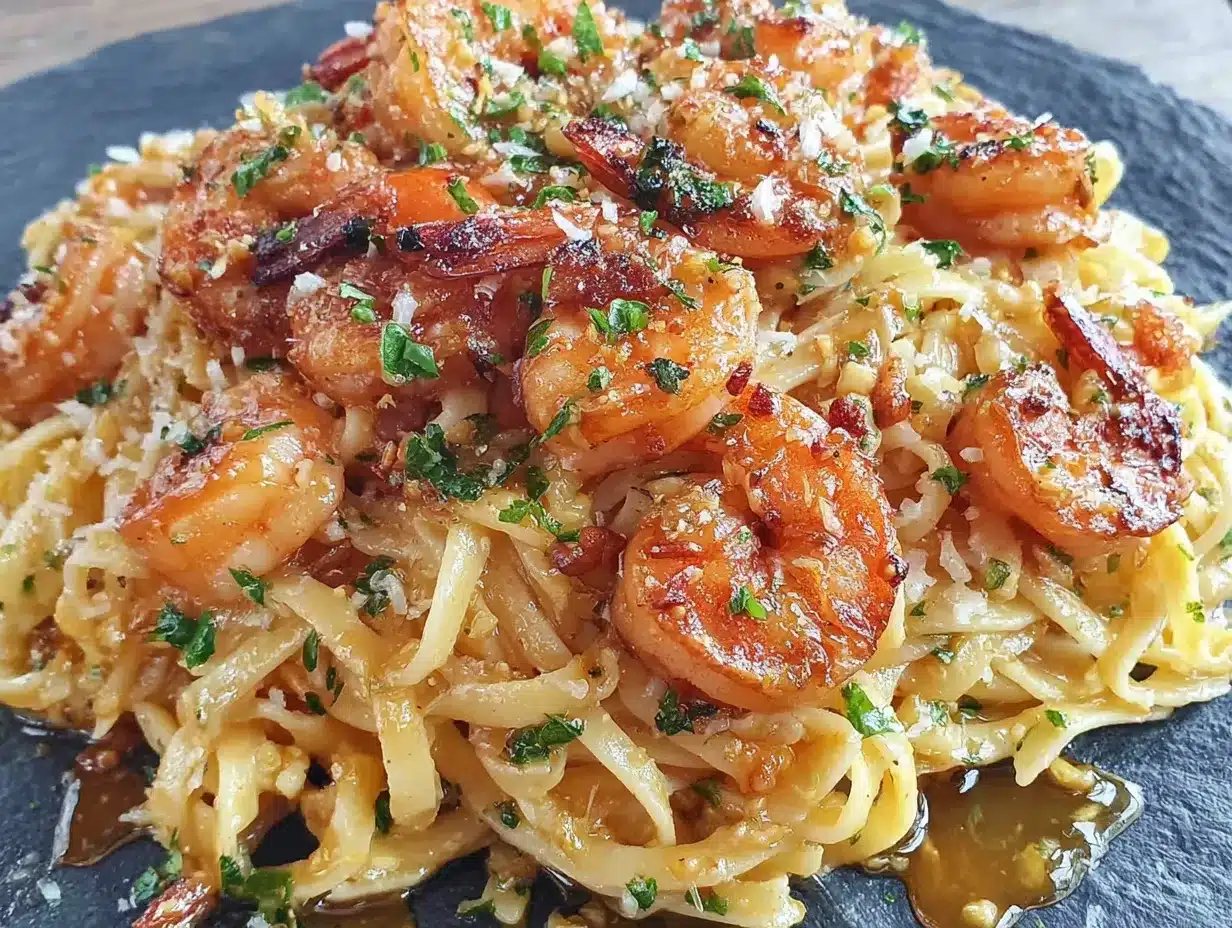
Here’s the step-by-step. I’ve included timing and visual cues so you know exactly what to look for at each stage.
- Bring a large pot of salted water to a rolling boil. Use about 1 tablespoon of kosher salt per 4 quarts of water. It should taste like the sea. While the water heats up, mince your garlic and chop your parsley. This saves precious minutes later.
- Add the pasta and cook according to package directions until al dente. For spaghetti, that’s usually about 8-10 minutes. Set a timer—overcooked pasta gets mushy and won’t hold the sauce well. Stir occasionally to prevent sticking.
- While the pasta cooks, prepare the shrimp. Pat the shrimp completely dry with paper towels. Season them lightly with salt and pepper. This step is crucial—wet shrimp won’t brown, and you’ll end up with a watery sauce.
- About 2 minutes before the pasta is done, reserve 1 cup of pasta water. Scoop it out with a measuring cup or a mug. Then drain the pasta in a colander, but don’t rinse it—you want that starch to help the sauce cling.
- In a large skillet, melt the butter over medium-high heat. Swirl the pan occasionally. The butter will foam, then subside, and start to turn golden brown with a nutty aroma. This takes about 2-3 minutes. Don’t walk away—burnt butter happens fast.
- Add the shrimp in a single layer. Cook for 1-2 minutes per side, until they’re pink and opaque. They should have a slight golden crust. Don’t overcrowd the pan—if your skillet is small, cook the shrimp in two batches.
- Reduce heat to medium-low and add the minced garlic and red pepper flakes. Stir constantly for about 30 seconds, until the garlic is fragrant. Garlic burns quickly, so keep it moving. If it starts to turn dark brown, pull the pan off the heat.
- Pour in 1/2 cup of the reserved pasta water and the lemon juice. Stir to scrape up any browned bits from the bottom of the pan. This is where all the flavor lives. Let it simmer for 30 seconds to thicken slightly.
- Add the drained pasta and chopped parsley to the skillet. Use tongs to toss everything together for about 1 minute, until the pasta is well coated and the sauce has thickened slightly. If it looks dry, add a splash more pasta water.
- Taste and adjust seasoning. Add more salt, pepper, or lemon juice as needed. Serve immediately, topped with grated Parmesan if desired. Garnish with extra parsley for a pretty finish.
My personal tip: I always set a small bowl of extra lemon wedges on the table. Some family members like a bright pop of acidity right before eating, and it lets everyone customize their plate.
Cooking Tips & Techniques
I’ve made this recipe enough times to know where things can go sideways. Here’s what I’ve learned the hard way so you don’t have to:
Don’t overcook the shrimp. This is the most common mistake. Shrimp cook in 3-4 minutes total. The moment they turn pink and curl into a loose “C” shape, they’re done. If they curl into a tight “O,” they’re overcooked and rubbery. I’ve ruined more shrimp than I care to admit before I learned this.
Use cold butter for a richer sauce. If you want an even silkier texture, cut the butter into small cubes and keep them in the fridge until you’re ready to add them to the pan. Cold butter emulsifies better into the pasta water, creating a creamier sauce without any cream.
Reserve more pasta water than you think you need. I always save a full cup, even though I usually only use half. If your pasta sits for a minute before saucing, it will absorb liquid and get sticky. Having extra pasta water on hand lets you loosen things up without resorting to plain water.
Timing is everything. Start the pasta first, then prep the shrimp and garlic while it boils. By the time the pasta is al dente, your skillet should be hot and ready. This multitasking is the key to the 15-minute promise. I used to cook everything sequentially and always ran over time. Now I overlap steps and dinner hits the table on schedule.
Don’t skip the lemon. It might seem like a small detail, but the acidity cuts through the rich butter and brightens the whole dish. Without it, the pasta tastes heavy and one-note. I’ve tested it both ways, and the lemon version wins every time.
Variations & Adaptations
This recipe is incredibly flexible. Here are some ways I’ve adapted it for different tastes and dietary needs:
- Gluten-Free Version: Swap the spaghetti for your favorite gluten-free pasta. I’ve had good luck with chickpea-based pastas, which hold up well and add a little protein. Just watch the cooking time—gluten-free pastas can go from al dente to mush quickly.
- Dairy-Free Adaptation: Use a high-quality vegan butter or olive oil instead of regular butter. I like using a good extra-virgin olive oil for a different but equally delicious flavor profile. The sauce will be thinner, so use a little less pasta water.
- Add Vegetables: Toss in a handful of spinach or arugula right at the end and let it wilt in the residual heat. Or add cherry tomatoes halved—throw them in with the garlic and let them soften for a minute before adding the pasta water.
- Make It Spicier: Double the red pepper flakes, or add a pinch of cayenne pepper with the garlic. My husband loves this version, though I keep it mild for the kids.
- Swap the Protein: No shrimp on hand? Diced chicken breast works beautifully—just cook it through before adding the garlic. Or use scallops for a more elegant twist. I’ve even made this with leftover rotisserie chicken in a pinch, adding it at the end just to warm through.
- Herb Variations: Fresh basil or chives make excellent substitutes for parsley. I’ve also used dried oregano in a pinch—just use half the amount since dried herbs are more concentrated.
One of my favorite experiments was adding a splash of white wine along with the lemon juice. It added a lovely complexity, but honestly, the original version is so good that I don’t bother with wine most nights. Keep it simple—that’s the whole point.
Serving & Storage Suggestions
Serving: Serve this pasta immediately while it’s hot and the sauce is glossy. I like to twirl the spaghetti into nests on individual plates for a nice presentation, then sprinkle Parmesan and parsley on top. A side of crusty bread is perfect for sopping up any extra garlic butter sauce left in the bowl. A simple green salad with a lemony vinaigrette rounds out the meal beautifully.
Storage: Leftovers keep well in an airtight container in the refrigerator for up to 3 days. The pasta will absorb some of the sauce as it sits, so don’t expect it to be as saucy the next day. To reheat, add a splash of water or chicken broth to a skillet over medium-low heat and toss the pasta until warmed through. Microwaving works too, but the texture won’t be as good—add a tablespoon of water and cover the bowl to create steam.
Freezing: I don’t recommend freezing this dish. The texture of the shrimp changes significantly when thawed, becoming mushy and unappealing. If you want to meal prep, cook the pasta and sauce separately, then combine fresh. Or freeze just the garlic butter sauce in an ice cube tray—pop a cube out whenever you need a quick flavor boost.
How flavors develop: Interestingly, this pasta is still pretty good cold straight from the fridge the next day. The garlic mellows overnight, and the lemon brightens. My kids have been known to eat leftovers for breakfast, standing in front of the open fridge. I’m not proud of it, but I get it.
Nutritional Information & Benefits
Here’s an approximate nutritional breakdown per serving (based on 4 servings, without Parmesan):
| Nutrient | Amount |
|---|---|
| Calories | 420 |
| Protein | 28g |
| Carbohydrates | 45g |
| Fat | 15g |
| Saturated Fat | 8g |
| Fiber | 2g |
| Sodium | 580mg |
Shrimp is an excellent source of lean protein and contains selenium, vitamin B12, and omega-3 fatty acids. Garlic has been linked to immune-boosting properties, and the lemon juice provides a dose of vitamin C. This meal is naturally low in sugar and can be made gluten-free or dairy-free with simple swaps. Keep in mind that the sodium content will vary based on how much salt you add to the pasta water and the shrimp.
From a wellness perspective, I love that this dinner feels indulgent but isn’t heavy. It’s satisfying without leaving you sluggish, which is exactly what I want on a busy weeknight when there’s still homework to tackle after dinner.
Conclusion
This quick garlic butter shrimp pasta is proof that you don’t need hours in the kitchen to make something genuinely delicious. It started as a happy accident—a desperate scramble on a chaotic evening—and turned into the recipe I reach for more than any other. It’s affordable, fast, and flexible enough to work with whatever you have on hand. I love that it brings my family to the table without any fuss, and I love even more that I’m not stuck doing dishes for an hour afterward.
I hope you give this a try on your next crazy weeknight. Customize it with whatever vegetables or herbs you have, adjust the spice level to your liking, and don’t stress about perfection. The beauty of this recipe is that it works even when you’re juggling a million things. If you make it, I’d love to hear how it turned out—drop a comment below or tag me in your photos. And don’t forget to share your own variations! Happy cooking, friends.
Frequently Asked Questions
Can I use pre-cooked shrimp for this recipe?
I don’t recommend it. Pre-cooked shrimp will turn rubbery and tough when you heat them in the skillet. Raw shrimp only take 3-4 minutes to cook, so it’s worth using raw for the best texture. If you only have pre-cooked shrimp on hand, add them at the very end just to warm through for about 30 seconds.
What if I don’t have fresh garlic?
Fresh garlic really does make a difference here, but in a pinch, you can use 1 teaspoon of garlic powder. Add it along with the red pepper flakes. The flavor won’t be as bright, but it will still be tasty. Avoid jarred minced garlic if possible—it tends to burn faster and can taste slightly metallic.
Can I make this ahead of time for meal prep?
This dish is best enjoyed fresh, but you can prep components ahead. Cook the pasta, make the garlic butter sauce (without the shrimp), and store them separately. When you’re ready to eat, reheat the sauce, cook the shrimp, and toss everything together. This takes about 5 minutes and tastes just as good.
How do I thaw frozen shrimp quickly?
Place the frozen shrimp in a colander and run cold water over them for 5-7 minutes, tossing occasionally. Pat them very dry before cooking. Don’t use warm or hot water—it will partially cook the shrimp and make them tough. If you remember, thaw them overnight in the refrigerator for the best results.
Can I use a different type of pasta?
Absolutely! I’ve made this with fettuccine, linguine, angel hair, and even penne. Long, thin pastas work best for catching the sauce, but short shapes like penne or rotini are fine too. Just adjust the cooking time based on the package directions and reserve that pasta water regardless of the shape.
Pin This Recipe!
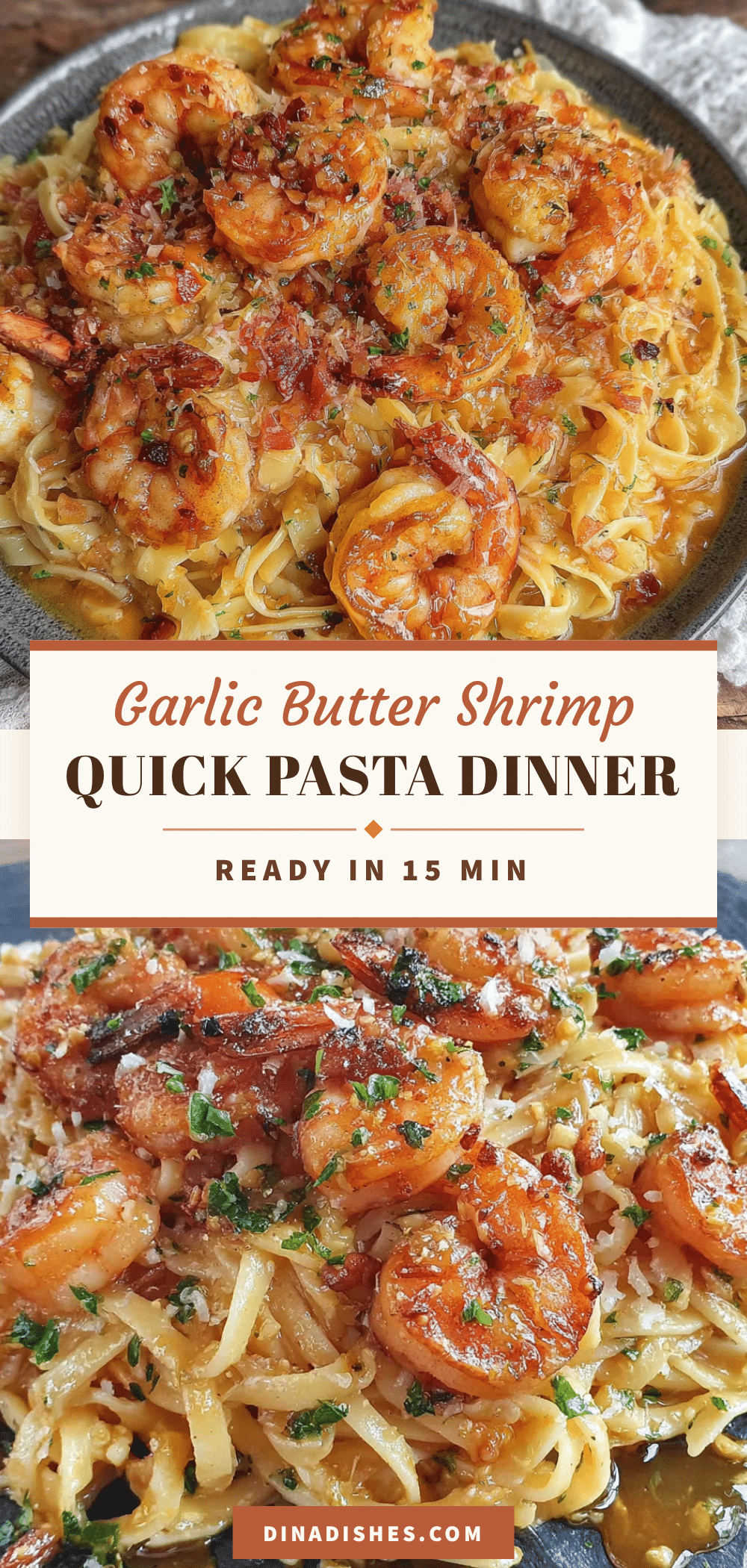
15-Minute Quick Garlic Butter Shrimp Pasta – Easy Family Dinner
A quick and easy garlic butter shrimp pasta that comes together in just 15 minutes, perfect for busy weeknights. This crowd-pleasing dish uses simple ingredients and delivers bold, satisfying flavor without the fuss.
- Prep Time: 5 minutes
- Cook Time: 10 minutes
- Total Time: 15 minutes
- Yield: 4 servings 1x
- Category: Main Course
- Cuisine: Italian-American
Ingredients
- 8 ounces (225g) spaghetti or linguine
- 1 pound (450g) raw shrimp, peeled and deveined
- 4 tablespoons (56g) unsalted butter
- 4 cloves garlic, minced
- 1/2 teaspoon red pepper flakes (optional)
- 1/2 cup (120ml) reserved pasta water
- 2 tablespoons fresh lemon juice (about 1 lemon)
- 1/4 cup (10g) fresh parsley, chopped
- Salt and black pepper, to taste
- Grated Parmesan cheese, for serving (optional)
Instructions
- Bring a large pot of salted water to a rolling boil. Use about 1 tablespoon of kosher salt per 4 quarts of water. While the water heats up, mince your garlic and chop your parsley.
- Add the pasta and cook according to package directions until al dente. For spaghetti, that’s usually about 8-10 minutes. Stir occasionally to prevent sticking.
- While the pasta cooks, prepare the shrimp. Pat the shrimp completely dry with paper towels. Season them lightly with salt and pepper.
- About 2 minutes before the pasta is done, reserve 1 cup of pasta water. Then drain the pasta in a colander, but don’t rinse it.
- In a large skillet, melt the butter over medium-high heat. Swirl the pan occasionally. The butter will foam, then subside, and start to turn golden brown with a nutty aroma. This takes about 2-3 minutes.
- Add the shrimp in a single layer. Cook for 1-2 minutes per side, until they’re pink and opaque. They should have a slight golden crust.
- Reduce heat to medium-low and add the minced garlic and red pepper flakes. Stir constantly for about 30 seconds, until the garlic is fragrant.
- Pour in 1/2 cup of the reserved pasta water and the lemon juice. Stir to scrape up any browned bits from the bottom of the pan. Let it simmer for 30 seconds to thicken slightly.
- Add the drained pasta and chopped parsley to the skillet. Use tongs to toss everything together for about 1 minute, until the pasta is well coated and the sauce has thickened slightly. If it looks dry, add a splash more pasta water.
- Taste and adjust seasoning. Add more salt, pepper, or lemon juice as needed. Serve immediately, topped with grated Parmesan if desired. Garnish with extra parsley for a pretty finish.
Notes
Don’t overcook the shrimp; they are done when pink and curled into a loose ‘C’ shape. Reserve more pasta water than you think you need. Use cold butter for a richer sauce. Don’t skip the lemon juice. For best results, use fresh garlic and fresh lemon juice.
Nutrition
- Serving Size: 1 serving (about 1/4
- Calories: 420
- Sodium: 580
- Fat: 15
- Saturated Fat: 8
- Carbohydrates: 45
- Fiber: 2
- Protein: 28
Keywords: quick dinner, garlic butter shrimp pasta, easy weeknight meal, 15-minute pasta, shrimp pasta recipe