My neighbor Jen wasn’t trying to impress anyone that Tuesday afternoon. I’d stopped by to borrow a ladder—ours had mysteriously vanished during a yard sale my husband still won’t talk about—and the smell hit me before I even got her screen door open. It was nutty, warm, and somehow woodsy, like someone had captured October in a pan. Jen was standing at her stove, swirling a stick of butter in a small saucepan like it was the most ordinary thing in the world. “Oh, that’s just the potatoes,” she said when I asked what smelled so good. Just the potatoes. She shrugged and pointed to a bowl of mashed potatoes on her counter, and honestly, I think I forgot about the ladder for a solid five minutes. I stood there watching her pour that brown butter over the top, and a few sage leaves sizzled as they hit the hot butter. She didn’t even look up. “My grandma used to make them this way for Thanksgiving,” she said, wiping her hands on her jeans. “It’s nothing fancy.” But let me tell you, that first bite was everything I didn’t know I needed. The nuttiness of the browned butter, the earthy whisper of sage, the creamy potatoes underneath—it was fall on a fork. Maybe you’ve been there, where something so simple stops you in your tracks. I asked for the recipe before I even remembered the ladder. And now, every time the leaves start turning, these brown butter sage mashed potatoes find their way onto my table.
Why You’ll Love This Recipe
These aren’t your average mashed potatoes. They’re the kind of side dish that quietly steals the show—no joke, I’ve seen people reach for seconds before they’ve finished their turkey. Here’s why this recipe is different from every other mashed potato recipe you’ve tried.
- Quick & Easy: You’re looking at about 30 minutes of active time. The brown butter takes maybe 5 minutes to make, and the potatoes boil while you’re doing everything else. Perfect for a busy weeknight or when you’re juggling a full Thanksgiving spread.
- Simple Ingredients: Potatoes, butter, sage, cream, salt, and pepper. That’s it. No fancy grocery store trips, no obscure spices you’ll never use again. You probably have most of these in your kitchen right now.
- Perfect for Fall Gatherings: These potatoes were made for Thanksgiving, Friendsgiving, Sunday roasts, or even a cozy Tuesday night when you need a little comfort. They scream autumn in the best way.
- Crowd-Pleaser: I’ve served these to everyone from picky kids to food-snob uncles, and they disappear every single time. The brown butter adds this nutty depth that even potato skeptics can’t resist.
- Unbelievably Delicious: The texture is creamy without being gluey, and the brown butter sage situation on top is pure magic. It’s comfort food that feels a little special without trying too hard.
What makes this recipe my best version? It’s the technique of browning the butter just until it turns amber and smells like toasted hazelnuts, then letting the sage leaves crisp up in the same pan. That one step transforms ordinary mashed potatoes into something you’ll crave all season long. And honestly, it’s the kind of dish that makes you close your eyes after the first bite. It’s comfort food reimagined—richer, warmer, and somehow more soul-soothing than the version you grew up with.
What Ingredients You Will Need
This recipe uses simple, honest ingredients to create something truly special. The magic is in the technique, not a long list of hard-to-find items. Most of these are fall pantry staples you probably already have on hand.
- 2 pounds Yukon Gold potatoes (about 6 medium potatoes), peeled and cut into 2-inch chunks. Yukon Golds are my go-to here because they’re naturally buttery and creamy without getting gluey. Russets work too, but they’ll be a bit fluffier and need more cream.
- 1/2 cup (1 stick) unsalted butter. Don’t skimp on quality here—I really like Kerrygold for its richness. The butter is the star of this dish, so use a good one.
- 10-12 fresh sage leaves, plus a few extra for garnish if you’re feeling fancy. Fresh sage is non-negotiable here. Dried sage just won’t give you the same aromatic, slightly peppery flavor that makes this dish sing. Look for leaves that are vibrant green and not wilted.
- 1/2 cup heavy cream, warmed. Warming the cream before adding it to the potatoes prevents them from getting cold and helps them absorb the liquid better. You can also use whole milk for a lighter version, but the cream makes it extra luxurious.
- 1 teaspoon kosher salt, plus more for the cooking water. I use Diamond Crystal brand—it’s less salty by volume than Morton’s, so adjust if you’re using a different kind.
- 1/2 teaspoon black pepper, freshly ground. Pre-ground pepper is fine in a pinch, but fresh makes a noticeable difference here.
- Optional: 2 cloves garlic, peeled and smashed. I sometimes toss these into the pot while the potatoes boil for a subtle garlic undertone. It’s not traditional, but it’s lovely.
For substitutions: If you’re dairy-free, you can use a high-quality vegan butter and full-fat oat milk or unsweetened cashew cream. The brown butter flavor won’t be quite the same, but it’ll still be delicious. And if sage isn’t your thing, try fresh rosemary or thyme instead—each brings its own fall vibe to the table.
Equipment Needed
You don’t need a ton of fancy gear for this recipe, which is part of why I love it. Here’s what you’ll need:
- Large pot (4-5 quart) for boiling the potatoes. I use my trusty enameled Dutch oven, but any heavy-bottomed pot works.
- Small saucepan for browning the butter. A light-colored pan is actually helpful here so you can see the butter change color.
- Potato masher or ricer. I prefer a ricer for the smoothest, fluffiest potatoes, but a good old-fashioned masher works beautifully too. I’ve even used a fork in a pinch—it just takes more elbow grease.
- Colander for draining the potatoes.
- Wooden spoon or silicone spatula for stirring.
- Measuring cups and spoons.
- Chef’s knife and cutting board.
If you don’t have a ricer, don’t stress. A masher gives you a slightly more rustic texture that I honestly prefer sometimes. And if you’re using an electric mixer, be careful not to overmix—mashed potatoes can turn gluey fast if you beat them too much. Hand-mashing gives you more control.
Preparation Method
Let’s make these potatoes. I’ll walk you through every step so you get perfect results, even if it’s your first time browning butter.
- Prep the potatoes. Peel your Yukon Gold potatoes and cut them into evenly sized 2-inch chunks. This is important—if your pieces are different sizes, they’ll cook unevenly. Rinse the cut potatoes in cold water to remove excess starch, which helps prevent them from becoming gluey.
- Boil the potatoes. Place the potato chunks in your large pot and cover them with cold water by about an inch. Add a generous tablespoon of kosher salt to the water—this seasons the potatoes from the inside out. Bring to a boil over high heat, then reduce to a simmer. Cook for 12-15 minutes, until the potatoes are fork-tender. You should be able to pierce a chunk easily with a knife, and it should slide off without resistance. Don’t overcook them, or they’ll get waterlogged.
- While the potatoes boil, make the brown butter. In your small saucepan, add the stick of butter and set it over medium heat. Let it melt completely, then keep cooking. The butter will start to foam and bubble—that’s the water evaporating. Swirl the pan occasionally. After about 3-4 minutes, the foam will subside and you’ll see golden brown specks forming at the bottom of the pan. The butter will smell nutty and toasty. Watch it carefully—brown butter can go from perfect to burnt in seconds. As soon as it turns amber and smells amazing, add the sage leaves. They’ll sizzle and crisp up in about 10-15 seconds. Immediately remove the pan from the heat and set it aside. The sage leaves will continue crisping as they cool.
- Drain and dry the potatoes. Once the potatoes are tender, drain them in a colander. Return them to the hot pot (off the heat) and let them sit for about a minute. This lets any excess steam escape, which means your potatoes will be fluffier and absorb the cream better. You want them dry, not watery.
- Mash the potatoes. Start mashing your potatoes with a potato masher or ricer. If using a ricer, rice them directly into the warm pot. If mashing by hand, mash until there are no large lumps left. Don’t overwork them—you want creamy, not pasty.
- Add the cream and seasoning. Pour in the warmed heavy cream, add the 1 teaspoon of salt and 1/2 teaspoon of pepper, and gently fold everything together with a wooden spoon or spatula. Taste and adjust seasoning—you might want a little more salt, depending on your preference.
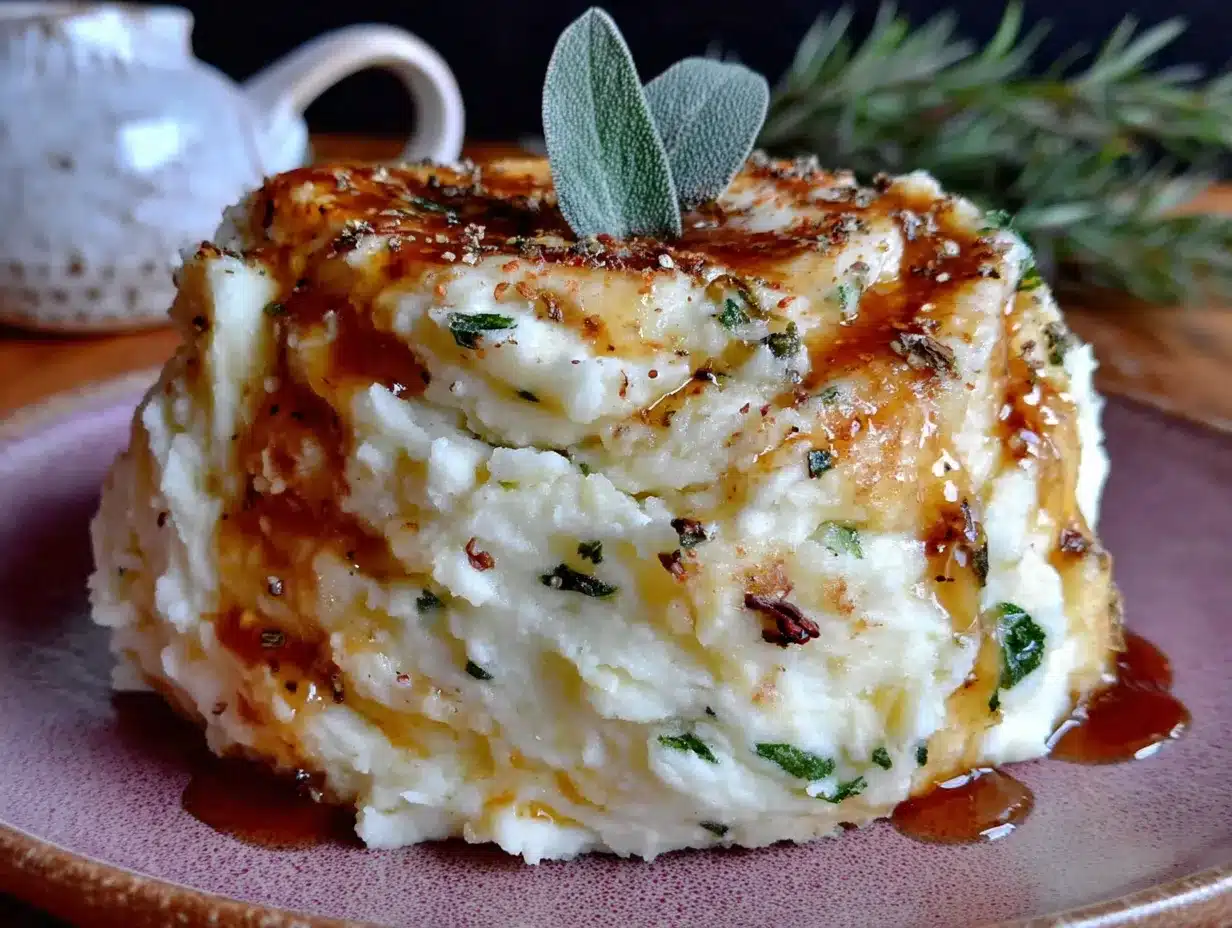
- Finish with the brown butter. Transfer the mashed potatoes to a serving bowl. Drizzle about half of the brown butter from the pan over the top, and arrange the crispy sage leaves on top as a garnish. Serve the remaining brown butter on the side for anyone who wants extra—trust me, they will.
One thing I learned the hard way: don’t add the brown butter to the whole batch of potatoes unless you’re serving them immediately. The butter can make them a bit greasy if they sit too long. Drizzling it on top right before serving keeps everything perfect.
Cooking Tips & Techniques
Over the years, I’ve made these brown butter sage mashed potatoes more times than I can count, and I’ve definitely had my share of mishaps. Here’s what I’ve learned so you can skip the mistakes.
Browning butter is easier than you think, but it demands your attention. I once walked away to answer the phone and came back to burnt butter that smelled like sadness. Stay at the stove, swirl the pan, and trust your nose. The moment it smells like toasted nuts, it’s done. And use a light-colored pan if you have one—it’s so much easier to see the color change from pale yellow to golden amber.
Don’t rinse your potatoes after boiling. I know it’s tempting to give them a cold water rinse, but you want them as dry as possible. Excess water makes mashed potatoes thin and sad. Just drain them well and let them steam dry in the hot pot for a minute.
Warm your cream. Cold cream will shock the hot potatoes and make them seize up. Just microwave the cream for 30-45 seconds before adding it. It’s a small step that makes a big difference in texture.
If your potatoes turn out gluey, don’t panic. You probably overmixed them or used a food processor (never do that). Stir in a splash more warm cream and a little extra butter to loosen them up. They won’t be perfect, but they’ll still taste good.
Multitasking is your friend. While the potatoes boil, brown your butter. While the butter cools slightly, mash the potatoes. Have everything measured and ready before you start, and you’ll breeze through this recipe.
Variations & Adaptations
One of the best things about this recipe is how easy it is to tweak. Here are some of my favorite variations.
Garlic Lover’s Version: Toss 4 peeled garlic cloves into the pot with the potatoes while they boil. Mash them right in with the potatoes. The garlic gets sweet and mellow, and it pairs beautifully with the brown butter and sage. I make this version at least once every fall.
Dairy-Free Adaptation: Use a good vegan butter (I like Miyoko’s) and unsweetened cashew cream or full-fat oat milk. The brown butter effect won’t be as pronounced, but you’ll still get that nutty, savory flavor. Roasted garlic helps boost the richness here.
Herb Swaps: Not a sage fan? Try fresh rosemary, thyme, or even a few sprigs of oregano. Each herb brings its own personality. Rosemary gives it a piney, almost woodsy note that’s gorgeous with roasted meats.
Cheesy Upgrade: Stir in 1/2 cup of grated Parmesan or Gruyère after you add the cream. The cheese melts into the potatoes and adds a salty, umami depth that’s absolutely addictive. Just don’t tell the purists.
Make It Ahead: You can make the mashed potatoes (without the brown butter topping) up to two days in advance. Store them in the fridge in an airtight container. To reheat, warm them gently on the stovetop with a splash of cream or milk, stirring often. Make the brown butter fresh right before serving.
Serving & Storage Suggestions
These potatoes are best served hot, right after you’ve drizzled the brown butter and sage on top. The contrast between the creamy potatoes and the crispy sage leaves is part of the magic.
What to serve with them: These are a natural partner for any roast—turkey, chicken, pork, or beef. I love them alongside a simple roasted chicken with pan gravy, or as part of a Thanksgiving spread with roasted Brussels sprouts with balsamic glaze. They also work beautifully with a cozy mushroom Wellington for a vegetarian holiday main.
Storage: Leftover mashed potatoes (without the brown butter topping) will keep in the fridge for up to 4 days in an airtight container. The brown butter can be stored separately in a small jar in the fridge for up to a week—just reheat it gently before using.
Reheating: The best way to reheat mashed potatoes is on the stovetop over low heat, with a splash of cream or milk stirred in to loosen them up. Stir frequently to prevent sticking. You can also reheat them in the microwave in 30-second bursts, stirring between each. If the potatoes seem dry, add a little butter or cream.
Freezing: These potatoes freeze surprisingly well. Spoon them into a freezer-safe container, press a piece of plastic wrap directly onto the surface to prevent freezer burn, and seal. They’ll keep for up to 3 months. Thaw overnight in the fridge and reheat as directed above. Make the brown butter fresh when you’re ready to serve.
One thing I’ve noticed: the flavors actually deepen after a day in the fridge. The sage and brown butter notes become more mellow and integrated. So don’t be afraid to make these ahead—they might even taste better the next day.
Nutritional Information & Benefits
Let’s be real—these are mashed potatoes with butter and cream. They’re a comfort food, not a health food. But they do have some redeeming qualities worth mentioning.
| Nutrient | Per Serving (about 1 cup) |
|---|---|
| Calories | 320 |
| Total Fat | 18g |
| Saturated Fat | 11g |
| Carbohydrates | 35g |
| Fiber | 3g |
| Protein | 4g |
| Sodium | 480mg |
Yukon Gold potatoes are a good source of vitamin C, potassium, and vitamin B6. The sage leaves contain antioxidants and have anti-inflammatory properties. And honestly, there’s something to be said for the comfort of a warm, satisfying side dish shared with people you love. I believe food should nourish more than just your body, and these potatoes definitely nourish the soul.
Dietary notes: This recipe contains dairy (butter, cream). It’s naturally gluten-free and vegetarian. For a vegan version, see the adaptations section above.
Conclusion
These cozy brown butter sage mashed potatoes are everything I want in a fall side dish—simple, comforting, and just a little bit special. They’re the recipe that made me forget why I’d walked over to my neighbor’s house in the first place, and they’ve been a staple in my kitchen ever since. The nutty brown butter, the crispy sage, the creamy potatoes underneath—it’s a combination that feels both familiar and exciting at the same time.
I hope you give these a try, whether for Thanksgiving, a Sunday roast, or just a random Tuesday when you need a little extra warmth. And don’t be afraid to make them your own—swap the herbs, add some garlic, or go all in with the cheese. The best recipes are the ones that adapt to your kitchen and your people.
If you make these brown butter sage mashed potatoes, I’d love to hear about it! Drop a comment below and let me know how they turned out, or tag me in your photos on Pinterest. And if you have a favorite variation, share that too—I’m always looking for new ideas. Until next time, happy cooking!
Frequently Asked Questions
Can I use russet potatoes instead of Yukon Golds?
Yes, you can. Russets will give you a fluffier, lighter texture, but they won’t be as naturally creamy. You might need a little extra cream or butter to get the same richness. Just be careful not to overmix them, since russets can turn gluey more easily.
Can I make the brown butter ahead of time?
Absolutely. You can brown the butter and crisp the sage leaves up to 3 days in advance. Store them together in an airtight container in the fridge. Gently reheat the butter and sage in a small pan over low heat before drizzling over the potatoes. The sage leaves might soften a bit, but they’ll still taste great.
Why did my mashed potatoes turn out gluey?
Gluey mashed potatoes usually happen from overmixing or using a food processor. The starch gets overworked and releases too much gluten. To fix it, stir in a splash of warm cream and a little extra melted butter to loosen the texture. Next time, use a potato masher or ricer and stop mixing as soon as the ingredients are combined.
Can I use dried sage instead of fresh?
I really don’t recommend it. Fresh sage leaves have a delicate, peppery flavor that crisps up beautifully in the brown butter. Dried sage is more intense and can turn bitter when fried. If fresh sage isn’t available, try fresh rosemary or thyme as a substitute instead.
How do I keep the potatoes warm for a dinner party?
Make the mashed potatoes (without the brown butter topping) and transfer them to a slow cooker set on warm. Stir in a splash of cream every 30 minutes or so to keep them from drying out. Make the brown butter fresh right before serving, then drizzle it over the top. This method works perfectly for Thanksgiving when you’re juggling a dozen dishes at once.
Pin This Recipe!
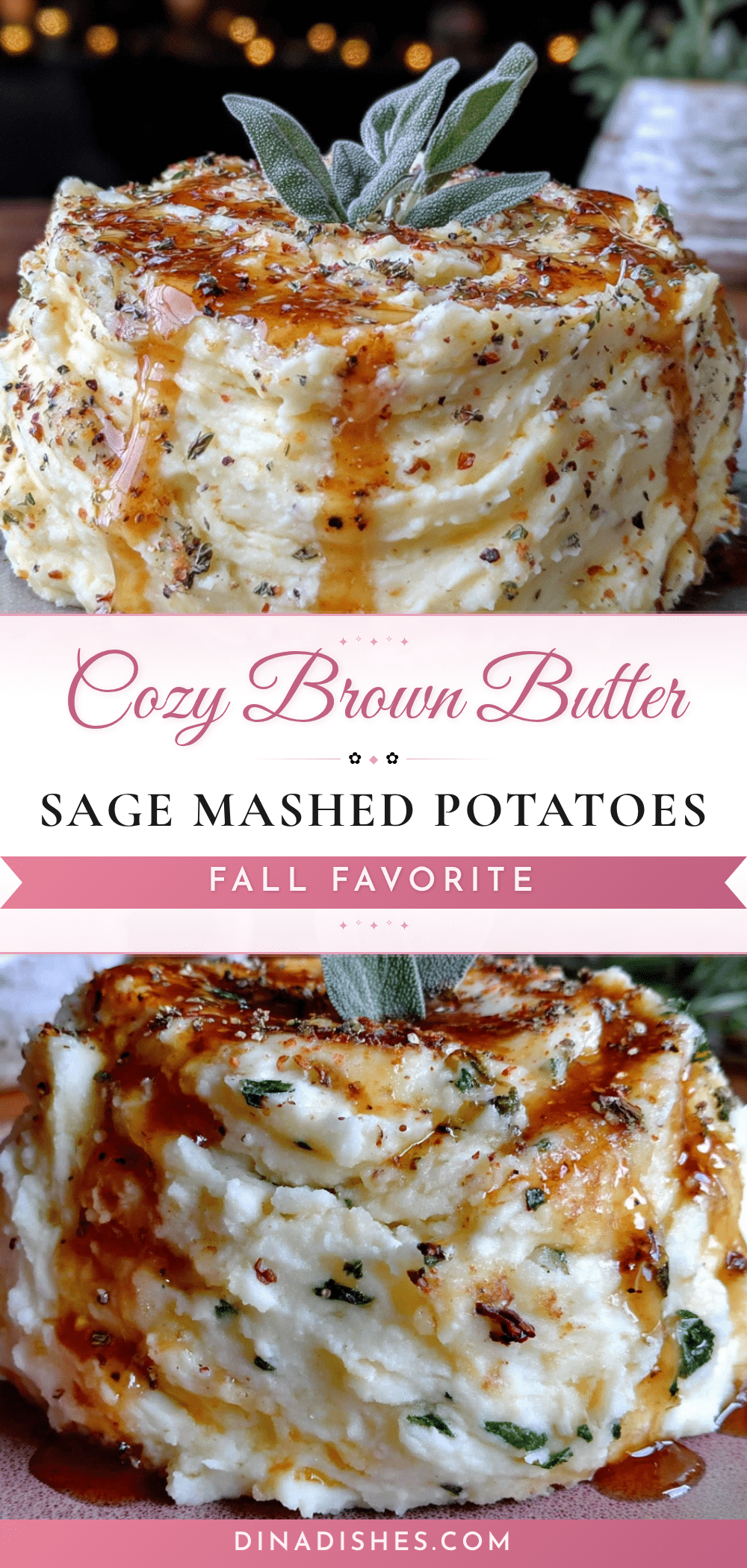
Cozy Brown Butter Sage Mashed Potatoes – Best Fall Side Dish
These creamy mashed potatoes are elevated with nutty brown butter and crispy sage leaves, making them the ultimate fall side dish. Simple ingredients and easy technique create a comforting, crowd-pleasing recipe perfect for Thanksgiving or any cozy gathering.
- Prep Time: 15 minutes
- Cook Time: 20 minutes
- Total Time: 35 minutes
- Yield: 4 servings 1x
- Category: Side Dish
- Cuisine: American
Ingredients
- 2 pounds Yukon Gold potatoes (about 6 medium), peeled and cut into 2-inch chunks
- 1/2 cup (1 stick) unsalted butter
- 10–12 fresh sage leaves, plus extra for garnish
- 1/2 cup heavy cream, warmed
- 1 teaspoon kosher salt, plus more for cooking water
- 1/2 teaspoon black pepper, freshly ground
- Optional: 2 cloves garlic, peeled and smashed
Instructions
- Prep the potatoes: Peel and cut Yukon Gold potatoes into evenly sized 2-inch chunks. Rinse in cold water to remove excess starch.
- Boil the potatoes: Place potato chunks in a large pot and cover with cold water by about an inch. Add a generous tablespoon of kosher salt. Bring to a boil, then reduce to a simmer. Cook for 12-15 minutes until fork-tender.
- While potatoes boil, make the brown butter: In a small saucepan, melt the butter over medium heat. Continue cooking, swirling occasionally, until the butter foams, then subsides, and golden brown specks appear. When it smells nutty and toasty (about 3-4 minutes), add the sage leaves. They will sizzle and crisp in 10-15 seconds. Immediately remove from heat.
- Drain and dry the potatoes: Drain the potatoes in a colander. Return them to the hot pot (off heat) and let sit for about a minute to steam dry.
- Mash the potatoes: Mash with a potato masher or ricer until no large lumps remain. Do not overwork.
- Add cream and seasoning: Pour in the warmed heavy cream, add 1 teaspoon salt and 1/2 teaspoon pepper. Gently fold together. Taste and adjust seasoning.
- Finish with brown butter: Transfer mashed potatoes to a serving bowl. Drizzle about half of the brown butter over the top and arrange crispy sage leaves as garnish. Serve remaining brown butter on the side.
Notes
Don’t add the brown butter to the entire batch unless serving immediately, as it can make the potatoes greasy if they sit. For best results, warm the cream before adding. If potatoes become gluey, stir in a splash of warm cream and extra butter to loosen. The brown butter can be made up to 3 days ahead and stored in the fridge.
Nutrition
- Serving Size: 1 cup
- Calories: 320
- Sugar: 2
- Sodium: 480
- Fat: 18
- Saturated Fat: 11
- Carbohydrates: 35
- Fiber: 3
- Protein: 4
Keywords: brown butter sage mashed potatoes, fall side dish, Thanksgiving mashed potatoes, creamy mashed potatoes, easy mashed potatoes