It was 11:47 PM on a random Wednesday, and I was starving. Not the polite kind of hungry you feel at 6 PM, but the kind where your stomach is staging a full-on protest and you’re already mentally in bed. I had a pack of pork chops defrosted in the fridge and absolutely zero energy for anything complicated. The ‘real’ recipe I wanted called for a long braise with apple cider, rosemary, and about an hour of simmering. But I didn’t have an hour. I didn’t even have thirty minutes to spare, honestly. I just had a craving for something sweet, savory, and fast. So I grabbed the apple cider from the back of the fridge, some butter, and a skillet. I figured, worst case, I’d eat cereal. But what happened next was pure late-night kitchen magic. The pork chops came out tender, the cider reduced into this glossy, tangy-sweet sauce that clung to every bite. I stood at the counter, fork in hand, eating straight from the pan. Maybe you’ve been there—that moment when a dinner born from sheer desperation becomes your new favorite thing. This recipe stuck because it proved you don’t need time or a perfect pantry to make something genuinely good.
Why You’ll Love This Recipe
Look, I’ve tested this recipe at least a dozen times now, tweaking the cider ratio and the cooking time until it was just right. It’s not just another pork chop recipe—it’s the one I actually make on a Tuesday night when I’m running on fumes. Here’s why it works:
- Quick & Easy: From fridge to plate in under 30 minutes. No marinating, no complicated steps.
- Simple Ingredients: You probably have apple cider in your fridge right now. If not, apple juice works in a pinch.
- Perfect for Weeknights: This is the dinner you make when you want something that feels special but takes zero effort.
- Crowd-Pleaser: My kids inhale these. My husband asks for seconds. Even my picky neighbor loved them.
- Unbelievably Delicious: The sauce is the star—slightly tangy, buttery, and just sweet enough to make you close your eyes after the first bite.
What makes this different from every other pork chop recipe out there? It’s the technique. You sear the chops hard, then deglaze the pan with apple cider, letting all those browned bits melt into the sauce. No flour, no heavy cream—just pure, concentrated flavor. It’s comfort food reimagined for people who don’t have time to mess around.
What Ingredients You Will Need
This recipe uses simple, everyday ingredients to deliver big flavor without the fuss. Most of these are pantry staples or easy to find at any grocery store.
- Pork chops: 4 boneless pork chops, about 1-inch thick (6 oz each). Look for chops with some marbling for juiciness. I prefer boneless for quick cooking, but bone-in works too—just add a couple minutes per side.
- Apple cider: 1 cup (240 ml) unsweetened apple cider. The real stuff, not the cloudy kind from the farmers’ market if you have it. It adds natural sweetness and tang. In a pinch, apple juice works, but the flavor is milder.
- Butter: 2 tablespoons (28 g) unsalted butter. This is non-negotiable for the sauce. It adds richness and helps the cider reduce into a silky glaze.
- Olive oil: 1 tablespoon (15 ml) for searing. Use a neutral oil with a high smoke point.
- Garlic: 3 cloves, minced. Fresh garlic is best here—it mellows out in the sauce and adds depth.
- Fresh thyme: 4 sprigs. If you don’t have fresh, use 1/2 teaspoon dried thyme. It’s not the same, but it’ll do.
- Dijon mustard: 1 tablespoon. This is the secret ingredient. It cuts through the sweetness and adds a subtle tang.
- Apple cider vinegar: 1 tablespoon. Adds brightness and balances the sweetness. Don’t skip it.
- Salt and pepper: To taste. I use kosher salt and freshly ground black pepper.
- Optional garnish: Fresh parsley or apple slices for serving.
For the best results, I recommend using pork chops that are at least 1-inch thick. Thin chops cook too fast and can dry out before the sauce comes together. If you only have thin chops, reduce the cooking time by about 2 minutes per side. Also, look for apple cider that’s unfiltered if possible—it has more flavor. I like Martinelli’s or a local orchard brand when I can find it.
Equipment Needed
You don’t need fancy equipment for this recipe. Here’s what you’ll need:
- Large skillet: A 12-inch cast iron or stainless steel skillet works best. Non-stick works too, but you won’t get as many browned bits for the sauce.
- Tongs: For flipping the pork chops. A spatula works, but tongs give you more control.
- Measuring cups and spoons: For the cider, vinegar, and mustard.
- Cutting board and knife: For mincing garlic and chopping parsley.
- Paper towels: For patting the pork chops dry. This is crucial for a good sear.
If you don’t have a cast iron skillet, don’t sweat it. I’ve made this in a regular non-stick pan and it still came out great. You just won’t get as much fond (those brown bits) for the sauce. Also, if you have a meat thermometer, use it. It takes the guesswork out of cooking pork. I use a Thermapen and it was worth every penny.
Preparation Method
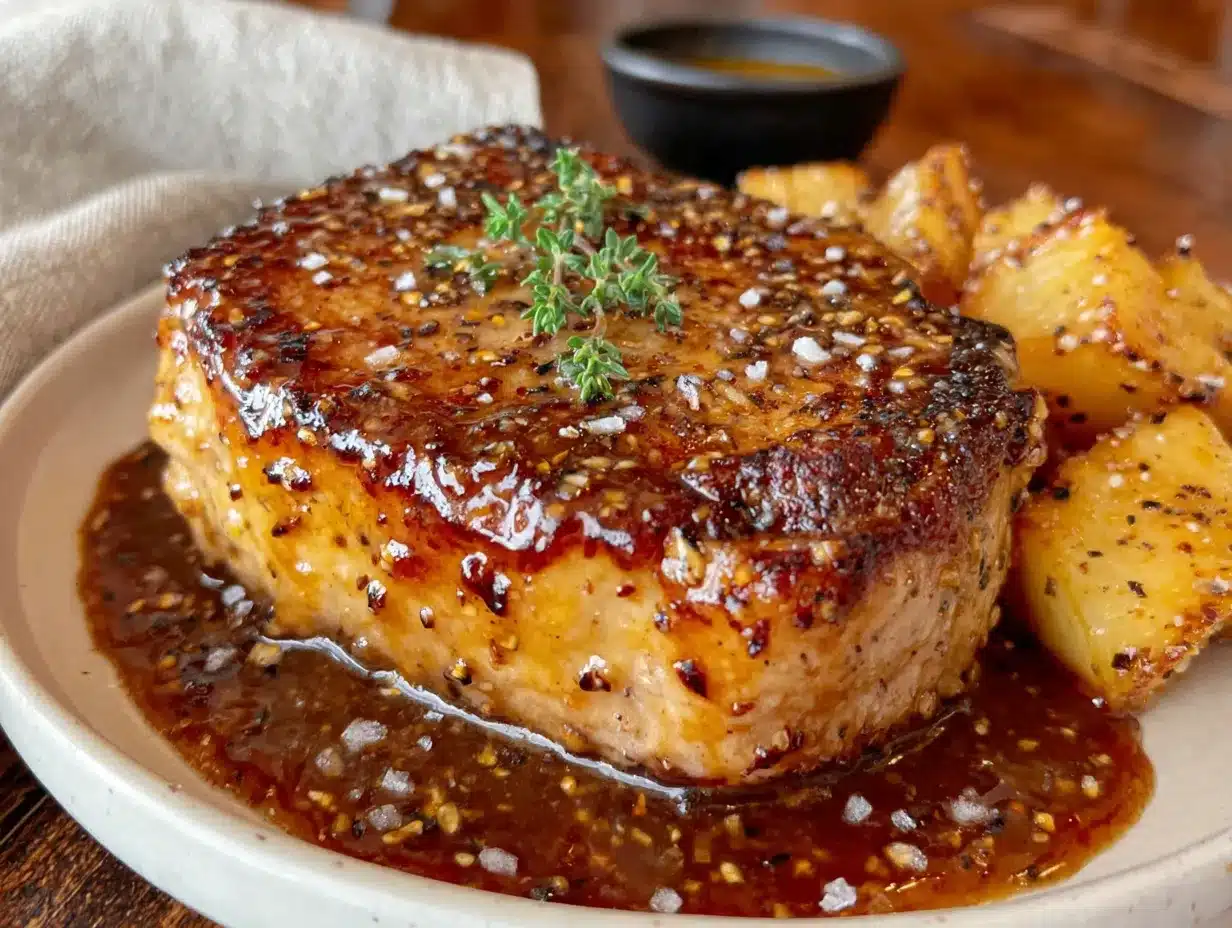
- Pat the pork chops dry. Take the pork chops out of the fridge and pat them dry with paper towels. This is the most important step for a good sear. Season both sides generously with salt and pepper. Let them sit at room temperature for 10 minutes while you prep the other ingredients.
- Heat the skillet. Place your skillet over medium-high heat and add the olive oil. Let it heat until it shimmers—about 2 minutes. You want the pan hot enough that the pork sizzles immediately when it hits the surface.
- Sear the pork chops. Carefully place the pork chops in the skillet. Don’t crowd them—cook in batches if needed. Let them sear undisturbed for 4-5 minutes, until a deep golden crust forms. Flip and cook for another 3-4 minutes. The internal temperature should reach 145°F (63°C) for medium. If you don’t have a thermometer, the chops should feel firm to the touch but still give slightly.
- Remove and rest. Transfer the pork chops to a plate and tent loosely with foil. Don’t skip this step—resting lets the juices redistribute so the meat stays tender.
- Make the sauce. Reduce the heat to medium. Add the butter to the skillet. Once it melts, add the minced garlic and thyme sprigs. Cook for about 30 seconds, until fragrant. Pour in the apple cider, scraping up any browned bits from the bottom of the pan with a wooden spoon. This is where all the flavor lives.
- Reduce the sauce. Let the cider simmer for 3-4 minutes, stirring occasionally, until it reduces by about half. It should thicken slightly and look glossy. Stir in the Dijon mustard and apple cider vinegar. Taste and adjust seasoning with salt and pepper.
- Return the pork chops. Place the pork chops back in the skillet, spooning the sauce over them. Let them warm through for about 1 minute. Remove the thyme sprigs before serving.
- Serve immediately. Spoon extra sauce over the pork chops and garnish with fresh parsley or apple slices if you’re feeling fancy.
A few things I’ve learned the hard way: Don’t move the pork chops around while they’re searing. Let them sit still so the crust forms properly. Also, if your sauce tastes too sharp, add a tiny pinch of sugar to balance it. And if it’s too thin, let it simmer a minute longer. It should coat the back of a spoon when it’s ready.
Cooking Tips & Techniques
I’ve messed this recipe up more times than I care to admit. Here’s what I’ve learned so you don’t have to repeat my mistakes.
The biggest mistake? Overcooking the pork. Pork chops are lean and cook fast. One minute too long and they turn into shoe leather. Use a meat thermometer and pull them at 145°F. They’ll carry over to 150°F while resting, which is perfect.
Another common issue: Not drying the pork chops enough. Wet meat won’t brown. Pat them dry until the paper towel comes away clean. If you have time, leave them uncovered in the fridge for an hour—that dries the surface even more and gives you a better crust.
Timing strategy: Start the rice or any sides before you cook the pork. The whole dish comes together in 20 minutes, so you want everything else ready to go. I usually start a pot of rice, then prep the pork while it cooks. By the time the rice is done, the pork is resting and the sauce is reducing.
For consistency: Buy pork chops of the same thickness. If they’re different sizes, the thin ones will overcook before the thick ones are done. I look for chops that are all about 1-inch thick. And if you’re using bone-in chops, expect them to take a minute or two longer per side.
One more thing—don’t skip the mustard. I know it sounds weird with apple cider, but it cuts through the sweetness and adds a savory note that makes the sauce taste more complex. Trust me on this one.
Variations & Adaptations
This recipe is flexible. Here are a few ways to switch it up:
- Low-Carb Version: Skip the apple cider and use chicken broth with a splash of apple cider vinegar. The flavor won’t be as sweet, but it’s still delicious. Serve with roasted vegetables instead of rice.
- Dairy-Free Option: Replace the butter with coconut oil or a dairy-free butter substitute. The sauce won’t be as rich, but it still works.
- Spicy Twist: Add a pinch of red pepper flakes along with the garlic. The heat pairs surprisingly well with the sweet cider sauce.
- Herb Swap: If you don’t have thyme, use fresh rosemary or sage. Rosemary is stronger, so use half the amount. Sage adds an earthy note that complements pork beautifully.
- Fruit Addition: Toss in a chopped apple (like Honeycrisp or Granny Smith) when you add the cider. Let it soften in the sauce for a few minutes. It adds texture and extra apple flavor.
I tried the apple addition once when I had a sad, lonely apple sitting in my fruit bowl. It turned out amazing. The apple slices soaked up the sauce and became almost caramelized. Now I add them every time I have an apple on hand.
Serving & Storage Suggestions
Serve these pork chops hot, straight from the skillet. Spoon extra sauce over the top. They’re great with mashed potatoes, rice, or crusty bread to soak up every last drop of that sauce. For a lighter option, serve with a simple green salad or roasted green beans.
For drinks, apple cider (warm or cold) is the obvious choice, but a crisp white wine like Sauvignon Blanc or a light beer also works. If you’re feeling fancy, a hard cider is perfect.
Storage: Leftover pork chops keep in the fridge for up to 3 days in an airtight container. The sauce will thicken as it cools, but it loosens up when reheated.
Reheating: The best way to reheat is in a skillet over medium-low heat with a splash of water or apple cider. Cover the pan and let the pork warm through gently—about 5 minutes. Microwaving works in a pinch, but the pork can get rubbery. If you use the microwave, do it in 30-second bursts at 50% power.
Freezing: You can freeze the cooked pork chops and sauce for up to 2 months. Thaw overnight in the fridge before reheating. The texture won’t be quite as good, but it’s still a solid meal for a busy night.
One thing I’ve noticed—the flavors actually deepen after a day in the fridge. So if you have leftovers, consider yourself lucky. They might be even better the next day.
Nutritional Information & Benefits
Per serving (1 pork chop with sauce, without sides):
- Calories: 320
- Protein: 35g
- Fat: 16g
- Carbohydrates: 8g
- Fiber: 0g
- Sugar: 6g
Pork chops are an excellent source of lean protein, which helps keep you full and supports muscle health. They’re also rich in B vitamins, particularly B6 and B12, which are important for energy metabolism. Apple cider provides a small amount of vitamin C and antioxidants, though the cooking process reduces some of that. The butter adds fat for flavor and satiety, but you can reduce the amount if you’re watching your intake.
This recipe is naturally gluten-free and can be made dairy-free with a simple swap. It’s also relatively low in carbs, making it a good option for those following a low-carb or keto diet with the modifications mentioned above. If you’re watching your sodium, use unsalted butter and go easy on the salt—you can always add more at the table.
From a personal wellness perspective, this recipe hits the sweet spot for me. It’s satisfying without being heavy, and it feels like a treat without derailing my weeknight eating habits. I don’t stress about the butter or the cider—it’s a balanced meal that makes me feel good.
Conclusion
These quick apple cider pork chops are proof that you don’t need hours in the kitchen to make something memorable. They’re fast, forgiving, and full of flavor. The sauce alone is worth the 30 minutes—it’s the kind of thing you’ll want to put on everything from chicken to roasted vegetables.
I love this recipe because it meets me where I am: tired, hungry, and not in the mood for a project. It’s become my go-to for those nights when I need dinner on the table fast but still want it to feel special. I hope it becomes that for you too.
Give it a try and let me know how it goes. Did you add an apple? Swap the thyme for rosemary? Serve it over something unexpected? I’d love to hear about your version. Drop a comment below or tag me in your photos—I’m always inspired by how people make recipes their own.
Happy cooking, and don’t forget to save that extra sauce for dipping bread. You’ll thank me later.
Frequently Asked Questions
Can I use pork tenderloin instead of pork chops?
Yes, but the cooking time will be different. Pork tenderloin is thicker and leaner. Sear it on all sides, then finish in a 400°F oven for about 15-20 minutes, or until it reaches 145°F internally. Let it rest before slicing, then drizzle with the sauce.
What if I don’t have apple cider?
Apple juice works in a pinch, but the flavor will be milder and sweeter. Add an extra splash of apple cider vinegar to balance it out. You can also use pear cider or even white grape juice for a different but still delicious twist.
Can I make this recipe ahead of time?
Technically yes, but it’s best fresh. The pork chops can dry out when reheated. If you must make it ahead, undercook the pork slightly (pull it at 140°F) and reheat gently in the sauce. The sauce can be made a day ahead and stored separately.
How do I know when the pork chops are done without a thermometer?
Cut into the thickest part of the chop. The meat should be white with just a hint of pink in the center—that’s medium. If it’s still pink and translucent, it needs more time. If it’s white all the way through and looks dry, it’s overcooked. A thermometer is really the best way to get it right every time.
Can I double this recipe?
Absolutely. Just make sure you don’t crowd the pan when searing. Cook the pork chops in batches if needed, and add a little more butter and cider to the sauce to account for the extra servings. The cooking time for the sauce might need an extra minute or two to reduce properly.
Pin This Recipe!

Quick Apple Cider Pork Chops – Best 30-Minute Dinner

Tender pork chops seared to perfection and finished with a glossy, tangy-sweet apple cider sauce. This quick and easy weeknight dinner comes together in under 30 minutes with simple ingredients.
- Prep Time: 10 minutes
- Cook Time: 20 minutes
- Total Time: 30 minutes
- Yield: 4 servings 1x
- Category: Main Course
- Cuisine: American
Ingredients
- 4 boneless pork chops, about 1-inch thick (6 oz each)
- 1 cup (240 ml) unsweetened apple cider
- 2 tablespoons (28 g) unsalted butter
- 1 tablespoon (15 ml) olive oil
- 3 cloves garlic, minced
- 4 sprigs fresh thyme (or 1/2 teaspoon dried thyme)
- 1 tablespoon Dijon mustard
- 1 tablespoon apple cider vinegar
- Salt and pepper to taste
- Fresh parsley or apple slices for garnish (optional)
Instructions
- Pat the pork chops dry with paper towels. Season both sides generously with salt and pepper. Let them sit at room temperature for 10 minutes.
- Heat a large skillet over medium-high heat and add the olive oil. Heat until shimmering, about 2 minutes.
- Sear the pork chops for 4-5 minutes on the first side until a deep golden crust forms. Flip and cook for another 3-4 minutes. Internal temperature should reach 145°F (63°C).
- Transfer the pork chops to a plate and tent loosely with foil. Let rest.
- Reduce heat to medium. Add butter to the skillet. Once melted, add minced garlic and thyme sprigs. Cook for 30 seconds until fragrant.
- Pour in the apple cider, scraping up any browned bits from the bottom of the pan. Let simmer for 3-4 minutes until reduced by half and slightly thickened.
- Stir in Dijon mustard and apple cider vinegar. Season with salt and pepper to taste.
- Return the pork chops to the skillet, spooning sauce over them. Warm through for about 1 minute. Remove thyme sprigs before serving.
- Serve immediately with extra sauce spooned over the top. Garnish with fresh parsley or apple slices if desired.
Notes
For best results, use pork chops at least 1-inch thick. Pat the chops very dry for a good sear. If sauce tastes too sharp, add a tiny pinch of sugar. If too thin, simmer a minute longer until it coats the back of a spoon. Leftovers keep in the fridge for up to 3 days. Reheat gently in a skillet with a splash of water or cider.
Nutrition
- Serving Size: 1 pork chop with sau
- Calories: 320
- Sugar: 6
- Sodium: 450
- Fat: 16
- Saturated Fat: 7
- Carbohydrates: 8
- Protein: 35
Keywords: apple cider pork chops, quick dinner, 30-minute meal, pork chop recipe, weeknight dinner, easy pork chops, apple cider sauce