Jenna wasn’t trying to impress anyone. I’d stopped by her place on a gray Tuesday afternoon to pick up a book I’d lent her, and the smell hit me before I even got past the front door. Something deep and savory, with a hint of wine and herbs, just hanging in the air like a warm blanket. She was in the kitchen, stirring a big pot with one hand and scrolling through her phone with the other, completely unbothered by the magic happening on her stove.
“Oh, it’s just a stew,” she said when I asked, like I’d commented on the weather. “Had some leftover wine and a sad-looking bag of carrots.” She shrugged and went back to her phone. But I couldn’t stop staring at that pot. The way the steam curled up, the rich burgundy color of the broth—it looked like something you’d pay twenty bucks for at a fancy restaurant. She finally noticed me hovering and laughed. “Fine, I’ll send you the recipe. It’s really nothing.”
Let me tell you, that “nothing” stew has become my go-to for every chilly evening since. I’ve tweaked it a bit, added more root vegetables, figured out the perfect timing for the beef to get that melt-in-your-mouth texture. But the soul of it—that cozy, red wine depth that makes you want to curl up on the couch and forget the world—that’s all Jenna’s casual genius. Honestly, maybe you’ve been there, standing in someone’s kitchen, watching them make something extraordinary look like absolutely no big deal. This cozy red wine beef stew is that recipe for me.
Why You’ll Love This Recipe
Look, there are a million beef stew recipes out there. I’ve tried probably a dozen of them myself. But this one? It’s different. It’s the one I keep coming back to, and here’s why you will too:
- Rich, Deep Flavor Without the Fuss: The red wine isn’t just there for show. It breaks down the beef and melds with the vegetables to create a broth that’s almost silky. It tastes like you slaved all day, but honestly, the oven does most of the work.
- Simple, Wholesome Ingredients: You don’t need a specialty grocery store. Beef chuck, carrots, potatoes, a decent bottle of red wine—these are things you can grab on a regular shopping trip. No obscure spices or hard-to-find cuts.
- Perfect for a Cozy Night In: This isn’t a summer salad recipe. This is the meal you make when the wind is howling and you want something that fills your whole house with a comforting aroma. It’s a hug in a bowl.
- Gets Better the Next Day: I’m not kidding. The flavors keep developing overnight. Make it on a Sunday, and Monday’s lunch will be the highlight of your day. It’s a crowd-pleaser that actually improves with time.
- Balanced and Satisfying: For those of us trying to eat well without feeling deprived, this stew hits the spot. It’s packed with protein from the beef and fiber from the root vegetables. It feels indulgent, but it’s built on real, good-for-you ingredients.
This isn’t just another stew. It’s the one that makes you close your eyes after the first bite. It’s comfort food reimagined—healthier, richer, and with the same soul-soothing satisfaction that makes a cold evening feel warm again.
What Ingredients You Will Need
This recipe uses simple, wholesome ingredients to deliver that bold, cozy flavor without any complicated techniques. Most of these are pantry staples or easy to find at any grocery store. Let’s break down what you’ll need and why each one matters.
For the Beef and Browning
- 2 lbs beef chuck, cut into 1.5-inch cubes: This is your best friend for stew. It has enough marbling to stay tender during long cooking. Avoid lean cuts like sirloin—they’ll turn tough and dry. I usually buy a whole chuck roast and cube it myself for better control over the size.
- 2 tablespoons olive oil: For searing the beef. You want an oil with a high smoke point. Avocado oil works great too.
- 1 teaspoon salt: Don’t be shy. Salt helps draw out moisture and creates that beautiful brown crust.
- 1/2 teaspoon black pepper: Freshly ground is always better.
- 2 tablespoons all-purpose flour: This helps thicken the stew slightly and gives the beef a nice coating for better browning.
For the Aromatic Base
- 1 large yellow onion, diced: About 1.5 cups. Onions are the backbone of any good stew. They melt into the broth and add sweetness.
- 3 cloves garlic, minced: Fresh garlic, not the jarred stuff. Trust me on this.
- 2 tablespoons tomato paste: This adds umami and depth. It’s a small ingredient with a big impact.
- 2 cups dry red wine: Use something you’d actually drink. A Cabernet Sauvignon, Merlot, or a French Côtes du Rhône works beautifully. Avoid “cooking wine”—it’s salty and lacks flavor. I usually grab a bottle in the $10-15 range.
For the Broth and Vegetables
- 3 cups beef broth: Low-sodium is best so you can control the salt level. I like Pacific Foods or Better Than Bouillon for the richest flavor.
- 1 cup water: Just to round out the liquid.
- 2 bay leaves: They add a subtle herbal note. Remember to remove them before serving.
- 2 sprigs fresh thyme: Or 1 teaspoon dried thyme. Fresh is more aromatic, but dried works in a pinch.
- 3 large carrots, peeled and cut into 1-inch chunks: About 2 cups. Carrots add sweetness and color.
- 3 celery stalks, cut into 1-inch pieces: About 1 cup. Celery adds a savory backbone.
- 1 lb Yukon Gold potatoes, cut into 1-inch chunks: About 3 medium potatoes. Yukon Golds hold their shape well and get creamy. Russets will fall apart too much.
- 2 parsnips, peeled and cut into 1-inch chunks: About 1 cup. Parsnips are the unsung hero of root vegetables. They have a slightly sweet, earthy flavor that pairs perfectly with the wine.
- 1 cup frozen peas: Added at the end for a pop of color and sweetness. Don’t skip them!
For Garnish
- Fresh parsley, chopped: A sprinkle on top adds freshness and color.
Ingredient Substitutions: If you can’t find parsnips, swap in an extra carrot or a small turnip. For a gluten-free option, use a gluten-free all-purpose flour blend or skip the flour and let the stew thicken naturally during cooking. You can also use a good-quality vegetable broth instead of beef broth for a lighter version.
Equipment Needed
You don’t need a professional kitchen to make this stew, but a few key tools will make your life easier. Here’s what I use:
- Large Dutch Oven (5-6 quart): This is non-negotiable for me. A heavy-bottomed pot like a Le Creuset or Lodge distributes heat evenly and goes from stovetop to oven seamlessly. If you don’t have one, a large heavy-bottomed pot with a tight-fitting lid will work.
- Sharp Chef’s Knife: A good knife makes cubing the beef and chopping vegetables so much easier. I use a 8-inch Wusthof, but any sharp knife will do.
- Cutting Board: Get a large one to give yourself room to work.
- Wooden Spoon or Spatula: For stirring and scraping up those delicious brown bits from the bottom of the pot.
- Measuring Cups and Spoons: For accuracy, especially with the wine and broth.
- Tongs: For flipping the beef cubes during browning.
- Small Bowl: For mixing the flour and seasonings.
If you’re on a budget, a good Dutch oven from a thrift store or a basic heavy pot from a discount store will work just fine. I started with a $20 enameled pot from a garage sale, and it made some of the best stews I’ve ever had.
Preparation Method
Alright, let’s get cooking. This might look like a long list of steps, but I promise it’s straightforward. Take your time with the browning—that’s where the magic happens.
- Preheat your oven to 325°F (160°C). We’re going to start on the stovetop and finish in the oven for the most tender beef. If you prefer, you can simmer it on the stovetop, but the oven gives you more even heat.
- Pat the beef cubes dry with paper towels. This is crucial. Wet beef won’t brown properly. In a small bowl, mix the flour, 1 teaspoon salt, and 1/2 teaspoon pepper. Toss the beef cubes in the flour mixture until evenly coated.
- Heat 1 tablespoon of olive oil in your Dutch oven over medium-high heat. Once the oil is shimmering, add half the beef cubes in a single layer. Don’t overcrowd the pot—work in batches. Let them brown without moving for 3-4 minutes, then flip with tongs and brown the other side. You want a deep, dark crust. Transfer the browned beef to a plate and repeat with the remaining oil and beef.
- Reduce the heat to medium. Add the diced onion to the pot. Cook for 5-6 minutes, stirring occasionally, until the onion is soft and translucent. Scrape up any brown bits from the bottom of the pot—that’s pure flavor.
- Add the minced garlic and tomato paste. Cook for 1 minute, stirring constantly, until the tomato paste darkens slightly and smells fragrant. This step deepens the flavor significantly.
- Pour in the red wine. Use a wooden spoon to scrape up every last bit of browned goodness from the bottom of the pot. Let the wine simmer for 3-4 minutes, until it has reduced by about half. The alcohol will cook off, leaving behind rich, fruity notes.
- Add the beef broth, water, bay leaves, and thyme sprigs. Return the browned beef and any accumulated juices to the pot. Stir everything together. Bring the stew to a gentle simmer. It should be bubbling softly, not boiling vigorously.
- Cover the pot with the lid and transfer it to the preheated oven. Let it cook for 1 hour 15 minutes. During this time, the collagen in the beef breaks down, making it incredibly tender.
- After 1 hour 15 minutes, remove the pot from the oven. Add the carrots, celery, potatoes, and parsnips. Stir them into the broth. Cover the pot again and return it to the oven for another 45 minutes to 1 hour. The vegetables should be tender when pierced with a fork, and the beef should be falling apart.
- Remove the pot from the oven. Fish out the bay leaves and thyme sprigs (the leaves will have fallen off, but the stems can be woody). Stir in the frozen peas. They’ll warm through in the residual heat within 2-3 minutes.
- Taste and adjust seasoning. Add more salt and pepper if needed. Sometimes the wine or broth can vary in saltiness, so trust your taste buds.
Sensory Cue: At step 6, the wine should smell rich and slightly sweet, not sharp or alcoholic. At step 10, the stew should be thick enough to coat the back of a spoon, with a deep, dark burgundy color. The beef should be so tender it almost falls apart when you poke it with a fork.
Cooking Tips & Techniques
I’ve made this stew probably twenty times now, and I’ve learned a few things the hard way. Let me save you some trouble.
- Don’t skip the browning. I know it’s tempting to just throw everything in the pot and walk away, but that brown crust on the beef is where so much of the flavor comes from. It’s called the Maillard reaction, and it’s non-negotiable for a deep, savory stew. Take the extra 10 minutes. Your future self will thank you.
- Use the right wine. I once used a cheap, sweet red blend because it was all I had, and the stew came out oddly sugary and flat. Stick with a dry red wine. If you wouldn’t drink it, don’t cook with it. That said, you don’t need a $50 bottle. A $12 Cabernet Sauvignon is perfect.
- Be patient with the oven. The first time I made this, I peeked after 30 minutes and thought it looked done. It wasn’t. The beef needs that full hour and a half to break down the connective tissue. Low and slow is the name of the game.
- Don’t add the vegetables too early. If you throw them in at the beginning, they’ll turn into mush. Adding them halfway through ensures they’re tender but still have some structure. I learned this after serving a bowl of mushy stew that looked more like baby food.
- Multitask wisely. While the beef is browning in batches, you can chop the onions and garlic. While the stew is in the oven, clean up your kitchen. It makes the whole process feel less overwhelming.
Variations & Adaptations
One of the best things about this stew is how flexible it is. Here are some ways I’ve adapted it over the years:
- Make it Dairy-Free: This recipe is naturally dairy-free, so no changes needed! Just double-check your beef broth for any added dairy.
- Make it Gluten-Free: Swap the all-purpose flour for a gluten-free blend or simply skip it. The stew will be slightly thinner, but the flavor is still incredible. You can also use a cornstarch slurry (1 tablespoon cornstarch mixed with 2 tablespoons cold water) stirred in at the end to thicken.
- Add More Vegetables: I’ve thrown in chopped sweet potatoes, turnips, and even butternut squash depending on what I have on hand. Mushrooms are also a fantastic addition—add them with the onions in step 4.
- Try a Different Protein: You can use lamb shoulder instead of beef for a completely different flavor profile. The cooking time will be similar.
- Make it in a Slow Cooker: Brown the beef and cook the aromatics on the stovetop as directed, then transfer everything (except the peas and potatoes) to a slow cooker. Cook on low for 6-8 hours. Add the potatoes and carrots in the last 2 hours of cooking, then stir in the peas before serving.
- Herb Variations: Rosemary is a wonderful addition. Add a sprig along with the thyme. I once used a bundle of herbes de Provence, and it gave the stew a lovely, floral note.
Personally, my favorite variation is adding a handful of pearl onions along with the other vegetables. They become sweet and tender, and they’re just fun to eat. It’s a small change that makes a big difference.
Serving & Storage Suggestions
This stew is a meal in itself, but the way you serve it can make it feel even more special. Here’s what I recommend:
- Serving Temperature: Serve it piping hot. Let the stew rest for 5-10 minutes after cooking to allow the flavors to settle, but don’t let it cool down too much. A steaming bowl is the goal.
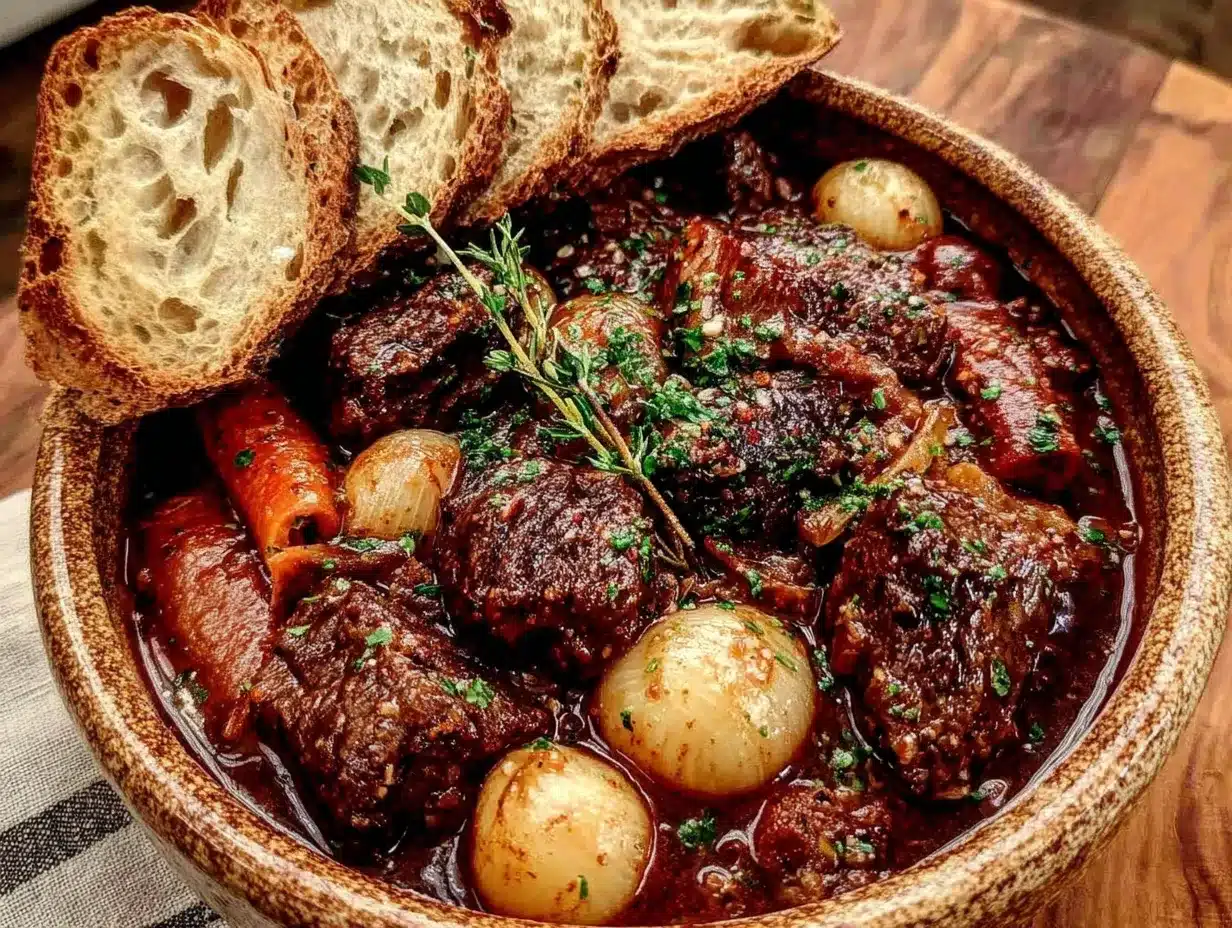
- Presentation: Ladle the stew into deep bowls. Make sure each bowl gets a good mix of beef, vegetables, and broth. Sprinkle with fresh parsley for a pop of green. A slice of crusty bread on the side is practically mandatory—it’s perfect for sopping up every last drop of that rich broth.
- Complementary Dishes: A simple green salad with a lemon vinaigrette cuts through the richness beautifully. For a heartier meal, serve it over mashed potatoes, egg noodles, or a scoop of creamy polenta. I’ve also served it with a side of roasted Brussels sprouts for a complete, cozy dinner.
- Storage: Let the stew cool completely before storing. Transfer it to an airtight container and refrigerate for up to 4 days. The flavors actually improve over time, so don’t be afraid to make it ahead.
- Freezing: This stew freezes beautifully. Portion it into freezer-safe containers or zip-top bags, leaving a little room for expansion. It will keep for up to 3 months. Thaw overnight in the refrigerator before reheating.
- Reheating: The best way to reheat is on the stovetop over medium-low heat, stirring occasionally. Add a splash of beef broth or water if the stew has thickened too much. You can also microwave individual portions in 30-second bursts, stirring in between. The peas might lose a bit of their bright green color, but the flavor will still be fantastic.
Flavor Development Note: I honestly think this stew is even better on day two. The beef has more time to absorb the wine and herbs, and the vegetables have softened even further. If you can, make it a day ahead and let it sit in the fridge overnight. You won’t regret it.
Nutritional Information & Benefits
This stew is not just delicious—it’s packed with nutrients that make it a smart choice for a wholesome meal. Here’s a rough estimate per serving (based on 6 servings):
| Nutrient | Amount Per Serving |
|---|---|
| Calories | ~420 |
| Protein | 35g |
| Fat | 18g |
| Carbohydrates | 30g |
| Fiber | 6g |
| Sugar | 8g |
| Sodium | ~750mg (varies with broth) |
- Beef Chuck: A great source of high-quality protein, iron, and B vitamins. Iron is essential for energy and oxygen transport in the body.
- Root Vegetables: Carrots, parsnips, and potatoes are packed with fiber, vitamin A (from the carrots), and potassium. They provide sustained energy and support digestive health.
- Red Wine: In moderation, red wine contains antioxidants like resveratrol, which may support heart health. Most of the alcohol cooks off, leaving behind the beneficial compounds.
- Dietary Considerations: This recipe is naturally gluten-free if you skip the flour or use a gluten-free alternative. It’s also dairy-free and nut-free. It’s a hearty, balanced meal that fits into a variety of eating patterns.
Personally, I love that I can serve this to my family knowing it’s filling them up with real, whole foods. It’s the kind of meal that makes you feel good from the inside out.
Conclusion
This cozy red wine beef stew is more than just a recipe—it’s a little piece of warmth you can create in your own kitchen. It started as a casual weeknight dinner at a friend’s house, and now it’s a staple in my home. The rich, wine-infused broth, the tender beef, the sweet root vegetables—it all comes together in a way that feels both comforting and special.
I hope you give it a try. Don’t be afraid to make it your own—swap in your favorite vegetables, experiment with different herbs, or make it a day ahead for even deeper flavor. The best recipes are the ones that adapt to your life, and this one is incredibly forgiving.
I’d love to hear how it turns out for you! Leave a comment below and let me know if you made any changes, or share a photo of your stew on social media. Tag me so I can see your cozy creation. Until next time, happy cooking—and stay warm out there!
Frequently Asked Questions
Can I make this stew in a slow cooker instead of the oven?
Absolutely! Brown the beef and cook the aromatics on the stovetop as directed. Then transfer everything (except the peas and potatoes) to a slow cooker. Cook on low for 6-8 hours. Add the potatoes and carrots in the last 2 hours, then stir in the peas before serving.
What’s the best cut of beef for stew?
Beef chuck is your best bet. It has enough marbling to stay tender during long cooking. Avoid lean cuts like sirloin or round, as they can become tough and dry. Look for a chuck roast and cut it into 1.5-inch cubes yourself.
Can I use a different type of wine?
Yes, but stick with a dry red wine. A Cabernet Sauvignon, Merlot, or Pinot Noir all work well. Avoid sweet wines or “cooking wines,” which are often salty and lack flavor. If you don’t have red wine, you can use an extra cup of beef broth with a tablespoon of balsamic vinegar for acidity.
How do I thicken the stew if it’s too thin?
If the stew is thinner than you’d like after cooking, mix 1 tablespoon of cornstarch with 2 tablespoons of cold water to make a slurry. Stir it into the simmering stew and let it cook for 2-3 minutes until thickened. You can also mash a few of the cooked potatoes against the side of the pot to naturally thicken the broth.
Can I freeze leftovers?
Yes! This stew freezes beautifully. Let it cool completely, then portion it into freezer-safe containers or zip-top bags. It will keep for up to 3 months. Thaw overnight in the refrigerator and reheat on the stovetop or in the microwave. The flavors will be just as good, if not better!
Pin This Recipe!
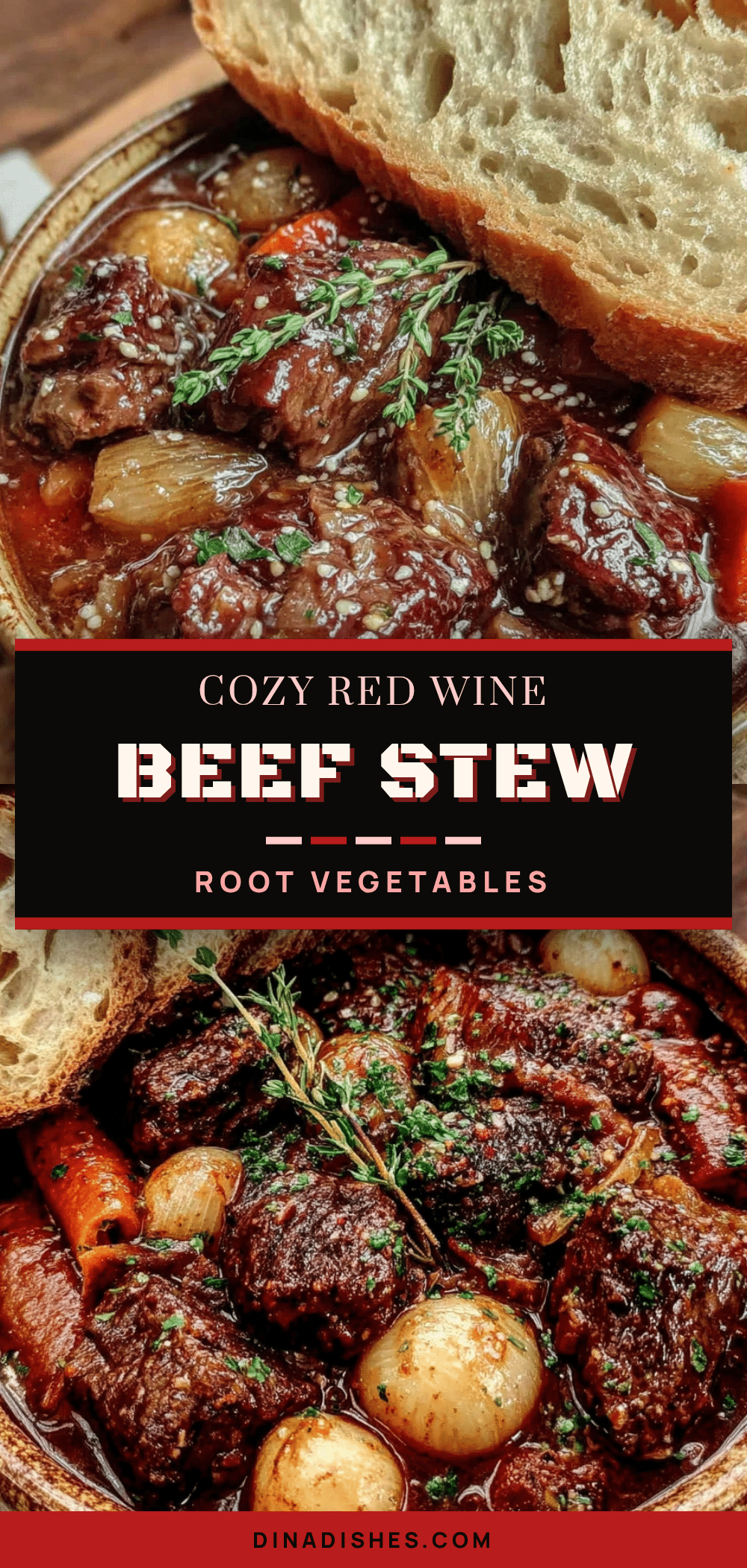
Cozy Red Wine Beef Stew Recipe with Root Vegetables
A rich, wine-infused beef stew with tender chuck and sweet root vegetables, slow-cooked to perfection. It’s the ultimate comfort food for chilly evenings, made with simple, wholesome ingredients.
- Prep Time: 20 minutes
- Cook Time: 2 hours 30 minutes
- Total Time: 2 hours 50 minutes
- Yield: 6 servings 1x
- Category: Main Course
- Cuisine: American
Ingredients
- 2 lbs beef chuck, cut into 1.5-inch cubes
- 2 tablespoons olive oil
- 1 teaspoon salt
- 1/2 teaspoon black pepper
- 2 tablespoons all-purpose flour
- 1 large yellow onion, diced
- 3 cloves garlic, minced
- 2 tablespoons tomato paste
- 2 cups dry red wine (e.g., Cabernet Sauvignon, Merlot)
- 3 cups low-sodium beef broth
- 1 cup water
- 2 bay leaves
- 2 sprigs fresh thyme (or 1 teaspoon dried)
- 3 large carrots, peeled and cut into 1-inch chunks
- 3 celery stalks, cut into 1-inch pieces
- 1 lb Yukon Gold potatoes, cut into 1-inch chunks
- 2 parsnips, peeled and cut into 1-inch chunks
- 1 cup frozen peas
- Fresh parsley, chopped (for garnish)
Instructions
- Preheat oven to 325°F (160°C).
- Pat beef cubes dry with paper towels. In a small bowl, mix flour, 1 teaspoon salt, and 1/2 teaspoon pepper. Toss beef in flour mixture until coated.
- Heat 1 tablespoon olive oil in a large Dutch oven over medium-high heat. Add half the beef in a single layer; brown for 3-4 minutes per side. Transfer to a plate. Repeat with remaining oil and beef.
- Reduce heat to medium. Add diced onion; cook 5-6 minutes until soft and translucent, scraping up brown bits.
- Add minced garlic and tomato paste; cook 1 minute, stirring constantly, until fragrant.
- Pour in red wine; scrape up browned bits. Simmer 3-4 minutes until reduced by half.
- Add beef broth, water, bay leaves, and thyme sprigs. Return beef and juices to pot. Bring to a gentle simmer.
- Cover pot and transfer to oven. Cook for 1 hour 15 minutes.
- Remove pot from oven. Add carrots, celery, potatoes, and parsnips. Stir, cover, and return to oven for 45 minutes to 1 hour, until vegetables are tender and beef is falling apart.
- Remove from oven. Discard bay leaves and thyme stems. Stir in frozen peas; let warm through for 2-3 minutes.
- Taste and adjust seasoning with salt and pepper. Serve hot, garnished with fresh parsley.
Notes
For best flavor, make a day ahead and refrigerate overnight. The stew thickens as it sits; add a splash of broth when reheating if needed. For a gluten-free version, use gluten-free flour or skip the flour and thicken with a cornstarch slurry at the end.
Nutrition
- Serving Size: 1 bowl (about 1.5 cu
- Calories: 420
- Sugar: 8
- Sodium: 750
- Fat: 18
- Saturated Fat: 6
- Carbohydrates: 30
- Fiber: 6
- Protein: 35
Keywords: beef stew, red wine stew, root vegetables, comfort food, winter recipe, cozy dinner, one-pot meal