I was standing in the frozen food aisle of our local grocery store last Tuesday, staring at a row of soup cartons, when the smell hit me. It wasn’t actually coming from the freezer section—it was a phantom scent, triggered by the cold air and the fluorescent lights and the sheer exhaustion of a long week. But suddenly I was eight years old, standing on a step stool in Grandma’s tiny kitchen, watching her drop ribbons of homemade noodles into a bubbling pot. The steam fogged up her glasses, and she’d push them up with her wrist because her hands were covered in flour. I can still see the way she’d test a noodle by fishing it out with a fork and blowing on it—three quick puffs—before popping it in her mouth. “Not quite,” she’d say, and add another pinch of salt. That woman never measured anything. Not once.
I didn’t buy the soup that night. I went home and called my mom instead, trying to piece together the recipe I’d watched a hundred times but never written down. “She just did it by feel,” Mom said, which was not helpful, honestly. So I spent the next three Sundays in my own kitchen, rolling out dough, cutting noodles, and simmering chicken until the meat fell apart. I burned my tongue on the first batch. The second batch was salty enough to preserve a ham. But the third one—the third one made me stop mid-bite and just sit there for a minute. It wasn’t exactly Grandma’s, but it was close. Close enough that I could almost hear her saying, “See? I told you it wasn’t hard.”
Maybe you’ve been there, chasing a taste from your past that you can’t quite replicate. This cozy grandma’s chicken noodle soup with homemade noodles is my best attempt at bottling that feeling—the warmth, the comfort, the way a simple bowl of soup can make everything feel a little less heavy. It’s the kind of recipe you make on a rainy Tuesday or a Sunday that needs saving. And honestly, it’s the kind of soup that hugs you from the inside out.
Why You’ll Love This Recipe
This isn’t just another chicken noodle soup recipe. I’ve tested this one at least a dozen times, tweaking the broth, adjusting the noodle thickness, and even asking my neighbor (hi, Susan!) to give it her honest opinion. What makes this version special is the homemade noodles, which transform the whole experience from a simple soup into something you’ll crave. Here’s why you’ll fall for it:
- Quick & Easy: The whole thing comes together in about an hour and a half, and most of that is hands-off simmering time. Perfect for a lazy Sunday or a weeknight when you need comfort fast.
- Simple Ingredients: No fancy grocery trips required. You probably have flour, eggs, carrots, and chicken in your kitchen right now. The ingredient list is short and honest.
- Perfect for Cold Days or Tough Weeks: This is the soup you make when you’re sick, when it’s snowing, or when you just need a warm hug in a bowl. It’s medicine for the soul.
- Crowd-Pleaser: I’ve served this to picky kids, soup skeptics, and my dad who claims he “doesn’t like noodles.” Everyone goes back for seconds. Every single time.
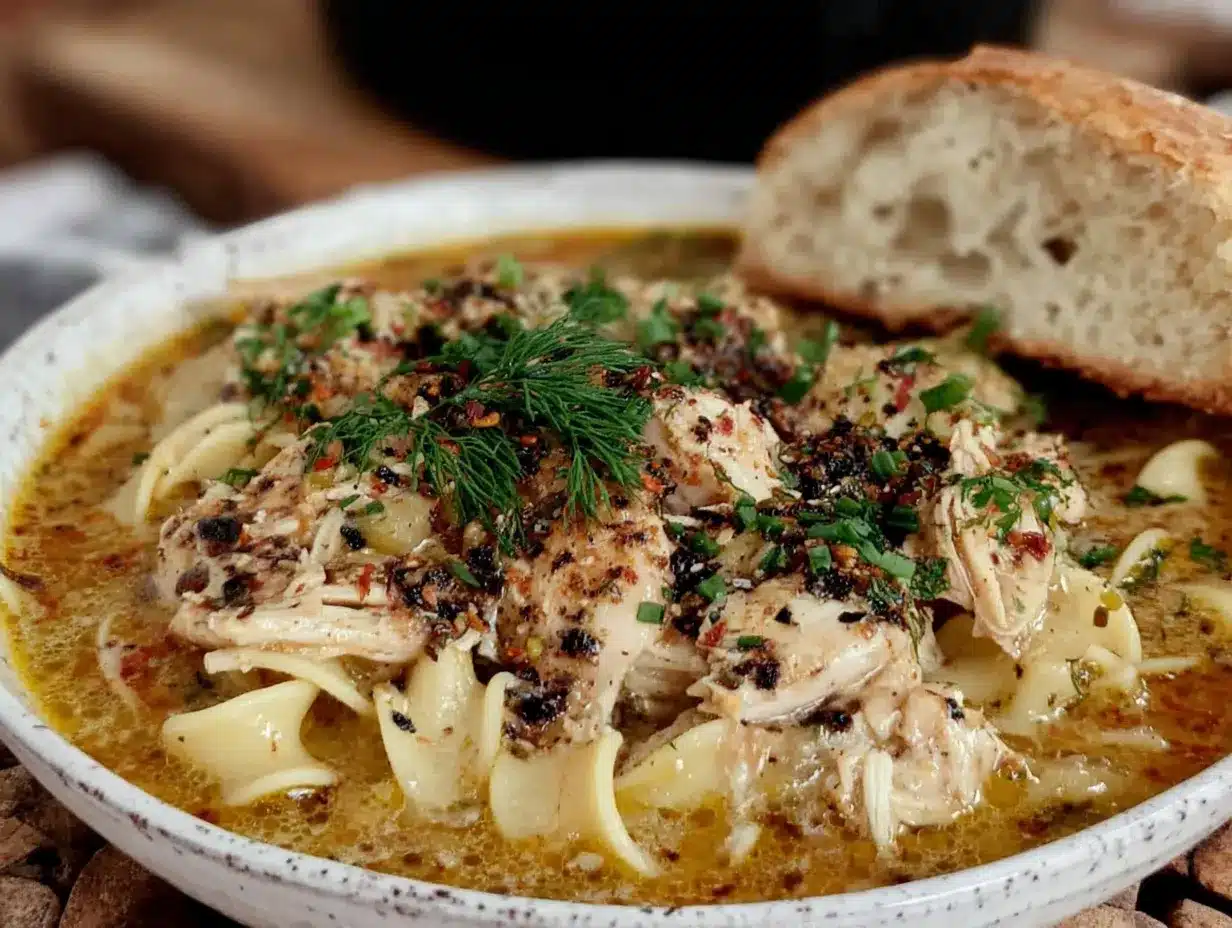
- Unbelievably Delicious: The texture of homemade noodles is something you can’t get from a box. They’re tender but chewy, soaking up all that rich, golden broth. It’s next-level comfort food.
What sets this recipe apart is the technique. Instead of just boiling the chicken, I roast it first with a few vegetables to deepen the flavor. And the noodles? They’re rolled thin and cut by hand—no pasta machine needed. It’s a little thing, but it makes a big difference. The broth gets this silky richness that you just can’t fake. This is the kind of soup that makes you close your eyes after the first bite. It’s comfort food at its finest—simple, soul-soothing, and made with love.
What Ingredients You Will Need
This recipe uses simple, honest ingredients to build deep flavor without any fuss. Most of these are pantry staples, so you probably won’t need to make a special trip. Let me walk you through what you’ll need and why each ingredient matters.
For the Broth & Chicken
- Whole chicken (3-4 pounds) – A whole bird gives you the richest, most flavorful broth. You can use bone-in, skin-on chicken breasts or thighs if you prefer, but the bones add so much depth. I usually buy a pasture-raised chicken when I can find one on sale.
- Carrots (3 large, roughly chopped) – These add natural sweetness to the broth. Don’t peel them too carefully—the skins add color and flavor.
- Celery stalks (3, roughly chopped) – The classic aromatic base. Leave the leaves on for extra flavor.
- Yellow onion (1 large, quartered) – No need to chop finely here. Rough quarters work perfectly for broth.
- Garlic cloves (4, smashed) – Adds a mellow, savory note. Smash them with the flat side of your knife to release the oils.
- Fresh thyme (4 sprigs) – Earthy and aromatic. Dried thyme works too, but fresh is better.
- Fresh parsley (a handful) – Adds brightness at the end. Save the stems for the broth.
- Bay leaves (2) – A subtle background flavor that makes the broth taste more complex.
- Whole black peppercorns (1 teaspoon) – Gentler than ground pepper, with a floral note.
- Kosher salt (to taste) – I use Diamond Crystal brand because it’s less salty per teaspoon, so I have more control. Start with 1 tablespoon and adjust.
For the Homemade Noodles
- All-purpose flour (2 cups) – Regular AP flour works perfectly. No need for bread flour or specialty flours here. I’ve used King Arthur Flour for years and it never lets me down.
- Large eggs (3, room temperature) – Room temperature eggs incorporate more easily into the dough. If you forgot to take them out, place them in warm water for 5 minutes.
- Kosher salt (1/2 teaspoon) – Seasons the noodles from the inside out.
- Water (1-2 tablespoons, as needed) – Only add if the dough feels too dry. Humidity affects how much you’ll need.
For the Soup Assembly
- Carrots (3 medium, diced) – These go into the finished soup for texture and color. Cut them into small, bite-sized pieces.
- Celery stalks (3, diced) – Same size as the carrots so everything cooks evenly.
- Shredded chicken (all the meat from the broth chicken) – Shred it while it’s still warm—it’s easier and the texture is better.
- Fresh dill (2 tablespoons, chopped, optional) – This is my secret ingredient. It adds a bright, almost lemony note that makes the soup sing. My grandma never used it, but I think she’d approve.
Equipment Needed
You don’t need a fancy kitchen to make this soup. Here’s what you’ll need:
- Large stockpot or Dutch oven (at least 6 quarts) – A heavy-bottomed pot distributes heat evenly and won’t scorch your broth. I use my enameled cast iron Le Creuset, but any large pot works. A cheap stainless steel stockpot from the restaurant supply store is actually my backup and it works great.
- Rolling pin – For rolling out the noodles. No pasta machine required. If you don’t have one, a wine bottle works in a pinch—I’ve done it.
- Sharp knife or pizza cutter – For cutting the noodles. A pizza cutter makes quick work of it.
- Large baking sheet – For holding the rolled-out noodles while they rest. I sprinkle it with a little flour so they don’t stick.
- Fine-mesh strainer – For straining the broth. A regular colander works too, but the fine mesh catches all the little bits.
- Measuring cups and spoons – For accuracy, especially with the noodles. I still use my grandma’s old set—they’re dented and the markings are worn off, but I know them by heart.
- Large bowl – For mixing the noodle dough and holding the shredded chicken.
- Tongs – For removing the chicken from the pot. Two forks work too, but tongs are easier.
If you don’t have a Dutch oven, don’t worry. A regular stockpot works perfectly. The key is to have a pot that’s big enough to hold the whole chicken with room to spare.
Preparation Method
Let’s make some soup. This recipe has a few steps, but I promise it’s worth it. Take your time, and don’t rush the broth—that’s where all the flavor lives.
Step 1: Roast the Chicken and Vegetables (Optional but Recommended)
Preheat your oven to 400°F (200°C). Place the whole chicken, roughly chopped carrots, celery, and quartered onion on a large baking sheet. Drizzle with a little olive oil and sprinkle with salt and pepper. Roast for 30-35 minutes until the chicken skin is golden and the vegetables are starting to brown. This step adds a depth of flavor that you just can’t get from boiling. If you’re short on time, you can skip this and go straight to the pot, but trust me—the roasted version is worth the extra step. I learned this trick from a chef friend, and now I never skip it.
Step 2: Make the Broth
Transfer the roasted chicken and vegetables to your large stockpot. Add the smashed garlic, thyme sprigs, parsley stems, bay leaves, and peppercorns. Pour in enough cold water to cover the chicken by about 2 inches (roughly 12 cups or 3 liters). Don’t use hot water—cold water helps extract more flavor from the bones. Bring everything to a gentle boil over medium-high heat, then reduce the heat to low so it’s barely simmering. Skim off any foam that rises to the surface during the first 15 minutes—this keeps the broth clear. Let it simmer gently for 45-60 minutes, until the chicken is cooked through and the meat is tender. The broth should be golden and fragrant.
Step 3: Shred the Chicken
Carefully remove the chicken from the pot using tongs and place it on a large cutting board. Let it cool for about 10 minutes—just until you can handle it. Pull the meat off the bones, discarding the skin and bones. Shred the meat into bite-sized pieces using two forks or your fingers. Don’t chop it; shredded pieces hold onto the broth better. Cover the shredded chicken with foil to keep it moist while you finish the broth.
Step 4: Strain the Broth
Pour the broth through a fine-mesh strainer into a large bowl or another pot. Discard the solids—they’ve given all their flavor to the broth. You should have about 8 cups of rich, golden broth. If you have more, that’s fine; just adjust the salt later. If you have less, add a little water. Wipe out your stockpot and return the strained broth to it. Bring it to a gentle simmer over medium heat.
Step 5: Make the Homemade Noodles
While the broth simmers, make the noodles. In a large bowl, whisk together the 2 cups of flour and 1/2 teaspoon of salt. Make a well in the center and crack the 3 eggs into it. Using a fork, gradually incorporate the flour into the eggs until a shaggy dough forms. Use your hands to bring the dough together—it will be stiff. Knead the dough on a lightly floured surface for about 5 minutes, until smooth and elastic. If it’s too dry, add water a teaspoon at a time. If it’s too sticky, add a little more flour. Wrap the dough in plastic wrap and let it rest for 20 minutes. This rest is important—it relaxes the gluten and makes the dough easier to roll.
After the rest, divide the dough into 4 pieces. Keep the pieces you’re not working with covered. On a lightly floured surface, roll one piece into a thin rectangle, about 1/8-inch thick. Don’t stress about getting it perfectly rectangular—rustic is fine. Using a sharp knife or pizza cutter, cut the dough into strips about 1/2-inch wide and 3-4 inches long. I like them uneven; it feels more homemade. Place the cut noodles on a floured baking sheet and toss them gently with a little flour to prevent sticking. Repeat with the remaining dough.
Step 6: Cook the Noodles and Vegetables
Add the diced carrots and celery to the simmering broth. Cook for 5 minutes, until they start to soften. Drop the homemade noodles into the broth a handful at a time, stirring gently to prevent them from sticking together. Cook for 8-10 minutes, until the noodles are tender but still have a little bite. Taste a noodle to check—undercooked noodles are chewy in a bad way, but overcooked ones turn mushy. The sweet spot is when they’re tender but still hold their shape.
Step 7: Add the Chicken and Finish
Stir in the shredded chicken and cook for 2-3 minutes, just until heated through. Remove the pot from the heat. Stir in the chopped fresh dill if you’re using it. Taste the soup and adjust the salt and pepper. Remember that the noodles will absorb some salt as they sit, so go a little lighter on the salt if you’re planning to have leftovers. Ladle the soup into bowls and serve immediately.
Cooking Tips & Techniques
I’ve made this soup more times than I can count, and I’ve learned a few things the hard way. Here are my best tips to help you avoid my mistakes:
Don’t boil the broth. A gentle simmer is all you need. Boiling makes the broth cloudy and can make the chicken tough. You want tiny bubbles, not a rolling boil. I learned this after making a murky, greasy broth my first time. It still tasted fine, but it wasn’t pretty.
Let the noodle dough rest. I know it’s tempting to skip this step, but don’t. The rest relaxes the gluten, which makes the dough easier to roll out and gives the noodles a better texture. I once rushed through this and ended up with noodles that snapped when I tried to roll them. Not my finest moment.
Roll the noodles thin but not too thin. Aim for about 1/8-inch thickness. Thicker noodles take longer to cook and can be doughy in the center. Thinner noodles cook quickly but can turn mushy. I like mine just thick enough to have a little chew. If you’re unsure, roll them a little thinner than you think—they’ll plump up as they cook.
Flour the noodles generously. After cutting the noodles, toss them with plenty of flour to prevent sticking. I use about 2 tablespoons of flour per batch. The excess flour will wash off in the broth and actually helps thicken it slightly.
Cook the noodles right before serving. Homemade noodles continue to absorb liquid as they sit, so if you cook them too early, they’ll become bloated and the soup will thicken. I like to cook the noodles, add the chicken, and serve immediately. If you’re making this ahead, cook the noodles separately and add them to individual bowls before pouring the hot broth over them.
Save the chicken skin. Don’t throw away the skin after roasting. I crisp it up in a skillet and sprinkle it over the finished soup like a crumble. It’s not traditional, but it’s delicious. My kids fight over it.
Variations & Adaptations
This recipe is forgiving, so feel free to make it your own. Here are some variations I’ve tried and loved:
Gluten-Free Version: Substitute the all-purpose flour with a gluten-free flour blend that contains xanthan gum. I’ve used Cup4Cup brand with good results. The dough will be a little more fragile, so handle it gently. You can also use gluten-free egg noodles from the store if you don’t want to make your own.
Vegetarian Version: Skip the chicken and use vegetable broth instead. Add a can of chickpeas or white beans for protein, and load up on extra vegetables like zucchini, mushrooms, and spinach. The homemade noodles still make it feel special. I made this for my vegetarian sister and she said it was the best soup she’d had in years.
Extra-Hearty Version: Add a cup of cooked rice or small pasta shapes along with the noodles. Or toss in a handful of frozen peas and corn at the end for color and sweetness. My husband loves this version—he calls it “soup that’s almost a stew.”
Lemon-Herb Version: Add the juice of half a lemon and a tablespoon of fresh thyme leaves at the end. The brightness cuts through the richness of the broth perfectly. This is my go-to version when I’m feeling under the weather.
Slow Cooker Adaptation: Place the whole chicken, vegetables, garlic, herbs, and water in a slow cooker. Cook on low for 6-8 hours or high for 4-5 hours. Remove the chicken, shred it, strain the broth, and then cook the noodles and vegetables on the stovetop as directed. The slow cooker version is perfect for busy days when you want dinner to be ready when you walk in the door.
Serving & Storage Suggestions
This soup is best served piping hot in deep bowls. I like to garnish each bowl with a sprinkle of fresh dill or parsley and a crack of black pepper. A squeeze of lemon juice right before serving brightens everything up. Serve with crusty bread or saltine crackers for dipping—my grandma always served it with buttered toast, and I still do the same.
For a complete meal, pair this soup with a simple green salad dressed with lemon vinaigrette. The acidity cuts through the richness of the broth. Or serve it alongside a grilled cheese sandwich for the ultimate comfort food combo. I’m not ashamed to admit I’ve eaten this soup for breakfast the next day.
Storage: Store leftover soup in an airtight container in the refrigerator for up to 4 days. The noodles will continue to absorb liquid, so the soup will thicken. When reheating, add a splash of water or broth to thin it back to your desired consistency. Reheat gently on the stovetop over medium-low heat, stirring occasionally. You can also reheat individual portions in the microwave for 2-3 minutes.
Freezing: This soup freezes well, but I recommend freezing the broth and noodles separately. The noodles can become mushy when frozen and reheated. Freeze the strained broth in freezer-safe containers for up to 3 months. Freeze the cooked noodles separately in a zip-top bag. When you’re ready to eat, thaw the broth in the refrigerator overnight, reheat it, and add the frozen noodles directly to the hot broth. Cook for 2-3 minutes until heated through.
Nutritional Information & Benefits
This cozy grandma’s chicken noodle soup isn’t just comfort food—it’s nourishing too. Here’s an approximate nutritional breakdown per serving (based on 8 servings):
| Nutrient | Amount per Serving |
|---|---|
| Calories | 320 |
| Protein | 28g |
| Fat | 8g |
| Carbohydrates | 35g |
| Fiber | 3g |
| Sodium | 680mg |
The chicken provides lean protein that keeps you full and supports muscle health. Carrots and celery add vitamins A and K, plus fiber for digestion. The homemade noodles offer complex carbohydrates for sustained energy. And the broth itself is hydrating and rich in minerals from the bones. This is the kind of meal that feels like a hug and actually does your body good. Plus, the act of making it—kneading the dough, chopping the vegetables, stirring the pot—is therapeutic in its own way. It’s slow food in the best sense.
Dietary Considerations: This recipe contains gluten (from the flour) and eggs. For a gluten-free version, use a gluten-free flour blend. For an egg-free version, you can use 3 tablespoons of water mixed with 1 tablespoon of flaxseed meal as an egg substitute, though the texture will be slightly different.
Conclusion
This cozy grandma’s chicken noodle soup with homemade noodles is more than just a recipe—it’s a ritual. It’s the soup you make when you need to slow down, when you want to fill your home with the smell of something good, when you’re craving a taste of simpler times. It’s not fancy or complicated, but it’s honest. And honestly, that’s what makes it special.
I hope you’ll make this soup your own. Maybe you’ll add more dill, or swap in parsnips for some of the carrots, or roll your noodles thicker than I do. That’s the beauty of a recipe like this—it’s meant to be adapted, shared, and passed down. My grandma would be thrilled to know her soup is still being made, even if the hands making it aren’t hers.
So go ahead. Get your hands floury. Simmer that broth until your kitchen smells like heaven. And when you take that first bite, close your eyes for a second. I think you’ll understand why this soup has stayed with me all these years. If you make it, I’d love to hear how it turned out. Leave a comment below or tag me in your photos. Happy cooking, friend.
Frequently Asked Questions
Can I use store-bought noodles instead of making them from scratch?
Absolutely. While homemade noodles are the star of this recipe, you can use store-bought egg noodles or even pasta if you’re short on time. Look for wide egg noodles for the closest texture. Cook them according to the package directions and add them to the soup at the end. The soup will still be delicious—just not quite as cozy.
How do I know when the noodles are cooked properly?
The best way to check is to fish one out with a fork and taste it. Homemade noodles should be tender but still have a slight chew—al dente, if you will. They usually take 8-10 minutes. Undercooked noodles will feel dense and doughy in the center. Overcooked noodles will be mushy and might start falling apart. When in doubt, taste one a minute or two before you think they’re done.
Can I make this soup in an Instant Pot?
Yes! Use the sauté function to brown the chicken and vegetables if you like, then add the water and herbs. Pressure cook on high for 20 minutes, then quick release. Remove the chicken, shred it, and strain the broth. Cook the noodles and vegetables on the sauté function for 8-10 minutes, then add the chicken back. It’s much faster and still tastes great.
Why is my broth cloudy?
Cloudy broth usually happens when you boil it too vigorously or stir it too much while it’s cooking. The agitation breaks up the fat and proteins into tiny particles that suspend in the liquid instead of rising to the surface to be skimmed off. To get a clear broth, keep it at a gentle simmer—just a few small bubbles breaking the surface—and don’t stir it. Skim the foam and impurities that rise to the top during the first 15 minutes.
How can I make this soup lower in sodium?
Use low-sodium or no-salt-added chicken broth if you’re supplementing with store-bought. When seasoning, start with less salt and add more at the end after tasting. You can also rinse the chicken before cooking to remove any added sodium from processing. Boost flavor with extra herbs like thyme, parsley, and dill instead of relying on salt. Your taste buds will adjust over time.
Pin This Recipe!
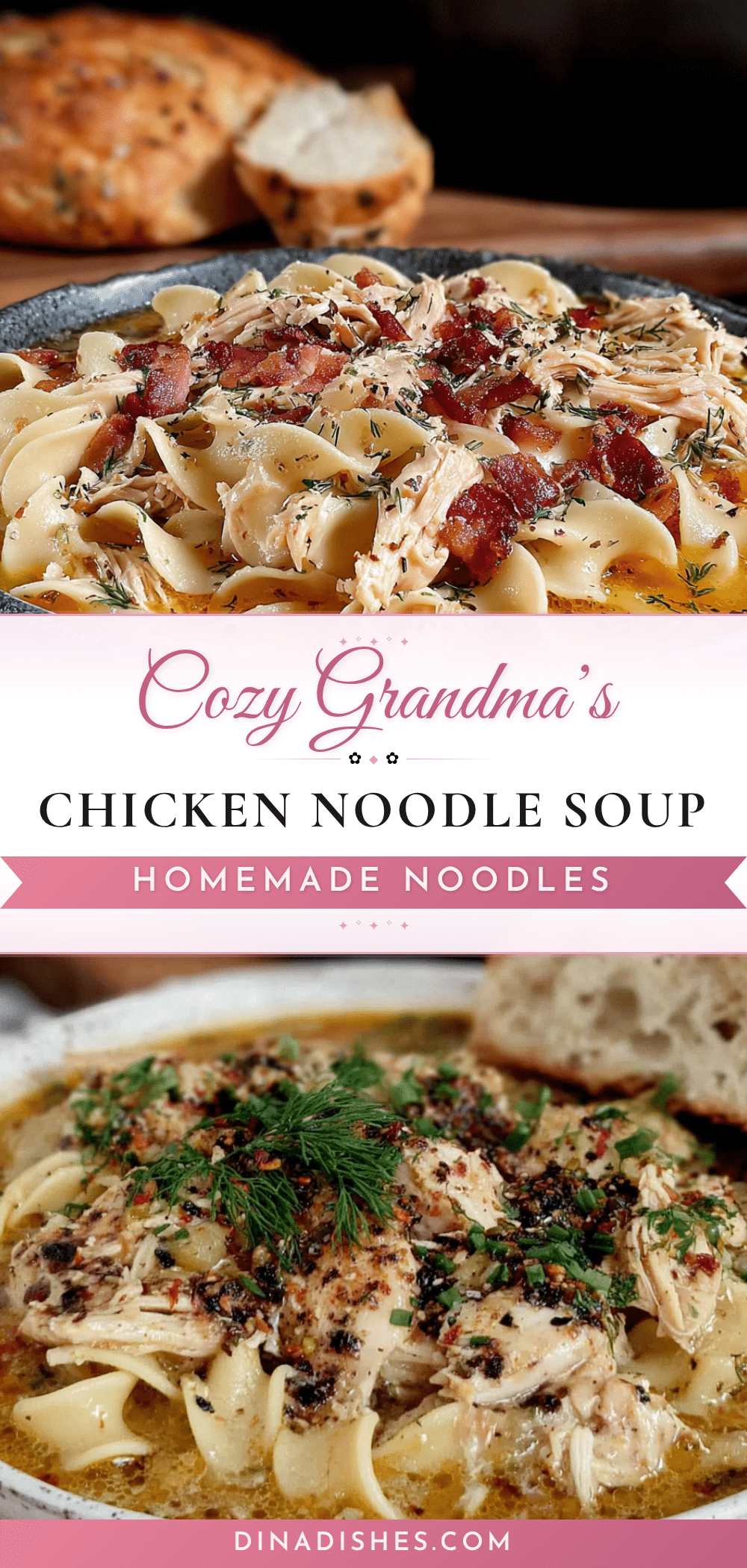
Cozy Grandma’s Chicken Noodle Soup with Homemade Noodles

A comforting chicken noodle soup with homemade noodles, roasted chicken, and a rich, golden broth. This soul-soothing recipe is perfect for cold days or tough weeks.
- Prep Time: 30 minutes
- Cook Time: 1 hour 30 minutes
- Total Time: 2 hours
- Yield: 8 servings 1x
- Category: Soup
- Cuisine: American
Ingredients
- 1 whole chicken (3–4 pounds)
- 3 large carrots, roughly chopped
- 3 celery stalks, roughly chopped
- 1 large yellow onion, quartered
- 4 garlic cloves, smashed
- 4 sprigs fresh thyme
- 1 handful fresh parsley
- 2 bay leaves
- 1 teaspoon whole black peppercorns
- Kosher salt, to taste
- 2 cups all-purpose flour
- 3 large eggs, room temperature
- 1/2 teaspoon kosher salt
- 1–2 tablespoons water, as needed
- 3 medium carrots, diced
- 3 celery stalks, diced
- Shredded chicken (from the broth chicken)
- 2 tablespoons fresh dill, chopped (optional)
Instructions
- Preheat oven to 400°F (200°C). Place whole chicken, roughly chopped carrots, celery, and quartered onion on a large baking sheet. Drizzle with olive oil and sprinkle with salt and pepper. Roast for 30-35 minutes until golden.
- Transfer roasted chicken and vegetables to a large stockpot. Add smashed garlic, thyme sprigs, parsley stems, bay leaves, and peppercorns. Cover with cold water by about 2 inches (roughly 12 cups). Bring to a gentle boil, then reduce to a simmer. Skim foam for first 15 minutes. Simmer 45-60 minutes until chicken is cooked through.
- Remove chicken from pot and let cool 10 minutes. Shred meat into bite-sized pieces, discarding skin and bones. Cover with foil.
- Strain broth through a fine-mesh strainer into a large bowl. Discard solids. Return broth to pot and bring to a gentle simmer.
- Make noodles: In a large bowl, whisk together 2 cups flour and 1/2 teaspoon salt. Make a well, add 3 eggs, and gradually incorporate flour until a shaggy dough forms. Knead on a floured surface for 5 minutes until smooth. Wrap in plastic and rest 20 minutes.
- Divide dough into 4 pieces. Roll each piece into a thin rectangle (about 1/8-inch thick). Cut into strips 1/2-inch wide and 3-4 inches long. Place on a floured baking sheet and toss with flour.
- Add diced carrots and celery to simmering broth. Cook 5 minutes. Drop noodles into broth a handful at a time, stirring gently. Cook 8-10 minutes until tender but still chewy.
- Stir in shredded chicken and cook 2-3 minutes until heated through. Remove from heat. Stir in fresh dill if using. Season with salt and pepper to taste. Serve immediately.
Notes
Don’t boil the broth; keep at a gentle simmer. Let noodle dough rest for 20 minutes. Roll noodles to about 1/8-inch thickness. Flour noodles generously to prevent sticking. Cook noodles right before serving to avoid them becoming bloated. Save chicken skin to crisp up as a garnish.
Nutrition
- Serving Size: 1 bowl (about 1.5 cu
- Calories: 320
- Sugar: 5
- Sodium: 680
- Fat: 8
- Saturated Fat: 2
- Carbohydrates: 35
- Fiber: 3
- Protein: 28
Keywords: chicken noodle soup, homemade noodles, comfort food, grandma's recipe, chicken soup