I was sorting through a box of old vinyl records at a flea market last October when the woman running the booth—a retired librarian named Margaret with glasses on a beaded chain—started talking about lasagna soup. I hadn’t asked. I was holding a scratched copy of Fleetwood Mac’s Rumours and trying to decide if it was worth three dollars. But she was already describing how she’d made it the night before, using up leftover ricotta and the last of her garden basil, and honestly, I forgot about the record completely.
“It’s all the good parts of lasagna,” she said, adjusting her glasses, “without the part where you have to layer noodles and wait an hour.” She told me she’d been making it every fall for thirty years. Thirty years! And here I was, thinking I’d seen every possible pasta soup variation out there. Let me tell you, I practically ran home to try it.
The first time I made it, I used too much broth and ended up with what I can only describe as lasagna-flavored tea. Delicious tea, but not quite right. The second time, I got it. That perfect balance of rich tomato broth, tender pasta, and those creamy ricotta dollops melting into everything. I mean, you know that feeling when something tastes exactly like it should? That’s this soup.
So here we are. A cozy lasagna soup that came to me from a flea market librarian who probably has no idea she changed my fall cooking forever. And now it’s your turn.
Why You’ll Love This Recipe
This isn’t just another soup recipe. After testing this at least eight times across two different stoves (my gas range at home and my mom’s electric coil nightmare), I can tell you exactly why this one works.
- 30 Minutes Start to Finish: From the moment you start chopping the onion to the second you’re scooping up that last spoonful, it’s half an hour. Perfect for those nights when you want lasagna-level comfort but don’t have lasagna-level time.
- Simple, Everyday Ingredients: No trips to specialty stores. Ground beef, canned tomatoes, onions, garlic, dried herbs, pasta, and ricotta. Chances are you’ve got most of this right now.
- Perfect for Chilly Evenings: When the temperature drops and you need something that wraps around you like a blanket, this is it. It’s fall in a bowl. Winter in a bowl. That first cold snap of October in a bowl.
- Crowd-Pleaser Status: I brought this to a friend’s soup exchange last month and came home with an empty pot and three people asking for the recipe. Kids love it. Adults love it. Even my picky brother-in-law asked for seconds.
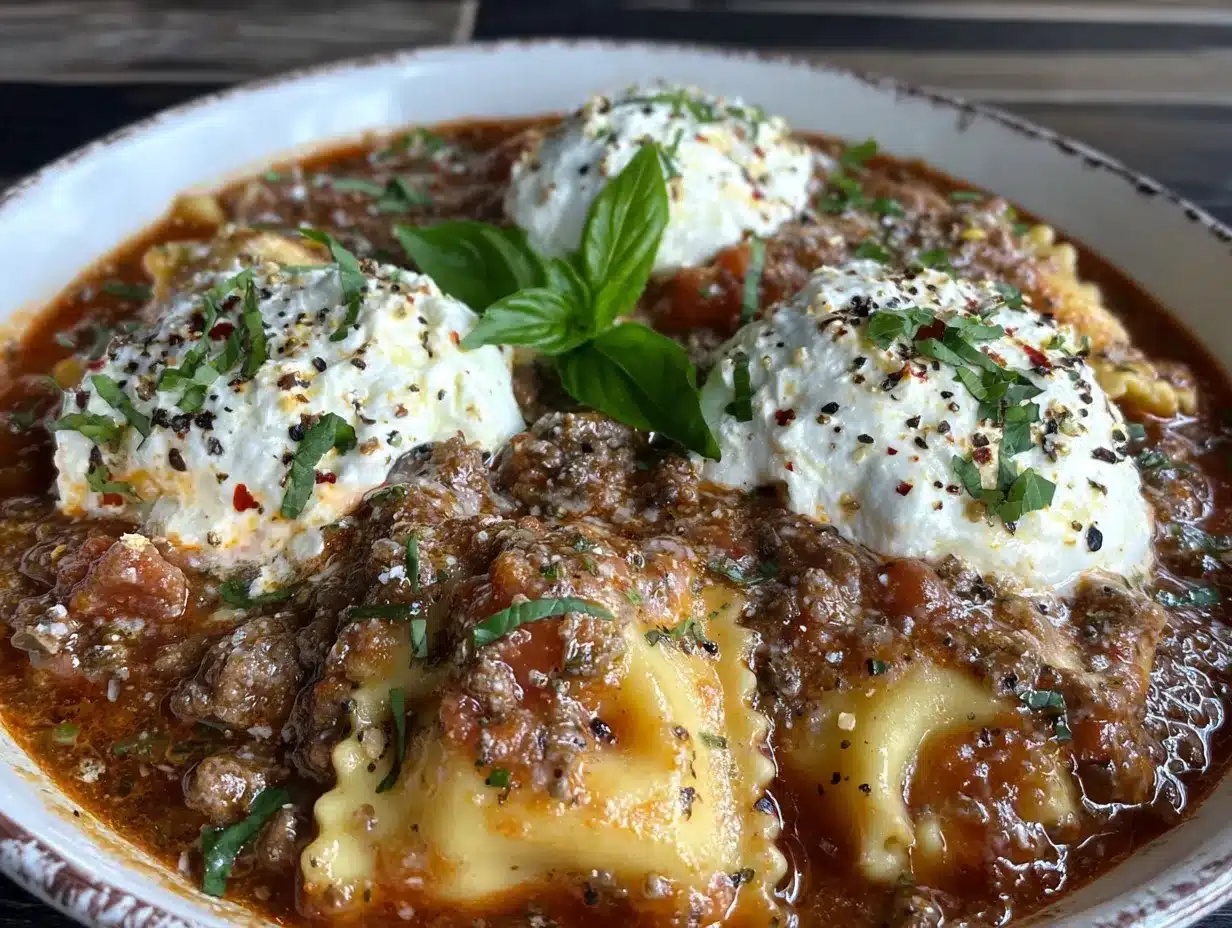
- That Ricotta Dollop Magic: Here’s what makes this different from every other tomato soup out there. The ricotta doesn’t just sit on top—it melts into the hot broth, creating little pockets of creamy richness in every spoonful. It’s the lasagna experience without the fuss.
This recipe is the kind that makes you close your eyes after the first bite. It’s comfort food reimagined—faster, simpler, but with the same soul-soothing satisfaction that makes lasagna a classic.
What Ingredients You Will Need
This recipe uses simple, wholesome ingredients that work together to create something genuinely special. Most of these are pantry staples, which makes this perfect for those nights when dinner feels like a question mark.
For the Soup Base
- 1 tablespoon olive oil (use a good quality one—it’s the first flavor in the pot)
- 1 pound ground beef (80/20 works best for flavor, but lean is fine too)
- 1 medium yellow onion, diced (about 1 cup)
- 4 cloves garlic, minced (don’t skimp—garlic is non-negotiable here)
- 1 teaspoon dried oregano (I prefer Mediterranean oregano for its slightly floral notes)
- 1 teaspoon dried basil (or 2 tablespoons fresh if you have it)
- 1/2 teaspoon red pepper flakes (optional, but I love the little warmth it adds)
- 1 can (28 ounces) crushed tomatoes (San Marzano if you can find them—they’re sweeter and less acidic)
- 4 cups low-sodium chicken broth (vegetable broth works too, but chicken adds deeper flavor)
- 8 ounces mafalda pasta (or broken lasagna noodles, or any short pasta you have)
- Salt and black pepper to taste
For the Ricotta Dollops
- 1 cup whole milk ricotta cheese (full-fat is worth it here—low-fat gets grainy when it hits the hot broth)
- 1/4 cup grated Parmesan cheese (freshly grated, not the green can stuff)
- 2 tablespoons fresh basil, chopped (plus more for garnish)
- 1 tablespoon fresh parsley, chopped
- 1 clove garlic, minced (microplaned is even better)
- Pinch of salt and black pepper
For Garnish
- Fresh basil leaves
- Extra Parmesan cheese
- A drizzle of good olive oil (trust me on this one)
I’ve tested this with different brands, and I’ll be honest—the ricotta matters. I really like Calabro or Polly-O for their creamy texture. If you can find fresh ricotta at a local Italian market, even better. The grocery store brands tend to be a bit watery, so just drain them in a fine-mesh strainer for 15 minutes before using if that’s what you’ve got.
For the pasta, traditional lasagna noodles broken into pieces are great, but mafalda pasta (those little ribbon-shaped noodles) is my favorite. It catches the broth in all the right ways. No mafalda? Use broken fettuccine, rotini, or even ditalini.
Equipment Needed
Nothing fancy here. That’s the beauty of this recipe—it comes together with basic kitchen tools you probably already own.
- Large Dutch oven or heavy-bottomed pot (5 to 6 quarts is ideal. I use my enameled cast iron Le Creuset, but any heavy pot works)
- Sharp chef’s knife and cutting board
- Wooden spoon or spatula
- Measuring cups and spoons
- Small bowl for the ricotta mixture
- Fine-mesh strainer (only if your ricotta looks watery)
- Ladle for serving
If you don’t have a Dutch oven, a large stockpot works fine. Just make sure it’s heavy-bottomed so the soup doesn’t scorch. I learned that one the hard way on a cheap thin pot—burnt soup is not the cozy experience we’re going for here.
Preparation Method
- Start the ricotta mixture first. In a small bowl, combine 1 cup whole milk ricotta, 1/4 cup grated Parmesan, 2 tablespoons chopped fresh basil, 1 tablespoon chopped fresh parsley, 1 minced garlic clove, and a pinch of salt and pepper. Stir until everything is combined. Set this aside at room temperature while you make the soup. Letting it sit helps the flavors meld together.
- Heat the olive oil in your Dutch oven over medium-high heat. Add 1 pound ground beef and cook, breaking it up with your wooden spoon, until it’s browned and no longer pink, about 5 to 6 minutes. Don’t drain all the fat—leave about a tablespoon in there for flavor. If you’re using lean ground beef, you might need to add a splash more olive oil.
- Add the aromatics. Toss in 1 diced yellow onion and cook for 3 to 4 minutes until it starts to soften. The onions should look translucent, not brown. Add 4 minced garlic cloves, 1 teaspoon dried oregano, 1 teaspoon dried basil, and 1/2 teaspoon red pepper flakes (if using). Stir constantly for about 30 seconds until the garlic is fragrant. You’ll know it’s ready when your kitchen starts smelling like a Sunday dinner.
- Pour in the tomatoes and broth. Add the 28-ounce can of crushed tomatoes and 4 cups of chicken broth. Stir everything together, scraping up any browned bits from the bottom of the pot. Those bits are flavor gold, honestly.
- Season and simmer. Add 1 teaspoon salt and 1/2 teaspoon black pepper. Bring the soup to a boil, then reduce the heat to medium-low and let it simmer for 10 minutes. This gives the flavors time to get to know each other. Taste it here and adjust the seasoning if needed.
- Cook the pasta. Add 8 ounces of mafalda pasta (or your chosen pasta) to the simmering soup. Cook according to package directions, usually about 8 to 10 minutes for al dente. Stir occasionally so the pasta doesn’t stick to the bottom. The pasta will absorb some of the broth as it cooks, so don’t worry if the soup looks a little thick at this point.
- Check the pasta. Taste a piece to make sure it’s cooked through. The soup should be brothy but not watery, with tender pasta that still has a little bite. If it’s too thick, add a splash more broth or water. If it’s too thin, let it simmer a few more minutes uncovered.
- Serve immediately. Ladle the soup into bowls. Drop a generous spoonful of the ricotta mixture into the center of each bowl. Don’t stir it in—let it sit there like a little cloud. Top with fresh basil leaves, extra Parmesan, and a drizzle of good olive oil.
- Watch the magic happen. As soon as that ricotta hits the hot broth, it starts to soften and melt. By the time you get your spoon in there, it’s creating these creamy pockets throughout the soup. That first bite is going to make you forget about traditional lasagna entirely.
One thing I learned the hard way: don’t add the pasta too early. If you add it before the soup has simmered enough, the pasta will overcook and get mushy. And if you’re planning to have leftovers, cook the pasta separately and add it to each bowl. The pasta soaks up broth overnight and you’ll end up with more of a pasta casserole situation than soup.
Cooking Tips & Techniques
After making this soup more times than I care to count, here’s what I’ve learned that makes the difference between good lasagna soup and great lasagna soup.
Brown the beef properly. Don’t crowd the pot and don’t stir constantly. Let the beef sit and develop a good sear before breaking it up. That browning adds deep, savory flavor that you can’t get any other way. I used to rush this step, and the soup always tasted flat. Now I take my time, and it’s night and day.
Taste and adjust as you go. This is the single most important cooking tip I can give you. Season the beef when you brown it. Taste the broth before you add the pasta. Taste it again after the pasta cooks. Every ingredient has different salt levels, and your taste buds are better than any recipe. I’ve had batches where I needed a full teaspoon more salt and others where the broth was perfect straight away.
Watch the pasta like a hawk. Pasta cooked in soup behaves differently than pasta cooked in water. It absorbs broth faster and can go from perfect to mushy in about 90 seconds. Start checking a minute before the package says it’s done. You want it al dente—it’ll continue cooking slightly even after you turn off the heat.
Don’t skip the ricotta step. I know it’s tempting to just plop plain ricotta on top, but that garlic and herb mixture makes a huge difference. The Parmesan adds saltiness, the fresh herbs add brightness, and that tiny bit of garlic ties it all together. I once forgot the garlic in the ricotta and the whole thing felt flat. Never again.
Make it ahead of time. Here’s a trick I use for busy weeks: make the soup base (everything except the pasta) up to three days in advance. Store it in the fridge, then reheat and add the pasta when you’re ready to eat. The flavors actually get better after a day or two in the fridge. Just you and that tomato broth, getting to know each other better.
Variations & Adaptations
This soup is incredibly flexible, and I’ve tried more variations than I can count. Here are some of my favorites.
Vegetarian Version: Skip the beef and double the mushrooms. Use cremini or baby bella mushrooms, chopped into bite-sized pieces. Sauté them with the onions until they release their liquid and start to brown. Use vegetable broth instead of chicken. I made this for my vegetarian sister-in-law and she asked for the recipe before she finished her bowl.
Spicy Italian Sausage Version: Replace the ground beef with 1 pound of spicy Italian sausage, casings removed. Brown it the same way, breaking it up as it cooks. The fennel and red pepper in the sausage add another layer of flavor that’s absolutely gorgeous with the ricotta. This is my husband’s preferred version, and honestly, I think I like it even more than the original.
Gluten-Free Adaptation: Use gluten-free pasta and make sure your broth is certified gluten-free. Brown rice pasta works really well here—just watch the cooking time closely because gluten-free pasta can go from al dente to mush quickly. I’ve had good luck with the Barilla gluten-free rotini.
Dairy-Free Option: This one takes a little creativity, but it works. Use a high-quality dairy-free ricotta (Kite Hill makes a good one) or make your own from blended cashews. Nutritional yeast can stand in for the Parmesan. The texture won’t be exactly the same, but the flavor is still wonderful.
Extra Veggie Version: Add a diced zucchini or yellow squash along with the onions. Throw in a handful of baby spinach right before serving and stir until it wilts. You can also add a diced bell pepper with the onions for extra sweetness. I do this when I’m trying to sneak more vegetables into my family’s diet, and nobody has ever complained.
Serving & Storage Suggestions
This soup is at its absolute best served immediately, while the ricotta is still melting into the broth and the pasta is perfectly al dente. But let’s be real—leftovers are a beautiful thing.
Serving Temperature and Presentation: Serve this soup piping hot. Ladle it into wide, shallow bowls so the ricotta dollop has room to shine. I like to add a final drizzle of olive oil right before serving—it catches the light and looks gorgeous. A sprinkle of fresh basil on top adds color and freshness. Serve with crusty bread for dipping, because you’re going to want to soak up every last drop of that broth.
What to Serve With It: A simple green salad with lemon vinaigrette is perfect alongside—the acidity cuts through the richness of the soup. Garlic bread is never a bad idea. Or keep it simple with a glass of red wine (a medium-bodied Chianti works beautifully) and call it dinner.
Storage Instructions: Store leftovers in an airtight container in the refrigerator for up to 4 days. Here’s the thing, though—the pasta will continue to absorb broth, so the soup will thicken significantly. I actually prefer to store the soup base and cooked pasta separately if I’m planning for leftovers. If you’ve already combined them, just add a splash of broth or water when reheating to thin it back out.
Freezing Instructions: This soup freezes beautifully, but again, think about the pasta. Freeze the soup base without the pasta for up to 3 months. Thaw overnight in the refrigerator, reheat, and add freshly cooked pasta. The ricotta mixture doesn’t freeze well, so make that fresh when you’re ready to serve.
Reheating Tips: Reheat gently on the stovetop over medium-low heat, stirring occasionally. Add a splash of broth or water if it’s too thick. Microwave works in a pinch, but the stovetop gives you better control. The ricotta should be added fresh after reheating—don’t microwave it or it’ll get grainy.
Nutritional Information & Benefits
Here’s the estimated nutritional breakdown for one serving (based on 6 servings, with the ricotta mixture divided evenly). Keep in mind these are estimates and will vary based on your specific ingredients and portion sizes.
| Nutrient | Amount Per Serving |
|---|---|
| Calories | 425 |
| Total Fat | 18g |
| Saturated Fat | 8g |
| Cholesterol | 65mg |
| Sodium | 780mg |
| Total Carbohydrates | 38g |
| Dietary Fiber | 4g |
| Sugars | 8g |
| Protein | 28g |
| Calcium | 180mg |
| Iron | 3.5mg |
This soup has some real nutritional bright spots. The ricotta is packed with calcium and protein, which is great for bone health and keeping you full. The tomatoes are loaded with lycopene, an antioxidant that’s been linked to heart health. And the garlic? It’s not just for flavor—it has anti-inflammatory properties that your body will thank you for.
If you’re watching your sodium, use low-sodium broth and go easy on the added salt. The Parmesan in the ricotta mixture adds saltiness too, so you might not need as much as you think. I’ve made this with no-salt-added crushed tomatoes and it was still plenty flavorful.
This recipe is naturally nut-free and egg-free. It contains dairy and gluten, but as I mentioned above, there are easy workarounds for both.
Conclusion
This cozy lasagna soup is everything I want in a fall dinner—warming, satisfying, and simple enough that I don’t dread making it after a long day. It came to me from a stranger at a flea market, and now it’s become a staple in my kitchen. That’s the thing about good recipes, isn’t it? They find you when you least expect them.
I hope you make this soup and love it as much as I do. Maybe you’ll tweak it—add more garlic, swap the beef for sausage, throw in some extra veggies. That’s the beauty of a recipe like this. It’s a starting point, not a rulebook. Make it your own.
When you do make it, I’d love to hear how it turned out. Drop a comment below and let me know what you changed, what you loved, or what you’d do differently next time. And if you share it on social media, tag me so I can see your beautiful bowls of soup. There’s nothing that makes me happier than knowing someone else is enjoying this recipe in their own kitchen.
Now go make some soup. Your cozy evening awaits.
Frequently Asked Questions
Can I use ground turkey instead of ground beef?
Absolutely. Ground turkey works well, though it’s leaner so you’ll want to add an extra tablespoon of olive oil to keep things from drying out. Season it generously—turkey can be a little bland on its own. I’ve also used ground chicken with great results.
What if I don’t have mafalda pasta?
No problem at all. Broken lasagna noodles are the classic substitute, but honestly, any short pasta works. Rotini, fusilli, ditalini, or even broken spaghetti will do the job. The key is using something that catches the broth. I’ve even used tortellini in a pinch, and it was delicious.
Can I make this in a slow cooker or Instant Pot?
Yes! For the slow cooker, brown the beef and onions first, then transfer everything except the pasta and ricotta to the slow cooker. Cook on low for 6 to 8 hours. Add the pasta in the last 20 minutes or cook it separately. For the Instant Pot, use the sauté function to brown the beef and onions, then add the liquids and cook on high pressure for 5 minutes. Quick release, add the pasta, and sauté for 8 to 10 minutes until tender.
Why is my ricotta mixture watery?
This usually happens if your ricotta had too much moisture to begin with. Some brands are wetter than others. To fix it, drain the ricotta in a fine-mesh strainer set over a bowl for 15 to 20 minutes before mixing it. You can also stir in an extra tablespoon of Parmesan to help absorb some of the liquid.
How do I prevent the pasta from getting mushy in leftovers?
The best trick is to cook the pasta separately and add it to each bowl as you serve. If you’ve already combined them, add a splash of broth when reheating and heat gently. The pasta will be softer than day one, but it’s still delicious. I honestly love the leftovers even when the pasta is soft—it’s like a different, equally comforting dish.
Pin This Recipe!
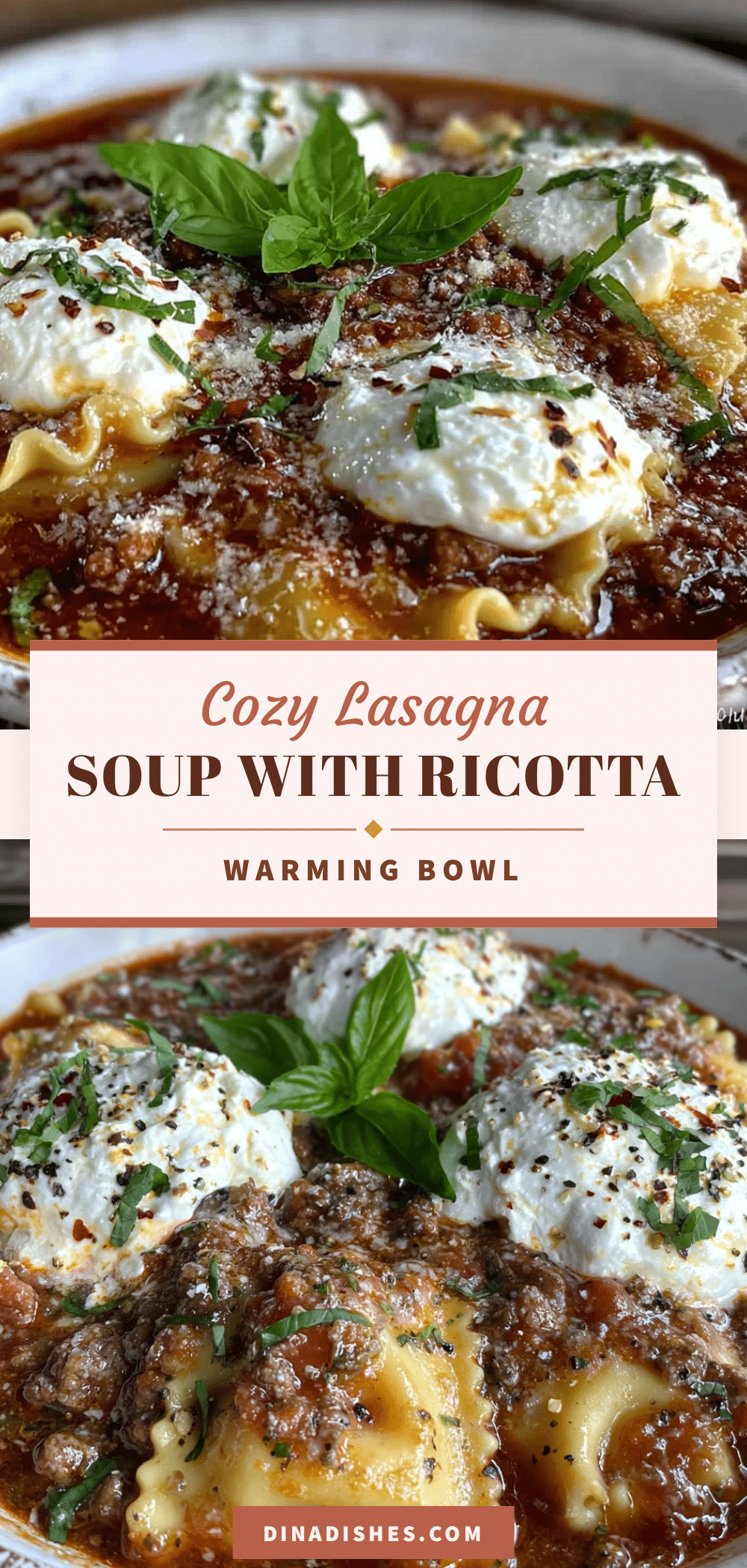
Cozy Lasagna Soup with Ricotta Dollops: Easy 30-Min Recipe
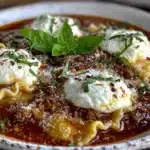
A quick and comforting lasagna soup that delivers all the rich flavors of traditional lasagna in just 30 minutes. Creamy ricotta dollops melt into a savory tomato broth with tender pasta and ground beef, making it the perfect cozy meal for chilly evenings.
- Prep Time: 10 minutes
- Cook Time: 20 minutes
- Total Time: 30 minutes
- Yield: 6 servings 1x
- Category: Main Course
- Cuisine: Italian
Ingredients
- 1 tablespoon olive oil
- 1 pound ground beef (80/20)
- 1 medium yellow onion, diced (about 1 cup)
- 4 cloves garlic, minced
- 1 teaspoon dried oregano
- 1 teaspoon dried basil
- 1/2 teaspoon red pepper flakes (optional)
- 1 can (28 ounces) crushed tomatoes (preferably San Marzano)
- 4 cups low-sodium chicken broth
- 8 ounces mafalda pasta (or broken lasagna noodles)
- Salt and black pepper to taste
- 1 cup whole milk ricotta cheese
- 1/4 cup grated Parmesan cheese
- 2 tablespoons fresh basil, chopped (plus more for garnish)
- 1 tablespoon fresh parsley, chopped
- 1 clove garlic, minced (for ricotta)
- Pinch of salt and black pepper (for ricotta)
- Fresh basil leaves (for garnish)
- Extra Parmesan cheese (for garnish)
- Good olive oil (for drizzling)
Instructions
- In a small bowl, combine 1 cup whole milk ricotta, 1/4 cup grated Parmesan, 2 tablespoons chopped fresh basil, 1 tablespoon chopped fresh parsley, 1 minced garlic clove, and a pinch of salt and pepper. Stir until combined. Set aside at room temperature.
- Heat 1 tablespoon olive oil in a Dutch oven over medium-high heat. Add 1 pound ground beef and cook, breaking it up, until browned and no longer pink, about 5 to 6 minutes. Leave about a tablespoon of fat in the pot.
- Add 1 diced yellow onion and cook for 3 to 4 minutes until softened. Add 4 minced garlic cloves, 1 teaspoon dried oregano, 1 teaspoon dried basil, and 1/2 teaspoon red pepper flakes (if using). Stir constantly for about 30 seconds until fragrant.
- Pour in the 28-ounce can of crushed tomatoes and 4 cups of chicken broth. Stir, scraping up any browned bits from the bottom. Add 1 teaspoon salt and 1/2 teaspoon black pepper. Bring to a boil, then reduce heat to medium-low and simmer for 10 minutes.
- Add 8 ounces of mafalda pasta to the simmering soup. Cook according to package directions, usually 8 to 10 minutes for al dente, stirring occasionally.
- Taste the pasta to ensure it’s cooked through. If the soup is too thick, add a splash more broth or water. If too thin, simmer uncovered for a few more minutes.
- Ladle the soup into bowls. Drop a generous spoonful of the ricotta mixture into the center of each bowl. Do not stir. Top with fresh basil leaves, extra Parmesan, and a drizzle of good olive oil.
- Serve immediately and enjoy the creamy pockets of ricotta as they melt into the hot broth.
Notes
For best results, use full-fat ricotta to avoid graininess. If using watery ricotta, drain in a fine-mesh strainer for 15 minutes before mixing. For leftovers, cook pasta separately and add to each bowl to prevent it from absorbing too much broth. The soup base can be made up to 3 days ahead and refrigerated; reheat and add pasta when ready to serve. Freeze the soup base without pasta for up to 3 months.
Nutrition
- Serving Size: 1 bowl (about 1.5 cu
- Calories: 425
- Sugar: 8
- Sodium: 780
- Fat: 18
- Saturated Fat: 8
- Carbohydrates: 38
- Fiber: 4
- Protein: 28
Keywords: lasagna soup, easy lasagna soup, 30 minute lasagna soup, ricotta dollops, cozy soup, fall soup, winter soup, comfort food, ground beef soup, pasta soup