I was supposed to be making a simple weeknight strata. That was the plan. Monday night, pouring rain, and I had a loaf of sourdough going stale on the counter and a vague memory of a casserole my aunt used to make. I grabbed the sausage from the fridge, the eggs from the carton, and started browning things in my biggest skillet. Halfway through, I realized I’d grabbed the wrong pan—the one with the burnt-on butter from breakfast—and the sausage was already sizzling in a pool of it. I was already late picking up my kid from soccer practice, and the kitchen smelled like a diner at 7 AM. Honestly, I almost just dumped it all in a bowl and called it a night.
But I didn’t. I added the onions anyway, tossed in the celery, and let the whole thing get a little too brown. Then I looked at the sourdough and thought, well, this isn’t going to be a strata. So I cubed the bread, poured in some broth, and threw it in the oven without even measuring the liquid. What came out of the oven was nothing like the plan—and better. It was the best stuffing I’d ever made, and I hadn’t even meant to make it. The edges were golden and crisp, the inside was soft and fragrant, and that herb butter from breakfast had somehow turned everything into pure comfort. Maybe you’ve been there—when a kitchen disaster turns into a happy accident you keep making on purpose. That’s this recipe. It’s the one that stayed with me because it didn’t try too hard. It just worked.
Why You’ll Love This Recipe
This isn’t just another stuffing recipe. I’ve tested it on Thanksgiving tables, casual Sunday dinners, and even a random Tuesday when I needed something warm and grounding. It delivers every time. Here’s why you’ll keep coming back to it:
- Quick & Easy: Comes together in under an hour, with only 15 minutes of active prep. Perfect for a holiday side or a cozy weeknight meal.
- Simple Ingredients: No fancy grocery trips needed. You likely already have sourdough, sausage, onions, and broth in your kitchen. The herb butter is the secret weapon, but it’s just butter and dried herbs.
- Perfect for Holidays & Weeknights: Great for Thanksgiving, Christmas, or any meal where you want that holiday feeling without the stress. It also works beautifully alongside roasted chicken or pork chops.
- Crowd-Pleaser: Always gets rave reviews from kids and adults alike. Even picky eaters go back for seconds. The sausage adds a savory depth that makes it feel substantial.
- Unbelievably Delicious: The texture and flavor combo is next-level comfort food. Crispy sourdough edges, tender interior, and that herb butter seeping into every bite—it’s the kind of stuffing you eat straight from the pan.
What makes this recipe different from the rest? It’s the herb butter technique. Instead of just mixing herbs into the broth, you melt herb butter into the pan before toasting the bread. That extra step locks in flavor and creates a golden crust you can’t get any other way. It’s not just another version—it’s my best version, tested and tweaked until every bite was perfect.
This recipe isn’t just good—it’s the kind that makes you close your eyes after the first bite. It’s comfort food reimagined—healthier, faster, but with the same soul-soothing satisfaction. Perfect for impressing guests without stress, or turning a simple meal into something memorable.
What Ingredients You Will Need
This recipe uses simple, wholesome ingredients to deliver bold flavor and satisfying texture without the fuss. Most of these are pantry staples, and the fresh ones are easy to find at any grocery store.
- For the Herb Butter:
- ½ cup (1 stick) unsalted butter, softened
- 2 teaspoons dried sage
- 1 teaspoon dried thyme
- 1 teaspoon dried rosemary
- ½ teaspoon dried marjoram (optional, but adds depth)
- ½ teaspoon salt
- ¼ teaspoon black pepper
- 1 clove garlic, minced (or ½ teaspoon garlic powder)
- For the Stuffing:
- 1 large loaf (about 1 pound) sourdough bread, cut into 1-inch cubes (day-old is best)
- 1 pound mild or spicy Italian sausage, casings removed
- 2 tablespoons olive oil
- 1 large yellow onion, diced
- 3 celery stalks, diced
- 3 cloves garlic, minced
- 1 ½ cups low-sodium chicken or vegetable broth
- 2 large eggs, lightly beaten
- ½ cup fresh parsley, chopped (for garnish)
- Salt and pepper to taste
Ingredient Tips: I recommend using a good-quality sourdough from a local bakery—it holds its shape better and adds a tangy flavor that complements the sausage. For the sausage, I prefer Johnsonville or a local butcher’s bulk sausage. If you’re using dried herbs, make sure they’re fresh—old herbs lose their punch. For a gluten-free option, use gluten-free sourdough or a sturdy gluten-free bread. You can also swap the sausage for a plant-based version, but look for one with good seasoning.
Equipment Needed
You don’t need a professional kitchen to make this stuffing. Here’s what you’ll need:
- Large skillet or sauté pan (12-inch works best)
- Large mixing bowl
- 9×13-inch baking dish (or similar size)
- Sharp knife and cutting board
- Wooden spoon or spatula
- Measuring cups and spoons
- Whisk (for the eggs)
- Aluminum foil (for covering during baking)
Alternatives: No 9×13 dish? Use a cast-iron skillet or a 10-inch round baking dish—just adjust the baking time by 5-10 minutes. No whisk? A fork works fine for beating the eggs. I’ve made this in a disposable aluminum pan for a potluck, and it turned out great. For the skillet, any heavy-bottomed pan will work—just avoid nonstick if you want those crispy brown bits on the bottom.
Preparation Method

- Make the herb butter: In a small bowl, combine the softened butter with sage, thyme, rosemary, marjoram, salt, pepper, and garlic. Mix until well combined. Set aside at room temperature. (You can make this a day ahead and keep it in the fridge—just let it soften before using.)
- Toast the bread: Preheat your oven to 375°F (190°C). Spread the sourdough cubes on a large baking sheet in a single layer. Bake for 10-12 minutes, stirring halfway, until lightly golden and dry. This step is crucial—if the bread is too soft, the stuffing will turn mushy. Let it cool while you prepare the rest. Sensory cue: The bread should smell toasty and feel firm to the touch, not hard like croutons.
- Cook the sausage: In a large skillet over medium-high heat, add the olive oil. Once hot, add the sausage, breaking it apart with a wooden spoon. Cook for 6-8 minutes until browned and cooked through. Use a slotted spoon to transfer the sausage to a plate, leaving about 2 tablespoons of drippings in the pan. Tip: Don’t drain all the fat—it adds flavor to the vegetables.
- Sauté the vegetables: Reduce heat to medium. Add the diced onion and celery to the same skillet. Cook for 5-6 minutes until softened and starting to brown. Add the minced garlic and cook for 1 more minute, stirring constantly so it doesn’t burn. Sensory cue: The kitchen should smell savory and sweet, with the onion turning translucent and the edges of the celery getting golden.
- Combine the base: Transfer the cooked vegetables to a large mixing bowl. Add the toasted sourdough cubes and cooked sausage. Toss gently to combine. In a separate small bowl, whisk together the broth and beaten eggs. Pour this mixture over the bread mixture, then add the herb butter in small dollops. Toss everything together until the bread is evenly moistened. Don’t overmix—you want some texture, not a paste.
- Bake the stuffing: Preheat your oven to 350°F (175°C). Grease your 9×13-inch baking dish with butter or cooking spray. Transfer the stuffing mixture to the dish and spread it into an even layer. Cover tightly with aluminum foil and bake for 25 minutes. Remove the foil and bake for an additional 15-20 minutes until the top is golden brown and crispy. Sensory cue: The edges should look deeply golden, and you should hear a slight sizzle when you pull it out of the oven.
- Rest and serve: Let the stuffing rest for 5-10 minutes before serving. This allows the liquid to absorb fully and makes it easier to scoop. Garnish with fresh parsley and serve warm.
Troubleshooting: If the stuffing looks too dry before baking, add an extra ¼ cup of broth. If it looks too wet, add a handful of extra bread cubes. The texture should be moist but not soupy. If the top is browning too quickly, cover loosely with foil for the last 10 minutes of baking.
Cooking Tips & Techniques
After making this stuffing more times than I can count, I’ve learned a few things the hard way. Here are my best tips:
- Don’t skip toasting the bread. I know it’s an extra step, but it’s the difference between stuffing and soggy bread. Day-old bread helps, but toasting ensures every cube can absorb liquid without falling apart. I once skipped this step when I was in a hurry, and the result was a dense, wet mess. Learn from my mistake.
- Use low-sodium broth. Sausage is already salty, and the herb butter adds more. Low-sodium broth lets you control the salt level. You can always add more salt at the end, but you can’t take it out.
- Let the stuffing rest. I know it’s tempting to dig in right away, but resting allows the flavors to meld and the texture to set. The first time I made this, I served it immediately, and it was good. The second time, I let it rest for 10 minutes, and it was amazing. Patience pays off.
- Multitask wisely. While the bread is toasting, cook the sausage. While the sausage is browning, chop the vegetables. This recipe moves fast, so having everything prepped before you start makes it stress-free.
- Check your oven temperature. Ovens vary—I’ve had one that ran 25 degrees hot. Use an oven thermometer if you have one. The stuffing should bake at 350°F, not 375°F, to ensure the inside cooks through without burning the top.
Variations & Adaptations
This recipe is incredibly flexible. Here are some ways to make it your own:
- Vegetarian Version: Skip the sausage and add 8 ounces of sautéed mushrooms (cremini or shiitake work well) and ½ cup of toasted walnuts. The mushrooms add that savory, umami flavor you’ll miss from the meat.
- Gluten-Free Option: Use a good-quality gluten-free sourdough or a sturdy gluten-free bread. I’ve tried this with Schar’s gluten-free sourdough, and it works beautifully. Just make sure to toast it a little longer to dry it out.
- Dairy-Free Adaptation: Replace the butter with a plant-based butter (I like Miyoko’s) and use vegetable broth instead of chicken. The herb butter still works—just use dairy-free butter and let it soften before mixing.
- Seasonal Twist: In the fall, add ½ cup of dried cranberries and 1 diced apple (like Honeycrisp) to the mix. In the spring, swap the sage for fresh dill and add ½ cup of peas. Both variations are delicious and feel fresh.
- Extra Crunchy Top: For those who love crispy edges, spread the stuffing in a thinner layer (use a 9×13 dish or two smaller dishes) and bake uncovered for the entire 40 minutes. The top will be extra golden and crunchy.
Personal Variation: I once added leftover roasted butternut squash to this stuffing, and it was incredible. The sweetness of the squash balanced the savory sausage and herbs. It’s now my go-to for Thanksgiving leftover night.
Serving & Storage Suggestions
This stuffing is best served warm, straight from the oven, with the top still crispy. I like to scoop it into a large serving bowl and garnish with fresh parsley for a pop of color. It pairs beautifully with roasted turkey, chicken, or pork chops. For a vegetarian meal, serve it alongside a hearty salad or roasted vegetables.
Storage: Leftover stuffing keeps in an airtight container in the refrigerator for up to 4 days. The flavors actually deepen after a day or two—the herbs mellow and the sausage flavor spreads throughout. To reheat, place it in a 350°F (175°C) oven for 10-15 minutes, or until warmed through. You can also microwave individual portions, but the top won’t be as crispy.
Freezing: This stuffing freezes beautifully. Let it cool completely, then transfer to a freezer-safe container or zip-top bag. Freeze for up to 3 months. To reheat, thaw in the refrigerator overnight, then bake at 350°F for 20-25 minutes, covered, until hot. I’ve done this for holiday prep, and it saves so much time.
Flavor Development: Honestly, this stuffing tastes even better the next day. The bread absorbs all the liquid and the herbs have time to meld. If you’re making it for a holiday, I recommend preparing it a day ahead and reheating it before serving. It’s one of those rare dishes that improves with time.
Nutritional Information & Benefits
This recipe serves about 8 people as a side dish. Here are the approximate nutritional values per serving:
- Calories: 320
- Protein: 14g
- Fat: 18g
- Carbohydrates: 28g
- Fiber: 3g
- Sugar: 4g
- Sodium: 580mg
Health Benefits: This stuffing is surprisingly balanced. The sourdough bread is easier to digest than regular bread due to the fermentation process, and it has a lower glycemic index. The sausage provides protein and iron, while the celery and onion add fiber and antioxidants. The herbs—sage, thyme, and rosemary—are packed with anti-inflammatory compounds. It’s comfort food that actually supports your body.
Dietary Considerations: This recipe can be made gluten-free, dairy-free, or vegetarian with the substitutions mentioned above. It contains eggs and dairy in the standard version, so adjust accordingly for allergies. The sodium content is moderate but can be reduced by using low-sodium broth and lean sausage.
Personal Wellness Perspective: I love that this recipe feels indulgent but doesn’t leave me feeling heavy. It’s the kind of dish you can enjoy without guilt—especially when you load it with extra vegetables or use lean turkey sausage. It’s proof that eating well doesn’t mean sacrificing flavor.
Conclusion
This sourdough sausage stuffing with herb butter is one of those recipes that feels like a hug in a dish. It started as a mistake—a distracted cook, a wrong pan, a happy accident—and turned into something I make on purpose, again and again. It’s simple enough for a Tuesday night, special enough for a holiday table, and forgiving enough for any skill level.
I hope you make it your own. Add more herbs, swap the sausage, load it with extra vegetables—whatever feels right. That’s the beauty of stuffing: it’s endlessly customizable and always comforting. I’d love to hear how it turns out for you. Leave a comment below with your favorite variation, or tag me in your photos. And if you make a mistake in the kitchen? Don’t panic. It might just become your new favorite recipe.
Happy cooking, friend. You’ve got this.
Frequently Asked Questions
Can I make this stuffing ahead of time?
Yes! You can assemble the stuffing up to a day ahead, cover it, and refrigerate it. When you’re ready to bake, add about 10 minutes to the covered baking time to account for the cold start. You can also bake it fully and reheat it the next day—the flavors get even better.
Can I use fresh herbs instead of dried?
Absolutely. If using fresh herbs, triple the amount: 6 teaspoons fresh sage, 3 teaspoons fresh thyme, and 3 teaspoons fresh rosemary. Fresh herbs have a milder flavor, so you might want to add a little extra. I’ve done both, and each version has its own charm.
What’s the best bread for stuffing?
Sourdough is my top choice because it’s sturdy and has a tangy flavor that complements the sausage and herbs. But you can also use French bread, ciabatta, or a good-quality white bread. Just make sure it’s day-old or toasted to avoid mushiness. I don’t recommend soft sandwich bread—it doesn’t hold up well.
Can I make this recipe without eggs?
Yes! The eggs help bind the stuffing, but you can omit them or use a flax egg (1 tablespoon ground flaxseed mixed with 3 tablespoons water, let sit for 5 minutes). The texture will be a little looser, but it’s still delicious. I’ve made it without eggs for a friend with allergies, and no one noticed the difference.
How do I know when the stuffing is done?
The stuffing is done when the top is golden brown and crispy, and the center is hot and set. You can insert a knife into the center—it should come out hot to the touch. If the top is browning too quickly but the center isn’t hot yet, cover it with foil and bake for another 10 minutes. The internal temperature should be at least 165°F (74°C) for food safety.
Pin This Recipe!
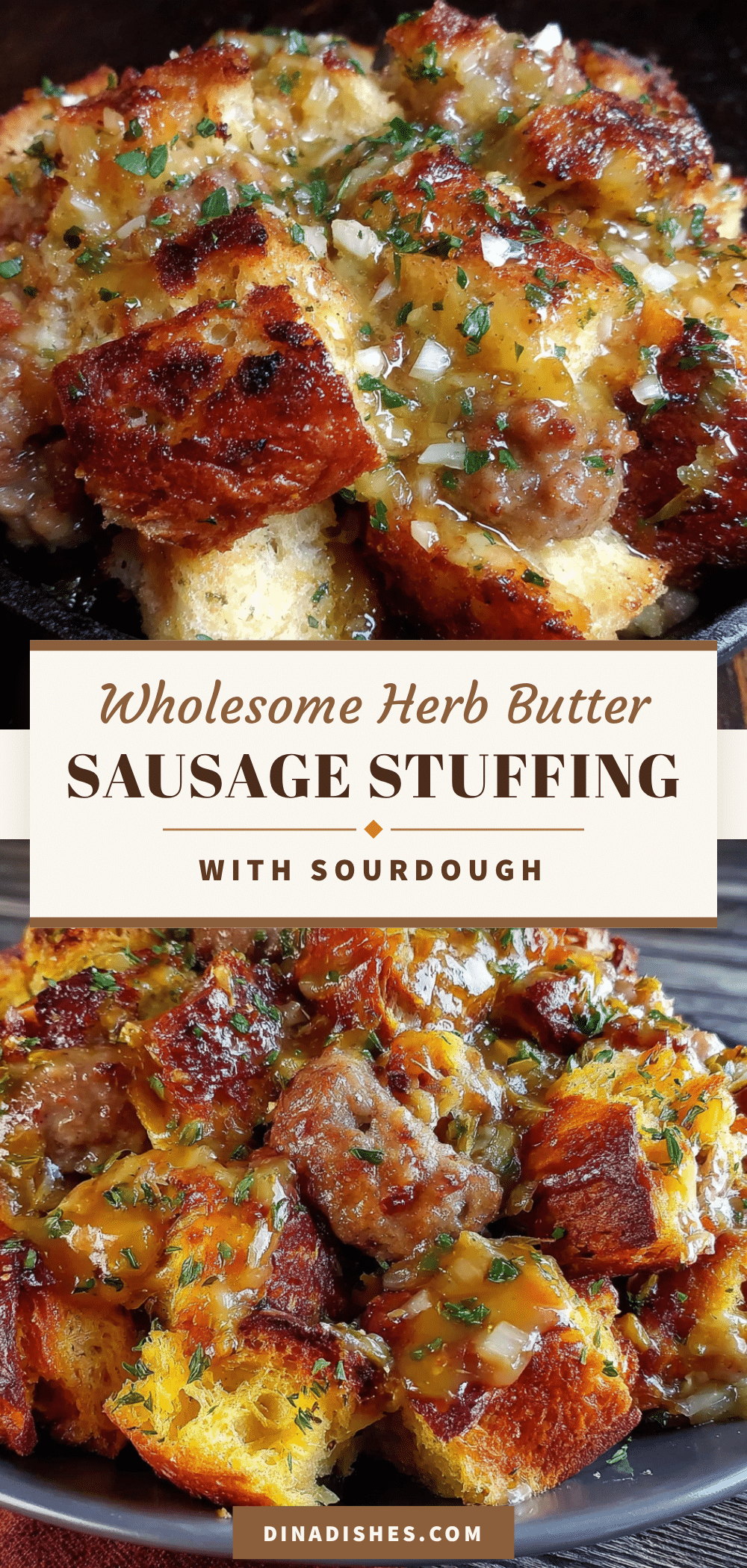
Best Easy Sourdough Sausage Stuffing with Herb Butter

This sourdough sausage stuffing with herb butter is a happy accident turned into a must-make recipe. It’s quick, easy, and delivers crispy edges, tender interior, and savory herb flavor in every bite.
- Prep Time: 15 minutes
- Cook Time: 40 minutes
- Total Time: 55 minutes
- Yield: 8 servings 1x
- Category: Side Dish
- Cuisine: American
Ingredients
- ½ cup (1 stick) unsalted butter, softened
- 2 teaspoons dried sage
- 1 teaspoon dried thyme
- 1 teaspoon dried rosemary
- ½ teaspoon dried marjoram (optional)
- ½ teaspoon salt
- ¼ teaspoon black pepper
- 1 clove garlic, minced (or ½ teaspoon garlic powder)
- 1 large loaf (about 1 pound) sourdough bread, cut into 1-inch cubes (day-old is best)
- 1 pound mild or spicy Italian sausage, casings removed
- 2 tablespoons olive oil
- 1 large yellow onion, diced
- 3 celery stalks, diced
- 3 cloves garlic, minced
- 1 ½ cups low-sodium chicken or vegetable broth
- 2 large eggs, lightly beaten
- ½ cup fresh parsley, chopped (for garnish)
- Salt and pepper to taste
Instructions
- Make the herb butter: In a small bowl, combine the softened butter with sage, thyme, rosemary, marjoram, salt, pepper, and garlic. Mix until well combined. Set aside at room temperature.
- Toast the bread: Preheat your oven to 375°F (190°C). Spread the sourdough cubes on a large baking sheet in a single layer. Bake for 10-12 minutes, stirring halfway, until lightly golden and dry. Let cool.
- Cook the sausage: In a large skillet over medium-high heat, add the olive oil. Once hot, add the sausage, breaking it apart with a wooden spoon. Cook for 6-8 minutes until browned and cooked through. Use a slotted spoon to transfer the sausage to a plate, leaving about 2 tablespoons of drippings in the pan.
- Sauté the vegetables: Reduce heat to medium. Add the diced onion and celery to the same skillet. Cook for 5-6 minutes until softened and starting to brown. Add the minced garlic and cook for 1 more minute, stirring constantly.
- Combine the base: Transfer the cooked vegetables to a large mixing bowl. Add the toasted sourdough cubes and cooked sausage. Toss gently to combine. In a separate small bowl, whisk together the broth and beaten eggs. Pour this mixture over the bread mixture, then add the herb butter in small dollops. Toss everything together until the bread is evenly moistened.
- Bake the stuffing: Preheat your oven to 350°F (175°C). Grease your 9×13-inch baking dish with butter or cooking spray. Transfer the stuffing mixture to the dish and spread it into an even layer. Cover tightly with aluminum foil and bake for 25 minutes. Remove the foil and bake for an additional 15-20 minutes until the top is golden brown and crispy.
- Rest and serve: Let the stuffing rest for 5-10 minutes before serving. Garnish with fresh parsley and serve warm.
Notes
Don’t skip toasting the bread—it prevents mushiness. Use low-sodium broth to control salt. Let the stuffing rest before serving for best texture. Can be assembled a day ahead and refrigerated; add 10 minutes to covered baking time. Freezes well for up to 3 months.
Nutrition
- Serving Size: 1 serving (about 1 c
- Calories: 320
- Sugar: 4
- Sodium: 580
- Fat: 18
- Saturated Fat: 8
- Carbohydrates: 28
- Fiber: 3
- Protein: 14
Keywords: sourdough stuffing, sausage stuffing, herb butter stuffing, Thanksgiving stuffing, easy stuffing recipe