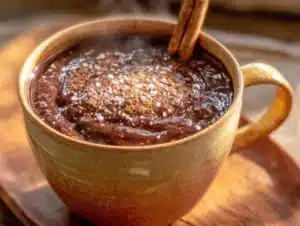
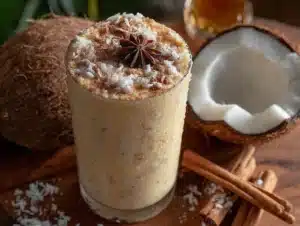
Introduction
My neighbor Marisol wasn’t trying to impress anyone. I’d stopped by to borrow a ladder on a rainy Tuesday afternoon, and this warm, sweet smell hit me before I even got my boots off at the door. It was December, sure, but this wasn’t the usual sugar cookie or gingerbread situation. It was deeper, spicier—like cinnamon and cloves had moved in and made themselves at home.
“Oh, that’s just coquito,” she said when I asked, waving her hand like it was nothing. Just coquito. She was standing at her stove, stirring a pot with this completely relaxed look on her face, like she was making boxed mac and cheese. Meanwhile, I was practically drooling on her welcome mat. The kitchen was a little messy—there was a splatter of what looked like coconut milk on the cabinet door, and she had a dish towel thrown over her shoulder that was definitely stained. It was so wonderfully real.
She handed me a small cup, still warm, and honestly, that first sip stopped me mid-sentence. It was creamy, rich, and had this cozy warmth that spread through my chest. Not too sweet, not too boozy, just perfectly balanced. I asked for the recipe, and she shrugged and scribbled it on the back of an old envelope. No fancy measurements, just “a can of this” and “a splash of that.”
That envelope is now stained and crinkled, tucked into my favorite cookbook. I’ve made this quick Puerto Rican coquito recipe every holiday season since, and it never fails to get that same reaction. Maybe you’ve been there—you taste something at a friend’s house and suddenly you can’t stop thinking about it. This is that recipe. The one that makes people close their eyes after the first sip and say, “Okay, I need this in my life.”
Why You’ll Love This Recipe
Let’s be real—most coquito recipes out there take hours. You’re soaking spices, toasting things, waiting for flavors to meld. That’s great for a weekend project, but what about a Tuesday night when you suddenly remember you have a holiday party tomorrow? This version is different. It’s quick Puerto Rican coquito that tastes like it simmered all day, but it comes together in about 15 minutes of active work.
Here’s what makes this the best coquito recipe you’ll try:
- Ready in 15 Minutes : No boiling, no steeping overnight. Just blend, stir, and chill. Perfect for last-minute holiday hosting or a spontaneous treat.
- Simple Ingredients : You can find everything at your regular grocery store. No special trips to a Latin market needed (though they’re fun to visit).
- Authentic Flavor, Shortcut Method : We’re using quality canned coconut cream and a quick simmer with whole spices. You get that deep, traditional taste without the all-day commitment.
- Crowd-Pleaser : I’ve served this at cookie exchanges, tree-trimming parties, and casual dinners. It disappears fast. Even people who “don’t like coconut drinks” ask for seconds.
- Make-Ahead Friendly : It actually gets better after a day or two in the fridge. One less thing to worry about on party day.
This isn’t just another coquito recipe. It’s the one that respects your time. The one that lets you show up with something incredible without spending your whole afternoon in the kitchen. When you taste it, you’ll understand why Marisol was so casual about it—because once you know how easy it is, you’ll be making it all season long too.
What Ingredients You Will Need
This recipe uses simple, pantry-friendly ingredients to create that signature creamy, spiced coquito flavor. No obscure items here—just good, honest components that work together beautifully.
- Canned coconut cream (15 oz) – This is the key to that luxurious texture. I prefer Chaokoh or Thai Kitchen for their thick, rich consistency. Don’t confuse it with coconut milk; cream is much thicker and gives a better mouthfeel.
- Sweetened condensed milk (14 oz) – Adds sweetness and a silky body. La Lechera is my go-to brand.
- Evaporated milk (12 oz) – Thins it out just enough while adding creamy richness. Carnation works perfectly.
- Cream of coconut (15 oz) – This is different from coconut cream. It’s sweetened and often used in cocktails. Coco López is the classic choice and gives that authentic flavor.
- White rum (1 cup, or to taste) – Use a good quality rum like Bacardi or Don Q. For a less boozy version, start with ¾ cup.
- Cinnamon sticks (2 whole) – For simmering. They infuse a warm, gentle spice without being overpowering.
- Whole cloves (4-5) – Just a few for that traditional holiday aroma. Be careful not to overdo it; cloves can be strong.
- Vanilla extract (1 teaspoon) – Pure vanilla, not imitation, for the best flavor.
- Ground cinnamon (½ teaspoon) – For a little extra spice boost.
- Ground nutmeg (¼ teaspoon) – Freshly grated is ideal, but pre-ground works fine.
- Salt (a pinch) – It sounds weird, but a tiny pinch of salt balances the sweetness and brightens all the flavors.
Ingredient Tips & Substitutions: If you can’t find cream of coconut, you can substitute with ½ cup coconut cream plus ½ cup simple syrup, but the texture won’t be quite as silky. For a dairy-free version, use full-fat canned coconut milk instead of evaporated milk and a dairy-free sweetened condensed milk alternative. The flavor will be slightly different but still delicious.
Look for cinnamon sticks that are fragrant and oily—that’s where the flavor is. Old, dry sticks won’t give you the same punch. And please, please don’t skip the salt. It’s the secret that makes everything pop.
Equipment Needed
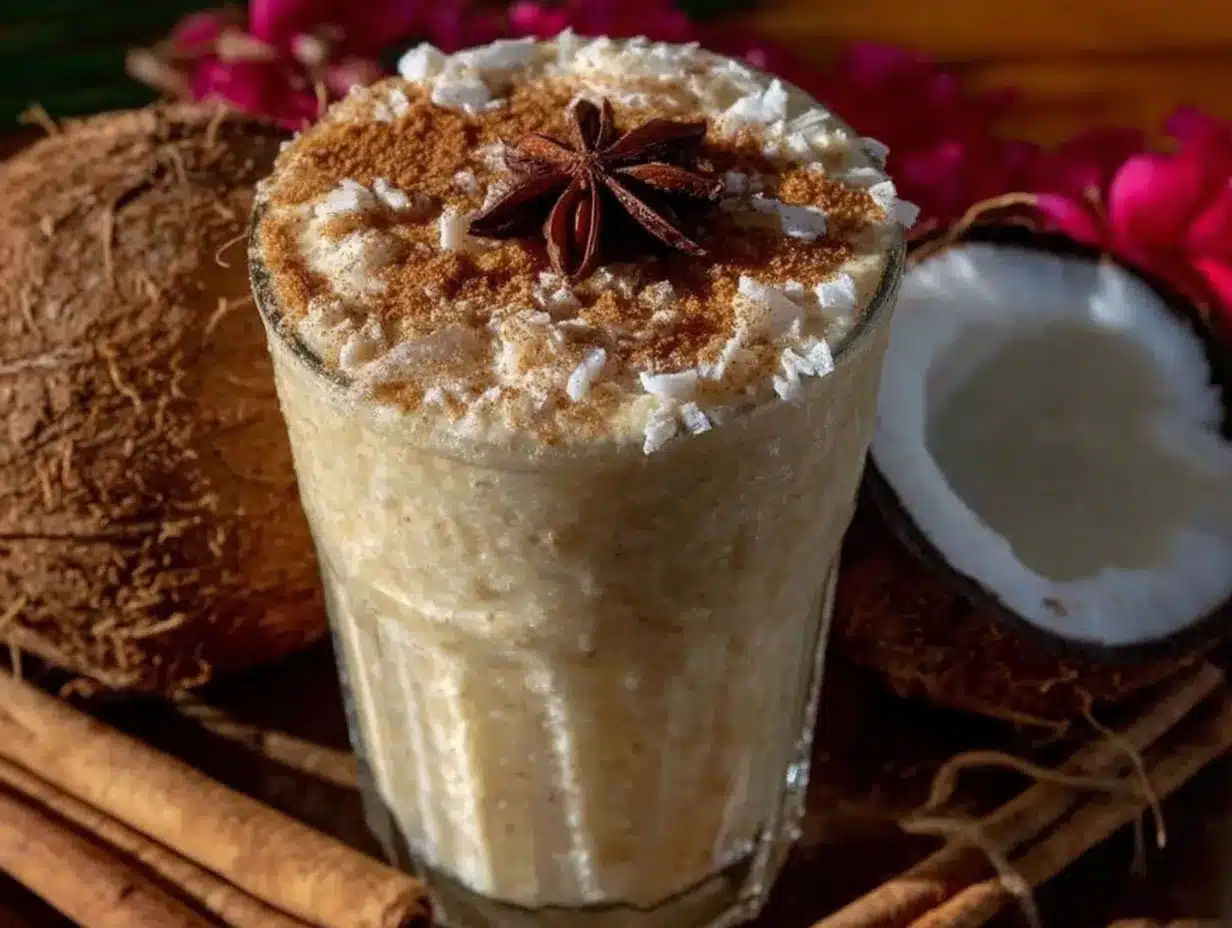
You don’t need a fancy kitchen setup for this quick Puerto Rican coquito. Here’s what you’ll need:
- Medium saucepan – For simmering the spices with the coconut cream. A heavy-bottomed pot works best to prevent scorching.
- Blender – A standard countertop blender is perfect. An immersion blender can work in a pinch, but you won’t get as smooth a result.
- Fine-mesh strainer – To remove the whole spices after simmering. A regular colander won’t catch the tiny clove bits.
- Large bowl or pitcher – For mixing everything together. A glass pitcher with a lid is ideal for storing.
- Whisk or long spoon – For stirring everything until smooth.
- Measuring cups and spoons – Standard set for accuracy.
- Glass bottles or jars – For storing and gifting. Swing-top bottles look gorgeous and seal well.
- Funnel – Makes pouring into bottles much less messy. Trust me on this one.
I’ve made this with a cheap $15 blender and it turned out just fine. Don’t stress about equipment. If you have a pot and something to blend with, you’re good to go.
Preparation Method
This is where the magic happens. Follow these steps, and you’ll have a batch of authentic coquito that tastes like it came from Abuela’s kitchen.
- Simmer the spices (5 minutes): Pour the can of coconut cream into your saucepan. Add the cinnamon sticks and whole cloves. Warm it over medium heat, stirring occasionally, until it’s steaming but not boiling. Let it simmer gently for 5 minutes. Your kitchen will start smelling incredible right about now. Don’t let it boil—that can make the cream separate later.
- Strain the cream (2 minutes): Place your fine-mesh strainer over a large bowl or directly over your blender pitcher. Pour the warm coconut cream through to catch the cinnamon sticks and cloves. Discard the spices. Give the strainer a little tap to get every last drop of that flavored cream.
- Blend the base (1 minute): Add the sweetened condensed milk, evaporated milk, cream of coconut, vanilla extract, ground cinnamon, ground nutmeg, and the pinch of salt to the blender with the strained coconut cream. Blend on low for about 30 seconds, then increase to medium for another 30 seconds. You want it completely smooth and well-combined. Scrape down the sides if needed.
- Add the rum (30 seconds): Pour in the white rum and pulse a few times to incorporate. Taste it here. Want it stronger? Add another splash. Prefer it milder? You can reduce the rum to ¾ cup. This is your coquito—make it how you like it.
- Chill and meld (at least 2 hours, ideally overnight): Pour the coquito into your storage bottles or pitcher using the funnel. Seal tightly and refrigerate. This step is crucial. The flavors need time to get to know each other. The first hour, it’ll taste good. After 4 hours, it’ll taste great. Overnight? It’s magic. The spices deepen, the coconut flavor becomes more rounded, and everything just comes together.
- Shake and serve: Before serving, give the bottle a good shake. Coconut cream can separate as it sits—that’s totally normal. Pour over ice in small glasses (coquito is rich, so a little goes a long way). Garnish with a cinnamon stick or a sprinkle of ground nutmeg if you’re feeling fancy.
Pro tip from my first attempt: I once skipped the straining step because I was in a hurry. Big mistake. Biting into a whole clove is not a pleasant experience. Don’t be like me—take the two extra minutes to strain.
Cooking Tips & Techniques
I’ve made this quick Puerto Rican coquito at least two dozen times, and I’ve learned a few things the hard way. Let me save you some trouble.
Don’t boil the coconut cream. I know it’s tempting to crank up the heat to speed things up, but high heat can cause the cream to separate or develop a grainy texture. Gentle simmering is all you need. You want steam, not bubbles.
Taste as you go. Everyone’s palate is different. Some people want a strong rum punch, others want a creamier, milder drink. After you blend everything, dip a spoon in and taste it. Adjust the rum, the sweetness, or the spices right then. It’s much harder to fix after it’s chilled.
Room temperature ingredients matter. If your condensed milk or cream of coconut is cold from the pantry, it won’t blend as smoothly. Let everything sit out for 15 minutes before you start. It makes a noticeable difference in the texture.
Patience with chilling. I get it—you want to try it right away. I’ve been there. But drinking it immediately is like opening a gift box before the wrapping paper is on. The flavors haven’t married yet. Give it at least 2 hours, but honestly, overnight is where the real transformation happens. The cinnamon and cloves mellow out and the coconut becomes more pronounced.
Shake before every pour. Even after chilling, the natural fats in the coconut can rise to the top. A good 5-second shake brings it all back together. If you forget and pour without shaking, the first glass will be thin and the last glass will be too rich.
Scale it up easily. This recipe doubles beautifully for parties. Just use a larger pot for simmering and blend in batches if your blender isn’t big enough. I’ve made a triple batch for Christmas Eve and it was a hit.
Variations & Adaptations
One of the best things about coquito is how customizable it is. Here are some variations I’ve tried and loved:
Spiced Chai Coquito: Add 2 chai tea bags to the coconut cream while it simmers. Remove them when you strain. The chai spices—cardamom, ginger, black pepper—add a lovely warmth that pairs beautifully with the coconut. I made this for a holiday brunch and it was the first thing to run out.
Dairy-Free / Vegan Coquito: Swap the evaporated milk for a full-fat oat milk or extra coconut milk (from a can). Use a vegan sweetened condensed milk alternative—Nature’s Charm makes a great one. The texture will be slightly thinner but still incredibly creamy. My lactose-intolerant friend nearly cried when I handed her a glass.
Lower Sugar Coquito: Use a “lite” sweetened condensed milk and a reduced-sugar cream of coconut. You can also cut the cream of coconut by half and replace it with unsweetened coconut cream. It won’t be as sweet, but the coconut flavor will still shine.
Spiked Eggnog Coquito: Replace the evaporated milk with 1 cup of good quality eggnog. It sounds wild, but the nutmeg and cinnamon in both drinks complement each other perfectly. This is my “Christmas morning” version—rich, indulgent, and totally festive.
Non-Alcoholic Version: Simply omit the rum and add an extra ½ cup of coconut cream or milk. You can also add 1 teaspoon of rum extract for that familiar flavor without the alcohol. Kids and designated drivers love this version.
Spicy Coquito: Add a small piece of fresh ginger (peeled, about 1 inch) to the simmering coconut cream. Strain it out with the other spices. The ginger adds a gentle heat that cuts through the richness. Unexpected and so good.
Serving & Storage Suggestions
Coquito is traditionally served chilled in small glasses—like a shot glass or a small juice glass. It’s rich, so a little goes a long way. I like to serve it over a single large ice cube to keep it cold without watering it down too quickly.
Garnish ideas: A cinnamon stick in each glass looks beautiful and doubles as a stirrer. A light dusting of ground nutmeg or a star anise pod floating on top adds a festive touch. For parties, rim the glasses with toasted coconut flakes or a cinnamon-sugar mixture.
What to serve with it: Coquito pairs wonderfully with Puerto Rican bread pudding recipe for a full holiday dessert spread. It’s also lovely alongside easy vanilla butter cookies or a simple plate of chocolate dipped shortbread. For a savory contrast, try it with spicy roasted almonds—the sweet and spicy combo is addictive.
Storage: Keep your coquito in a sealed glass bottle or jar in the refrigerator. It will stay fresh for up to 2 weeks. The flavors will continue to develop over the first 3-4 days, so it actually gets better with time.
Freezing: You can freeze coquito in airtight containers for up to 3 months. Leave a little headspace for expansion. Thaw it in the fridge overnight, then shake well before serving. The texture might be slightly less silky after freezing, but it’s still delicious.
Reheating: Coquito is meant to be served cold, but if you want a warm version (coquito caliente), gently warm it in a saucepan over low heat. Don’t boil it. Stir in a little extra coconut milk if it thickens too much. It’s like a boozy hot chocolate, but better.
Nutritional Information & Benefits
Let’s be honest—coquito is a treat. It’s creamy, sweet, and indulgent. But that doesn’t mean it can’t have some redeeming qualities.
Estimated nutrition per 4-ounce serving (makes about 8 servings):
- Calories: 320
- Fat: 16g (mostly from coconut, which is healthy saturated fat)
- Carbohydrates: 32g
- Protein: 4g
- Sugar: 28g
- Alcohol: varies by rum amount
Health highlights: Coconut cream contains medium-chain triglycerides (MCTs), which are a type of fat that your body can use quickly for energy. Cinnamon has anti-inflammatory properties and may help regulate blood sugar. Cloves are packed with antioxidants. So yes, it’s a dessert drink, but there’s some good stuff in there too.
Dietary considerations: This recipe is naturally gluten-free. For a vegan version, use the substitutions listed above. It contains dairy (unless modified) and alcohol. The sugar content is high, so it’s best enjoyed in moderation—which is easy because a little goes a long way.
I’m not a nutritionist, and I don’t pretend to be. But I do believe that food should bring joy, and a small glass of coquito shared with friends is good for the soul. Balance is everything.
Conclusion
This quick Puerto Rican coquito recipe is more than just a drink—it’s a little piece of holiday tradition that you can make in minutes. It’s the recipe that makes you look like you spent all day in the kitchen when you really just blended and chilled. It’s the one that gets passed around at parties, with people asking, “Can I get this recipe?”
I love this recipe because it reminds me of that rainy Tuesday at Marisol’s house. It reminds me that the best things in life don’t have to be complicated. Sometimes they come from a stained envelope and a neighbor who didn’t think she was doing anything special.
Now it’s your turn. Make this coquito for your next holiday gathering, or just for a cozy night in. Adjust the rum to your liking, try a variation, and make it your own. When you taste that first sip—creamy, spiced, and perfectly balanced—you’ll understand why I couldn’t stop thinking about it.
I’d love to hear how it turns out! Leave a comment below and tell me about your coquito experience. Did you try a variation? Did your guests love it? Share your stories and photos—I read every single one. Happy holidays, and cheers to good food, good drinks, and the people we share them with. ¡Salud!
Frequently Asked Questions
Can I make coquito without alcohol?
Absolutely! Simply omit the rum and add an extra ½ cup of coconut cream or milk to maintain the creamy texture. You can also add a teaspoon of rum extract for that familiar flavor without the alcohol. It’s perfect for kids, pregnant women, or anyone who prefers a non-alcoholic version.
How long does homemade coquito last in the fridge?
When stored in a sealed glass bottle or jar in the refrigerator, coquito stays fresh for up to 2 weeks. The flavors actually improve over the first 3-4 days as the spices continue to meld. Always give it a good shake before serving, as the coconut cream can separate naturally.
Why did my coquito turn out grainy or separated?
Graininess usually happens when the coconut cream is boiled too aggressively. Always simmer gently—steam is fine, but bubbles mean it’s too hot. Separation can also occur if ingredients were too cold when blended. Let everything come to room temperature before starting, and blend thoroughly until completely smooth.
Can I use light coconut milk instead of coconut cream?
You can, but the texture will be much thinner and less luxurious. Coconut cream is what gives coquito that signature rich, velvety mouthfeel. If you only have light coconut milk, try adding an extra ¼ cup of cream of coconut to compensate for the lost richness.
What’s the best rum to use for coquito?
A good quality white rum like Bacardi, Don Q, or Havana Club works beautifully. White rum has a clean, slightly sweet flavor that doesn’t overpower the coconut and spices. You can use dark rum for a deeper, more molasses-like flavor, but it will change the color and taste profile significantly. Stick with white rum for the most authentic result.
Pin This Recipe!
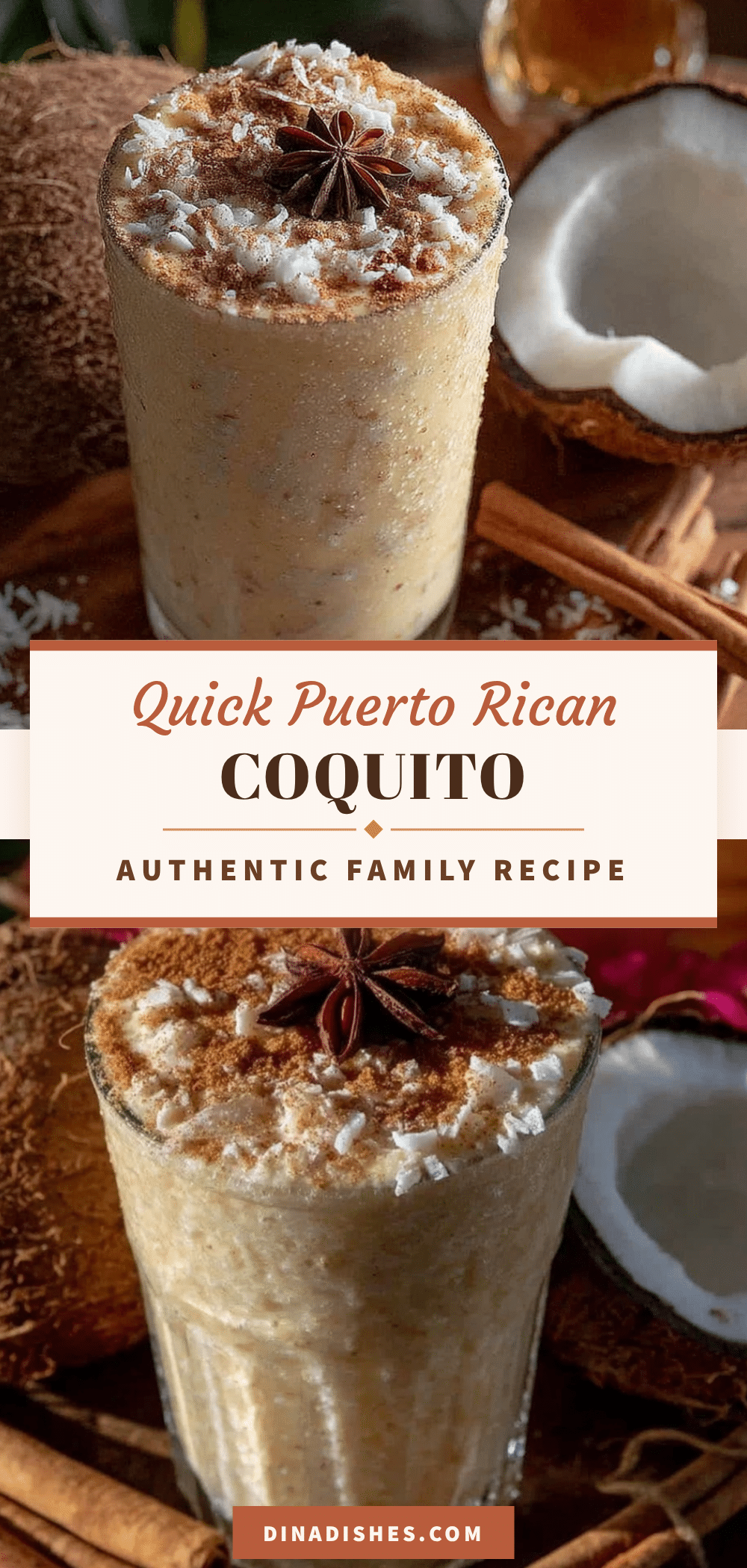
Best Quick Puerto Rican Coquito Recipe – Easy & Authentic
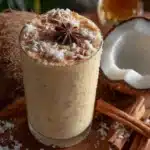
This quick Puerto Rican coquito recipe delivers authentic, creamy, spiced coconut flavor in just 15 minutes of active work. Perfect for last-minute holiday hosting or a spontaneous treat, it tastes like it simmered all day but comes together with simple ingredients and a shortcut method.
- Prep Time: 15 minutes
- Cook Time: 5 minutes
- Total Time: 2 hours 20 minutes (includes minimum chilling time)
- Yield: 8 servings 1x
- Category: Beverage
- Cuisine: Puerto Rican
Ingredients
- 1 can (15 oz) coconut cream (e.g., Chaokoh or Thai Kitchen)
- 1 can (14 oz) sweetened condensed milk (e.g., La Lechera)
- 1 can (12 oz) evaporated milk (e.g., Carnation)
- 1 can (15 oz) cream of coconut (e.g., Coco López)
- 1 cup white rum (e.g., Bacardi or Don Q; adjust to taste)
- 2 whole cinnamon sticks
- 4–5 whole cloves
- 1 teaspoon vanilla extract (pure)
- ½ teaspoon ground cinnamon
- ¼ teaspoon ground nutmeg (freshly grated preferred)
- A pinch of salt
Instructions
- Simmer the spices (5 minutes): Pour the can of coconut cream into a medium saucepan. Add the cinnamon sticks and whole cloves. Warm over medium heat, stirring occasionally, until steaming but not boiling. Let it simmer gently for 5 minutes. Do not let it boil.
- Strain the cream (2 minutes): Place a fine-mesh strainer over a large bowl or directly over your blender pitcher. Pour the warm coconut cream through to catch the cinnamon sticks and cloves. Discard the spices. Tap the strainer to get every last drop.
- Blend the base (1 minute): Add the sweetened condensed milk, evaporated milk, cream of coconut, vanilla extract, ground cinnamon, ground nutmeg, and the pinch of salt to the blender with the strained coconut cream. Blend on low for 30 seconds, then increase to medium for another 30 seconds until completely smooth and well-combined. Scrape down the sides if needed.
- Add the rum (30 seconds): Pour in the white rum and pulse a few times to incorporate. Taste and adjust rum to your preference (start with ¾ cup for a milder version).
- Chill and meld (at least 2 hours, ideally overnight): Pour the coquito into storage bottles or a pitcher using a funnel. Seal tightly and refrigerate. The flavors deepen and meld over time; overnight is best.
- Shake and serve: Before serving, shake the bottle well. Pour over ice in small glasses. Garnish with a cinnamon stick or a sprinkle of ground nutmeg if desired.
Notes
Do not boil the coconut cream; gentle simmering prevents separation. Taste the blended base before chilling to adjust rum, sweetness, or spices. Let ingredients come to room temperature for smoother blending. Chill for at least 2 hours, but overnight yields the best flavor. Shake well before every pour as coconut cream naturally separates. The recipe doubles easily for parties.
Nutrition
- Serving Size: 4 ounces
- Calories: 320
- Sugar: 28
- Sodium: 80
- Fat: 16
- Saturated Fat: 14
- Carbohydrates: 32
- Protein: 4
Keywords: coquito, Puerto Rican coquito, quick coquito, easy coquito, holiday drink, coconut drink, Christmas drink, rum cocktail