The woman at the farmer’s market stall watched me pick up three different butternut squashes, put them down, and pick them up again. She didn’t say anything at first. Then she reached under her table, pulled out a gnarled, slightly scarred squash, and handed it to me. “This one,” she said, tapping its tough skin. “It sat in the sun the longest. It’ll be the sweetest.” I bought it on her word alone, no questions asked. That was three winters ago, and I haven’t picked a squash the same way since.
That chance encounter changed how I approach this whole dish. I used to just cube squash, toss it with oil, and hope for the best. But that day, I had a conversation about patience—how the best flavors come from things that take their time. The squash roasted slowly, getting caramelized and jammy, and I topped it with these little ruby pomegranate seeds that popped with tartness. It was so simple, but honestly, it felt like a revelation. Maybe you’ve been there—when a single piece of produce teaches you something new about cooking.
This roasted butternut squash with pomegranate seeds is the dish I bring to every potluck and dinner party now. It’s the one that gets the “who made this?” question before anyone even takes a bite. The colors alone—deep orange against bright red—make it look like you fussed for hours. But the real magic is in that balance. The squash gets all sweet and tender, almost like candy, while the pomegranate cuts through with a sharp, fresh zing. A little salt, a little warmth from cinnamon or chili if you’re feeling bold, and you’ve got a side dish that steals the whole show.
I keep making it because it reminds me of that market conversation. It’s not about showing off; it’s about sharing something that tastes like a good memory. And honestly, when you put this on a table full of people you love, it just works.
Why You’ll Love This Recipe
I have tested this roasted butternut squash with pomegranate seeds more times than I can count. I have burned it, under-seasoned it, and once dropped an entire baking sheet on the floor (the dog was very happy). Through all those trials, I landed on a version that is forgiving, stunning, and absolutely foolproof for a crowd.
- Quick & Easy : It comes together in about 45 minutes, with only 10 minutes of active prep. You can do other things while it roasts.
- Simple Ingredients : No weird specialty items. You need a squash, a pomegranate, some oil, and pantry spices. That’s it.
- Perfect for Hosting : This dish looks like a centerpiece. It works for Thanksgiving, a casual Friendsgiving, or a fancy winter dinner party.
- Crowd-Pleaser : I have served it to picky kids and food-snob adults. Everyone goes back for seconds. The sweetness wins them over.
- Unbelievably Delicious : The texture is what gets me. The edges get crispy and caramelized, the inside stays creamy, and the pomegranate seeds pop like little flavor bombs.
What makes this different from every other squash recipe out there? It’s the balance. Many recipes make the squash too sweet or too savory. This one hits a perfect middle ground—earthy, warm, and bright all at once. I use a high roasting temperature to get that deep caramelization without turning the squash mushy. And the pomegranate seeds aren’t just a garnish; they are a structural component. They add texture and acidity that makes the dish feel complete.
This recipe is the kind that makes you close your eyes after the first bite. It’s comfort food reimagined—healthier than a creamy casserole, faster than a braised dish, but with the same soul-soothing satisfaction. Perfect for impressing guests without stress, or turning a simple weeknight meal into something memorable.
What Ingredients You Will Need
This recipe uses simple, wholesome ingredients to deliver bold flavor and satisfying texture without the fuss. Most of these are pantry staples or easy to find at any grocery store. Here is what you will need:
- Butternut Squash (1 large, about 2.5 to 3 pounds) – Peeled, seeded, and cut into 1-inch cubes. Look for one that feels heavy for its size with a matte, not shiny, skin. The farmer’s market lady was right—the scarred ones are often the sweetest.
- Pomegranate Seeds (1 cup, about seeds from 1 large pomegranate) – Fresh is non-negotiable here. The bottled stuff is watery and sad. To seed a pomegranate easily, cut it in half, hold it cut-side down over a bowl, and whack the skin with a wooden spoon. The seeds fall right out.
- Olive Oil (3 tablespoons) – Use a good quality extra virgin olive oil for flavor. It helps the squash caramelize beautifully.
- Maple Syrup (2 tablespoons) – This adds a subtle sweetness that enhances the squash’s natural sugars. Honey works too, but maple has a warmer, more autumnal flavor.
- Ground Cinnamon (1 teaspoon) – Adds warmth without overpowering. You can substitute with pumpkin pie spice for a more complex flavor.
- Ground Cumin (½ teaspoon) – This is my secret weapon. It adds an earthy, slightly smoky note that balances the sweetness. Trust me on this one.
- Salt (1 teaspoon, plus more to taste) – I prefer kosher salt for even seasoning.
- Black Pepper (½ teaspoon, freshly ground) – Freshly ground makes a difference here.
- Fresh Thyme (4-5 sprigs) – Optional but recommended. The leaves get crispy in the oven and add a lovely herbal note.
- Optional Garnish – A handful of fresh parsley or mint leaves, and a sprinkle of flaky sea salt right before serving.
Ingredient Selection Tips: For the best roasted butternut squash with pomegranate seeds, choose a squash that is firm with no soft spots. If you are short on time, many stores sell pre-cut butternut squash cubes. They work fine, but they tend to be drier and less sweet than whole squash. For the pomegranate, look for one that feels heavy and has a deep red color. The heavier it is, the juicier the seeds will be.
Substitution Guidance: For a lower-sugar option, skip the maple syrup entirely. The squash will still caramelize, just less intensely. If you don’t have pomegranates, dried cranberries or fresh raspberries can add a similar tart pop, though the texture will be different. For a spicy kick, add a pinch of cayenne pepper or red pepper flakes along with the cumin.
Equipment Needed
You do not need a fancy kitchen to make this dish. Here is what you will need:
- Baking Sheet (1 large, rimmed) – A half-sheet pan (18×13 inches) is ideal. It gives the squash room to breathe, which helps it caramelize instead of steam. If your pan is too small, use two pans.
- Chef’s Knife (1 sharp, 8-inch) – A sharp knife is crucial for cutting through the tough squash skin. I learned this the hard way after nearly losing a finger to a dull blade.
- Vegetable Peeler – A sturdy Y-peeler works best for butternut squash. It is faster and safer than trying to cut the skin off with a knife.
- Cutting Board (1 large, sturdy) – Wood or plastic, just make sure it doesn’t slide around. Place a damp paper towel under it for stability.
- Large Bowl (for tossing the squash with oil and spices)
- Serving Platter (1 large, flat) – A white platter makes the orange and red colors pop beautifully.
- Optional but Helpful – A microplane or fine grater if you want to add fresh ginger or orange zest. A kitchen scale is helpful for measuring the squash if you are using pre-cut cubes.
Budget-Friendly Tip: You do not need a fancy baking sheet. A basic, heavy-duty aluminum pan from the grocery store works perfectly for this. Just line it with parchment paper for easy cleanup.
Preparation Method
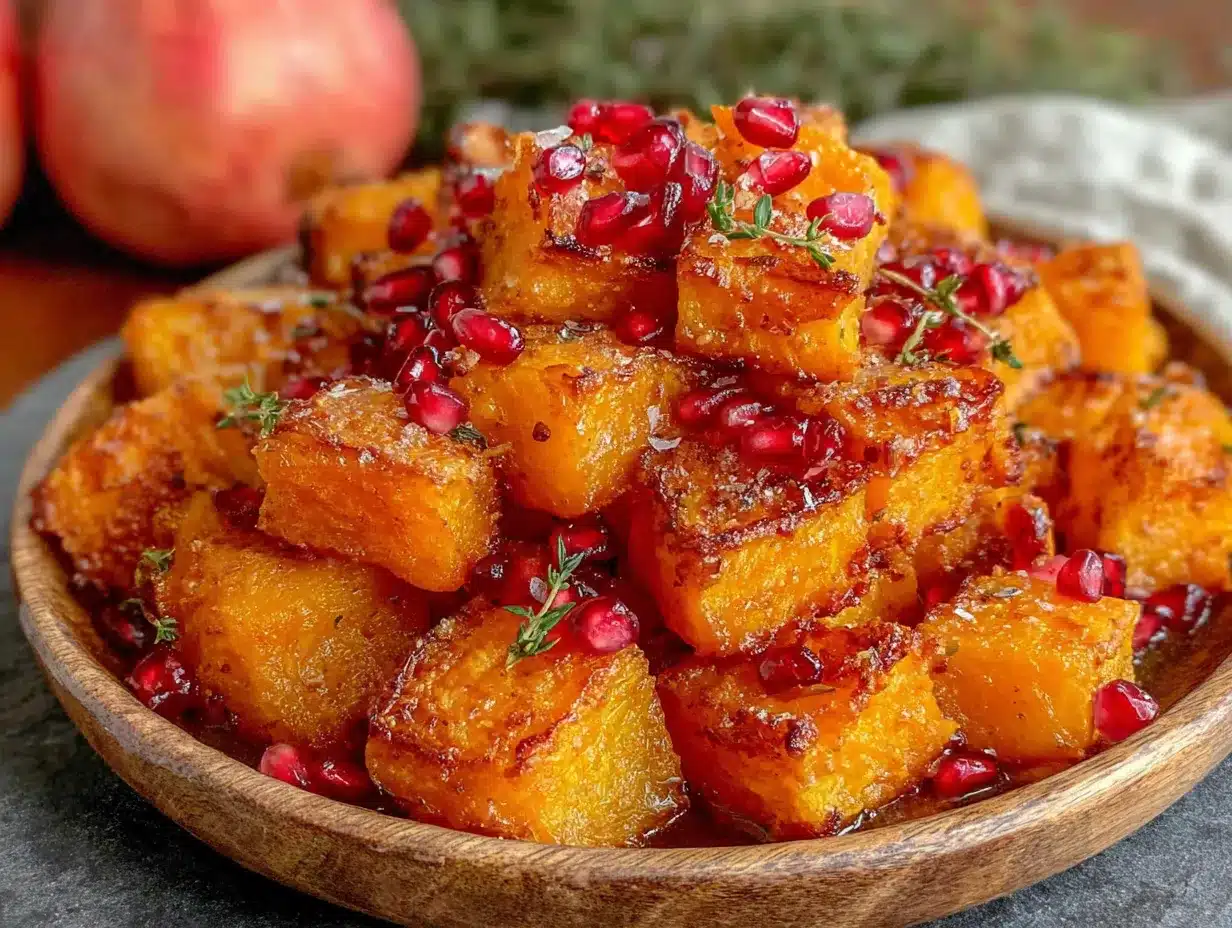
Follow these steps carefully, and you will have the best roasted butternut squash with pomegranate seeds of your life.
- Preheat your oven to 425°F (220°C). This high heat is key for getting those caramelized edges. Place a rack in the middle of the oven.
- Prepare the butternut squash. Using your sharp chef’s knife, cut off the top and bottom of the squash. This gives you a stable base. Stand the squash upright and carefully slice down the middle, from top to bottom. Scoop out the seeds and stringy bits with a spoon. You can save the seeds to roast later if you want.
- Peel the squash. Use your vegetable peeler to remove the skin. It is thick, so you might need to go over some areas twice. Don’t worry if a little orange flesh comes off with the skin—that is normal.
- Cube the squash. Cut each half into 1-inch thick half-moons, then cut those into 1-inch cubes. Try to keep them uniform in size so they cook evenly. If some pieces are smaller, they will burn faster, so keep an eye on them.
- Season the squash. In your large bowl, combine the cubed squash, olive oil, maple syrup, cinnamon, cumin, salt, and pepper. Toss everything together with your hands or a spatula until every piece is evenly coated. Add the fresh thyme sprigs and toss again.
- Arrange on the baking sheet. Spread the squash in a single layer on your rimmed baking sheet. Make sure the pieces are not touching each other too much. If they overlap, they will steam instead of roast. Use two sheets if you need to.
- Roast for 25-30 minutes. Place the sheet in the oven and roast without disturbing for the first 20 minutes. Then, remove the sheet and flip each piece using a spatula. The bottoms should be golden brown. Return to the oven and roast for another 10-15 minutes, until the squash is tender and caramelized on the edges. A fork should slide in easily.
- Prepare the pomegranate seeds. While the squash roasts, seed your pomegranate. Cut it in half horizontally. Hold one half cut-side down over a bowl. Whack the skin firmly with a wooden spoon. The seeds will rain down. Pick out any white pith that falls in. Set the seeds aside.
- Assemble the dish. Once the squash is done, transfer it to your serving platter. Let it cool for 2-3 minutes. Sprinkle the pomegranate seeds generously over the top. Add a few fresh thyme leaves or parsley if you are using them. Finish with a pinch of flaky sea salt.
- Serve immediately. This dish is best served warm. The contrast between the hot, caramelized squash and the cool, juicy pomegranate seeds is the whole point.
Preparation Notes: Be careful when flipping the squash—it is hot and the edges can be sticky. Use a thin metal spatula for best results. If you want to prep ahead, you can cube the squash and seed the pomegranate up to two days in advance. Store them separately in the fridge. Toss the squash with oil and spices just before roasting.
Cooking Tips & Techniques
I have made this roasted butternut squash with pomegranate seeds at least thirty times. Here are the things I wish someone had told me from the start.
Don’t overcrowd the pan. This is the number one mistake. If the squash pieces are too close together, they release steam and never get that beautiful caramelization. They turn out pale and soggy. Give them space. If you have to, use two pans and rotate them halfway through.
Cut the cubes evenly. I know it takes extra time, but it matters. A 1-inch cube that is actually 1 inch on all sides will cook at the same rate as its neighbor. If you have a mix of ½-inch and 1½-inch pieces, some will burn and some will be raw. Trust me, I have eaten the evidence.
Flip them once, and only once. Flipping too often breaks the squash and prevents a good crust. Let the first side get deeply golden before you touch it. That usually takes about 20 minutes. Then flip and let the other side get its turn.
Season in layers. I add salt and pepper before roasting, but I always add a little more flaky salt at the end. That final sprinkle wakes up all the flavors. It is a small step that makes a big difference.
Watch the pomegranate seeds. Do not add them too early. If you put them on the hot squash and let it sit for 15 minutes, the seeds will get warm and lose their pop. They are best when they are still cool and firm. Add them right before serving.
My biggest failure: Once, I forgot to flip the squash entirely. The bottoms burned black while the tops stayed pale. I tried to salvage it by scraping off the burnt parts, but it was a mess. Now I set a timer specifically for the flipping step. It is non-negotiable.
Timing strategy for hosting: Roast the squash while your guests are arriving. Let it rest on the counter for up to 30 minutes before adding the pomegranate seeds. It will still be warm enough to serve. This frees up your oven for other dishes.
Variations & Adaptations
This recipe is incredibly flexible. Here are some ways I have adapted it for different occasions and diets.
Spicy Maple Version: Add ½ teaspoon of cayenne pepper or red pepper flakes along with the cumin. The heat pairs beautifully with the sweet squash and tart pomegranate. I made this for a chili-themed dinner party, and it was the first dish to disappear.
Herb-Forward Version: Skip the cinnamon and cumin. Instead, toss the squash with olive oil, salt, pepper, and a tablespoon of fresh chopped rosemary and sage. Roast as directed. Top with pomegranate seeds and a drizzle of balsamic glaze. This version is more savory and pairs well with roasted meats.
Citrus Glow Version: Add the zest of one orange and one lemon to the oil and spice mixture. Squeeze the juice of half the orange over the finished dish before adding the pomegranate seeds. The citrus brightens everything up and makes it taste like sunshine in winter.
Dairy-Free and Vegan: This recipe is already dairy-free and vegan if you use maple syrup. It is a safe bet for almost any dietary restriction.
Low-Carb Adaptation: While butternut squash is higher in carbs than some vegetables, you can swap half the squash for cauliflower florets. Roast them together. The cauliflower will soak up the spices and get just as caramelized.
Different Squash Options: This works beautifully with acorn squash, delicata squash (which has edible skin, so no peeling needed), or even sweet potatoes. Each will bring a slightly different texture and sweetness level.
Personal Variation: My favorite way to make this is with a sprinkle of toasted pumpkin seeds on top, right alongside the pomegranate seeds. The crunch is addictive, and it feels like a nod to the squash’s origins.
Serving & Storage Suggestions
This roasted butternut squash with pomegranate seeds is a showstopper on any table. Here is how to serve it and keep it fresh.
Serving Temperature: Serve it warm, but not piping hot. Let it rest for 5 minutes after roasting so the flavors settle. Room temperature is also lovely—I have served it at picnics and it held up beautifully.
Presentation Tips: Use a large, white platter for maximum contrast. Spread the squash in a single layer, then scatter the pomegranate seeds evenly. Don’t pile them all in one spot. Add a few fresh herb leaves for color. A drizzle of balsamic glaze or a sprinkle of flaky salt right before serving adds a professional touch.
What to Serve Alongside: This dish pairs wonderfully with roasted chicken, turkey, or pork tenderloin. It also works as a side for a hearty grain bowl with quinoa and roasted chickpeas. For a holiday table, serve it alongside mashed potatoes and green beans. It brings a pop of color and acidity that cuts through rich dishes.
Storage Instructions: Store leftovers in an airtight container in the refrigerator for up to 4 days. The pomegranate seeds will soften over time, but the squash will still be delicious. Do not freeze this dish—the texture of the squash will become watery and mushy when thawed.
Reheating Methods: The best way to reheat is in the oven. Spread the squash on a baking sheet and warm at 350°F (175°C) for 5-7 minutes. This helps restore some of the caramelized edges. You can also reheat in a skillet over medium heat for 3-4 minutes, stirring occasionally. The microwave works in a pinch, but the squash will be softer.
Flavor Development: Interestingly, this dish tastes even better the next day. The flavors meld together overnight. If you are making it for a party, consider roasting the squash a day ahead and adding the pomegranate seeds just before serving. Your guests will never know.
Nutritional Information & Benefits
This dish is as good for you as it is delicious. Here is a breakdown per serving (about 1 cup):
| Nutrient | Amount |
|---|---|
| Calories | 180 |
| Total Fat | 9g |
| Saturated Fat | 1g |
| Carbohydrates | 26g |
| Fiber | 5g |
| Sugar | 12g (natural) |
| Protein | 3g |
| Vitamin A | 250% DV |
| Vitamin C | 35% DV |
| Potassium | 15% DV |
Health Benefits: Butternut squash is packed with vitamin A (beta-carotene) for eye health and immune function. Pomegranate seeds are rich in antioxidants called punicalagins, which are great for heart health. The olive oil provides healthy monounsaturated fats. This is a nutrient-dense side dish that supports overall wellness.
Dietary Considerations: This recipe is naturally gluten-free, dairy-free, and vegan. It is also low in sodium if you watch your salt. The main allergens to note are none—it is free of the top eight allergens.
Personal Wellness Perspective: I love that this dish feels indulgent but is actually full of good stuff. It is the kind of food that makes you feel satisfied without being heavy. Perfect for a holiday meal when you want to leave room for dessert.
Conclusion
This roasted butternut squash with pomegranate seeds is more than just a side dish. It is a conversation starter, a color explosion, and a way to bring people together around a table. The sweetness of the squash, the pop of the pomegranate, and the warmth of the spices create something that feels both familiar and special.
I love this recipe because it reminds me of that farmer’s market moment—a small, human exchange that taught me to look for the imperfect things that hold the most flavor. It is forgiving enough for a beginner and impressive enough for a seasoned cook. You can make it your own with different spices, herbs, or toppings.
So go ahead and try it. Roast that squash, seed that pomegranate, and watch your guests’ faces light up. When they ask for the recipe (and they will), tell them the story about the farmer’s market lady. Then share it with them. That is how good food spreads.
I would love to hear how it turns out for you! Drop a comment below with your favorite variation, or tag me in your photos. Happy cooking, friends!
Frequently Asked Questions
Can I use frozen butternut squash for this recipe?
You can, but I do not recommend it. Frozen squash releases a lot of water as it thaws, which will make it steam instead of roast. You will end up with soggy, pale pieces. If you are in a pinch, thaw the squash completely and pat it very dry with paper towels before tossing with oil and spices. The texture will still be softer than fresh, but it will work.
How do I seed a pomegranate without making a mess?
The wooden spoon method is my favorite. Cut the pomegranate in half horizontally. Hold one half cut-side down over a deep bowl. Whack the skin firmly with a wooden spoon. The seeds fall out easily, and the pith stays behind. Do this over a bowl of water to catch any stray juice splatters. The seeds will sink, and any white pith will float to the top for easy removal.
Can I make this dish ahead of time for a party?
Yes, absolutely. Roast the squash up to two days in advance and store it in an airtight container in the fridge. Seed the pomegranate and store the seeds separately. When you are ready to serve, reheat the squash in a 350°F (175°C) oven for 5-7 minutes, then add the pomegranate seeds. This way, the seeds stay fresh and cold, creating that perfect temperature contrast.
What can I use instead of maple syrup?
Honey is the best substitute. It has a similar sweetness and consistency. Agave nectar or brown sugar (dissolved in a little warm water) also work. If you want to skip the sweetener entirely, the squash will still caramelize from its own natural sugars. Just add an extra tablespoon of olive oil to help with browning.
Is this recipe spicy?
No, not in the base version. The cinnamon and cumin are warm and aromatic, not hot. If you want heat, add ¼ to ½ teaspoon of cayenne pepper or red pepper flakes along with the other spices. I recommend starting with less—you can always add more, but you cannot take it away.
Pin This Recipe!
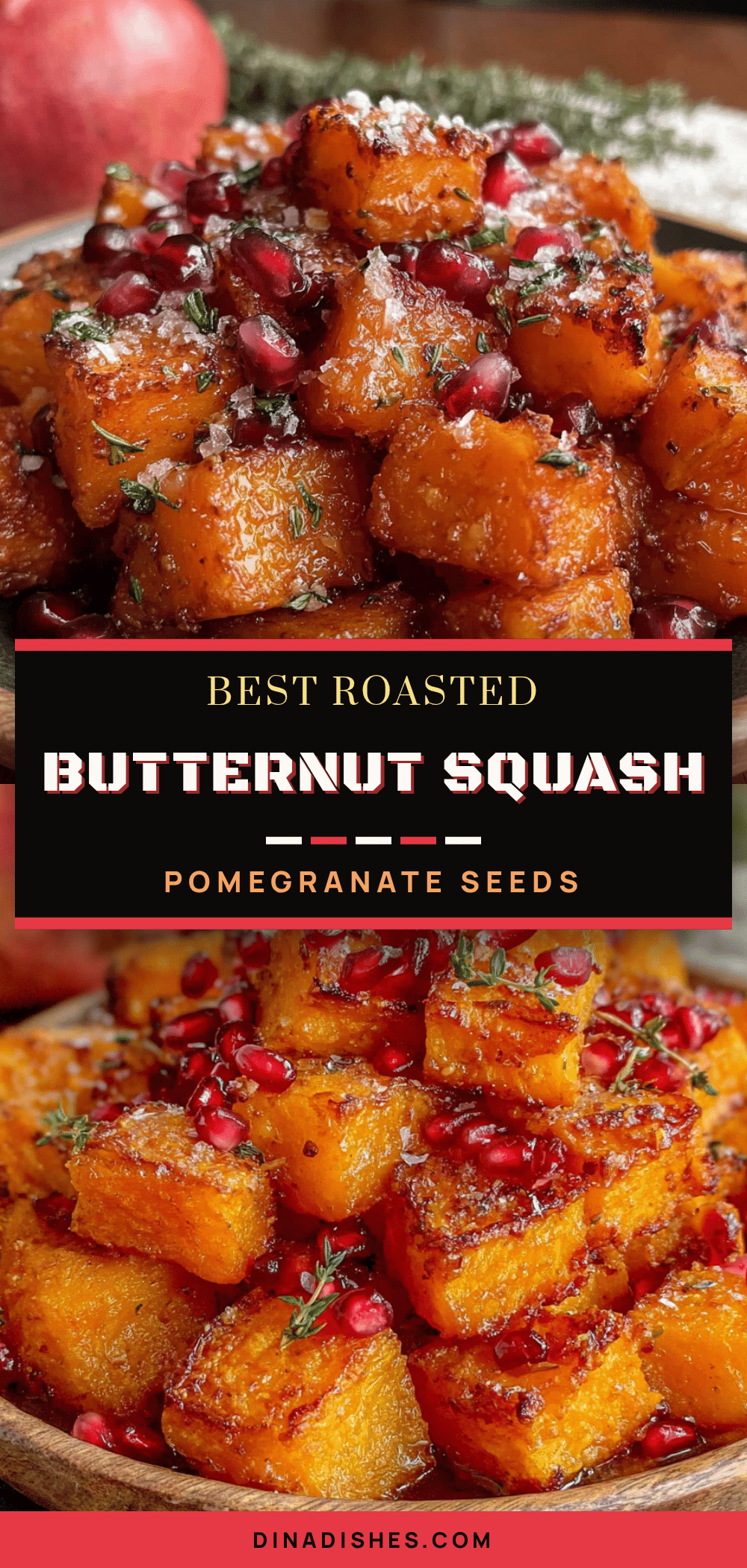
Best Roasted Butternut Squash with Pomegranate – Easy Holiday Side Dish
This roasted butternut squash with pomegranate seeds is a stunning, easy holiday side dish. The squash gets caramelized and tender, while the pomegranate adds a fresh, tart pop, creating a perfect balance of sweet and savory.
- Prep Time: 10 minutes
- Cook Time: 30 minutes
- Total Time: 40 minutes
- Yield: 4 servings 1x
- Category: Side Dish
- Cuisine: American
Ingredients
- 1 large butternut squash (about 2.5 to 3 pounds), peeled, seeded, and cut into 1-inch cubes
- 1 cup pomegranate seeds (from 1 large pomegranate)
- 3 tablespoons olive oil
- 2 tablespoons maple syrup
- 1 teaspoon ground cinnamon
- ½ teaspoon ground cumin
- 1 teaspoon kosher salt, plus more to taste
- ½ teaspoon freshly ground black pepper
- 4–5 sprigs fresh thyme (optional)
- Fresh parsley or mint leaves for garnish (optional)
- Flaky sea salt for finishing (optional)
Instructions
- Preheat your oven to 425°F (220°C). Place a rack in the middle of the oven.
- Prepare the butternut squash: Cut off the top and bottom, then stand upright and slice down the middle. Scoop out seeds and stringy bits.
- Peel the squash using a vegetable peeler, going over thick areas twice if needed.
- Cut each half into 1-inch thick half-moons, then into 1-inch cubes. Try to keep them uniform.
- In a large bowl, combine cubed squash, olive oil, maple syrup, cinnamon, cumin, salt, and pepper. Toss until evenly coated. Add thyme sprigs and toss again.
- Spread squash in a single layer on a rimmed baking sheet, ensuring pieces are not touching. Use two sheets if necessary.
- Roast for 25-30 minutes: Roast without disturbing for 20 minutes, then flip each piece. Return to oven and roast for another 10-15 minutes until tender and caramelized.
- While squash roasts, seed the pomegranate: Cut in half horizontally, hold cut-side down over a bowl, and whack the skin with a wooden spoon. Remove any white pith.
- Transfer roasted squash to a serving platter. Let cool for 2-3 minutes. Sprinkle pomegranate seeds over the top. Add fresh herbs and flaky sea salt if desired.
- Serve immediately while warm.
Notes
For best caramelization, do not overcrowd the pan. Cut cubes evenly. Flip only once. Add pomegranate seeds just before serving to keep them cool and firm. Leftovers can be stored in the fridge for up to 4 days; reheat in the oven at 350°F for 5-7 minutes.
Nutrition
- Serving Size: 1 cup
- Calories: 180
- Sugar: 12
- Sodium: 300
- Fat: 9
- Saturated Fat: 1
- Carbohydrates: 26
- Fiber: 5
- Protein: 3
Keywords: roasted butternut squash, pomegranate seeds, holiday side dish, easy, vegetarian, gluten-free, vegan