I was waiting for my car to get an oil change last November—a Tuesday, I think—when the mechanic, a guy named Sal who always has flour dust on his coveralls, started talking about bread. I wasn’t expecting cooking advice from a man holding a greasy wrench, but there I was, sitting on a plastic chair by the vending machine, listening to him describe exactly how to make the focaccia his grandmother taught him. “The secret,” he said, wiping his hands on a rag, “is the sourdough starter and a good Parmigiano. None of that canned stuff.” I scribbled his instructions on the back of my receipt. Honestly, I almost forgot about it. But that winter, when I needed a side dish for a holiday dinner that wouldn’t stress me out, I found that crumpled receipt in my coat pocket. I’m not exaggerating when I say Sal’s rosemary parmesan sourdough focaccia changed my holiday cooking forever. It’s got that perfect chew, those crispy, buttery edges, and the kind of flavor that makes everyone at the table stop talking for a second. Maybe you’ve been there—looking for a side that feels special but doesn’t require a culinary degree? This is it. This focaccia is the thing I keep making, and honestly, I think you will too.
Why You’ll Love This Recipe
I’ve tested this rosemary parmesan sourdough focaccia about seven times since that day at the garage. Sal’s method was solid, but I tweaked the hydration and the bake time to get it just right. This isn’t just another bread recipe—it’s the one I bring to every holiday gathering, and it never comes home with leftovers. Here is why this one stands out:
- Quick & Easy: The active prep time is only about 20 minutes. The dough does the hard work while you relax or prep the rest of your meal.
- Simple Ingredients: You likely already have flour, olive oil, and salt. The sourdough starter, fresh rosemary, and Parmesan are easy to find at any grocery store.
- Perfect for the Holidays: This focaccia fits right in next to the roast turkey, glazed ham, or a big bowl of pasta. It is the side that makes the meal feel complete.
- Crowd-Pleaser: Even folks who claim they “don’t like sourdough” have asked me for the recipe. The tangy flavor is subtle, and the cheesy, herby top is universally loved.
- Unbelievably Delicious: The texture is what gets me every time—crispy on the bottom, soft and airy inside, with those little crispy bits of Parmesan sticking to the pan. It’s next-level comfort food.
What makes this different from other focaccia recipes? It’s the sourdough starter. It adds a gentle tang that cuts through the richness of holiday meals, and it gives the crumb a structure that’s hard to get with commercial yeast alone. Plus, the combination of fresh rosemary and real Parmesan—not the powdery stuff—creates a savory, aromatic crust that is honestly addictive. I’ve seen people eat it as an appetizer, a side, and even for breakfast the next day. It’s that good.
What Ingredients You Will Need
This recipe uses simple, wholesome ingredients to deliver bold flavor and satisfying texture. Most of these are pantry staples for anyone who bakes, and the fresh ingredients are easy to find year-round. Here is what you’ll need:
For the Dough
- Active sourdough starter – 100g (about ½ cup). Make sure it’s bubbly and fed within the last 4-8 hours. I use my own starter that I’ve kept alive for three years, but any active starter works.
- Bread flour – 400g (about 3 cups). King Arthur Flour is my go-to for consistent results. All-purpose flour works too, but bread flour gives a chewier crumb.
- Warm water – 300g (about 1 ¼ cups). It should feel like bathwater—not hot, not cold.
- Olive oil – 60g (about ¼ cup), plus extra for the pan. Use a good quality extra virgin olive oil here. It adds flavor to the dough and helps create that crispy bottom.
- Fine sea salt – 10g (about 1 ½ teaspoons). I use Morton’s fine sea salt. If you use table salt, reduce to 8g.
For the Topping
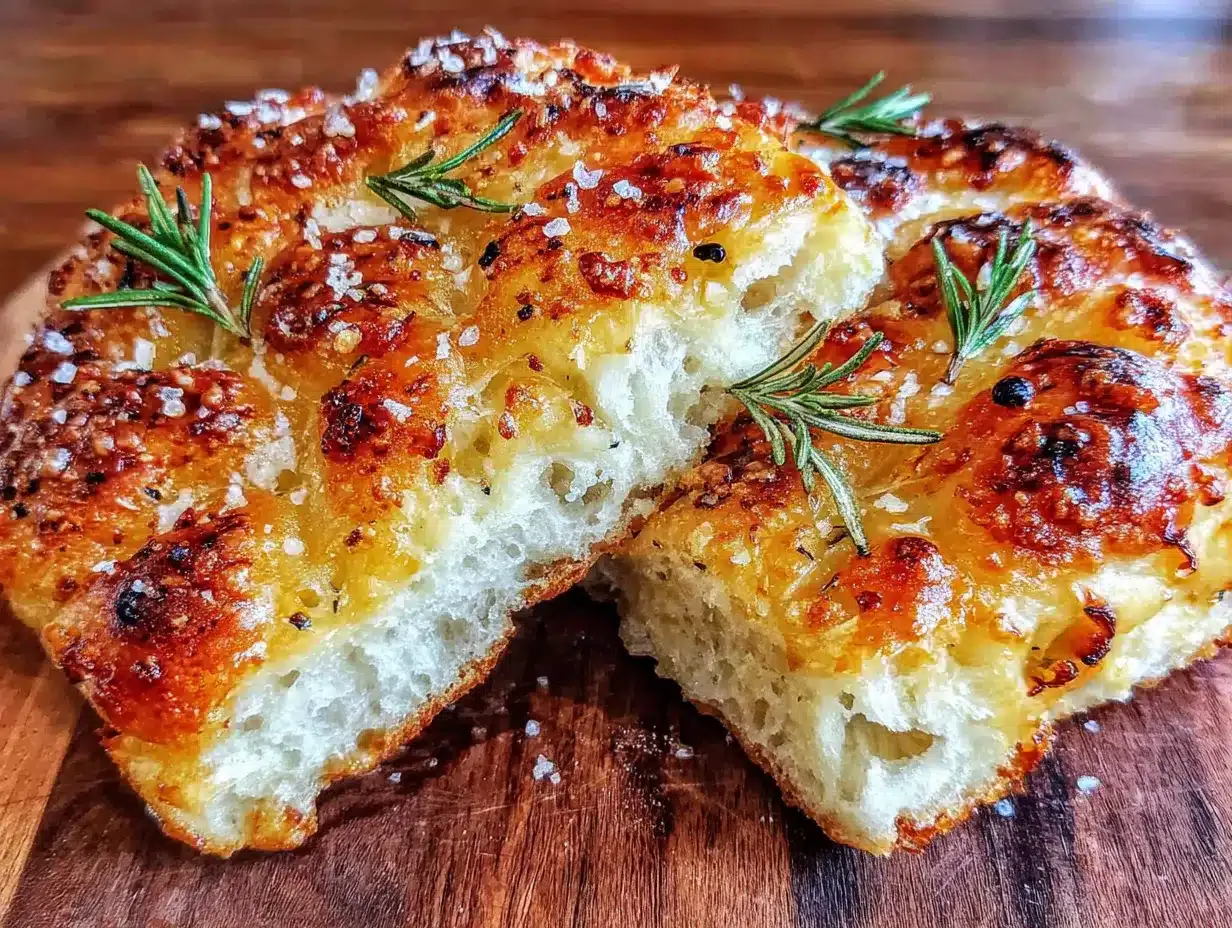
- Fresh rosemary – 2 tablespoons, finely chopped. Use the leaves only, not the woody stems. I like to snip it directly over the dough with kitchen shears.
- Parmesan cheese – 50g (about ½ cup), freshly grated. Buy a block of Parmigiano-Reggiano and grate it yourself. The pre-shredded stuff doesn’t melt the same way.
- Flaky sea salt – 1 teaspoon, for sprinkling. Maldon is my favorite brand. It adds those little bursts of saltiness on top.
- Extra virgin olive oil – 2 tablespoons, for drizzling on top before baking.
Ingredient Selection Tips: For the best texture, use a mature sourdough starter that’s been fed regularly. If your starter is new, it might take longer to rise. For the cheese, I really recommend spending a little extra on real Parmesan. The flavor is nuttier and more complex, and it melts into the dough beautifully. If you need a dairy-free option, use a high-quality nutritional yeast instead of Parmesan—it won’t be the same, but it will still be tasty.
Equipment Needed
You don’t need a lot of fancy tools for this recipe, which is part of why I love it. Here is what you’ll need:
- 9×13-inch baking pan – A metal or glass pan works. I prefer a dark metal pan because it helps the bottom get extra crispy. Glass pans work too, but you might need to add 5 minutes to the bake time.
- Large mixing bowl – Any bowl big enough to hold the dough as it rises. Glass or ceramic is fine.
- Kitchen scale – I use a digital scale for accuracy. Measuring flour by volume can be inconsistent, and sourdough is a little more forgiving when you weigh things.
- Bench scraper – This is great for folding the dough and scraping it out of the bowl. A plastic dough scraper costs about $5 and is worth it.
- Plastic wrap or a damp kitchen towel – To cover the dough while it rises. I use reusable beeswax wrap now, but plastic wrap works perfectly.
- Cooling rack – To cool the focaccia after baking. It prevents the bottom from getting soggy.
Budget-friendly options: If you don’t have a bench scraper, use a spatula. No baking scale? Use the spoon-and-level method for flour: spoon it into your measuring cup and level it off with a knife. It’s not as accurate, but it works in a pinch.
Preparation Method
This recipe takes a little patience because of the rise time, but the active work is minimal. Here’s how to do it:
- Mix the dough (10 minutes): In a large mixing bowl, combine 100g of active sourdough starter, 300g of warm water, and 60g of olive oil. Whisk until the starter is mostly dissolved. Add 400g of bread flour and 10g of fine sea salt. Mix with a spatula or your hands until a shaggy dough forms. It will look rough and sticky—that’s normal. Cover the bowl with plastic wrap and let it rest for 30 minutes. This is called the autolyse, and it helps the flour absorb the water.
- Stretch and fold (30 minutes total): After the rest, wet your hands (this prevents sticking) and grab one side of the dough. Stretch it up and fold it over the center. Rotate the bowl and repeat on all four sides. This is one set of folds. Cover the dough and wait 15 minutes. Do this stretch and fold process a total of three times, with 15-minute rests in between. By the end, the dough will feel smoother and more elastic. I usually set a timer on my phone so I don’t forget.
- Bulk fermentation (6-8 hours at room temperature, or overnight in the fridge): Cover the bowl tightly and let the dough rise at room temperature. My kitchen is usually around 70°F, and it takes about 7 hours for the dough to double in size. If your kitchen is warmer, it might take less time. If it’s cold, it might take longer. The dough is ready when it looks puffy, has bubbles on the surface, and jiggles when you shake the bowl. You can also do this in the fridge for 12-18 hours—the flavor develops more, and the dough is easier to handle.
- Prepare the pan (5 minutes): When the dough is ready, generously coat your 9×13-inch baking pan with olive oil. Don’t be shy—use about 2 tablespoons. Pour the dough into the pan. It will look lumpy and uneven. Don’t try to spread it out yet. Just let it sit in the pan for 30 minutes.
- Dimple the dough (5 minutes): After 30 minutes, drizzle 1 tablespoon of olive oil over the top of the dough. Using your fingertips, gently press into the dough to create deep dimples all over the surface. Don’t be gentle—you want the oil to pool in the dimples. This is what creates those iconic focaccia pockets. If the dough resists, let it rest another 15 minutes and try again.
- Add the topping (5 minutes): Sprinkle the chopped rosemary and grated Parmesan evenly over the top. Don’t press them in—they’ll stick to the oil. Sprinkle the flaky sea salt over everything.
- Second rise (1-2 hours): Cover the pan loosely with plastic wrap and let the dough rise again until it’s puffy and has almost doubled in height. This usually takes about 1.5 hours in my kitchen. The dough should look pillowy and full of air.
- Bake (25-30 minutes): Preheat your oven to 425°F (220°C) about 30 minutes before baking. Place the pan on the middle rack and bake for 25-30 minutes. The focaccia is done when the top is deep golden brown, the edges are crispy, and the internal temperature reaches 200°F (93°C). If the top is browning too fast, tent it loosely with foil after 20 minutes.
- Cool (15 minutes): Remove the pan from the oven and let it cool in the pan for 5 minutes. Then transfer the focaccia to a cooling rack. I like to slide a spatula around the edges to loosen it first. Let it cool for at least 10 minutes before cutting. This is the hardest part—the smell is incredible.
Sensory cues: When you dimple the dough, you should hear a soft popping sound from the air bubbles. The dough should feel like a soft pillow. When it’s baked, the bottom should be golden and crispy, and the top should be crackly when you tap it.
Cooking Tips & Techniques
I’ve made a lot of focaccia in my time, and I’ve learned a few things the hard way. Here are my best tips:
Don’t skip the stretch and fold. I tried skipping this step once because I was in a hurry, and the focaccia came out flat and dense. The stretch and fold builds strength in the dough without kneading, which is essential for that open, airy crumb. It’s only three sets of folds—just do them.
Use enough oil. I know it feels like a lot, but the olive oil is what gives focaccia its crispy bottom and tender crumb. If you skimp on oil, the dough will stick to the pan and the texture will be dry. Trust me on this one.
Check your starter activity. If your sourdough starter isn’t bubbly and active, your focaccia won’t rise properly. I learned this the hard way when I tried to rush a lazy starter. If your starter doesn’t double in size within 4-6 hours of feeding, give it another day of regular feedings before using it for this recipe.
Room temperature matters. Sourdough is sensitive to temperature. If your kitchen is cold (under 68°F), the rise will take longer. I’ve had batches take 10 hours in the winter. If your kitchen is warm (over 80°F), check it after 4 hours. The key is watching the dough, not the clock.
Don’t over-bake. Focaccia can go from perfectly golden to dry in just a few minutes. Start checking at 22 minutes. The top should be deep golden, and the bottom should sound hollow when you tap it. If you’re unsure, use a thermometer—200°F is the sweet spot.
Variations & Adaptations
This rosemary parmesan sourdough focaccia is a great base, and I’ve played around with it quite a bit. Here are some variations you might like:
- Garlic and Herb: Add 3 cloves of minced garlic to the olive oil before dimpling the dough. Swap the rosemary for thyme or oregano. I made this version for a summer barbecue, and it disappeared in minutes.
- Sun-Dried Tomato and Feta: Before baking, press ½ cup of chopped sun-dried tomatoes and ½ cup of crumbled feta cheese into the dimples. The salty feta and sweet tomatoes are a great combo.
- Everything Bagel: Skip the rosemary and Parmesan. Instead, sprinkle the top with everything bagel seasoning (sesame seeds, poppy seeds, garlic flakes, onion flakes, and salt). This is my go-to for breakfast—it’s amazing with cream cheese.
- Gluten-Free Option: I’ve tested this with a gluten-free all-purpose flour blend (Cup4Cup works well). The texture is a little more dense and cake-like, but it’s still delicious. Add 1 teaspoon of xanthan gum if your blend doesn’t include it.
- Vegan Version: Use nutritional yeast instead of Parmesan. The flavor is different—more savory and cheesy—but it works. I also use a vegan sourdough starter (just flour and water).
A personal variation I tried: Last Christmas, I added caramelized onions and crispy pancetta to the top. It was ridiculous. I didn’t even serve the turkey because everyone was too busy eating the focaccia. Just a thought if you want to go all out.
Serving & Storage Suggestions
This rosemary parmesan sourdough focaccia is best served warm, but it’s still fantastic at room temperature. Here’s how I like to do it:
Serving: Cut the focaccia into squares or rectangles. I usually make 12 pieces from a 9×13 pan. Serve it on a wooden board or a big platter. It’s great as a side with roasted meats, soups, or salads. I also love it as an appetizer with a bowl of olive oil and balsamic vinegar for dipping. If you’re serving it for a holiday meal, put it out right before the main course so it stays warm.
Storage: Store leftover focaccia in an airtight container at room temperature for up to 2 days. Don’t refrigerate it—the fridge dries out the bread. If you need to store it longer, wrap it tightly in plastic wrap and freeze it for up to 3 months.
Reheating: The best way to reheat focaccia is in a 350°F oven for 5-7 minutes. It brings back the crispy texture. You can also reheat individual pieces in a toaster oven. The microwave works in a pinch, but the texture will be soft, not crispy.
Flavor development: Honestly, this focaccia tastes even better the next day. The rosemary and Parmesan flavors meld together, and the crumb gets slightly more tender. I sometimes make it a day ahead on purpose. Just reheat it before serving.
Nutritional Information & Benefits
I’m not a nutritionist, but I can give you a rough idea of what’s in this focaccia. Here are the estimated values per serving (1 piece out of 12):
| Nutrient | Amount |
|---|---|
| Calories | 220 |
| Total Fat | 9g |
| Saturated Fat | 2g |
| Carbohydrates | 28g |
| Fiber | 1g |
| Protein | 6g |
| Sodium | 380mg |
Health benefits: Sourdough bread is often easier to digest than bread made with commercial yeast because the fermentation process breaks down some of the gluten and phytic acid. The olive oil provides healthy monounsaturated fats, and the Parmesan adds a little calcium and protein. Rosemary is rich in antioxidants. Is it health food? Not exactly. But it’s a real food made from simple ingredients, and that counts for something.
Dietary considerations: This recipe contains gluten and dairy (from the Parmesan). For a dairy-free version, use nutritional yeast. For a gluten-free version, use a gluten-free flour blend. Always check your ingredients if you have specific allergies.
Conclusion
This rosemary parmesan sourdough focaccia is the side dish that will make your holiday meal unforgettable. It’s simple enough for a Tuesday dinner but special enough for a celebration. The tangy sourdough, the fragrant rosemary, the salty Parmesan—it all comes together in a way that feels both rustic and elegant. I love that I can make it ahead of time, that it pairs with almost anything, and that it always gets compliments. Honestly, it’s become my signature holiday dish, and I’m not even a bread baker by trade.
I hope you give this recipe a try. Play around with the toppings, make it your own, and don’t stress about perfection. The first time I made it, I forgot the salt on top, and it was still delicious. That’s the beauty of focaccia—it’s forgiving.
I’d love to hear how it turns out for you. Leave a comment below and let me know what variations you tried, or share a photo of your focaccia. Happy baking, and here’s to a holiday table full of good food and even better company!
Frequently Asked Questions
Can I use all-purpose flour instead of bread flour?
Yes, you can. The focaccia will be slightly less chewy and a bit more tender, but it will still be delicious. If you use all-purpose flour, reduce the water to 280g (about 1 ⅛ cups) because all-purpose flour absorbs less liquid.
How do I know if my sourdough starter is active enough?
Your starter should be bubbly, doubled in size, and smell pleasantly sour. It should pass the float test: drop a small spoonful of starter into a glass of water, and if it floats, it’s ready. If it sinks, feed it and wait a few more hours.
Can I make this without a sourdough starter?
You can, but it won’t be the same recipe. Use 2 teaspoons of active dry yeast instead of the starter. Mix the yeast with the warm water and let it sit for 5 minutes until it’s foamy. Then proceed with the recipe. The rise times will be shorter (about 2 hours for bulk fermentation).
Why is my focaccia dense and not airy?
This usually happens when the dough doesn’t rise enough. Make sure your starter is active, your kitchen is warm enough (68-75°F), and you’re giving the dough enough time to double. Also, don’t skip the stretch and fold—it builds the structure that creates air pockets.
Can I freeze the baked focaccia?
Yes! Let it cool completely, then wrap it tightly in plastic wrap and then aluminum foil. Freeze for up to 3 months. To thaw, leave it at room temperature for about 2 hours, then reheat in a 350°F oven for 10 minutes. It’s almost as good as fresh.
Pin This Recipe!

Best Rosemary Parmesan Sourdough Focaccia Holiday Side

This rosemary parmesan sourdough focaccia is the side dish that will make your holiday meal unforgettable. It’s simple enough for a Tuesday dinner but special enough for a celebration.
- Prep Time: 20 minutes
- Cook Time: 25-30 minutes
- Total Time: 8-10 hours (including rising time)
- Yield: 12 servings 1x
- Category: Side Dish
- Cuisine: Italian
Ingredients
- 100g (about ½ cup) active sourdough starter
- 400g (about 3 cups) bread flour
- 300g (about 1 ¼ cups) warm water
- 60g (about ¼ cup) olive oil, plus extra for the pan
- 10g (about 1 ½ teaspoons) fine sea salt
- 2 tablespoons fresh rosemary, finely chopped
- 50g (about ½ cup) Parmesan cheese, freshly grated
- 1 teaspoon flaky sea salt
- 2 tablespoons extra virgin olive oil, for drizzling
Instructions
- Mix the dough (10 minutes): In a large mixing bowl, combine 100g of active sourdough starter, 300g of warm water, and 60g of olive oil. Whisk until the starter is mostly dissolved. Add 400g of bread flour and 10g of fine sea salt. Mix with a spatula or your hands until a shaggy dough forms. Cover the bowl with plastic wrap and let it rest for 30 minutes.
- Stretch and fold (30 minutes total): After the rest, wet your hands and grab one side of the dough. Stretch it up and fold it over the center. Rotate the bowl and repeat on all four sides. Cover the dough and wait 15 minutes. Do this stretch and fold process a total of three times, with 15-minute rests in between.
- Bulk fermentation (6-8 hours at room temperature, or overnight in the fridge): Cover the bowl tightly and let the dough rise at room temperature until doubled in size, about 7 hours at 70°F. Alternatively, refrigerate for 12-18 hours.
- Prepare the pan (5 minutes): Generously coat a 9×13-inch baking pan with olive oil (about 2 tablespoons). Pour the dough into the pan and let it sit for 30 minutes.
- Dimple the dough (5 minutes): Drizzle 1 tablespoon of olive oil over the top. Using your fingertips, gently press into the dough to create deep dimples all over the surface.
- Add the topping (5 minutes): Sprinkle the chopped rosemary and grated Parmesan evenly over the top. Sprinkle the flaky sea salt over everything.
- Second rise (1-2 hours): Cover the pan loosely with plastic wrap and let the dough rise until puffy and almost doubled in height, about 1.5 hours.
- Bake (25-30 minutes): Preheat oven to 425°F (220°C). Bake for 25-30 minutes until deep golden brown and internal temperature reaches 200°F (93°C).
- Cool (15 minutes): Let cool in the pan for 5 minutes, then transfer to a cooling rack. Cool for at least 10 minutes before cutting.
Notes
Don’t skip the stretch and fold; it builds strength for an airy crumb. Use enough olive oil for a crispy bottom. Check starter activity before starting. Room temperature affects rise time. Don’t over-bake; start checking at 22 minutes.
Nutrition
- Serving Size: 1 piece (out of 12)
- Calories: 220
- Sodium: 380
- Fat: 9
- Saturated Fat: 2
- Carbohydrates: 28
- Fiber: 1
- Protein: 6
Keywords: sourdough focaccia, rosemary parmesan focaccia, holiday side dish, easy focaccia recipe, sourdough bread