My brother had refused to eat butternut squash soup for nearly a decade. A decade. He’d made that very clear at every Thanksgiving, every fall gathering, every time someone mentioned the words “squash” and “soup” in the same sentence. “It’s baby food,” he’d say, wrinkling his nose. “Orange mush.” I’d stopped trying to convince him somewhere around year seven. Then last October, I caught him standing at my kitchen counter, spoon halfway to his mouth, looking like a kid who’d been caught sneaking cookies before dinner. He was eating my roasted butternut squash soup with brown butter sage. And he wasn’t just tasting it—he was going back for a second spoonful.
I didn’t say a word. I just leaned against the doorframe and watched him finish the bowl. “This isn’t squash soup,” he finally muttered, refusing to make eye contact. “This is something else entirely.” And honestly? He wasn’t wrong. This cozy roasted butternut squash soup with brown butter sage is something else entirely. It’s not the thin, watery version you might remember from sad cafeteria lines or bland health-food blogs. It’s velvety and rich, with that deep caramelized sweetness you only get from roasting the squash until the edges turn golden brown. Then there’s the brown butter—nutty, toasty, almost magical—swirled in at the end with crispy sage leaves on top. It’s the kind of soup that makes you slow down, wrap your hands around the bowl, and actually taste every single spoonful.
Maybe you’ve been there, too. Maybe you’ve written off a certain dish because the first version you tried just didn’t deliver. I get it. I’ve been that person more times than I care to admit. But this recipe? It changed my brother’s mind without me even trying. And now, every time the weather turns cold and the leaves start falling, I get a text from him asking when I’m making “that soup again.” That’s the power of a recipe done right. This is the one that stays.
Why You’ll Love This Recipe
Let me tell you why this cozy roasted butternut squash soup with brown butter sage has earned a permanent spot in my fall and winter rotation. I’ve tested this recipe more times than I can count—tweaking the roasting time, adjusting the broth ratio, figuring out exactly when to add the brown butter so it doesn’t lose its magic. What I landed on is the version I keep coming back to, and I think you will too.
- Rich, Complex Flavor Without the Fuss : Roasting the squash brings out a natural sweetness that you just can’t get from boiling or steaming. The brown butter adds this incredible nutty depth that makes the soup taste like you spent hours in the kitchen—when really, the oven does most of the work.
- Simple, Whole-Food Ingredients : You don’t need anything fancy here. A butternut squash, some onions, garlic, broth, and butter. That’s it. No heavy cream, no complicated spice blends. Just real food that comes together beautifully.
- Perfect for Cozy Nights : This is the soup you want on a cold, rainy evening when all you want to do is curl up on the couch with a blanket. It’s soothing and satisfying without being heavy.
- Crowd-Pleaser Status : I’ve served this at dinner parties, family gatherings, and quiet weeknight dinners. It gets rave reviews every single time. Even my brother—the former squash soup hater—asks for it by name.
- Make-Ahead Friendly : The flavors actually get better after a day in the fridge. Make it on Sunday, and you’ve got cozy lunches or quick dinners all week long.
What makes this version different from all the others? It’s the roasting. Most recipes skip this step or rush through it, but taking the time to really caramelize the squash changes everything. And the brown butter sage topping? That’s the finishing touch that turns a good soup into something memorable. It’s comfort food at its finest—simple, honest, and deeply satisfying.
What Ingredients You Will Need
This recipe uses simple, wholesome ingredients that work together to create something truly special. Most of these are pantry staples or easy to find at any grocery store. Here’s what you’ll need and why each one matters.
For the Soup Base
- Butternut squash (1 large, about 3 pounds) – Look for one that feels heavy for its size with a firm, tan skin. You’ll peel, seed, and cube it. I prefer using a whole squash rather than pre-cut cubes because you get better flavor and texture, but pre-cut works in a pinch (just reduce roasting time slightly).
- Yellow onion (1 large, roughly chopped) – Adds savory depth that balances the sweetness of the squash. I’ve tried this with white and red onions too, but yellow gives the best mellow, sweet result after roasting.
- Garlic cloves (4-5, smashed) – Roasted garlic turns sweet and buttery. Don’t skip this—it adds a subtle warmth that ties everything together.
- Olive oil (2 tablespoons) – For roasting the vegetables. Use a good-quality extra virgin olive oil for the best flavor.
- Salt and black pepper – To taste. I use kosher salt for roasting and adjust at the end.
- Vegetable broth (4 cups) – Use a good-quality broth here since it’s the liquid base. I like Better Than Bouillon roasted vegetable base for the richest flavor, but any brand works. You can also use chicken broth if you’re not keeping it vegetarian.
- Fresh thyme (3-4 sprigs) – Adds an earthy, slightly floral note that pairs perfectly with the squash. Dried thyme works too—use about 1 teaspoon.
For the Brown Butter Sage Topping

- Unsalted butter (4 tablespoons) – The star of the show. Use unsalted so you can control the salt level. I recommend Kerrygold or another European-style butter for the richest brown butter flavor—the higher fat content makes a difference.
- Fresh sage leaves (10-12 leaves) – Look for bright green leaves without any brown spots. The sage crisps up beautifully in the brown butter and adds that unmistakable savory, slightly peppery flavor.
- Flaky sea salt (for finishing) – A sprinkle of Maldon or another flaky salt on top just before serving makes a lovely textural contrast.
Optional Add-Ins
- Coconut milk or heavy cream (¼ cup) – For an extra-creamy version, stir this in at the end. I often skip it because the roasted squash is already so velvety, but it’s nice for special occasions.
- Apple cider vinegar (1 teaspoon) – A tiny splash at the end brightens everything up. I add this almost every time—it’s my secret trick for balancing rich soups.
- Ground nutmeg or cinnamon (¼ teaspoon) – A pinch of warm spice can be lovely, but I prefer to let the brown butter and sage shine. Experiment if you like!
Equipment Needed
You don’t need a fancy kitchen to make this soup. Here’s what I use and some alternatives if you’re working with what you’ve got.
- Large baking sheet (half-sheet pan) – For roasting the squash, onion, and garlic. A rimmed baking sheet works best to catch any juices. If you don’t have one, use the largest oven-safe dish you own.
- Sharp chef’s knife – Peeling and cubing a butternut squash requires a good knife. A dull one makes the job frustrating and dangerous. I use my Victorinox chef’s knife—affordable and stays sharp.
- Vegetable peeler – For removing the squash skin. A standard Y-peeler works great. I’ve also used a paring knife in a pinch, but the peeler is faster and safer.
- Large pot or Dutch oven – For simmering the soup. A 5- to 6-quart pot is ideal. I use my Lodge enameled Dutch oven because it holds heat well and looks pretty on the table.
- Immersion blender – This is my preferred tool for blending the soup right in the pot. So much easier than transferring hot liquid to a blender. If you don’t have one, a regular blender works—just work in batches and let the soup cool slightly first.
- Small skillet – For browning the butter and frying the sage leaves. Any small pan works; I use a non-stick one for easy cleanup.
One tip: if you’re buying an immersion blender, you don’t need an expensive one. My $20 KitchenAid hand blender has lasted years. Just make sure it’s powerful enough to handle roasted vegetables.
Preparation Method
Let me walk you through this step by step. I’ve made this soup so many times that I’ve got the rhythm down, and I’ll share all the little tricks I’ve learned along the way.
- Preheat your oven to 400°F (200°C). Get this going first so the oven is nice and hot when you’re ready to roast.
- Prepare the butternut squash. This is the most labor-intensive part, but it gets easier with practice. Cut off the top and bottom of the squash so it sits flat. Use a sharp vegetable peeler to remove the skin completely. Cut the squash in half lengthwise and scoop out the seeds with a spoon. Then cut the flesh into 1-inch cubes. Don’t stress about perfect uniformity—just aim for similar sizes so they cook evenly. I usually end up with about 6 cups of cubed squash.
- Roast the vegetables. On your large baking sheet, toss the cubed squash, chopped onion, and smashed garlic cloves with the olive oil, salt, and pepper. Spread everything in a single layer—crowding the pan will steam the vegetables instead of roasting them. If your squash is very crowded, use two baking sheets. Roast for 30-35 minutes, flipping halfway through, until the squash is tender and the edges are starting to caramelize and turn golden brown. The onions should be soft and slightly charred in spots. This caramelization is where the magic happens, so don’t pull them out too early.
- Simmer the soup base. Transfer the roasted vegetables to your large pot or Dutch oven. Add the vegetable broth and fresh thyme sprigs. Bring to a boil over medium-high heat, then reduce to a simmer. Let it cook for 10 minutes, stirring occasionally. The flavors are melding together at this stage—you’ll start to smell how good this is going to be.
- Blend until smooth. Remove the thyme sprigs (the leaves will have fallen off, but you don’t want the woody stems). If using an immersion blender, blend the soup directly in the pot until completely smooth. If using a regular blender, work in batches—fill the blender no more than halfway, hold the lid firmly with a towel, and blend carefully. The soup is hot, so take your time. Blend until velvety smooth with no chunks remaining.
- Season and adjust. Taste the soup and add more salt and pepper as needed. This is where I often add that splash of apple cider vinegar—it brightens everything up without making the soup taste vinegary. If you want a thinner soup, stir in a little more broth or water until it reaches your preferred consistency.
- Make the brown butter and sage. While the soup is simmering, heat a small skillet over medium heat. Add the butter and let it melt, swirling the pan occasionally. The butter will foam up, then start to turn golden. Watch carefully—once you see brown specks forming at the bottom and it smells nutty and toasty, it’s ready. This takes about 3-4 minutes. Immediately add the sage leaves and cook for about 30 seconds, until they’re crisp and the butter is a deep amber color. Remove from heat immediately to prevent burning. The sage leaves will crisp up as they cool.
- Serve and garnish. Ladle the soup into bowls. Drizzle a spoonful of the brown butter over each serving and top with a few crispy sage leaves. Sprinkle with flaky sea salt if you have it. The contrast between the silky soup and the crunchy sage is just perfect.
Cooking Tips & Techniques
Over the years, I’ve learned a few things the hard way so you don’t have to. Here are my best tips for making this cozy roasted butternut squash soup with brown butter sage turn out perfectly every time.
Don’t rush the roasting. I know it’s tempting to pull the squash out as soon as it’s tender, but those extra few minutes that create golden-brown edges are what give the soup its deep, caramelized flavor. If your oven runs hot, check at 25 minutes. If it runs cool, give it the full 35. You’re looking for color, not just tenderness.
Watch the brown butter like a hawk. I cannot stress this enough. Brown butter goes from perfect to burnt in about 30 seconds. The first time I made this, I walked away to answer my phone and came back to black butter and a smoky kitchen. Now I stand right there, swirling the pan, and pull it off the heat the moment I see those brown specks. The sage leaves will continue to crisp in the residual heat, so don’t worry if they’re not fully crunchy in the pan.
Blend safely. Hot soup in a blender is a recipe for disaster if you’re not careful. The steam builds up pressure and can blow the lid off. Always let the soup cool for a few minutes before blending, remove the center cap from the blender lid, and cover it with a folded kitchen towel. Or just use an immersion blender and skip the hassle entirely.
Season in layers. I add salt at the roasting stage, then again after blending, and sometimes a little more right before serving. Each layer of salt builds flavor without making anything taste salty. Trust your taste buds—if it tastes flat, it probably needs more salt.
Make it ahead. This soup actually improves overnight. The flavors meld and deepen, and the texture gets even silkier. Make it a day ahead, let it cool completely, then refrigerate. Reheat gently on the stovetop, adding a splash of broth or water if it’s too thick. Make the brown butter and sage fresh right before serving—they don’t keep well.
Variations & Adaptations
One of the things I love about this recipe is how adaptable it is. Here are some ways to make it your own.
Vegan version: Swap the butter for a high-quality vegan butter or coconut oil for the brown butter. The flavor won’t be exactly the same, but it’s still delicious. Use vegetable broth and skip the cream. For the sage, you can fry it in olive oil instead of butter—it won’t brown the same way, but the crispy sage is still wonderful.
Spicy twist: Add a pinch of red pepper flakes or a small chopped chili pepper to the roasting pan with the vegetables. The heat contrasts beautifully with the sweet squash. I tried this once when I had a cold and wanted something with a kick—it’s now one of my favorite variations.
Coconut curry version: Swap one cup of the broth for full-fat coconut milk and add 1 tablespoon of curry powder to the roasting vegetables. Finish with a squeeze of lime juice instead of apple cider vinegar. The coconut and curry pair surprisingly well with the brown butter sage topping.
Apple-squash combo: Add one peeled and chopped apple (Granny Smith or Honeycrisp work well) to the roasting pan with the squash. The apple adds a subtle sweetness and a touch of acidity that brightens the whole soup. I stumbled on this variation when I had an extra apple lying around, and it was a happy accident.
Roasted carrot addition: Swap half the squash for carrots. The carrots add a slightly earthier sweetness and a beautiful orange color. This is a great option if you can’t find a good butternut squash or want to mix things up.
Gluten-free and dairy-free: The base recipe is naturally gluten-free. For dairy-free, use the vegan butter option mentioned above or simply skip the brown butter and drizzle with a good quality olive oil and crispy sage instead.
Serving & Storage Suggestions
This soup is wonderful on its own, but here are some ideas for making it a complete meal.
Serving temperature: Serve this soup piping hot. I like to warm the bowls in the oven (low heat, about 5 minutes) before ladling in the soup—it keeps everything hot longer, especially on cold nights.
What to serve alongside: A crusty loaf of sourdough or a grilled cheese sandwich is the classic companion. I also love serving this with a simple green salad dressed with lemon vinaigrette—the acidity cuts through the richness of the soup beautifully. For a heartier meal, pair it with a roasted chicken or a simple grain bowl.
Storage: Let the soup cool completely before transferring to an airtight container. It will keep in the refrigerator for up to 5 days. The brown butter and sage are best made fresh, but you can store leftover brown butter in a jar in the fridge for up to a week—just reheat gently before using.
Freezing: This soup freezes beautifully. Portion it into freezer-safe containers or zip-top bags (lay them flat for easy stacking). It will keep for up to 3 months. Thaw overnight in the refrigerator and reheat gently on the stovetop. The texture may be slightly thinner after freezing, so you can blend it again briefly to restore the silkiness. Don’t freeze the brown butter and sage—make those fresh when you’re ready to serve.
Reheating: Reheat the soup over medium-low heat on the stovetop, stirring occasionally. Add a splash of broth or water if it’s too thick. You can also reheat individual portions in the microwave—just cover the bowl and heat in 1-minute intervals, stirring in between.
Flavor development: I find this soup tastes even better on day two. The flavors have time to meld and deepen, and the texture becomes even more velvety. If you can plan ahead, make it a day before you want to serve it.
Nutritional Information & Benefits
This cozy roasted butternut squash soup with brown butter sage isn’t just delicious—it’s packed with good-for-you ingredients too. Here’s a rough breakdown per serving (about 1.5 cups, without optional cream or coconut milk).
Estimated nutrition per serving: Approximately 220 calories, 12g fat (7g saturated), 28g carbohydrates, 6g fiber, 8g sugar, 4g protein, 680mg sodium. Values will vary based on specific ingredients and portions.
Health highlights: Butternut squash is rich in vitamin A (one serving provides over 200% of your daily needs), vitamin C, potassium, and fiber. The roasting process concentrates these nutrients while adding no extra fat or sugar. Garlic and onions provide prebiotic fiber that supports gut health. Sage has been traditionally used for its antioxidant and anti-inflammatory properties. The brown butter adds a small amount of vitamin A and healthy fats that help your body absorb the fat-soluble vitamins from the squash.
Dietary considerations: This recipe is naturally gluten-free, nut-free, and can easily be made vegan and dairy-free. It’s also relatively low in calories for such a satisfying soup, making it a great option if you’re watching your intake. The fiber content helps keep you full and satisfied.
Allergen note: Contains dairy (butter). For a dairy-free version, see the variations section above. The base soup without the brown butter is free of the top eight allergens.
I love that this soup feels indulgent but is actually packed with nourishment. It’s the kind of meal that warms you from the inside out and leaves you feeling good—not heavy or sluggish.
Conclusion
This cozy roasted butternut squash soup with brown butter sage is more than just a recipe—it’s the one that changed my brother’s mind about an entire category of food. It’s the soup I turn to when the weather turns cold, when I need a little comfort, when I want to impress guests without breaking a sweat. The roasting brings out a sweetness you can’t get any other way, the brown butter adds a nutty richness that feels luxurious, and the crispy sage leaves on top? They’re the little detail that makes everything feel special.
I hope you give this recipe a try, and I hope it becomes a staple in your kitchen the way it has in mine. Don’t be afraid to make it your own—add a pinch of spice, swap in some carrots, or go all out with the coconut milk version. The beauty of a good soup is that it welcomes adaptation. And if you have a butternut squash skeptic in your life? Make this for them. Just don’t be surprised when they ask for the recipe.
I’d love to hear how it turns out for you! Drop a comment below and let me know if you tried any variations or if this soup converted someone in your life. Share this recipe with a friend who needs a little cozy comfort, and don’t forget to pin it for later. Happy cooking, friends!
Frequently Asked Questions
Can I use frozen butternut squash instead of fresh?
Yes, you can use frozen cubed butternut squash in a pinch. However, frozen squash has a higher water content and won’t caramelize as well during roasting. If using frozen, thaw it first and pat it dry with paper towels before roasting. You may need to roast it a bit longer to get some color. The soup will still be delicious, but fresh squash gives the best flavor and texture.
How do I peel and cut a butternut squash safely?
Start by cutting off the top and bottom so the squash sits flat on your cutting board. Use a sharp vegetable peeler to remove the skin in long strips. Cut the squash in half lengthwise, then scoop out the seeds with a spoon. Cut the flesh into cubes. If the squash is very large or hard, you can microwave it whole for 2-3 minutes to soften it slightly—just pierce it first with a fork to let steam escape.
Can I make this soup in a slow cooker or Instant Pot?
Absolutely. For a slow cooker, roast the vegetables as directed, then transfer them to the slow cooker with the broth and thyme. Cook on low for 4-6 hours or high for 2-3 hours. Blend and finish with the brown butter and sage. For an Instant Pot, use the sauté function to brown the onion and garlic first, then add the roasted squash and broth. Pressure cook on high for 10 minutes, then do a quick release and blend.
Why did my brown butter burn?
Brown butter burns easily because it goes from perfect to burnt very quickly. The most common mistake is walking away from the pan. Stay close, swirl the pan frequently, and remove it from the heat as soon as you see brown specks forming at the bottom and smell a nutty aroma. If you see black specks or smell a burnt odor, you’ve gone too far—start over with fresh butter.
Can I freeze the soup with the brown butter already added?
I don’t recommend it. The brown butter can separate and become grainy when frozen and reheated. It’s best to freeze the soup on its own and make the brown butter and crispy sage fresh when you’re ready to serve. The fresh brown butter only takes about 5 minutes to make, and the texture and flavor are so much better.
Pin This Recipe!
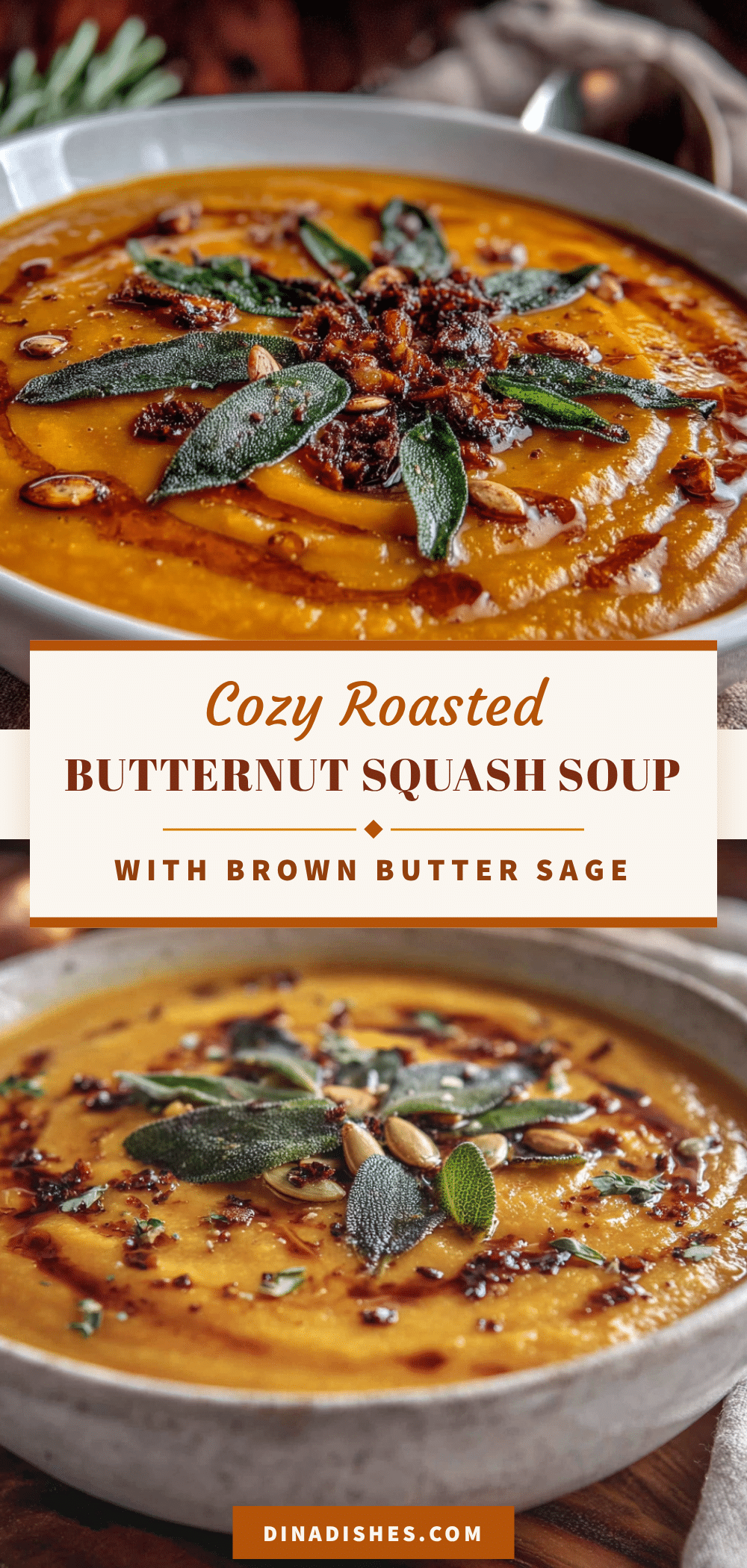
Cozy Roasted Butternut Squash Soup with Brown Butter Sage

This velvety roasted butternut squash soup is elevated with nutty brown butter and crispy sage leaves. It’s the perfect comforting fall and winter soup that even squash skeptics will love.
- Prep Time: 15 minutes
- Cook Time: 45 minutes
- Total Time: 1 hour
- Yield: 4 servings 1x
- Category: Soup
- Cuisine: American
Ingredients
- 1 large butternut squash (about 3 pounds), peeled, seeded, and cubed
- 1 large yellow onion, roughly chopped
- 4–5 garlic cloves, smashed
- 2 tablespoons olive oil
- Salt and black pepper to taste
- 4 cups vegetable broth
- 3–4 sprigs fresh thyme (or 1 teaspoon dried)
- 4 tablespoons unsalted butter
- 10–12 fresh sage leaves
- Flaky sea salt for finishing
- Optional: 1/4 cup coconut milk or heavy cream
- Optional: 1 teaspoon apple cider vinegar
- Optional: 1/4 teaspoon ground nutmeg or cinnamon
Instructions
- Preheat your oven to 400°F (200°C).
- Prepare the butternut squash: Cut off the top and bottom, peel with a vegetable peeler, cut in half lengthwise, scoop out seeds, and cut into 1-inch cubes.
- On a large baking sheet, toss the cubed squash, chopped onion, and smashed garlic cloves with olive oil, salt, and pepper. Spread in a single layer.
- Roast for 30-35 minutes, flipping halfway through, until the squash is tender and edges are caramelized and golden brown.
- Transfer roasted vegetables to a large pot or Dutch oven. Add vegetable broth and fresh thyme sprigs. Bring to a boil, then reduce to a simmer. Cook for 10 minutes, stirring occasionally.
- Remove the thyme sprigs. Blend the soup until smooth using an immersion blender directly in the pot, or in batches in a regular blender (let cool slightly first).
- Taste and adjust seasoning with salt and pepper. Add optional apple cider vinegar if desired. Thin with more broth or water if needed.
- While soup simmers, make the brown butter and sage: In a small skillet over medium heat, melt the butter. Swirl the pan until the butter foams, then turns golden with brown specks and smells nutty (about 3-4 minutes). Immediately add sage leaves and cook for 30 seconds until crisp. Remove from heat.
- Ladle soup into bowls. Drizzle with brown butter and top with crispy sage leaves. Sprinkle with flaky sea salt.
Notes
Don’t rush the roasting—caramelization is key for flavor. Watch the brown butter carefully as it burns quickly. The soup tastes even better the next day. Make brown butter and sage fresh when serving; they don’t keep well. For a vegan version, use vegan butter or coconut oil and vegetable broth.
Nutrition
- Serving Size: 1.5 cups
- Calories: 220
- Sugar: 8
- Sodium: 680
- Fat: 12
- Saturated Fat: 7
- Carbohydrates: 28
- Fiber: 6
- Protein: 4
Keywords: butternut squash soup, roasted butternut squash soup, brown butter sage soup, fall soup, winter soup, creamy squash soup, vegetarian soup, gluten-free soup