There used to be a tiny, wood-paneled restaurant tucked away on a side street in Portland called The Gander & Grain that made the most ridiculous stuffing balls. They were crispy on the outside, impossibly tender on the inside, and had this herbaceous punch that made you forget all about the turkey. When they closed their doors three years ago—honestly, I think the owner just wanted to retire to the coast—I felt a genuine pang of loss. I mean, who gets that attached to a side dish? Me, apparently. After seven attempts—the first batch was basically a greasy hockey puck—I finally cracked the code. The secret is in the bread-to-sausage ratio and letting the mixture rest before rolling. These cozy sausage and sage stuffing balls are my love letter to that little restaurant, and now they’re a non-negotiable part of my Thanksgiving table.
Why You’ll Love This Recipe
Let’s face it, Thanksgiving dinner is a battlefield of competing side dishes. You need something that stands out without causing more stress in the kitchen. These stuffing balls are that hero. They’re the perfect make-ahead solution for a day that’s already chaotic enough.
- Quick & Easy: Comes together in under 45 minutes, most of which is hands-off baking time. Perfect for when you’re juggling a million other dishes.
- Simple Ingredients: No fancy grocery trips needed. Stale bread, breakfast sausage, fresh sage, and a few pantry staples are all you need.
- Perfect for Thanksgiving: They free up oven space since they bake on a sheet pan, not in the bird. Plus, they look gorgeous on a platter.
- Crowd-Pleaser: Even the picky eaters who claim they don’t like stuffing go back for seconds. Something about the crispy edges gets everyone.
- Unbelievably Delicious: The combination of savory sausage, earthy sage, and golden-brown crust is pure comfort food magic. You’ll catch yourself sneaking one straight from the baking sheet.
What makes these different from every other stuffing recipe out there? It’s the technique. I toast the bread cubes until they’re bone-dry, then let the sausage-bread mixture rest for a full 15 minutes before rolling. This gives the flavors time to marry and the bread time to fully absorb all that savory goodness. The result is a stuffing ball that holds its shape perfectly without being dense or dry. I’ve tested this with guests who swore they were “done” with stuffing, and they walked away with the recipe scribbled on a napkin. That’s the kind of reaction that tells me this one’s a keeper.
What Ingredients You Will Need
This recipe uses simple, honest ingredients to create something that tastes far more complex than the sum of its parts. Most of these are likely already in your kitchen, especially if you’re a regular Thanksgiving cook.
- For the Stuffing Balls:
- 1 pound mild or sweet Italian sausage, casings removed (I prefer Johnsonville for consistent flavor)
- 6 cups day-old French bread or sourdough, cut into ½-inch cubes (about half a large loaf)
- 2 tablespoons unsalted butter
- 1 medium yellow onion, finely diced (about 1 cup)
- 2 celery stalks, finely diced (about ½ cup)
- 3 cloves garlic, minced
- 2 tablespoons fresh sage, finely chopped (or 2 teaspoons dried, but fresh is truly better here)
- 1 teaspoon fresh thyme leaves (or ½ teaspoon dried)
- ½ teaspoon salt
- ¼ teaspoon black pepper
- ½ cup low-sodium chicken broth (adds moisture without making them soggy)
- 1 large egg, lightly beaten (the binder that holds everything together)
- 2 tablespoons olive oil or melted butter, for brushing (for that golden, crispy exterior)
Ingredient Selection Tips: Look for bread that’s at least a day old—fresh bread will turn into a paste when mixed. If you only have fresh bread, cut it into cubes and spread them on a baking sheet at 300°F for 10 minutes to dry them out. For the sausage, I’ve found that mild Italian gives the best balance of flavor without overwhelming the sage, but hot Italian works beautifully if you want a kick. If you’re using dried sage, crumble it between your fingers before adding to release the oils. And please, please use fresh thyme if you can—dried works in a pinch, but fresh adds a brightness that cuts through the richness.
Equipment Needed
You don’t need a professional kitchen to pull these off. Just a few basic tools that you probably already own.
- Large baking sheet (half-sheet pan works best)
- Parchment paper or silicone baking mat
- Large mixing bowl
- Medium skillet or sauté pan
- Chef’s knife and cutting board
- Measuring cups and spoons
- Cookie scoop or small ice cream scoop (optional, but makes portioning so much easier)
- Cooling rack (optional, for crispiest bottoms)
If you don’t have a cookie scoop, just use your hands—lightly moisten them with water to prevent sticking. I’ve made these in a cast-iron skillet before (baking them directly in the pan), and they come out with an amazing crust. For a budget-friendly option, skip the parchment and just grease your baking sheet well with butter or cooking spray. Just keep an eye on them so they don’t stick.
Preparation Method
Get ready for the most forgiving stuffing recipe you’ll ever make. These steps are straightforward, but I’ve included all the little details I learned the hard way.
- Preheat your oven to 375°F (190°C). Line a large baking sheet with parchment paper or a silicone mat. This makes cleanup a breeze—trust me, you’ll thank yourself later.
- Prepare the bread. If using day-old bread, spread the cubes on the baking sheet and toast for 8-10 minutes, until dry and lightly golden. If using fresh bread, toast for 12-15 minutes. You want them dry but not hard—think crouton-adjacent. Set aside to cool slightly.
- Cook the sausage. In a medium skillet over medium-high heat, add the sausage, breaking it up with a wooden spoon. Cook for 5-7 minutes, until browned and cooked through. Use a slotted spoon to transfer the sausage to a large mixing bowl, leaving about 1 tablespoon of drippings in the pan. Do not drain all the fat—that’s flavor!
- Sauté the aromatics. Reduce heat to medium. Add the butter to the skillet with the reserved drippings. Once melted, add the diced onion and celery. Cook for 5-6 minutes, stirring occasionally, until softened and translucent. Add the minced garlic, fresh sage, and thyme, and cook for 1 more minute until fragrant. Your kitchen will smell incredible at this point.
- Combine the mixture. Add the sautéed vegetables to the bowl with the sausage. Add the toasted bread cubes, salt, and pepper. Toss everything together gently with a spatula until evenly distributed. Don’t overmix—you want some texture, not a paste.
- Add the liquid and rest. In a small bowl, whisk together the chicken broth and beaten egg. Pour this mixture over the bread-sausage mixture and toss gently to coat. Now for the crucial step: let the mixture rest for 15 minutes. This allows the bread to absorb the liquid fully, which is the secret to stuffing balls that hold their shape without being dry. Use this time to wash a few dishes or pour yourself a glass of wine.
- Shape the balls. Using a cookie scoop or your hands, portion the mixture into 2-inch balls (about ¼ cup each). You should get 16-18 balls. Place them on the prepared baking sheet, spacing them about 1 inch apart. They won’t spread much, so don’t worry about crowding.
- Brush and bake. Brush each ball lightly with olive oil or melted butter—this is what gives them that gorgeous golden crust. Bake for 20-25 minutes, rotating the pan halfway through, until the balls are deep golden brown and crispy on the outside. If you want extra crunch, switch the oven to broil for the last 2 minutes, but watch them carefully—they go from perfect to burnt in seconds.
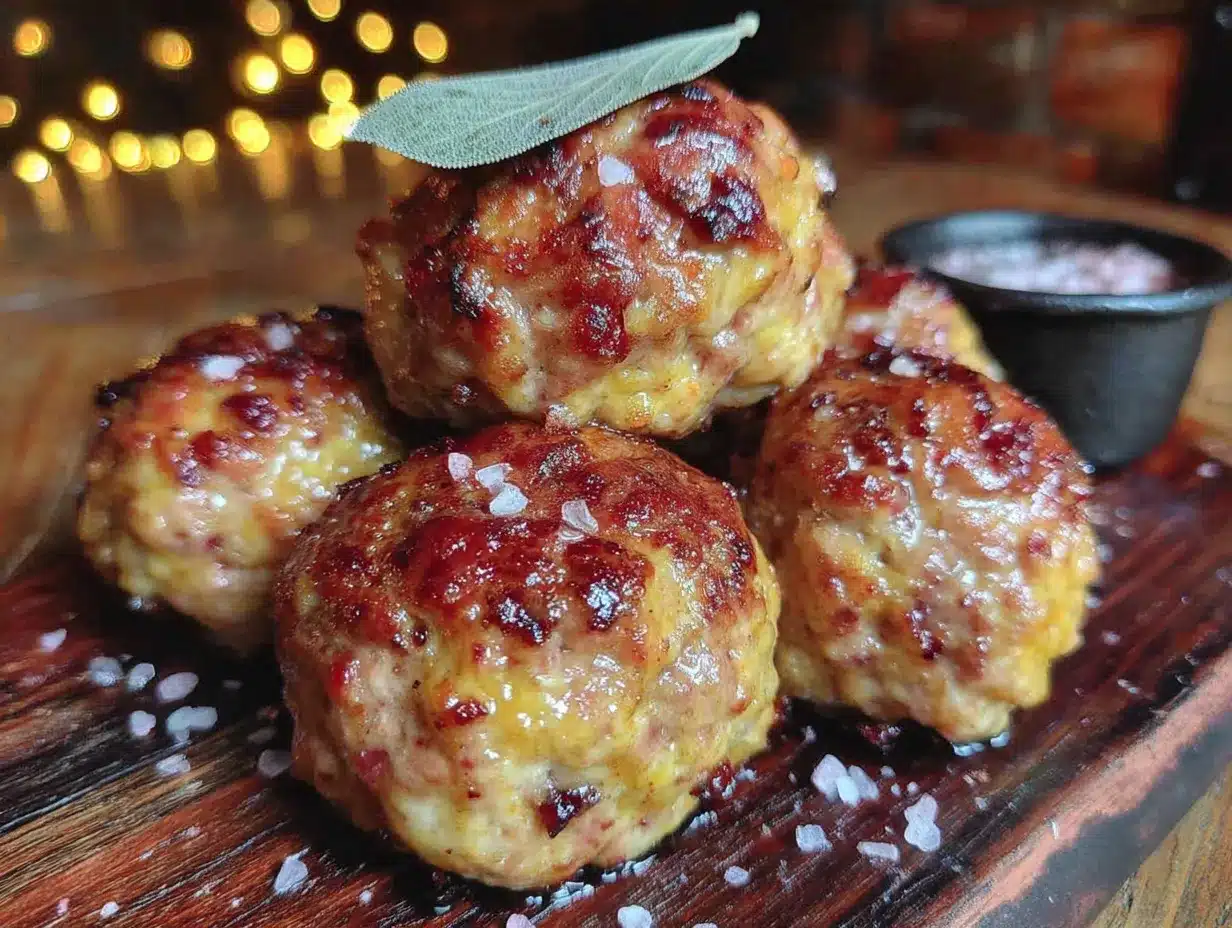
- Rest before serving. Let the stuffing balls cool on the baking sheet for 5 minutes before transferring to a serving platter. This helps them set and makes them easier to handle. They should be crispy on the outside and tender, almost creamy on the inside.
Cooking Tips & Techniques
I’ve made these stuffing balls more times than I care to count, and I’ve collected a few hard-won lessons along the way. Let me save you from my mistakes.
Don’t skip the resting time. I know it’s tempting to rush, especially on Thanksgiving morning when the clock is ticking. But that 15-minute rest is non-negotiable. The first time I made these, I skipped it, and my stuffing balls fell apart on the baking sheet. The bread needs time to absorb the liquid and egg; otherwise, you’ll end up with a greasy, crumbly mess.
Toast the bread properly. Under-toasted bread leads to soggy stuffing balls. You want the cubes to be dry enough that they crack when you break one in half. If they’re still soft, they’ll turn into mush when you mix them with the sausage and broth. Learn from my second attempt—it was basically bread pudding with sausage.
Use a light hand when mixing. Overmixing the bread and sausage mixture will break down the bread cubes and create a dense, heavy stuffing ball. You want to toss everything together just until combined, leaving some larger pieces of bread intact for texture. Think of it like making meatballs—gentle is better.
Make them ahead. These stuffing balls are perfect for meal prep. You can assemble them up to 24 hours in advance, cover the baking sheet with plastic wrap, and refrigerate. When ready to bake, just add 5-7 minutes to the baking time. I often make a double batch, bake half for dinner, and freeze the other half for a quick weeknight side.
Variations & Adaptations
One of the best things about this recipe is how easily it adapts to different tastes and dietary needs. Here are a few ways I’ve played with it over the years.
- Gluten-Free Version: Substitute the French bread with your favorite gluten-free bread. Look for a sturdy loaf, not the soft sandwich kind. Toast the cubes a little longer to ensure they’re dry enough to hold up. I’ve used Schär’s artisan bread with excellent results.
- Vegetarian Option: Replace the sausage with 8 ounces of finely chopped mushrooms (cremini or shiitake work best) sautéed with an extra tablespoon of butter and a teaspoon of soy sauce. The mushrooms provide that same savory, umami depth that sausage brings.
- Herb Swap: Not a sage fan? Swap it out for equal amounts of fresh rosemary or tarragon. Tarragon gives it a lovely anise-like flavor that pairs beautifully with chicken or turkey. I actually prefer the rosemary version for Christmas dinner.
- Add Some Crunch: Fold in ½ cup of toasted pecans or walnuts along with the bread cubes. The nuts add a wonderful crunch and a slightly sweet, buttery flavor that complements the sage and sausage perfectly.
- Spicy Kick: Use hot Italian sausage instead of mild, and add a pinch of red pepper flakes along with the garlic. This version is fantastic served alongside roasted chicken or pork chops.
Serving & Storage Suggestions
These stuffing balls are incredibly versatile when it comes to serving. Here’s how I handle them from the table to the fridge.
Serving: Serve them warm, straight from the oven, arranged on a platter with a sprig of fresh sage for garnish. They’re perfect alongside roasted turkey, mashed potatoes, and cranberry sauce. I also love them as a Thanksgiving appetizer—just make them slightly smaller and serve with a dollop of cranberry chutney on top. The sweet-tart cranberries cut through the richness beautifully.
Storage: Leftover stuffing balls keep well in an airtight container in the refrigerator for up to 4 days. The flavors actually deepen overnight as the herbs meld with the sausage. To reheat, place them on a baking sheet in a 350°F oven for 8-10 minutes, until warmed through and crispy again. The microwave works in a pinch, but you’ll lose that lovely crispy exterior.
Freezing: These freeze like a dream. Arrange the unbaked stuffing balls on a baking sheet and freeze until solid, then transfer to a freezer bag or container. They’ll keep for up to 3 months. To bake from frozen, add 10-15 minutes to the baking time and brush with a little extra oil before putting them in the oven. I always keep a batch in my freezer for unexpected guests or lazy Sunday dinners.
Nutritional Information & Benefits
While these are definitely a treat, they’re not without their redeeming qualities. Here’s a rough breakdown per stuffing ball (based on 18 servings).
- Calories: 165
- Protein: 8g
- Carbohydrates: 14g
- Fat: 9g
- Fiber: 1g
- Sugar: 2g
- Sodium: 380mg
The sage in this recipe isn’t just for flavor—it’s packed with antioxidants and has anti-inflammatory properties. The celery adds a bit of fiber and a healthy dose of vitamin K. And while sausage isn’t typically considered a health food, using a high-quality brand with minimal additives makes a difference. I personally love that these stuffing balls let me enjoy a Thanksgiving classic without the guilt of overindulging on the traditional bread-heavy version. They’re satisfying in a way that a scoop of regular stuffing just isn’t.
Conclusion
These cozy sausage and sage stuffing balls have become my signature Thanksgiving contribution, and I honestly can’t imagine the holiday without them. They’re the dish that disappears first, the one people ask for the recipe, the one that makes me feel like a kitchen rockstar even when the gravy is lumpy and the turkey is running late. Whether you’re recreating a restaurant memory like I was, or just looking for a fresh take on a classic side, I hope these bring as much joy to your table as they’ve brought to mine. Don’t be afraid to tweak the herbs or swap the sausage—this recipe is forgiving and flexible. If you give them a try, I’d love to hear how they turned out. Drop a comment below and let me know your favorite Thanksgiving side dish memory. Happy cooking, friend!
Frequently Asked Questions
Can I make these stuffing balls ahead of time for Thanksgiving?
Absolutely! You can assemble them up to 24 hours in advance and keep them covered in the refrigerator. When you’re ready to bake, just add 5-7 minutes to the cooking time. They’re a lifesaver on a busy holiday morning.
Can I use dried sage instead of fresh in this recipe?
Yes, you can substitute dried sage for fresh. Use 2 teaspoons of dried sage instead of 2 tablespoons of fresh. Just crumble it between your fingers before adding to release the oils. The flavor will be slightly more concentrated, but still delicious.
Why did my stuffing balls fall apart on the baking sheet?
This usually happens for one of two reasons: either the bread wasn’t toasted enough, or you skipped the 15-minute resting time. The bread needs to be dry enough to absorb the liquid, and the resting time allows the egg and broth to fully hydrate the bread, creating a binder that holds everything together.
Can I freeze these stuffing balls after baking?
Yes, they freeze beautifully. Let them cool completely, then place them in a single layer on a baking sheet and freeze until solid. Transfer to a freezer bag or container for up to 3 months. Reheat in a 350°F oven for 10-12 minutes until warmed through and crispy.
What can I use instead of Italian sausage?
You can use breakfast sausage, ground pork seasoned with fennel and sage, or even a plant-based sausage for a vegetarian version. If using ground pork, add an extra teaspoon of fennel seeds and a pinch of red pepper flakes to mimic the Italian sausage flavor.
Pin This Recipe!
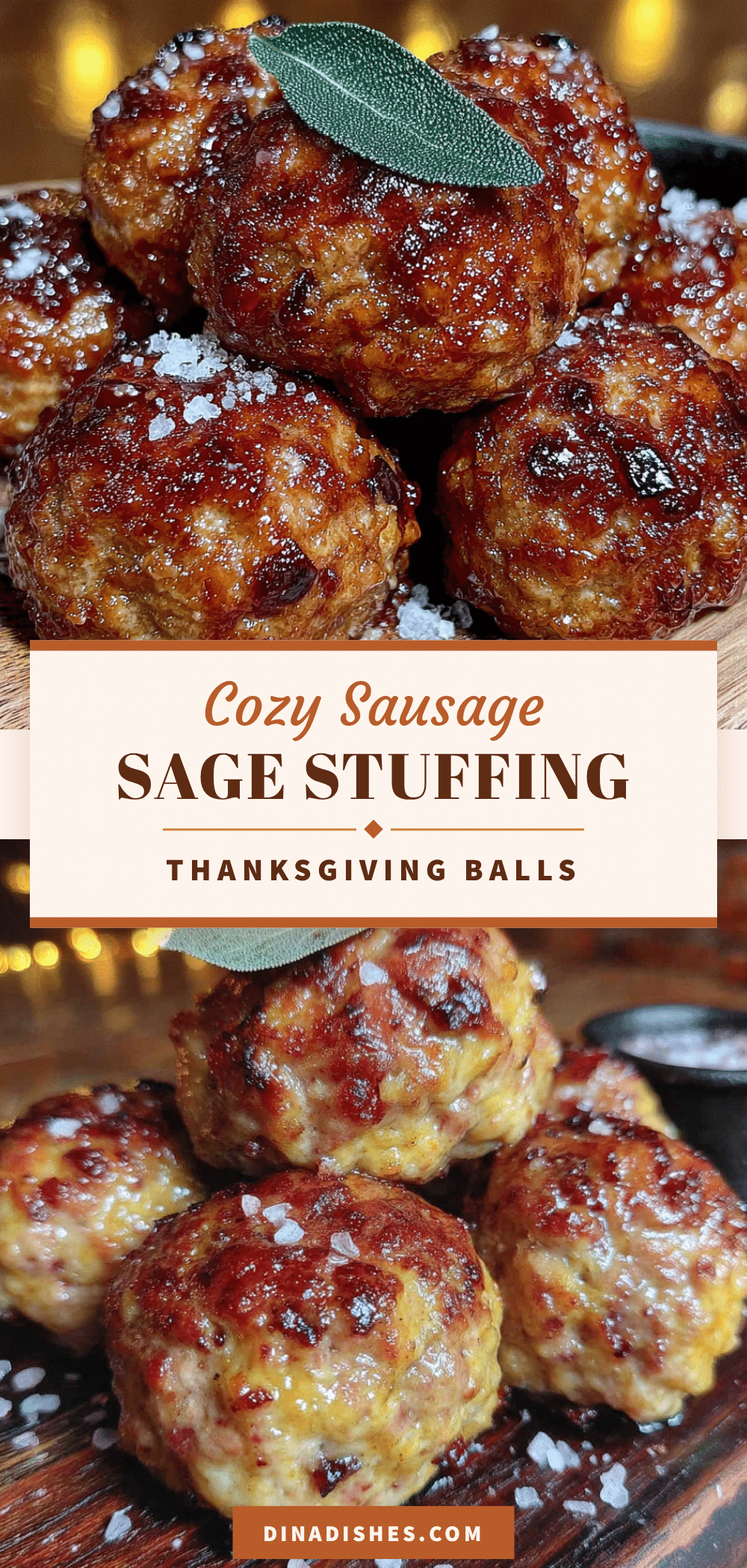
Cozy Sausage and Sage Stuffing Balls: Easy Thanksgiving Recipe

These crispy-on-the-outside, tender-on-the-inside stuffing balls are packed with savory sausage and earthy sage. They’re the perfect make-ahead side dish for Thanksgiving, freeing up oven space and delighting even picky eaters.
- Prep Time: 15 minutes
- Cook Time: 25 minutes
- Total Time: 45 minutes
- Yield: 16-18 servings 1x
- Category: Side Dish
- Cuisine: American
Ingredients
- 1 pound mild or sweet Italian sausage, casings removed
- 6 cups day-old French bread or sourdough, cut into ½-inch cubes
- 2 tablespoons unsalted butter
- 1 medium yellow onion, finely diced (about 1 cup)
- 2 celery stalks, finely diced (about ½ cup)
- 3 cloves garlic, minced
- 2 tablespoons fresh sage, finely chopped
- 1 teaspoon fresh thyme leaves
- ½ teaspoon salt
- ¼ teaspoon black pepper
- ½ cup low-sodium chicken broth
- 1 large egg, lightly beaten
- 2 tablespoons olive oil or melted butter, for brushing
Instructions
- Preheat your oven to 375°F (190°C). Line a large baking sheet with parchment paper or a silicone mat.
- Prepare the bread: If using day-old bread, spread the cubes on the baking sheet and toast for 8-10 minutes, until dry and lightly golden. If using fresh bread, toast for 12-15 minutes. Set aside to cool slightly.
- Cook the sausage: In a medium skillet over medium-high heat, add the sausage, breaking it up with a wooden spoon. Cook for 5-7 minutes, until browned and cooked through. Use a slotted spoon to transfer the sausage to a large mixing bowl, leaving about 1 tablespoon of drippings in the pan.
- Sauté the aromatics: Reduce heat to medium. Add the butter to the skillet with the reserved drippings. Once melted, add the diced onion and celery. Cook for 5-6 minutes, stirring occasionally, until softened and translucent. Add the minced garlic, fresh sage, and thyme, and cook for 1 more minute until fragrant.
- Combine the mixture: Add the sautéed vegetables to the bowl with the sausage. Add the toasted bread cubes, salt, and pepper. Toss everything together gently with a spatula until evenly distributed.
- Add the liquid and rest: In a small bowl, whisk together the chicken broth and beaten egg. Pour this mixture over the bread-sausage mixture and toss gently to coat. Let the mixture rest for 15 minutes.
- Shape the balls: Using a cookie scoop or your hands, portion the mixture into 2-inch balls (about ¼ cup each). You should get 16-18 balls. Place them on the prepared baking sheet, spacing them about 1 inch apart.
- Brush and bake: Brush each ball lightly with olive oil or melted butter. Bake for 20-25 minutes, rotating the pan halfway through, until the balls are deep golden brown and crispy on the outside. If you want extra crunch, switch the oven to broil for the last 2 minutes, but watch them carefully.
- Rest before serving: Let the stuffing balls cool on the baking sheet for 5 minutes before transferring to a serving platter.
Notes
Don’t skip the 15-minute resting time—it allows the bread to absorb the liquid and helps the balls hold their shape. Toast the bread properly to avoid sogginess. Use a light hand when mixing to keep some texture. These can be assembled up to 24 hours in advance and refrigerated; add 5-7 minutes to baking time. For gluten-free, use sturdy gluten-free bread and toast longer. For vegetarian, replace sausage with 8 ounces of finely chopped mushrooms sautéed with extra butter and soy sauce.
Nutrition
- Serving Size: 1 stuffing ball
- Calories: 165
- Sugar: 2
- Sodium: 380
- Fat: 9
- Saturated Fat: 3
- Carbohydrates: 14
- Fiber: 1
- Protein: 8
Keywords: stuffing balls, sausage and sage, Thanksgiving side dish, easy stuffing recipe, make-ahead stuffing