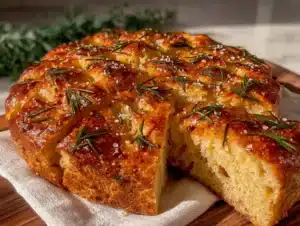
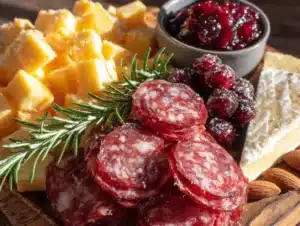
The Christmas Eve potluck was in six hours and I’d completely forgotten. Everyone else would be bringing their signature dishes—Aunt Sarah’s legendary seven-layer dip, my cousin’s slow-cooked brisket that takes two days to prepare, and the neighbor who always shows up with something that looks like it came from a magazine cover. I had a block of cheddar, some salami from the back of the fridge, and a jar of olives that was definitely past its prime. Honestly, I almost just grabbed a bag of chips and called it a day.
But then I remembered the leftover prosciutto I’d bought for a recipe I never made, and the little jar of fig jam my friend had given me months ago. I started rummaging through the pantry, pulling out almonds, crackers, and a random hunk of parmesan. I threw everything onto a wooden cutting board—the one my sister got me from a flea market that’s way too big for my counter—and arranged it all in a very panicked, very desperate way. I didn’t even have time to Google “how to make a charcuterie board.” I just stacked and stuffed and hoped for the best.
Let me tell you, I walked into that party feeling like I was bringing a last-minute science project. But the thing is, people went absolutely wild for it. They kept circling back, grabbing handfuls of cheese and meat, dipping everything into that fig jam like it was liquid gold. Someone actually asked me for the recipe. The recipe! For a board I’d thrown together in a panic. That’s when I realized—this is the kind of thing that works. You don’t need fancy ingredients or a culinary degree. You just need a little confidence, a decent cutting board, and the right mix of flavors. Maybe you’ve been there too—showing up to something with a dish you’re embarrassed about, only to have it be the first thing to disappear. This Christmas Eve charcuterie board is that dish. It’s the one you make when you want to look like you planned it all along.
Why You’ll Love This Recipe
This isn’t just a pile of snacks on a board. This is a guest-favorite Christmas Eve charcuterie board that has been tested at multiple family gatherings, cookie swaps, and last-minute holiday parties. I’ve refined the combination of flavors and textures over several Christmases, and I can tell you with confidence—this is the version that works every single time.
- Comes together in 15 minutes: No cooking, no baking, no stress. You can literally assemble this while wearing your pajamas and sipping hot cocoa.
- No fancy ingredients needed: Everything is available at any grocery store. You don’t need a specialty cheese shop or a trip to a gourmet market.
- Perfect for holiday hosting: This is designed for Christmas Eve gatherings where people are grazing, mingling, and waiting for the main meal. It keeps everyone happy without filling them up too much.
- Crowd-pleaser guaranteed: I’ve watched kids bypass cookies for the prosciutto-wrapped figs. I’ve seen adults fight over the last piece of aged gouda. It’s that kind of board.
- Unbelievably impressive: The visual impact of a well-arranged board makes people think you spent hours on it. You didn’t. But they don’t need to know that.
What makes this Christmas Eve charcuterie board different from the rest? It’s the balance. Most boards are either all meat or all cheese, or they’re so complicated you need a map to navigate them. This one has a perfect ratio of savory, sweet, salty, and tangy. The fig jam is the secret weapon—it ties everything together and makes each bite feel intentional. It’s comfort food reimagined as a grazing experience, and it’s the kind of thing that makes you close your eyes after the first bite.
What Ingredients You Will Need
This recipe uses simple, crowd-pleasing ingredients to deliver a board that looks extravagant without requiring any actual cooking. Every component has a job to do, and together they create a balanced, satisfying spread.
For the Meats
- Prosciutto (6-8 slices): Look for thinly sliced prosciutto di Parma for the best flavor. I personally prefer the brand from the deli counter rather than pre-packaged—it’s more tender and less salty.
- Salami (4-6 ounces): Use a mix of hard salami and genoa salami for variety. I like to buy a whole piece and slice it myself for thicker, more rustic pieces.
- Soppressata (optional, 3-4 ounces): This adds a spicy kick that cuts through the richness of the cheese. If you can’t find it, use pepperoni instead.
For the Cheeses
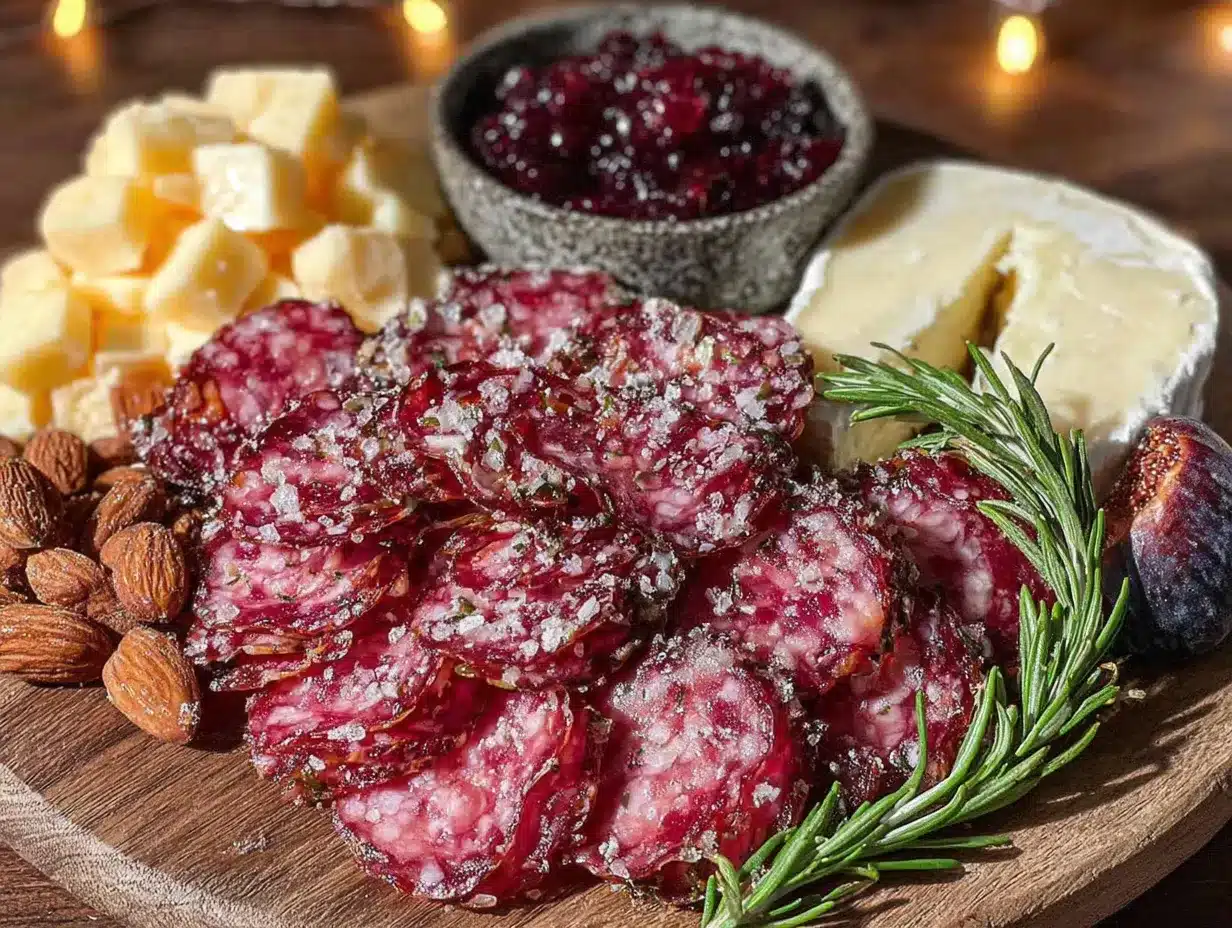
- Aged Gouda (4-6 ounces): The crystallized bits in aged gouda add a crunchy, salty surprise. I recommend a 12-month aged version for maximum flavor.
- Brie (one small wheel): Go for a double or triple cream brie. It should be soft and slightly oozy at room temperature—that’s the sign it’s ready to eat.
- Sharp Cheddar (4 ounces): A good quality white cheddar works beautifully. Avoid pre-shredded cheese; it doesn’t look as nice and won’t taste as fresh.
- Blue Cheese (optional, 2-3 ounces): For the adventurous eaters. Gorgonzola dolce is milder and more approachable than a strong roquefort.
For the Accompaniments
- Fig Jam (½ cup): This is non-negotiable. It’s the glue that holds the whole board together. I use Bonne Maman fig jam—it’s widely available and has a perfect consistency.
- Honey (for drizzling): A local wildflower honey adds a floral note that pairs beautifully with the brie and blue cheese.
- Olives (½ cup): Castelvetrano olives are my favorite—they’re buttery and mild. Kalamata olives work too if you prefer a stronger flavor.
- Cornichons (½ cup): These tiny pickles add acidity and crunch. They’re essential for cutting through the richness of the meats and cheese.
- Dried Apricots (½ cup): Their natural sweetness balances the saltiness of the cured meats. Look for unsulfured ones if possible.
- Toasted Almonds (½ cup): Marcona almonds are ideal—they’re already salted and have a softer texture. Regular roasted almonds work fine too.
- Crackers (1 box): Use a mix of plain water crackers and something more substantial like rosemary or sea salt crackers. I like Raincoast Crisps for their texture and flavor.
- Bread (1 baguette): Slice it thin and toast it lightly if you have time. A good crusty baguette adds a wonderful chewiness.
- Fresh Figs or Grapes (optional, ½ cup): If they’re in season, fresh figs add a gorgeous pop of color. Red grapes work as a substitute year-round.
Equipment Needed
You don’t need much for this Christmas Eve charcuterie board, which is part of the beauty. Here’s what I use:
- A large wooden cutting board or serving platter: At least 12 by 18 inches is ideal. If you don’t have a wooden board, a large ceramic platter or even a clean baking sheet works. I’ve used my grandmother’s old marble pastry board before, and it looked stunning.
- Small bowls or ramekins: For the fig jam, honey, olives, and cornichons. I use a set of mismatched ceramic bowls I found at a thrift store—they add character.
- Cheese knives: At least two—one for soft cheese and one for hard cheese. A good cheese knife has holes in the blade to prevent sticking.
- Small tongs or spreaders: For serving. It’s more hygienic and looks more polished.
- Parchment paper (optional): If you’re using a porous wooden board, a sheet of parchment underneath makes cleanup much easier.
Budget-friendly tip: You don’t need a fancy charcuterie board. A large dinner plate or a flat baking sheet covered with a clean kitchen towel works perfectly. The food is the star, not the board.
Preparation Method
This is the easiest part. No cooking, no complicated steps—just thoughtful arrangement. Here’s how I put together my guest-favorite Christmas Eve charcuterie board.
- Set out your cheeses 30 minutes before serving: This is the most important step. Cheese should be served at room temperature for the best flavor and texture. Take the brie, gouda, and cheddar out of the fridge and let them rest on the counter while you prepare everything else. I learned this the hard way after serving cold, rubbery brie at a party—never again.
- Choose your board or platter: Place it on your counter or table where you plan to serve. Make sure there’s enough space around it for people to reach. If you’re feeding a crowd, consider using two smaller boards instead of one giant one—it allows for better traffic flow.
- Place the bowls first: Put the small bowls of fig jam, honey, olives, and cornichons around the board. Position them so they’re evenly spaced—this creates natural “anchor points” that guide the eye. I usually put the fig jam in the center because it’s the most popular item.
- Add the cheeses: Place the brie (whole wheel), gouda (cut into wedges), and cheddar (sliced into triangles) around the board. Leave space between them. If you’re using blue cheese, crumble it into a small pile rather than leaving it in a block—it looks more inviting.
- Arrange the meats: Fold the prosciutto slices into loose ribbons and place them in a pile. Fan out the salami slices in a row or stack them in a small pile. The soppressata can be folded into quarters. Don’t worry about perfection—a slightly messy arrangement looks more rustic and appealing.
- Fill in with accompaniments: Scatter the dried apricots, almonds, and fresh figs or grapes in the empty spaces. Tuck them between the cheeses and meats. This is where the board starts to look full and abundant. Don’t be afraid to pile things up—charcuterie boards should look generous.
- Add the crackers and bread: Arrange the crackers in small clusters around the board. Slice the baguette into thin rounds and place them in a fan pattern. You can also put some crackers in a small basket next to the board if you’re running out of space.
- Drizzle and garnish: Drizzle a little honey over the brie and blue cheese. Sprinkle a few fresh herbs (rosemary or thyme sprigs) around the board for color. This is optional but makes a huge visual difference.
- Final check: Step back and look at your board. Are there any empty spots? Fill them with extra almonds or crackers. Does everything look balanced? You should have a mix of colors, textures, and shapes. If something feels off, move a bowl or rearrange a pile. Trust your eye.
And that’s it. In about 15 minutes, you’ve created a Christmas Eve charcuterie board that looks like it took an hour. The key is to relax and have fun with it—the more natural it looks, the better.
Cooking Tips & Techniques
Over the years, I’ve made this Christmas Eve charcuterie board more times than I can count, and I’ve learned a few things the hard way. Here are my best tips for making it perfect every time.
Don’t overcrowd the board: It’s tempting to pile on as much food as possible, but a crowded board is hard to navigate. Leave a little breathing room between items so people can easily grab what they want. If you have too much food, set up a separate plate for crackers and bread.
Think about texture contrast: The best boards have a mix of soft (brie, fig jam), crunchy (almonds, crackers), chewy (dried apricots, prosciutto), and creamy (aged gouda, honey). If everything is the same texture, it gets boring fast. I once made a board with all soft cheeses and no crunch, and it felt like eating baby food.
Prep everything before guests arrive: This is a make-ahead board. You can arrange everything up to two hours in advance, cover it loosely with plastic wrap, and keep it in the fridge. Just remember to take it out 30 minutes before serving to bring the cheese to room temperature. I forgot to do this one Christmas, and my brie was still cold and hard. People ate it anyway, but it wasn’t as good.
Use the “three of everything” rule: For a balanced board, aim for three types of meat, three types of cheese, and three accompaniments. This gives you enough variety without overwhelming yourself or your guests. If you’re feeding a larger crowd, scale up to four or five of each.
Label your cheeses: If you’re using multiple cheeses, especially ones that look similar, put a small label next to each one. People appreciate knowing what they’re eating, and it makes the board feel more intentional. I use tiny chalkboard labels I found at a craft store.
Variations & Adaptations
This Christmas Eve charcuterie board is endlessly customizable. Here are some variations I’ve tried over the years.
Mediterranean twist: Swap the prosciutto for spicy capicola, add feta cheese and tzatziki, and replace the fig jam with roasted red pepper spread. Include pita chips instead of crackers and add some cherry tomatoes and cucumber slices. This version is lighter and works well for a pre-dinner appetizer.
Vegetarian version: Skip the meat entirely and double up on the cheese. Add marinated artichoke hearts, roasted red peppers, and a variety of olives. Include a bowl of hummus or baba ganoush for extra protein. I’ve served this at a gathering with several vegetarian friends, and it was a huge hit—they appreciated having something substantial to eat.
Sweet and spicy board: Add a dollop of hot honey or red pepper jelly alongside the fig jam. Include spicy salami or chorizo, and add some candied pecans or walnuts. The combination of sweet, spicy, and savory is addictive. I made this version for a New Year’s Eve party, and it disappeared within an hour.
Budget-friendly option: Use cheaper cuts of meat like ham or turkey, and opt for block cheese that you slice yourself instead of pre-sliced. Replace the prosciutto with regular ham, and use store-brand crackers. The board will still look beautiful and taste great—you just won’t spend as much. I’ve done this for casual gatherings, and no one noticed the difference.
Seasonal swap: In the summer, use fresh peaches or nectarines instead of dried apricots, and add fresh basil leaves for a pop of green. In the fall, add sliced apples and a sprinkle of cinnamon. The board can change with the seasons, which keeps it interesting.
Serving & Storage Suggestions
This Christmas Eve charcuterie board is best served at room temperature, which is why I always take it out of the fridge 30 minutes before guests arrive. The cheese will be soft and spreadable, the meats will be more flavorful, and the accompaniments will shine.
For presentation, I like to place the board in the center of the table with small plates, napkins, and cheese knives nearby. If you’re serving it as an appetizer before a big meal, keep it small—just a few bites per person. If it’s the main event, go big and make sure there’s plenty of everything.
What to serve alongside? A crisp white wine like Sauvignon Blanc or a light red like Pinot Noir pairs beautifully. For non-alcoholic options, sparkling water with a slice of lemon or a festive cranberry spritzer works well. I also like to have a bowl of mixed nuts or a simple green salad on the side for extra variety.
Storage tips: If you have leftovers (unlikely, but possible), separate the components and store them in airtight containers. Cheese should be wrapped in wax paper or parchment paper, not plastic wrap—it allows the cheese to breathe. Meats can be stored in the fridge for up to three days. The fig jam and olives will keep for weeks. Don’t try to save the crackers or bread—they’ll get stale. Just toss them and use fresh ones next time.
Flavors actually improve overnight for some components. The cheese will be more flavorful, and the fig jam will absorb some of the aromas from the meats. I’ve been known to make the board a day ahead and just add the crackers and bread right before serving.
Nutritional Information & Benefits
Because this is a grazing board, it’s hard to give exact nutritional values—it depends on how much you eat. But here’s a rough estimate per serving (assuming the board serves 8-10 people):
| Nutrient | Amount per serving |
|---|---|
| Calories | 350-450 |
| Protein | 15-20g |
| Fat | 25-30g |
| Carbohydrates | 20-25g |
| Fiber | 3-5g |
| Sugar | 12-15g |
This board has some surprising health benefits. Cheese is a good source of calcium and protein, and aged cheeses like gouda are naturally low in lactose. The almonds provide healthy fats and vitamin E, while the dried apricots offer fiber and potassium. The olives contain heart-healthy monounsaturated fats and antioxidants. Even the prosciutto has some protein, though it’s higher in sodium—so enjoy it in moderation.
If you’re watching your carb intake, skip the crackers and bread and use cucumber slices or bell pepper strips instead. For a lower-fat option, choose reduced-fat cheese and leaner meats like turkey. This board is naturally gluten-free if you use gluten-free crackers, and it can be made dairy-free by using plant-based cheese alternatives (though the texture won’t be quite the same).
Potential allergens: This recipe contains dairy, tree nuts (almonds), and gluten (crackers, bread). Check labels on all packaged items if you’re serving someone with allergies.
Conclusion
This Christmas Eve charcuterie board is the recipe I come back to year after year because it never fails. It’s the one I make when I want to impress without stress, when I want to feed a crowd without cooking, and when I want to enjoy the party instead of hiding in the kitchen. Honestly, it’s become my signature dish—the thing people ask me to bring to every gathering.
What I love most about this board is how forgiving it is. You can swap ingredients, change the proportions, and rearrange it a dozen times, and it still looks beautiful. It’s not about perfection—it’s about abundance and generosity. It’s about putting out a spread that says, “I’m glad you’re here, and I want you to feel welcome.”
So go ahead and make this your own. Add your favorite cheese, throw in something unexpected, and don’t stress about the arrangement. Trust me, your guests will love it. And when someone asks for the recipe, just smile and say it’s a family secret. I won’t tell.
Have you made a charcuterie board for a holiday gathering? What’s your go-to combination? I’d love to hear about it in the comments below. And if you try this Christmas Eve charcuterie board, let me know how it goes—I’m always happy to swap tips and ideas.
Frequently Asked Questions
How far in advance can I make this Christmas Eve charcuterie board?
You can assemble the board up to two hours before serving. Just cover it loosely with plastic wrap and keep it in the fridge. Take it out 30 minutes before serving to let the cheese come to room temperature. Don’t add the crackers or bread until right before serving, or they’ll get soft.
Can I make this board gluten-free?
Absolutely. Just use gluten-free crackers and skip the baguette. Most cheeses, meats, olives, and nuts are naturally gluten-free. Double-check labels on the fig jam and any pre-seasoned nuts to be safe.
How much food do I need per person?
For an appetizer board before a meal, plan on 2-3 ounces of meat and 2-3 ounces of cheese per person. For a main course board, double that amount. The accompaniments (olives, nuts, fruit) should be about ¼ cup per person total. It’s always better to have too much than too little—leftovers make great snacks.
What’s the best way to arrange the board so it looks professional?
Start with the bowls (they anchor the board), then add the cheeses in different spots, then the meats, and finally fill in the gaps with accompaniments. Use a mix of colors and textures. Don’t be afraid to pile things up—a full board looks more inviting than a sparse one. And remember, symmetry is overrated; a slightly asymmetrical arrangement looks more natural and rustic.
Can I use different cheeses than what’s listed?
Of course. The key is to have a variety of textures and flavors. I recommend one soft cheese (like brie or camembert), one hard cheese (like aged gouda or parmesan), and one semi-soft cheese (like cheddar or manchego). If you’re adding a blue cheese, keep it separate from the other cheeses so the flavor doesn’t overpower them.
Pin This Recipe!
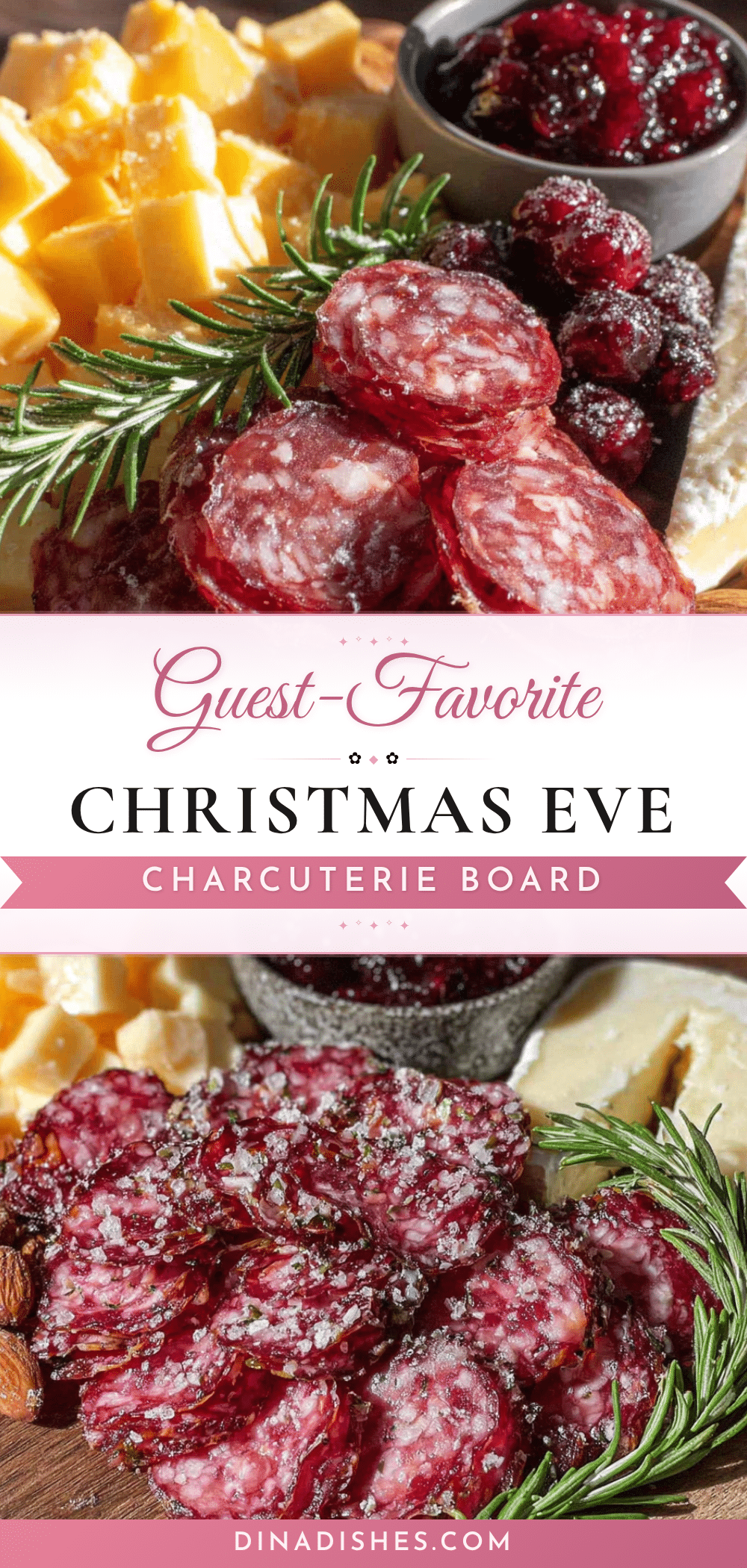
Easy Christmas Eve Charcuterie Board: A Guest Favorite
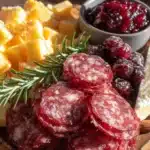
This Christmas Eve charcuterie board is a guest-favorite that comes together in 15 minutes with no cooking required. It features a perfect balance of savory, sweet, salty, and tangy flavors, making it an impressive and stress-free holiday appetizer.
- Prep Time: 15 minutes
- Cook Time: 0 minutes
- Total Time: 15 minutes
- Yield: 8-10 servings 1x
- Category: Appetizer
- Cuisine: American
Ingredients
- 6–8 slices prosciutto
- 4–6 ounces salami (mix of hard and genoa)
- 3–4 ounces soppressata (optional, or substitute pepperoni)
- 4–6 ounces aged gouda
- 1 small wheel brie (double or triple cream)
- 4 ounces sharp cheddar (white cheddar recommended)
- 2–3 ounces blue cheese (optional, gorgonzola dolce recommended)
- ½ cup fig jam
- Honey for drizzling
- ½ cup Castelvetrano olives (or Kalamata olives)
- ½ cup cornichons
- ½ cup dried apricots
- ½ cup toasted almonds (Marcona almonds preferred)
- 1 box crackers (mix of water crackers and rosemary or sea salt crackers)
- 1 baguette (sliced and lightly toasted if desired)
- ½ cup fresh figs or red grapes (optional)
Instructions
- Set out your cheeses 30 minutes before serving to bring them to room temperature.
- Choose your board or platter and place it on your counter or table.
- Place small bowls of fig jam, honey, olives, and cornichons evenly spaced on the board, with fig jam in the center.
- Add the cheeses: place the brie (whole wheel), gouda (cut into wedges), and cheddar (sliced into triangles) around the board. If using blue cheese, crumble it into a small pile.
- Arrange the meats: fold prosciutto into loose ribbons, fan out salami slices, and fold soppressata into quarters. Place them in piles around the board.
- Fill in empty spaces with dried apricots, almonds, and fresh figs or grapes, tucking them between cheeses and meats.
- Arrange crackers in small clusters and fan out baguette slices on the board.
- Drizzle honey over the brie and blue cheese. Garnish with fresh rosemary or thyme sprigs if desired.
- Step back and check for balance. Fill any empty spots with extra almonds or crackers.
Notes
For best flavor, bring cheese to room temperature before serving. The board can be assembled up to 2 hours in advance; cover loosely with plastic wrap and refrigerate. Add crackers and bread just before serving to prevent sogginess. Leftover cheese should be wrapped in wax paper or parchment paper, not plastic wrap.
Nutrition
- Serving Size: 1 serving (based on
- Calories: 350450
- Sugar: 1215
- Sodium: 8001000
- Fat: 2530
- Saturated Fat: 1015
- Carbohydrates: 2025
- Fiber: 35
- Protein: 1520
Keywords: Christmas Eve charcuterie board, holiday appetizer, easy charcuterie board, no-cook appetizer, guest favorite, prosciutto, brie, fig jam