This was supposed to be a lemon-herb roasted chicken situation. I had the lemons, I had the fresh thyme, I had this whole vision of a crispy-skinned centerpiece bird that would make me feel like a proper adult who has their life together. But then Tuesday happened. You know the kind of Tuesday I mean—the one where the car makes a weird noise, the kid forgets their lunch, and you realize you haven’t actually defrosted the chicken. I stood in my kitchen at 5:15 PM, staring at a rock-hard whole chicken in my sink, and honestly? I almost just ordered pizza.
Instead, I grabbed my keys and made a run to the grocery store, where I found myself in the deli aisle having a full-on internal debate about rotisserie chicken. It felt like cheating. It felt like giving up. But my neighbor Sarah—who always seems to know exactly what to say—had told me just last week that her grandmother’s best soups all started with store-bought chicken. “It’s not about where the chicken comes from,” she said, “it’s about what you do with it.” So I grabbed the warmest, most golden rotisserie chicken I could find, and I figured I’d at least try.
What came out of that pot was nothing like the plan—and better. The broth had this deep, almost velvety richness that I’d never gotten from my from-scratch attempts. The chicken was impossibly tender, like it had been slow-cooking all day instead of just an hour. And the noodles? They soaked up all that goodness until every single bite tasted like a hug. I stood there over the stove, tasting it straight from the ladle (burned my tongue, honestly), and I couldn’t believe this came from a shortcut. Maybe you’ve been there—staring down a weeknight with nothing planned, feeling like you’ve already failed before you’ve even started. This soup is for those nights. It’s proof that sometimes the best things happen when your original plan falls apart.
Why You’ll Love This Recipe
Let me tell you why this particular chicken noodle soup has become my most-requested recipe, even from friends who swear they don’t like soup. It’s not just another version—it’s the version that makes you close your eyes after the first bite.
- Quick & Easy: This comes together in about 40 minutes flat. No simmering bones for hours, no complicated techniques. The rotisserie chicken does all the heavy lifting for you.
- Simple Ingredients: You probably have most of this in your pantry right now. Carrots, celery, onion, garlic, noodles, and that beautiful rotisserie chicken. No fancy grocery trips required.
- Perfect for Cozy Nights: This is the soup you want when you’re curled up on the couch, when the rain won’t stop, or when you just need something warm to fix a rough day.
- Crowd-Pleaser: I’ve served this to picky kids, to my dad who claims he doesn’t like soup, and to friends recovering from colds. Every single person has asked for the recipe.
- Unbelievably Delicious: The secret is in how you build the broth. We’re not just tossing chicken in water—we’re layering flavors with browned vegetables, fresh herbs, and a little trick with the chicken skin that makes all the difference.
What makes this different from every other chicken noodle soup out there? It’s the technique. Most recipes either take all day or taste like they took no time at all. This one gives you that deep, slow-cooked flavor in under an hour because we’re maximizing every single ingredient. The rotisserie chicken isn’t a shortcut to bland soup—it’s a secret weapon for incredible flavor. And honestly, after testing this about seven times (my family was very patient), I can say with confidence that this is the best version. It’s comfort food reimagined—faster, easier, but with the same soul-soothing satisfaction that makes you want to curl up with a big bowl and forget about everything else.
What Ingredients You Will Need
This recipe uses simple, wholesome ingredients that work together to create a broth that tastes like it simmered all day. Most of these are pantry staples, and the rotisserie chicken is the hero that makes everything quick without sacrificing flavor.
- Rotisserie chicken (1 large, about 2-3 pounds): Look for one that’s still warm from the store if you can—the meat is juicier and easier to shred. I prefer the ones from Costco or my local grocery store deli. Remove the skin and shred the meat, keeping both dark and white meat for best flavor.
- Olive oil (2 tablespoons): For sautéing the vegetables. You can use butter instead for a richer flavor, but olive oil works beautifully.
- Yellow onion (1 large, diced): The foundation of any good soup. Sweet onions work too, but yellow onions give the best savory depth.
- Carrots (3 medium, peeled and sliced into rounds): I like mine cut about 1/4-inch thick so they soften but still have a little bite. Baby carrots work in a pinch, but they’re less sweet.
- Celery (3 stalks, sliced): Don’t skip this—celery adds that essential aromatic backbone. Slice them about the same thickness as the carrots for even cooking.
- Garlic (4 cloves, minced): Fresh garlic is non-negotiable here. The jarred stuff just doesn’t give the same punch. I add mine right after the vegetables soften so it doesn’t burn.
- Chicken broth (8 cups, low-sodium): Use a good quality broth here—it makes a difference. I recommend Swanson or Kitchen Basics. If you’re feeling fancy, use 4 cups broth and 4 cups water with 2 tablespoons better than bouillon chicken base.
- Dried thyme (1 teaspoon): Earthy and warm, thyme is the classic herb for chicken soup. Fresh thyme works too—use 1 tablespoon of fresh leaves.
- Dried rosemary (1/2 teaspoon, crushed): Just a little goes a long way. Rub it between your palms before adding to release the oils.
- Bay leaves (2): These add subtle depth that you’ll miss if you leave them out. Remember to fish them out before serving!
- Egg noodles (8 ounces, wide): I love the wide, curly egg noodles for chicken soup—they catch the broth in all their folds. No yolk noodles work too, but they’re less tender.
- Fresh parsley (1/4 cup, chopped): Added at the very end for freshness and color. Flat-leaf Italian parsley is best.
- Salt and black pepper (to taste): Start with 1 teaspoon salt and 1/2 teaspoon pepper, then adjust at the end. Remember that rotisserie chicken is already seasoned!
- Lemon juice (1 tablespoon, optional): A squeeze at the end brightens everything up. I add this when I want the soup to feel a little fresher.
Equipment Needed
You don’t need a fancy kitchen to make this soup. Here’s what you’ll need:
- Large Dutch oven or heavy-bottomed pot (6-8 quart): This is my go-to for soups. The heavy bottom helps everything cook evenly and prevents scorching. If you don’t have a Dutch oven, any large stockpot will work—just stir a little more often.
- Cutting board and sharp chef’s knife: A dull knife makes dicing vegetables feel like a workout. Take two minutes to sharpen yours before starting—it makes a real difference.
- Wooden spoon or silicone spatula: For stirring and scraping up those flavorful browned bits from the bottom of the pot.
- Measuring cups and spoons: I know, obvious, but having them ready saves you from digging through drawers with garlicky hands.
- Two forks or your hands: For shredding the chicken. I usually let the chicken cool just enough to handle, then use my fingers. It’s faster than forks and you can feel for any bones or cartilage.
- Fine-mesh strainer (optional): If you want to strain your broth for an extra-clear soup. I don’t usually bother, but it’s nice if you’re serving company.
- Ladle: For serving. A 1/2-cup ladle is perfect for portioning.
I’ve made this soup in a cheap stockpot from Target and in my fancy Le Creuset—both worked great. The key is just having enough space for everything to simmer without boiling over.
Preparation Method
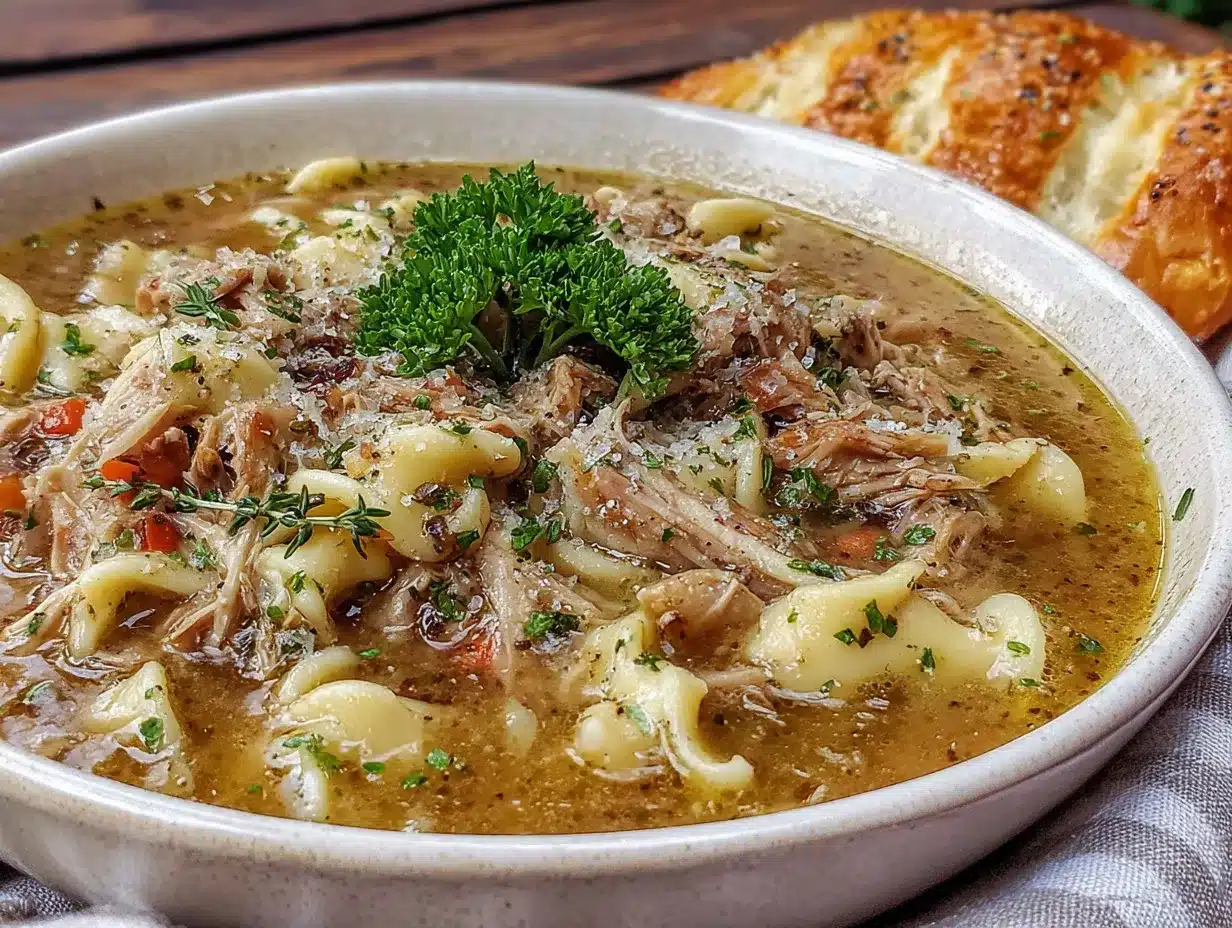
- Prep your chicken first. While your pot is still cold, pull the rotisserie chicken apart. Remove all the skin and set it aside (we’re using it later!). Shred all the meat into bite-sized pieces, discarding the bones and any gristly bits. You should have about 4-5 cups of shredded chicken. Set this aside. Don’t skip this step—doing it before you start cooking means less scrambling later.
- Start the aromatics. Heat your Dutch oven over medium heat and add the olive oil. Once it shimmers (about 30 seconds), add the diced onion. Cook for 4-5 minutes, stirring occasionally, until the onion turns translucent and starts to get a little golden at the edges. This is where the flavor foundation begins—don’t rush it.
- Add the carrots and celery. Toss in the sliced carrots and celery. Stir everything together and let it cook for another 5 minutes. The vegetables should start to soften and the kitchen should smell amazing. If you hear a nice sizzle, you’re doing it right. If it starts to stick, add a splash of broth to loosen things up.
- Add the garlic and herbs. Push the vegetables to the sides of the pot and add the minced garlic to the center. Cook for 30 seconds, stirring constantly—garlic burns fast and bitter. Then stir in the dried thyme and crushed rosemary. Let everything toast together for about a minute. This wakes up the dried herbs in a way that adding them to liquid just can’t match.
- Here’s the secret step: Take that reserved chicken skin and chop it into small pieces. Add it to the pot with the vegetables. Cook for 2-3 minutes, stirring, until the skin renders some of its fat and gets a little crispy. This adds unbelievable depth to the broth. I learned this trick from a chef friend and it’s the thing that makes people ask “what’s in this?”
- Add the broth and bay leaves. Pour in all 8 cups of chicken broth. Use your wooden spoon to scrape up any browned bits from the bottom of the pot—that’s pure flavor. Drop in the bay leaves. Bring everything to a boil, then reduce the heat to a gentle simmer. Let it bubble away for 10 minutes. The broth will start to look richer and smell deeper.
- Season the broth. Add 1 teaspoon of salt and 1/2 teaspoon of black pepper. Taste it. Does it taste like something’s missing? Add a little more salt. Remember, you’re seasoning the broth that will flavor the noodles and chicken. It should taste slightly saltier than you want the final soup to be.
- Cook the noodles. Add the egg noodles directly to the simmering broth. Stir them in gently so they don’t clump together. Cook according to package directions, usually 6-8 minutes for wide egg noodles. Stir occasionally to prevent sticking. The noodles will absorb some of the broth as they cook, so don’t worry if the pot looks a little full.
- Add the chicken. Once the noodles are tender, stir in all that shredded rotisserie chicken. Let it heat through for 2-3 minutes. You don’t want to boil the chicken—it’s already cooked and just needs to warm up. Overcooking will make it dry and stringy.
- Finish with parsley and lemon. Remove the bay leaves (seriously, don’t forget—biting into a bay leaf is not fun). Stir in the fresh parsley and, if using, the squeeze of lemon juice. Taste one more time and adjust salt and pepper. The lemon should just brighten the flavors, not make it taste lemony.
- Let it rest. Turn off the heat and let the soup sit for 5 minutes before serving. This lets the flavors meld and the noodles absorb just a little more broth. I know you’re hungry, but trust me on this.
Cooking Tips & Techniques
After making this soup more times than I can count, here are the things I wish someone had told me sooner.
Don’t boil the noodles in the broth. Wait—I just told you to do that. Here’s the nuance: if you’re planning to have leftovers, cook the noodles separately and add them to each bowl. Noodles left in the broth overnight turn into mushy, swollen blobs. If you’re eating the whole pot in one sitting (no judgment), cooking them in the broth is fine and actually adds starch that thickens the soup beautifully.
Toast your spices. I mentioned this in the method, but it bears repeating. Adding dried herbs to hot oil for 30-60 seconds before adding liquid transforms their flavor completely. They go from tasting dusty and flat to warm and aromatic. This is one of those small chef tricks that makes a huge difference.
Watch your salt. Rotisserie chickens are brined and seasoned, so they already contain a fair amount of salt. Always use low-sodium broth and taste before adding extra salt. I’ve ruined batches by oversalting because I forgot about the chicken’s contribution. Learn from my mistakes.
The chicken skin trick. This was a happy accident. I had leftover skin from shredding the chicken and thought, “what if I just… browned it?” The rendered fat adds richness that you usually only get from homemade stock. Just be sure to chop it small so it incorporates into the broth rather than floating as big greasy pieces.
Let it sit. Soup always tastes better the next day. If you have time, make this in the morning and let it sit in the fridge until dinner. The flavors meld and deepen in a way that’s hard to achieve with same-day cooking. Just remember the noodle issue—store noodles separately if you’re planning for leftovers.
Variations & Adaptations
This recipe is wonderfully flexible. Here are some ways I’ve adapted it over the years:
Gluten-Free Version: Swap the egg noodles for gluten-free pasta, rice noodles, or even cooked quinoa. I’ve also used chickpea pasta for extra protein—just watch the cooking time as it can get mushy fast. Add a cup of cooked white rice instead of noodles for a naturally gluten-free option that’s just as comforting.
Extra-Vegetable Loaded: On days when I’m feeling virtuous, I add a cup of frozen peas (stirred in with the chicken), a handful of chopped spinach (wilted at the end), and even some diced zucchini (added with the carrots). The peas add sweetness, the spinach adds color, and the zucchini just melts into the broth. My kids don’t even notice the extra vegetables.
Spicy Kick: Add a pinch of red pepper flakes with the garlic, or stir in a teaspoon of sriracha at the end. The heat cuts through the richness beautifully. I made this version when I had a cold and couldn’t taste anything—the spice woke up my sinuses and the soup actually tasted like something.
Creamy Chicken Noodle Soup: Stir in 1/2 cup of heavy cream or full-fat coconut milk at the very end, after you’ve turned off the heat. This turns the broth into something luxurious and velvety. It’s not traditional, but it’s absolutely delicious on a freezing winter night.
Herb Swaps: If you have fresh herbs, use 1 tablespoon each of fresh thyme and fresh rosemary instead of dried. You can also add a sprig of fresh dill at the end for a completely different flavor profile. Dill and chicken are a match made in heaven.
Serving & Storage Suggestions
This soup is at its best served piping hot in deep bowls. I like to garnish each bowl with a little extra fresh parsley and a crack of black pepper. A squeeze of fresh lemon over each serving brightens everything up if you didn’t add it to the pot.
What to serve with it: A crusty loaf of sourdough or French bread is perfect for dipping. I also love serving this with simple buttered toast or a side salad with a tangy vinaigrette to cut through the richness. For a truly cozy meal, pair it with a grilled cheese sandwich—the classic combo for a reason.
Storage: Store leftover soup in an airtight container in the refrigerator for up to 4 days. Remember my tip about the noodles—if you anticipate leftovers, store the noodles separately and add them when reheating. The broth and chicken actually get more flavorful as they sit.
Freezing: This soup freezes beautifully for up to 3 months. Again, freeze without the noodles if possible. Let the soup cool completely, then transfer to freezer-safe containers. Leave about an inch of headspace for expansion. To reheat, thaw overnight in the refrigerator, then warm gently on the stovetop. Cook fresh noodles and add them just before serving.
Reheating: Reheat on the stovetop over medium-low heat, stirring occasionally. Add a splash of broth or water if the soup has thickened too much. You can also microwave individual portions in 1-minute intervals, stirring between each. The soup will taste even better the next day as the flavors continue to develop.
Nutritional Information & Benefits
Here’s the approximate nutritional breakdown for one serving (about 1.5 cups, based on 8 servings):
- Calories: 285
- Protein: 28g
- Carbohydrates: 22g
- Fat: 9g
- Fiber: 3g
- Sodium: 680mg (varies based on broth and chicken)
This soup is packed with protein from the chicken, which helps keep you full and satisfied. The carrots provide a healthy dose of vitamin A for immune health, while the celery offers antioxidants and anti-inflammatory benefits. The broth itself is hydrating and soothing, especially when you’re feeling under the weather. If you use low-sodium broth and remove the chicken skin before shredding, you can reduce the sodium and fat content significantly.
For those watching their carb intake, this recipe can be adapted by using zucchini noodles or shirataki noodles instead of egg noodles. The soup is naturally dairy-free and can be made gluten-free with a simple noodle swap. It’s a balanced, nourishing meal that feels indulgent without being heavy.
Conclusion
This chicken noodle soup has become my go-to for so many reasons. It’s the recipe I turn to when I’m tired, when I’m stressed, when I need something warm and familiar to make everything feel okay. It’s proof that you don’t need to spend all day in the kitchen to create something truly special. The rotisserie chicken isn’t a shortcut—it’s a smart choice that lets you focus on building flavor in other ways.
I hope you’ll make this soup your own. Add extra vegetables, play with the herbs, make it spicy or creamy or however your heart desires. The best recipes are the ones that adapt to you, not the other way around. And honestly? I’d love to hear how it turns out. Drop a comment below and tell me about your version—what did you add, what did you change, did your family love it as much as mine does?
Here’s to cozy nights, happy accidents, and the magic that happens when you stop trying so hard. Grab a spoon and dig in—you deserve this.
Frequently Asked Questions
Can I use leftover homemade chicken instead of rotisserie?
Absolutely! This recipe works beautifully with any cooked chicken. Use about 4-5 cups of shredded leftover chicken from a roasted bird, poached chicken breasts, or even leftover turkey. The rotisserie chicken just adds that extra layer of seasoned flavor, but homemade works great too.
Why is my soup too salty?
This usually happens when you forget that rotisserie chicken is already well-seasoned. Always use low-sodium broth and taste before adding extra salt. If you’ve already oversalted, try adding a peeled potato to the pot and simmering for 15 minutes—the potato absorbs some of the excess salt. Remove it before serving.
Can I make this in a slow cooker or Instant Pot?
Yes! For a slow cooker, sauté the vegetables on the stovetop first, then transfer to the slow cooker with broth, herbs, and raw chicken breasts. Cook on low for 6-8 hours, then shred the chicken and add cooked noodles at the end. For Instant Pot, use the sauté function for vegetables, then pressure cook on high for 10 minutes with raw chicken. Quick release, shred chicken, and stir in cooked noodles.
How do I keep the noodles from getting mushy in leftovers?
The best solution is to cook the noodles separately and add them to individual bowls when serving. Store the broth and chicken mixture in the fridge, then reheat and add freshly cooked noodles. If you’ve already combined everything, the soup will still be good for 1-2 days—the noodles just won’t be as firm.
Can I add rice instead of noodles?
Definitely! Rice is a wonderful substitute. Add 1 cup of uncooked white rice to the simmering broth and cook for about 15-18 minutes before adding the chicken. Brown rice takes longer (about 40 minutes), so adjust accordingly. Wild rice adds a lovely nutty flavor and chewy texture that pairs beautifully with the chicken.
Pin This Recipe!
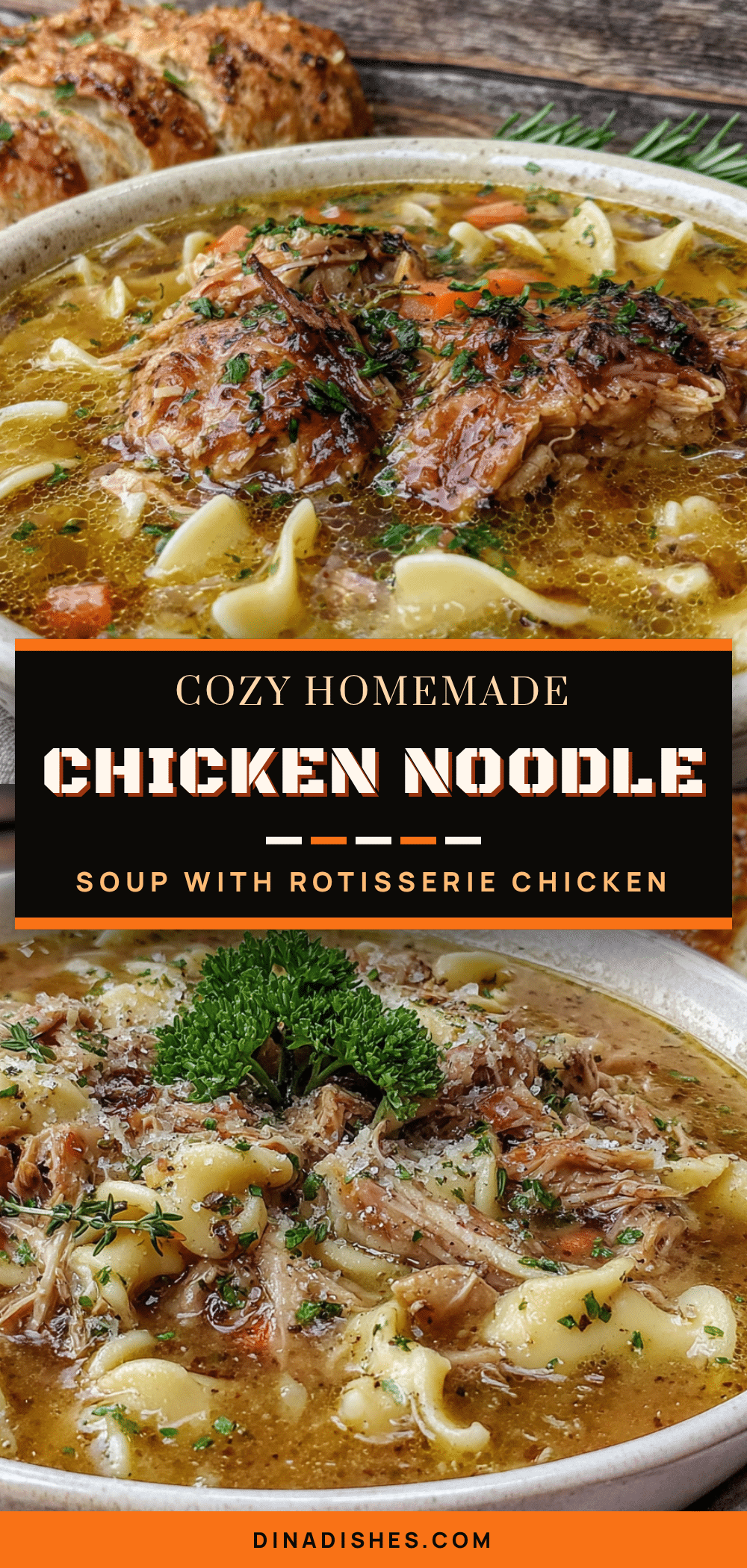
Easy Homemade Chicken Noodle Soup with Rotisserie Chicken

A quick and comforting chicken noodle soup made with rotisserie chicken, tender vegetables, and egg noodles in a rich, flavorful broth. Perfect for busy weeknights when you need a warm, satisfying meal in under an hour.
- Prep Time: 15 minutes
- Cook Time: 25 minutes
- Total Time: 40 minutes
- Yield: 8 servings 1x
- Category: Main Course
- Cuisine: American
Ingredients
- 1 large rotisserie chicken (about 2–3 pounds)
- 2 tablespoons olive oil
- 1 large yellow onion, diced
- 3 medium carrots, peeled and sliced into rounds
- 3 stalks celery, sliced
- 4 cloves garlic, minced
- 8 cups low-sodium chicken broth
- 1 teaspoon dried thyme
- 1/2 teaspoon dried rosemary, crushed
- 2 bay leaves
- 8 ounces wide egg noodles
- 1/4 cup fresh parsley, chopped
- Salt and black pepper to taste
- 1 tablespoon lemon juice (optional)
Instructions
- Prep your chicken first. While your pot is still cold, pull the rotisserie chicken apart. Remove all the skin and set it aside. Shred all the meat into bite-sized pieces, discarding the bones and any gristly bits. You should have about 4-5 cups of shredded chicken. Set this aside.
- Start the aromatics. Heat your Dutch oven over medium heat and add the olive oil. Once it shimmers (about 30 seconds), add the diced onion. Cook for 4-5 minutes, stirring occasionally, until the onion turns translucent and starts to get a little golden at the edges.
- Add the carrots and celery. Toss in the sliced carrots and celery. Stir everything together and let it cook for another 5 minutes. The vegetables should start to soften.
- Add the garlic and herbs. Push the vegetables to the sides of the pot and add the minced garlic to the center. Cook for 30 seconds, stirring constantly. Then stir in the dried thyme and crushed rosemary. Let everything toast together for about a minute.
- Here’s the secret step: Take that reserved chicken skin and chop it into small pieces. Add it to the pot with the vegetables. Cook for 2-3 minutes, stirring, until the skin renders some of its fat and gets a little crispy.
- Add the broth and bay leaves. Pour in all 8 cups of chicken broth. Use your wooden spoon to scrape up any browned bits from the bottom of the pot. Drop in the bay leaves. Bring everything to a boil, then reduce the heat to a gentle simmer. Let it bubble away for 10 minutes.
- Season the broth. Add 1 teaspoon of salt and 1/2 teaspoon of black pepper. Taste it and adjust if needed.
- Cook the noodles. Add the egg noodles directly to the simmering broth. Stir them in gently so they don’t clump together. Cook according to package directions, usually 6-8 minutes for wide egg noodles. Stir occasionally to prevent sticking.
- Add the chicken. Once the noodles are tender, stir in all that shredded rotisserie chicken. Let it heat through for 2-3 minutes.
- Finish with parsley and lemon. Remove the bay leaves. Stir in the fresh parsley and, if using, the squeeze of lemon juice. Taste one more time and adjust salt and pepper.
- Let it rest. Turn off the heat and let the soup sit for 5 minutes before serving.
Notes
For leftovers, cook noodles separately and add to each bowl to prevent them from becoming mushy. The soup tastes even better the next day as flavors meld. If using fresh herbs, use 1 tablespoon each of fresh thyme and fresh rosemary instead of dried. To reduce sodium, use low-sodium broth and remove chicken skin before shredding.
Nutrition
- Serving Size: 1.5 cups
- Calories: 285
- Sugar: 4
- Sodium: 680
- Fat: 9
- Saturated Fat: 2
- Carbohydrates: 22
- Fiber: 3
- Protein: 28
Keywords: chicken noodle soup, rotisserie chicken, easy soup, comfort food, weeknight dinner, homemade soup