My neighbor across the hall, a retired librarian named Carol who wears reading glasses on a chain and grows herbs on her fire escape, asked why I couldn’t just assemble the scalloped potatoes the night before. I started to explain why that wouldn’t work—something about the cream separating, the potatoes oxidizing, the whole thing turning into a sad, watery mess. Then I stopped. I honestly had no good reason. I had just never tried it.
So I did. I sliced the potatoes, layered them with Gruyère, poured the cream mixture over the top, covered the dish, and tucked it into the fridge. The next evening, I pulled it out, let it sit on the counter while the oven preheated, and baked it off. Let me tell you, I stood there with the oven door open, fork in hand, waiting to be proven right about my original instinct. I mean, I was ready to say “I told you so” to an empty hallway.
But the first bite—that creamy, cheesy, tender-yet-slightly-crisp-on-top bite—made me eat my words. It was better. The flavors had melded overnight. The Gruyère had worked its way into every nook and cranny. The potatoes were somehow more velvety. I actually called Carol and left a slightly embarrassed voicemail admitting she was right. This recipe is now my go-to for holidays, dinner parties, and those nights when you want something deeply comforting without spending the whole afternoon in the kitchen. Maybe you’ve been there—wanting the soul-soothing satisfaction of scalloped potatoes without the last-minute scramble. This one’s for you.
Why You’ll Love This Recipe
These aren’t just any scalloped potatoes. After testing this recipe about six times (my neighbors have become very willing taste-testers), I can tell you exactly why this version stands out. It’s the combination of make-ahead convenience with genuinely luxurious results—no shortcuts that compromise flavor, no sacrifices that leave you wishing you’d just made them from scratch.
- Make-Ahead Magic: Assemble this dish up to 48 hours in advance. The flavors actually deepen as it rests, so you’re not just saving time—you’re improving the final result. Perfect for holiday meal prep or busy weeknights.
- Simple, Wholesome Ingredients: No canned soups, no processed cheese products. Just cream, milk, real Gruyère, Yukon Gold potatoes, and a few pantry staples. You probably have most of this already.
- Perfect for Entertaining: Pop it in the oven while your guests arrive. The house fills with that incredible cheesy, garlicky aroma, and you get to look like a hero without breaking a sweat.
- Crowd-Pleaser: I’ve served these at Thanksgiving, Christmas brunch, and casual dinner parties. They disappear every single time. Kids love the creamy texture; adults appreciate the sophisticated Gruyère flavor.
- Unbelievably Delicious: The top gets golden and bubbly, the inside stays luscious and tender, and every bite has that nutty, slightly salty Gruyère goodness. It’s comfort food that feels a little special.
What makes this recipe different from the dozens of scalloped potato recipes out there? It’s the technique of par-cooking the cream mixture before layering, which ensures the potatoes cook evenly and the sauce stays silky even after refrigeration. Plus, the ratio of cheese to cream is dialed in perfectly—enough Gruyère to be unmistakably cheesy, but not so much that it turns greasy upon reheating. This isn’t just another version; it’s the one I’ve tweaked until it was absolutely right.
What Ingredients You Will Need
This recipe relies on a handful of quality ingredients working together. The beauty is in the simplicity—each component has a specific job, and together they create something truly special. Most of these are pantry or fridge staples, but a couple deserve a little explanation.
- Yukon Gold Potatoes (3 pounds, about 6-7 medium): These are my non-negotiable choice. They have a naturally buttery flavor and a waxy-yet-starchy texture that holds up beautifully to baking. Russets can get too mealy; red potatoes don’t soften enough. Yukon Golds hit that perfect sweet spot. Look for firm potatoes without green spots or sprouts.
- Gruyère Cheese (8 ounces, grated): This is the star. Gruyère melts like a dream and has that nutty, slightly sweet, complex flavor that makes scalloped potatoes feel luxurious. I recommend buying a block and grating it yourself—pre-shredded cheese contains anti-caking agents that prevent smooth melting. For best results, use a cheese that’s aged about 6-8 months. If you’re feeling adventurous, try a mix of Gruyère and Comté.
- Heavy Cream (1 ½ cups): This provides the richness. Don’t substitute with half-and-half or milk alone—you need the fat content to create that luscious, velvety sauce that coats every potato slice. That said, see the variations section for lighter options.
- Whole Milk (1 cup): The milk balances the cream so the sauce isn’t overwhelmingly heavy. It also helps create the right consistency for the sauce to thicken properly as it bakes.
- Unsalted Butter (3 tablespoons): We’ll use this to sauté the aromatics and to grease the baking dish. Using unsalted butter lets you control the overall salt level of the dish.
- Garlic (3 cloves, minced): Garlic adds a savory backbone that complements the Gruyère beautifully. Don’t skip it—it’s subtle but essential.
- Fresh Thyme (1 tablespoon, leaves stripped from stems): Thyme and Gruyère are a classic pairing. The earthiness of the thyme cuts through the richness and adds a layer of complexity. If you only have dried, use 1 teaspoon.
- Shallot (1 medium, finely diced): Shallots are milder than onions and add a gentle sweetness that melds into the sauce. If you don’t have a shallot, use a small yellow onion, finely diced.
- Salt (1 ½ teaspoons, plus more for layering): I use fine sea salt. Seasoning the cream mixture and each layer of potatoes is crucial—underseasoned scalloped potatoes are tragically bland.
- Black Pepper (½ teaspoon, freshly ground, plus more for layering): Freshly ground pepper adds a subtle warmth. Pre-ground pepper just doesn’t have the same punch.
- Nutmeg (¼ teaspoon, freshly grated if possible): This is my secret ingredient. A tiny amount of nutmeg adds an almost imperceptible warmth that makes the dairy flavors sing. It’s a classic addition to creamy potato dishes for good reason.
Equipment Needed
You don’t need a professional kitchen to make these potatoes, but having the right tools makes the process smoother. Here’s what you’ll need:
- 9×13-inch Baking Dish: This is the standard size for this recipe. Glass or ceramic works best because they distribute heat evenly. I use a Pyrex dish that my grandmother passed down—it’s seen a lot of scalloped potatoes in its day.
- Mandoline Slicer (or sharp chef’s knife): A mandoline ensures uniformly thin slices (about ⅛-inch thick), which is key for even cooking. If you’re using a knife, just take your time and try to keep the slices consistent. I’ve done it both ways, and the mandoline is undeniably faster.
- Medium Saucepan: For heating the cream mixture. A 2-quart saucepan is perfect.
- Large Mixing Bowl: For combining the sliced potatoes with the cream mixture before layering. This step ensures every slice gets coated.
- Cheese Grater: A box grater or Microplane works. Grating your own cheese is non-negotiable here for that silky sauce.
- Sharp Knife and Cutting Board: For prepping the aromatics. A good chef’s knife makes quick work of shallots and garlic.
- Aluminum Foil: For covering the dish during the initial bake and for storage. Heavy-duty foil is worth the extra cost.
If you don’t have a mandoline, a food processor with a slicing disc works well too. I’ve also used a Y-shaped vegetable peeler in a pinch—it’s tedious but doable. Just aim for that ⅛-inch thickness, whatever method you use.
Preparation Method
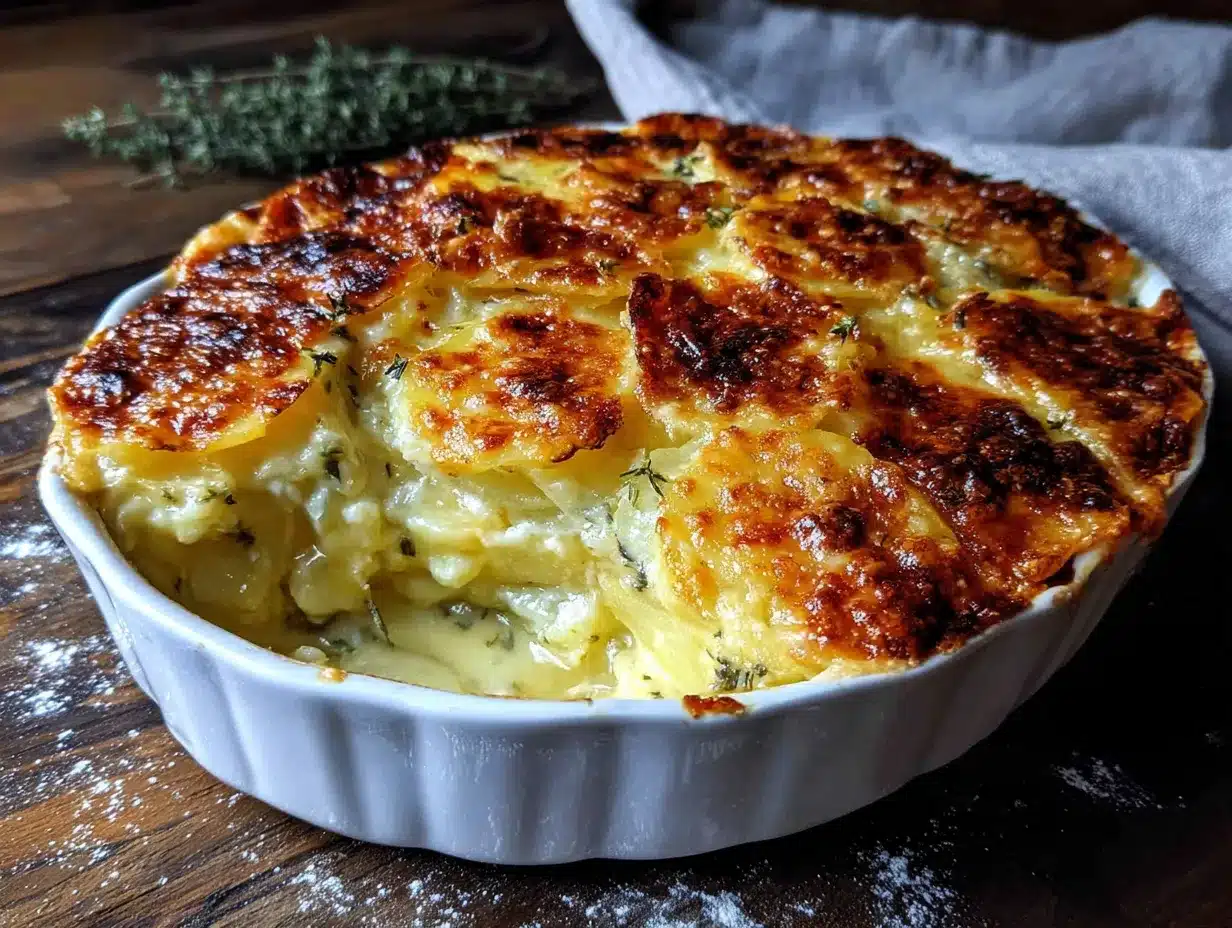
Let’s walk through this step by step. I’ve included all the little details I wish someone had told me the first time I made scalloped potatoes. The total active time is about 30 minutes, and then the oven does the rest of the work.
- Preheat your oven to 375°F (190°C). Position a rack in the center of the oven. While it’s heating, grease your 9×13-inch baking dish with 1 tablespoon of the butter. Make sure to coat the bottom and sides well.
- Prepare the potatoes. Wash and scrub the Yukon Gold potatoes thoroughly—you can peel them if you prefer, but I leave the skins on for extra texture and nutrients. Slice them into ⅛-inch thick rounds. A mandoline makes this incredibly fast, but a sharp knife works fine. Place the sliced potatoes in a large bowl and cover them with cold water to prevent browning while you make the sauce. This also rinses off some surface starch, which helps the sauce stay creamy rather than gummy.
- Make the cream mixture. In a medium saucepan over medium heat, melt the remaining 2 tablespoons of butter. Add the diced shallot and cook for 2-3 minutes until softened and translucent. Add the minced garlic and cook for another 30 seconds until fragrant—don’t let it brown or it will become bitter. Pour in the heavy cream and whole milk, then add the fresh thyme leaves, 1 ½ teaspoons of salt, ½ teaspoon of black pepper, and the grated nutmeg. Stir everything together and bring it to a gentle simmer—you’ll see small bubbles around the edges. Remove from heat immediately. Do not let it boil vigorously or the cream could curdle.
- Drain the potatoes. Pour off the cold water and pat the potato slices dry with a clean kitchen towel or paper towels. This step matters—excess water will thin out your sauce and make the final dish watery. Take an extra minute to get them reasonably dry.
- Layer the potatoes. Spread about ¼ cup of the warm cream mixture on the bottom of the prepared baking dish. Arrange a single layer of potato slices over the sauce, slightly overlapping them like shingles. Sprinkle a pinch of salt and a grind of pepper over the layer, then scatter about ⅓ cup of the grated Gruyère on top. Repeat this layering process—cream mixture, potatoes, salt, pepper, cheese—until you’ve used all the potatoes. You should get about 4-5 layers. Pour any remaining cream mixture evenly over the top layer. You want the liquid to come about halfway up the sides of the dish—if it looks low, don’t worry, the potatoes will release some moisture as they bake.
- Top with remaining cheese. Sprinkle the last of the Gruyère over the top layer of potatoes. Cover the dish tightly with aluminum foil. At this point, you can refrigerate the dish for up to 48 hours. If you’re baking immediately, proceed to the next step.
- Bake covered. Place the covered dish on a baking sheet (to catch any potential overflow) and bake for 40 minutes. The foil traps steam, which helps the potatoes cook through evenly. If you’re baking from cold, add 10-15 minutes to this covered baking time.
- Bake uncovered. After 40 minutes, carefully remove the foil. The potatoes should be tender when pierced with a knife. Continue baking, uncovered, for 20-25 minutes more, until the top is deeply golden brown and bubbly. The edges should be caramelized and the sauce should be thick and creamy. If you want an extra-crispy top, switch the oven to broil for the last 2-3 minutes—but watch it closely, because it can go from golden to burnt very quickly.
- Rest before serving. This is crucial! Let the dish rest on a wire rack for at least 15-20 minutes before serving. The sauce needs time to set up, and the potatoes need to cool slightly so they hold their shape when you scoop them. I know it’s tempting to dig in right away, but trust me—this resting period makes a huge difference in texture.
Cooking Tips & Techniques
After making this recipe more times than I care to count (and messing it up in several creative ways), I’ve collected some tips that will help you nail it on the first try.
The par-cooking trick I almost skipped. The first time I made these, I thought I could just dump everything in the dish and bake it. The result was edible but uneven—some potatoes were perfectly tender while others were still crunchy in the middle. That’s why heating the cream mixture before layering is non-negotiable. It gives the potatoes a head start on cooking and ensures the sauce thickens properly. Don’t skip this step thinking you’re saving time—you’re actually creating more work.
My biggest failure with this recipe. I once used pre-shredded cheese because I was in a hurry. The sauce turned out grainy and slightly greasy. The anti-caking agents in pre-shredded cheese (usually potato starch or cellulose) prevent the cheese from melting smoothly. I stood there staring at my lumpy, separated sauce, wishing I’d spent the extra three minutes grating a block of Gruyère. Learn from my laziness—grate your own cheese.
Timing and multitasking strategies. While the cream mixture is heating, you can slice the potatoes. While the potatoes are draining, you can grate the cheese. The whole active prep takes about 30 minutes if you stay organized. If you’re making this for a holiday meal, assemble it the day before. Then on the day, you just need to let it sit at room temperature for 30 minutes before baking (to take the chill off) and add about 10 minutes to the covered baking time. This frees up your oven and your attention for other dishes.
Consistency tip. If your sauce seems too thin after baking, don’t panic. Let the dish rest longer—the sauce will continue to thicken as it cools. If it’s still thin after 20 minutes of resting, you may have used potatoes that were too starchy (like Russets) or didn’t simmer the cream mixture long enough. Make a note for next time and enjoy it anyway—it will still taste delicious.
Variations & Adaptations
One of the best things about this recipe is how adaptable it is. I’ve experimented with several variations, and here are my favorites.
Lighter version. Swap 1 cup of the heavy cream for an additional cup of whole milk and use half the butter. The result is still creamy but noticeably lighter. You can also use a combination of Gruyère and a lower-fat cheese like part-skim mozzarella, though the flavor won’t be as complex. I’ve made this version for weeknight dinners when I want something comforting but not quite so indulgent.
Herb and garlic variations. Try adding fresh rosemary or sage along with the thyme. Rosemary and Gruyère are a fantastic pairing—the piney, slightly floral notes of rosemary complement the nutty cheese beautifully. For a garlic lover’s version, roast a whole head of garlic, squeeze the soft cloves into the cream mixture, and mash it smooth before simmering. The roasted garlic adds a sweet, mellow depth that’s absolutely addictive.
Add some vegetables. Layer thin slices of fennel or leek between the potato layers for extra flavor and texture. Sautéed mushrooms are another excellent addition—their earthy flavor matches perfectly with Gruyère. I once added a layer of caramelized onions and it was arguably better than the original. Just make sure any added vegetables are cooked or very thinly sliced so they soften during baking.
Dietary adaptations. For a gluten-free version, this recipe is naturally gluten-free as written—just double-check that your Gruyère doesn’t contain any anti-caking agents (most blocks don’t). For a vegetarian version, it’s already vegetarian. For a dairy-free version, substitute the cream and milk with full-fat canned coconut milk and use a dairy-free cheese alternative, though I’ll be honest—the texture and flavor won’t be the same. This is one of those recipes where dairy really shines.
Serving & Storage Suggestions
These scalloped potatoes are incredibly versatile when it comes to serving. Here’s how I like to enjoy them.
Serving temperature and presentation. Serve these warm, not piping hot. The 15-20 minute rest after baking is perfect for bringing them to the ideal serving temperature. Spoon them onto plates or a platter, making sure to get some of the crispy edges and creamy center in each serving. A sprinkle of fresh thyme leaves or a little flaky sea salt on top adds a beautiful finishing touch. They’re stunning as a side dish for holiday roasts, but honestly, I’ve eaten them as a main course with a simple green salad on the side.
Complementary dishes. These potatoes pair beautifully with roasted chicken, seared steak, baked salmon, or a hearty mushroom ragout. For a complete meal, serve them alongside roasted asparagus or a crisp green salad with a lemony vinaigrette—the acidity cuts through the richness of the potatoes. A glass of dry white wine, like a Sauvignon Blanc or unoaked Chardonnay, complements the Gruyère beautifully.
Storage instructions. Leftovers keep well in the refrigerator for up to 4 days. Store them in an airtight container or cover the baking dish tightly with foil. The flavors actually continue to meld and deepen overnight, so leftovers are often even better the next day.
Reheating methods. The best way to reheat is in the oven at 350°F (175°C) for about 15-20 minutes, covered with foil to prevent the top from burning. You can also reheat individual portions in the microwave for 1-2 minutes, though the top won’t be as crispy. For a quick stovetop reheat, place a portion in a non-stick skillet over medium-low heat, covered, for about 5-7 minutes. Add a splash of milk or cream if the sauce seems dry.
Freezer instructions. These potatoes freeze surprisingly well. Assemble the dish completely but don’t bake it. Cover it tightly with plastic wrap, then foil, and freeze for up to 3 months. To bake from frozen, remove the plastic wrap, cover with foil, and bake at 375°F (190°C) for about 60-70 minutes, then uncover and bake for another 20-25 minutes until golden and bubbly. The texture will be slightly softer than fresh, but the flavor remains excellent.
Nutritional Information & Benefits
Let’s be real—this is an indulgent dish. But it’s made with real, whole ingredients, and that counts for something. Here’s the breakdown per serving (assuming 8 servings).
- Calories: Approximately 380 per serving
- Protein: 12g
- Fat: 24g
- Carbohydrates: 30g
- Fiber: 3g
- Sugar: 4g
- Sodium: 480mg
Health benefits of key ingredients. Yukon Gold potatoes are a good source of vitamin C, potassium, and fiber, especially if you leave the skins on. Gruyère cheese provides calcium and protein. Garlic and thyme offer anti-inflammatory properties. And while this isn’t a “health food” by any stretch, it’s made from scratch with ingredients you can pronounce—which is more than you can say for many convenience foods.
Dietary considerations. This recipe contains dairy and is not suitable for vegans or those with lactose intolerance (unless you use the dairy-free adaptations mentioned above). It is naturally gluten-free and vegetarian. If you’re watching your sodium intake, you can reduce the added salt and use a low-sodium cheese, though the flavor will be less pronounced.
From a wellness perspective, I believe in balance. This dish is for special occasions, holiday gatherings, and those days when you need a little extra comfort. It’s not an everyday meal, and that’s okay. The joy of cooking with real ingredients and sharing food with people you love is its own kind of nourishment.
Frequently Asked Questions
Can I use a different type of potato?
You can, but the results will vary. Yukon Golds are ideal because they strike the perfect balance between waxy and starchy. Russets will break down more and create a softer, almost mashed-potato-like texture. Red or new potatoes will hold their shape better but won’t absorb the cream as well, resulting in a thinner sauce. If you’re in a pinch, use what you have, but adjust your expectations accordingly.
How far in advance can I assemble this dish?
You can assemble it up to 48 hours before baking. The flavors actually improve as the potatoes absorb the cream mixture and the seasonings meld. Just make sure to cover it tightly with foil and refrigerate. If you’re assembling more than 24 hours in advance, you might notice the top layer of potatoes darkens slightly from oxidation—this is harmless and will disappear during baking.
Why did my scalloped potatoes turn out watery?
This usually happens for one of three reasons: the potatoes weren’t dried properly after slicing, the cream mixture wasn’t simmered long enough to thicken, or the dish wasn’t baked long enough. Make sure to pat the potato slices dry, simmer the cream mixture until it’s slightly thickened, and bake until the potatoes are fully tender and the sauce has reduced. Resting the dish after baking also helps the sauce set up.
Can I freeze baked scalloped potatoes?
Yes, but the texture will be slightly softer after thawing and reheating. If you have leftovers, freeze them in an airtight container for up to 3 months. Thaw overnight in the refrigerator, then reheat in a 350°F oven until warmed through. For best results, I recommend freezing the unbaked assembled dish rather than the baked dish—the texture holds up much better.
What can I substitute for Gruyère cheese?
Gruyère is the star here, but if you can’t find it or need a substitute, try Comté, Emmental, or a high-quality Swiss cheese. These have similar nutty, meltable qualities. For a completely different flavor profile, you could use sharp white cheddar or a mix of fontina and Parmesan. Just avoid pre-shredded blends labeled “Swiss cheese”—they often contain anti-caking agents that affect the texture.
Conclusion
These Wholesome Make-Ahead Cheesy Gruyère Scalloped Potatoes have become a staple in my kitchen for good reason. They deliver that incredible, soul-warming comfort food experience without the last-minute stress. The make-ahead convenience means you can actually enjoy your own dinner party instead of sweating in the kitchen. And the flavor—that nutty, creamy, perfectly seasoned flavor—is something you’ll find yourself craving long after the dish is empty.
I hope you’ll try this recipe and make it your own. Maybe you’ll add extra garlic, or a layer of caramelized onions, or a sprinkle of fresh herbs on top. That’s the beauty of cooking—finding what works for you and your family. I’d love to hear how it turns out. Drop a comment below and let me know if Carol’s trick worked for you too, or share your own variation that made these potatoes even better.
Happy cooking, and here’s to meals that bring us together—one creamy, cheesy, perfectly layered bite at a time.
Pin This Recipe!
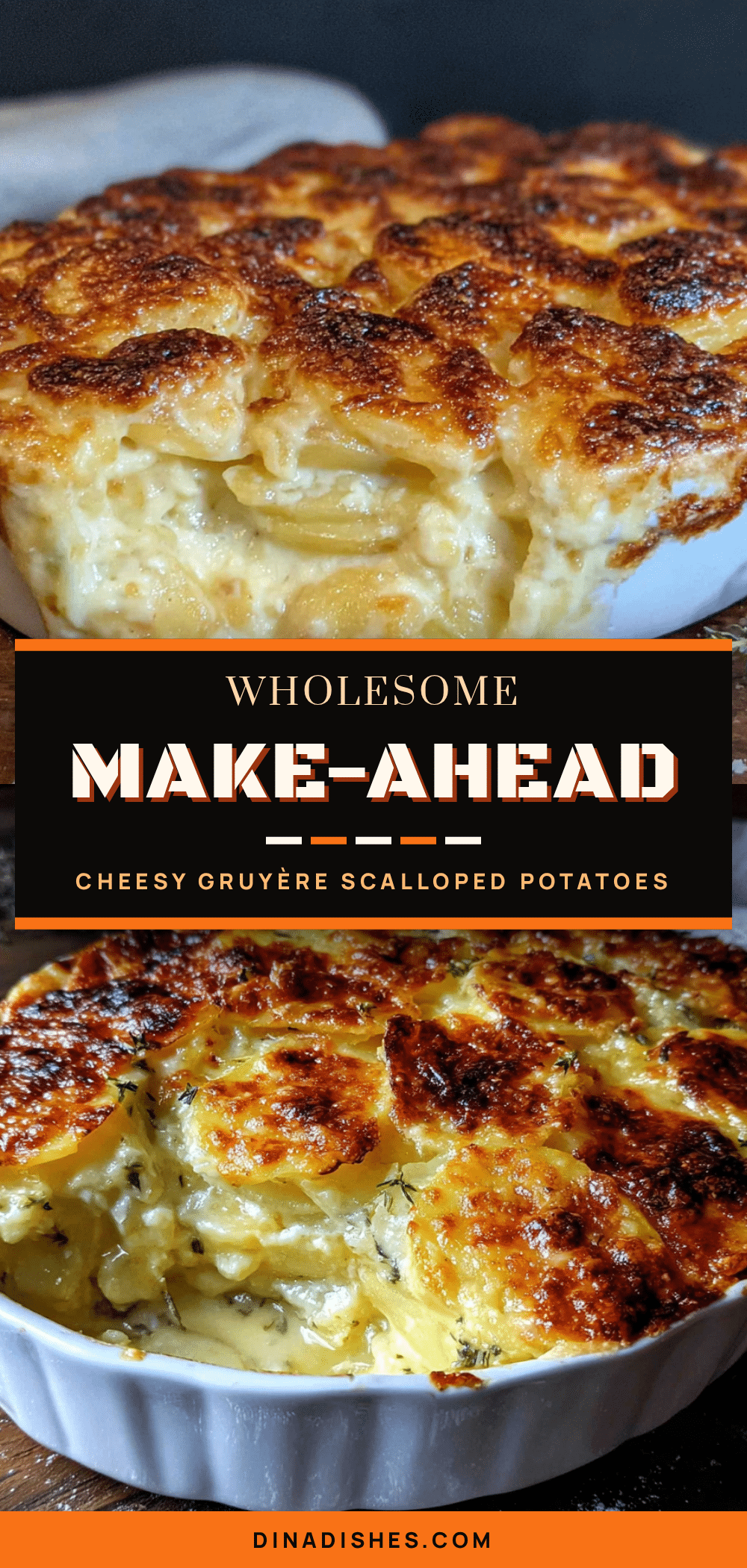
Wholesome Make-Ahead Cheesy Gruyère Scalloped Potatoes

These make-ahead scalloped potatoes are creamy, cheesy, and perfect for holidays or busy weeknights. Assemble up to 48 hours in advance for deeper flavor and effortless entertaining.
- Prep Time: 30 minutes
- Cook Time: 60 minutes
- Total Time: 1 hour 30 minutes
- Yield: 8 servings 1x
- Category: Side Dish
- Cuisine: American
Ingredients
- 3 pounds Yukon Gold potatoes (about 6–7 medium)
- 8 ounces Gruyère cheese, grated
- 1 ½ cups heavy cream
- 1 cup whole milk
- 3 tablespoons unsalted butter
- 3 cloves garlic, minced
- 1 tablespoon fresh thyme leaves (or 1 teaspoon dried)
- 1 medium shallot, finely diced
- 1 ½ teaspoons fine sea salt, plus more for layering
- ½ teaspoon freshly ground black pepper, plus more for layering
- ¼ teaspoon freshly grated nutmeg
Instructions
- Preheat oven to 375°F (190°C). Grease a 9×13-inch baking dish with 1 tablespoon of the butter.
- Wash and scrub potatoes (peel if desired). Slice into ⅛-inch thick rounds. Place in a large bowl and cover with cold water to prevent browning.
- In a medium saucepan over medium heat, melt remaining 2 tablespoons butter. Add shallot and cook 2-3 minutes until softened. Add garlic and cook 30 seconds until fragrant.
- Pour in heavy cream and whole milk. Add thyme, 1 ½ teaspoons salt, ½ teaspoon pepper, and nutmeg. Stir and bring to a gentle simmer. Remove from heat immediately.
- Drain potatoes and pat dry with a clean towel.
- Spread ¼ cup of the warm cream mixture on the bottom of the prepared dish. Arrange a single layer of potato slices, slightly overlapping. Sprinkle with a pinch of salt and pepper, then ⅓ cup Gruyère. Repeat layering until all potatoes are used (about 4-5 layers). Pour remaining cream mixture over the top.
- Sprinkle remaining Gruyère over the top layer. Cover tightly with aluminum foil. At this point, refrigerate for up to 48 hours or bake immediately.
- Place covered dish on a baking sheet. Bake for 40 minutes (add 10-15 minutes if baking from cold).
- Remove foil and bake uncovered for 20-25 minutes until top is golden brown and bubbly. For extra crispiness, broil for 2-3 minutes at the end.
- Let rest on a wire rack for 15-20 minutes before serving.
Notes
For best results, grate your own Gruyère—pre-shredded cheese contains anti-caking agents that prevent smooth melting. Let the dish rest after baking to allow the sauce to set. If assembling ahead, let sit at room temperature for 30 minutes before baking and add 10-15 minutes to covered baking time.
Nutrition
- Serving Size: 1 serving (about 1 c
- Calories: 380
- Sugar: 4
- Sodium: 480
- Fat: 24
- Saturated Fat: 15
- Carbohydrates: 30
- Fiber: 3
- Protein: 12
Keywords: scalloped potatoes, gruyere, make-ahead, holiday side dish, creamy potatoes, comfort food