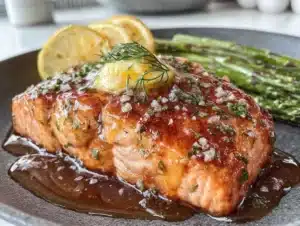
Honestly, I think the best recipes come from being proven wrong. My friend Mark asked me why I couldn’t just bake the salmon on a single sheet pan with everything—the lemon, the dill, the garlic—all at once. I started to explain why that wouldn’t work. Something about layering flavors, searing first, keeping the fish from steaming. Then I stopped. I had no good reason, really. I just assumed it wouldn’t be good enough. So I tried it. And let me tell you, it was better than my usual fussy method. The lemon softened into the fish, the dill got a little crispy at the edges, and the whole thing came together in under twenty minutes. I’ve made it for every dinner party since.
This lemon dill salmon is now my secret weapon. You know that feeling when you want to impress guests but don’t want to spend all day in the kitchen? This is the answer. It looks like you fussed, but you barely did anything. The first time I served it, my neighbor Karen asked for the recipe before she even finished her plate. That’s when I knew I had something special.
It’s the kind of dish that makes you look like a hero. The salmon comes out tender and flaky, with bright lemon and herby dill in every bite. It’s simple enough for a Tuesday night but fancy enough for a celebration. And the best part? You can prep it in the morning, pop it in the fridge, and bake it right when your guests arrive. That fifteen-minute bake time means you can relax and enjoy your own party.
I keep coming back to this recipe because it’s so forgiving. You can use fresh or dried dill, swap in lime for lemon, or even add a splash of white wine. It always works. It always gets compliments. And it always makes me feel like I know what I’m doing—even when I’m just following my own happy accident.
What Ingredients You Will Need
This recipe uses simple, fresh ingredients that come together to create a bright, elegant dish. Most of these are pantry staples or easy to find at any grocery store. I’ve tested this with different brands and variations, and I’ll share what works best.
For the Salmon
- 4 salmon fillets (6 ounces each, skin-on or skinless) — Look for fillets that are evenly thick so they cook at the same rate. I prefer wild-caught when I can find it, but farm-raised Atlantic salmon works beautifully too. (Just pat it dry for better browning.)
- 2 tablespoons olive oil — A good-quality extra virgin olive oil adds richness. You can also use avocado oil for a neutral flavor.
- 1 large lemon — You’ll need both the zest and the juice. Roll the lemon on the counter before juicing to get more out of it.
- 3 cloves garlic, minced — Fresh garlic is non-negotiable here. The jarred stuff won’t give you the same punch. I use a microplane for super fine mincing.
- 2 tablespoons fresh dill, chopped (or 2 teaspoons dried dill) — Fresh dill has a softer, brighter flavor. Dried works in a pinch, but use less since it’s more concentrated.
- ½ teaspoon salt — I use kosher salt for its clean taste. If you use table salt, reduce to ¼ teaspoon.
- ¼ teaspoon black pepper — Freshly ground is always better. It makes a difference here.
- Optional: 2 tablespoons capers — These add a briny pop that pairs beautifully with lemon and dill. I add them when I’m feeling fancy.
For the Garnish (Optional but Recommended)
- Fresh lemon slices — Thin rounds arranged on top before baking look stunning.
- Extra fresh dill sprigs — For that restaurant-style finish.
- Flaky sea salt — A sprinkle right before serving makes the flavors sing.
Ingredient Tips: If you’re feeding a crowd, this recipe scales beautifully. For 8 people, double everything and use two sheet pans. Just rotate the pans halfway through baking. For a dairy-free version, skip any butter-based sides and serve with roasted vegetables or rice pilaf. I’ve also made this with frozen salmon—just thaw it completely in the fridge overnight and pat it very dry before cooking. The texture won’t be quite as perfect, but it’s still delicious.
Equipment Needed
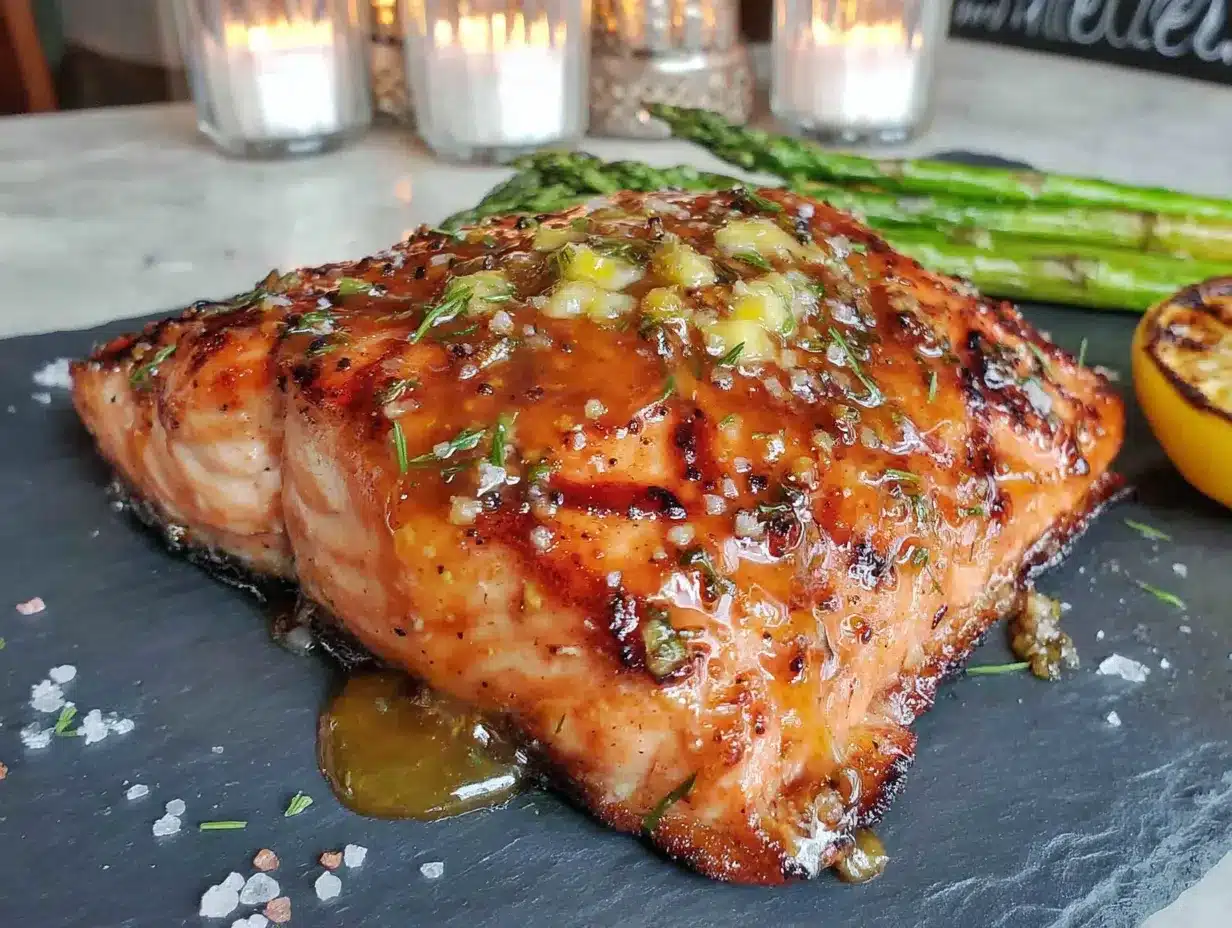
You don’t need much for this recipe, which is part of its charm. Here’s what you’ll want to have on hand:
- Baking sheet or sheet pan — A rimmed baking sheet works best to catch any juices. I use a half-sheet pan (18×13 inches). If you don’t have one, a 9×13 baking dish works too, but the salmon won’t get as crispy on the edges.
- Parchment paper or aluminum foil — Lining the pan makes cleanup a breeze. I prefer parchment because it’s non-stick and eco-friendly.
- Chef’s knife and cutting board — For mincing garlic and chopping dill. Nothing fancy needed.
- Microplane or zester — For getting the lemon zest without the bitter white pith. A box grater’s fine side works too.
- Small bowl — For mixing the garlic, dill, lemon zest, and olive oil.
- Fish spatula or thin metal spatula — For lifting the cooked salmon off the pan without breaking it. A regular spatula works, but you might lose some of that crispy skin.
- Instant-read thermometer — Optional but helpful. Salmon is done at 125°F to 130°F for medium. I’ve learned to trust the flake test, but the thermometer gives me peace of mind when cooking for guests.
Budget tip: You don’t need a fancy baking sheet. I used a beat-up old pan for years and it worked fine. The parchment paper does the heavy lifting.
Preparation Method
This comes together fast, so I like to have everything prepped before I start. Read through the whole method once, then dive in.
- Preheat your oven to 400°F (200°C). Line a baking sheet with parchment paper or foil. If using foil, lightly grease it with a little olive oil so the salmon doesn’t stick.
- Make the lemon dill mixture. In a small bowl, combine 2 tablespoons olive oil, the zest of 1 lemon, 2 tablespoons fresh dill (chopped), 3 minced garlic cloves, ½ teaspoon salt, and ¼ teaspoon black pepper. Stir until it forms a thick, fragrant paste. Taste it—it should be bright and herby. If it tastes flat, add a pinch more salt.
- Prep the salmon. Pat the 4 salmon fillets dry with paper towels. This step is crucial—wet salmon steams instead of bakes, and you want those edges to get slightly golden. Place the fillets skin-side down (if using skin-on) on the prepared baking sheet, spacing them about 2 inches apart.
- Season the salmon. Spoon the lemon dill mixture evenly over the top of each fillet. Use the back of the spoon to spread it into a thin layer. Don’t worry if some falls off the sides—it’ll caramelize in the oven and add flavor. Arrange thin lemon slices on top if you’re using them.
- Optional: Add capers. Sprinkle 2 tablespoons capers over the fillets. They add little bursts of salty, briny goodness that make the dish feel extra special.
- Bake the salmon. Place the baking sheet in the preheated oven. Bake for 12 to 15 minutes, depending on the thickness of your fillets. For 1-inch thick fillets, 13 minutes is usually perfect. The salmon is done when it flakes easily with a fork and the internal temperature reaches 125°F to 130°F (52°C to 54°C) for medium. If you like it more well-done, cook to 135°F (57°C).
- Rest the salmon. Remove the baking sheet from the oven and let the salmon rest for 2 to 3 minutes. This allows the juices to redistribute, so the fish stays moist and tender. Don’t skip this step—I’ve ruined perfectly good salmon by cutting into it too soon.
- Garnish and serve. Sprinkle with fresh dill sprigs and a pinch of flaky sea salt. Squeeze a little extra lemon juice over the top if you like things bright. Transfer to a serving platter or individual plates.
Sensory Cues: At 10 minutes, you’ll smell the lemon and garlic filling your kitchen. The edges of the salmon will look opaque and slightly golden. When you gently press the center with a fork, it should give slightly but feel firm. If it’s still squishy, give it another 2 minutes.
Prep Ahead Tip: You can assemble the lemon dill mixture up to 24 hours in advance and store it in the fridge. Spread it on the salmon just before baking. You can also season the salmon up to 2 hours ahead and keep it refrigerated—just let it sit at room temperature for 10 minutes before baking so it cooks evenly.
Cooking Tips & Techniques
I’ve made this lemon dill salmon more times than I can count, and I’ve learned a few things the hard way. Here’s what I wish someone had told me.
Don’t overcrowd the pan. Salmon needs space to cook evenly. If you cram all four fillets together, they’ll steam instead of roast, and you’ll lose that lovely texture. Use two pans if you’re doubling the recipe.
Pat the salmon dry. This is the single most important step. Excess moisture creates steam, which prevents browning. Spend an extra 30 seconds with a paper towel. Your future self will thank you.
Watch the thickness. Not all salmon fillets are created equal. A thin tail piece will cook faster than a thick center cut. If your fillets vary in size, check the thin ones at 10 minutes and remove them if they’re done, letting the thicker ones continue baking.
My biggest failure: The first time I made this for a dinner party, I forgot to zest the lemon before juicing it. I ended up with a watery, sad mixture that didn’t stick to the fish. Now I always zest first, then juice. Learn from my mistake.
Room temperature matters. Take the salmon out of the fridge 15 to 20 minutes before baking. A cold fillet hitting a hot oven will cook unevenly—the outside will be overdone while the center stays raw. Let it breathe a little.
Use a thermometer. I know, I know, it feels fussy. But salmon is expensive, and overcooking it is heartbreaking. An instant-read thermometer takes the guesswork out. Insert it into the thickest part of the fillet, and you’ll never serve dry salmon again.
Timing strategy for hosting: When I have guests, I prep everything in the morning. The lemon dill mixture goes in a small bowl in the fridge. The salmon sits on the lined baking sheet, covered, in the fridge. Fifteen minutes before I want to eat, I pull the pan out, spread the mixture on, and pop it in the oven. While it bakes, I toss a salad and open a bottle of wine. Done.
Variations & Adaptations
This recipe is incredibly flexible. Here are some ways I’ve adapted it for different tastes and occasions.
Dietary Variations
- Dairy-free: This recipe is naturally dairy-free as written. Just skip any butter-based sides and serve with roasted vegetables or a simple green salad.
- Low-carb/Keto: Salmon is already low-carb. Serve it with roasted asparagus or cauliflower rice instead of potatoes or grains.
- Gluten-free: This recipe is naturally gluten-free. Just double-check your spice blends if you’re using any.
Flavor Twists
- Lemon Herb Salmon: Swap the dill for fresh parsley, thyme, or oregano. Each herb brings a different personality—thyme is earthy, parsley is fresh, oregano is bold.
- Spicy Lemon Salmon: Add ½ teaspoon red pepper flakes or a pinch of cayenne to the lemon dill mixture. The heat balances the brightness beautifully.
- Maple Dijon Salmon: Replace the dill with 1 tablespoon Dijon mustard and 1 tablespoon maple syrup. It’s sweet, tangy, and caramelizes gorgeously in the oven.
Cooking Method Variations
- Air Fryer: Preheat your air fryer to 375°F (190°C). Cook the salmon for 8 to 10 minutes, depending on thickness. The edges get extra crispy. I’ve done this when I’m cooking just for myself, and it’s fantastic.
- Grill: Place the seasoned salmon on a piece of foil (or a cedar plank) and grill over medium heat for 10 to 12 minutes, covered. The smoky flavor is incredible for summer gatherings.
- Pan-Seared: Sear the salmon in a hot skillet with a little oil for 3 to 4 minutes per side, then finish with the lemon dill mixture. This gives you a beautiful crust.
Personal Variation: I once made this with lime instead of lemon because that’s what I had. It was bright and slightly floral, and my guests couldn’t stop talking about it. Don’t be afraid to experiment with what’s in your fridge.
Serving & Storage Suggestions
This salmon is versatile enough for a casual weeknight or a formal dinner party. Here’s how I like to serve it and keep leftovers.
Serving Suggestions
Serve the salmon warm, right out of the oven. I usually transfer the fillets to a white platter with the lemon slices still on top—it looks stunning. A sprinkle of fresh dill and flaky sea salt right before serving makes it look like it came from a restaurant.
What to serve alongside:
- Rice pilaf or lemon rice — The rice soaks up the lemony juices from the salmon. I love making a simple jasmine rice with a squeeze of lemon and a pinch of dill.
- Roasted asparagus or green beans — Roast them on a separate pan at the same temperature. They’ll be done in about 12 minutes.
- Simple arugula salad — Toss arugula with lemon juice, olive oil, and shaved Parmesan. The peppery greens balance the rich salmon.
- Crusty bread — For sopping up any extra juices on the plate. Don’t judge me.
Beverage pairings: A crisp Sauvignon Blanc or a dry Pinot Grigio is perfect. For non-alcoholic, try sparkling water with a lemon twist.
Storage Instructions
Leftover salmon keeps well for up to 3 days in the refrigerator. Let it cool completely, then store it in an airtight container. The flavor actually mellows and deepens overnight—I’ve eaten it cold over a salad the next day and loved it.
Reheating: The best way to reheat salmon is gently. Place it in a 300°F (150°C) oven for 5 to 7 minutes, or until just warmed through. You can also microwave it on low power in 30-second bursts, but be careful—it can dry out quickly. I prefer it cold or at room temperature for leftovers.
Freezing: Cooked salmon freezes well for up to 2 months. Wrap each fillet tightly in plastic wrap, then place in a freezer bag. Thaw in the fridge overnight and reheat gently. The texture won’t be quite as perfect, but it’s still delicious in salads or pasta.
Flavor development: This salmon is actually fantastic cold the next day. The lemon and dill flavors meld together, and the texture firms up slightly. I’ve flaked it over a bed of mixed greens with a simple vinaigrette for lunch, and it’s become one of my favorite ways to enjoy leftovers.
Nutritional Information & Benefits
This lemon dill salmon is not just delicious—it’s packed with nutrients that make you feel good about serving it to your family and guests.
| Nutrient | Per Serving (1 fillet) |
|---|---|
| Calories | 320-350 |
| Protein | 35-40g |
| Fat | 18-22g |
| Saturated Fat | 3-4g |
| Carbohydrates | 2-3g |
| Fiber | 0-1g |
| Sugar | 0-1g |
| Sodium | 400-500mg |
| Omega-3 Fatty Acids | 2-3g |
| Vitamin D | 15-20% DV |
| Vitamin B12 | 50-60% DV |
Health Benefits: Salmon is one of the best sources of omega-3 fatty acids, which support heart health and brain function. The lemon provides a good dose of vitamin C, which boosts your immune system. Garlic adds anti-inflammatory properties, and dill is rich in antioxidants. This dish is naturally low in carbs and high in protein, making it a great option for anyone watching their blood sugar or trying to build muscle.
Dietary Considerations: This recipe is naturally gluten-free, dairy-free, and low-carb. It’s also suitable for pescatarian and Mediterranean diets. If you’re watching your sodium, reduce the salt to ¼ teaspoon and skip the capers.
Personal Perspective: I love that this meal feels indulgent but is actually incredibly healthy. I can serve it to guests and feel good about what they’re eating. It’s proof that healthy food doesn’t have to be boring or complicated.
Frequently Asked Questions
Can I use frozen salmon for this recipe?
Yes, absolutely. Thaw the salmon completely in the refrigerator overnight. Pat it very dry with paper towels before seasoning—frozen salmon releases more moisture as it thaws. The texture won’t be quite as perfect as fresh, but it’s still delicious.
How do I know when the salmon is done?
The best way is to use an instant-read thermometer. Insert it into the thickest part of the fillet—it should read 125°F to 130°F (52°C to 54°C) for medium. If you don’t have a thermometer, gently press the center with a fork. The salmon should flake easily and look opaque all the way through.
Can I make this recipe ahead of time?
You can prep the lemon dill mixture up to 24 hours in advance and store it in the fridge. You can also season the salmon up to 2 hours before baking. I don’t recommend baking it ahead of time, as it’s best fresh out of the oven. But leftovers are great cold the next day.
What can I substitute for fresh dill?
Dried dill works in a pinch—use about 2 teaspoons instead of 2 tablespoons of fresh. You can also swap in fresh parsley, thyme, or oregano. Each herb brings a different flavor, but they all pair well with lemon and garlic. I’ve even used tarragon for a slightly licorice-like twist.
Can I cook this salmon on the grill?
Yes! Place the seasoned salmon on a piece of foil (or a cedar plank) and grill over medium heat for 10 to 12 minutes, covered. The smoky flavor is incredible. You can also use a grill basket for easier handling. Just keep an eye on it—grill temperatures vary.
Conclusion
This lemon dill salmon has become my go-to for every dinner party, potluck, and special occasion. It’s the recipe that made me realize sometimes the simplest approach is the best one. Mark’s suggestion that day turned into a dish I genuinely love—one that makes me look good without making me work hard.
I hope you try it and make it your own. Add a little more garlic if that’s your thing. Swap in lime for lemon. Throw in some capers. The beauty of this recipe is that it’s forgiving and flexible. It’s meant to be adapted to whatever you have on hand and whoever you’re feeding.
When you make it—and I really hope you do—let me know how it turns out. Did your guests ask for the recipe? Did you add your own twist? I’d love to hear about it in the comments. And if you’re looking for another crowd-pleasing dish, try my garlic herb roasted potatoes to serve alongside—they’re just as simple and just as impressive.
Happy cooking, friends. Here’s to more happy accidents in the kitchen.
Pin This Recipe!
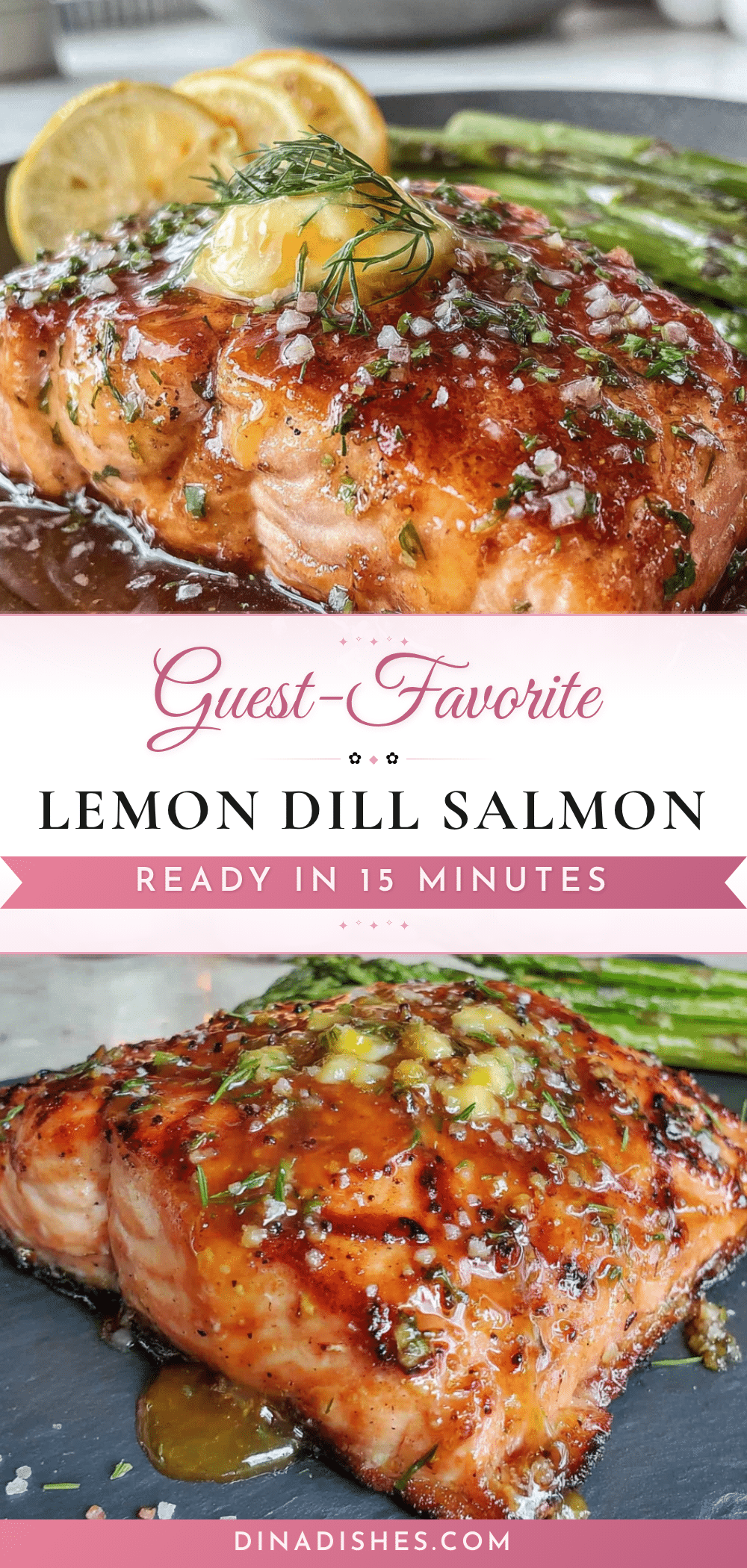
Easy 15-Minute Lemon Dill Salmon: Best Guest Recipe
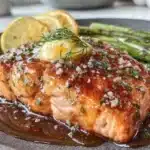
This lemon dill salmon is a quick and elegant dish that comes together in under 20 minutes. It’s perfect for impressing guests or a simple weeknight dinner, with tender, flaky salmon and bright, herby flavors.
- Prep Time: 5 minutes
- Cook Time: 15 minutes
- Total Time: 20 minutes
- Yield: 4 servings 1x
- Category: Main Course
- Cuisine: American
Ingredients
- 4 salmon fillets (6 ounces each, skin-on or skinless)
- 2 tablespoons olive oil
- 1 large lemon (zest and juice)
- 3 cloves garlic, minced
- 2 tablespoons fresh dill, chopped (or 2 teaspoons dried dill)
- ½ teaspoon kosher salt
- ¼ teaspoon black pepper, freshly ground
- Optional: 2 tablespoons capers
- For garnish: fresh lemon slices, extra fresh dill sprigs, flaky sea salt
Instructions
- Preheat your oven to 400°F (200°C). Line a baking sheet with parchment paper or foil. If using foil, lightly grease it with olive oil.
- In a small bowl, combine 2 tablespoons olive oil, the zest of 1 lemon, 2 tablespoons fresh dill (chopped), 3 minced garlic cloves, ½ teaspoon salt, and ¼ teaspoon black pepper. Stir until it forms a thick, fragrant paste.
- Pat the 4 salmon fillets dry with paper towels. Place them skin-side down on the prepared baking sheet, spacing them about 2 inches apart.
- Spoon the lemon dill mixture evenly over the top of each fillet. Use the back of the spoon to spread it into a thin layer. Arrange thin lemon slices on top if using.
- Optional: Sprinkle 2 tablespoons capers over the fillets.
- Bake for 12 to 15 minutes, depending on thickness. For 1-inch thick fillets, 13 minutes is usually perfect. Salmon is done when it flakes easily with a fork and internal temperature reaches 125°F to 130°F (52°C to 54°C) for medium.
- Remove from oven and let rest for 2 to 3 minutes.
- Sprinkle with fresh dill sprigs and a pinch of flaky sea salt. Squeeze extra lemon juice over the top if desired. Serve warm.
Notes
Pat the salmon dry for better browning. Don’t overcrowd the pan. Let salmon rest before serving. Prep the lemon dill mixture up to 24 hours in advance. For frozen salmon, thaw completely and pat dry. Use a thermometer for perfect doneness.
Nutrition
- Serving Size: 1 fillet
- Calories: 335
- Sugar: 0.5
- Sodium: 450
- Fat: 20
- Saturated Fat: 3.5
- Carbohydrates: 2.5
- Fiber: 0.5
- Protein: 37
Keywords: lemon dill salmon, easy salmon recipe, 15-minute salmon, baked salmon, sheet pan salmon, healthy salmon, dinner party recipe